20,862  PAGES BROWSED TODAY PAGES TODAY • 60 ANTIQUES UPLOADED TODAYNEW ARRIVALS
GIFTS
60 ITEMS ADDED TODAY
Sort Order
Items Per Page
Antiques dealer?
Join as a Seller
Browse Categories
Sort order
Relevant Links
Items per page
ID #SA1084417
SOLD
Email Phone
Save
Antique Betjemann’s Oak Three Cut Crystal Decanter Tantalus C1870 19th C
Sold by Regent Antiques
sold SA1084417
Sorry, but this item has been sold.
Regent Antiques

Regent Antiques

Sellingantiques Verified Since Sep 2016
Browse dealers 637 items
  • About Us
    We specialise in english and continental furniture, silver, porcelain and decorative items.
  • Trade Associations
    Regent Antiques is a registered member of LAPADA  CINOA
Id #SA1084417
PDF SHARE
SAVE

Antique Betjemann’s Oak Three Cut Crystal Decanter Tantalus C1870 19th C

19th century
Sold 19 August 2024 · Regent Antiques
This “Antique Betjemann’s Oak Three Cut Crystal Decanter Tantalus C1870 19th C” found a buyer.

It was listed by Regent Antiques. Sold pieces stay on Sellingantiques as a record of what has passed through, and the next one is rarely far away.

Description

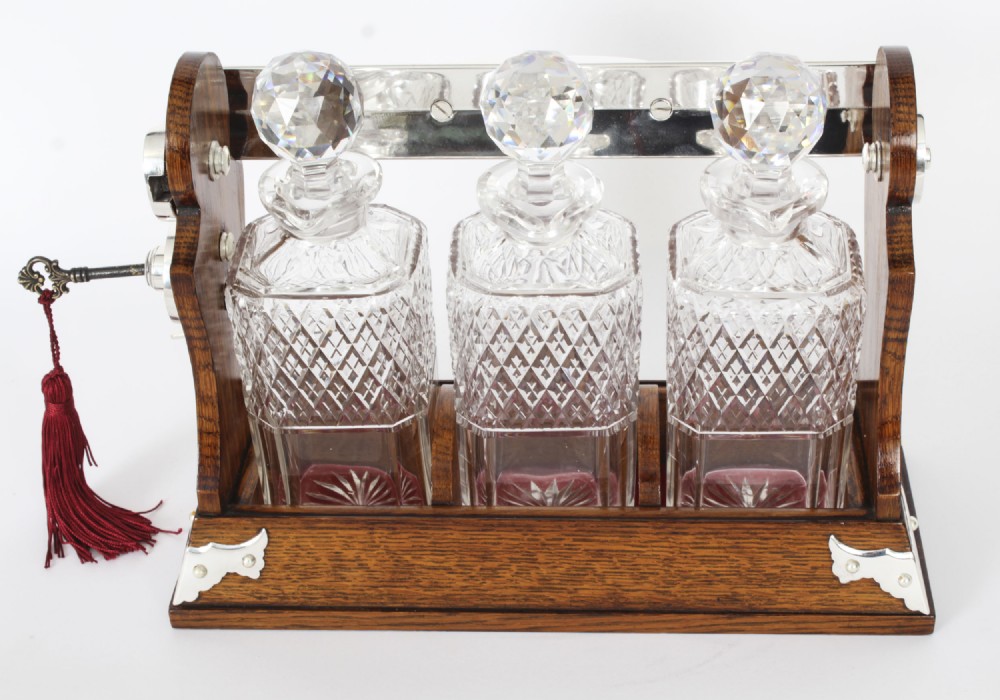
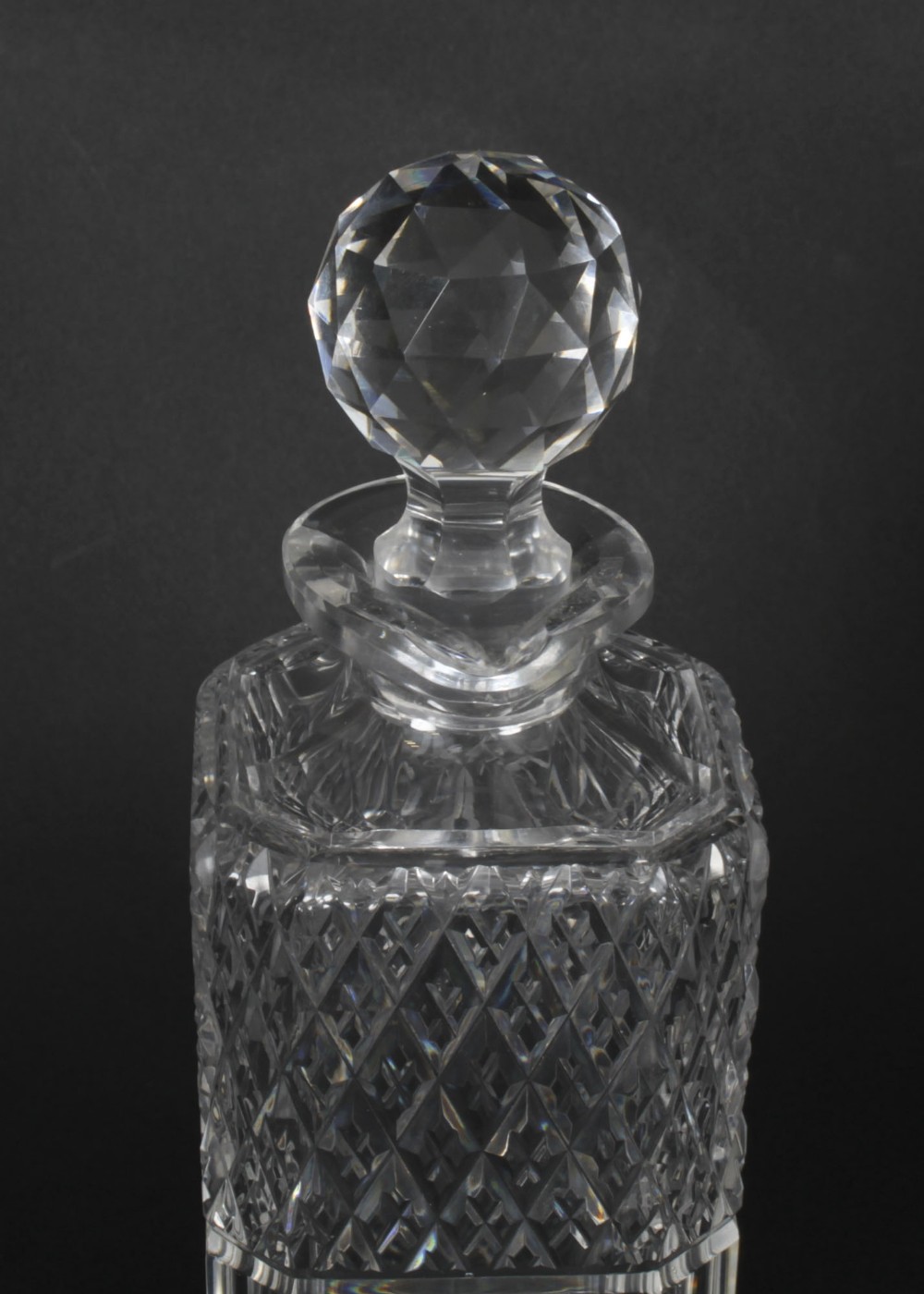
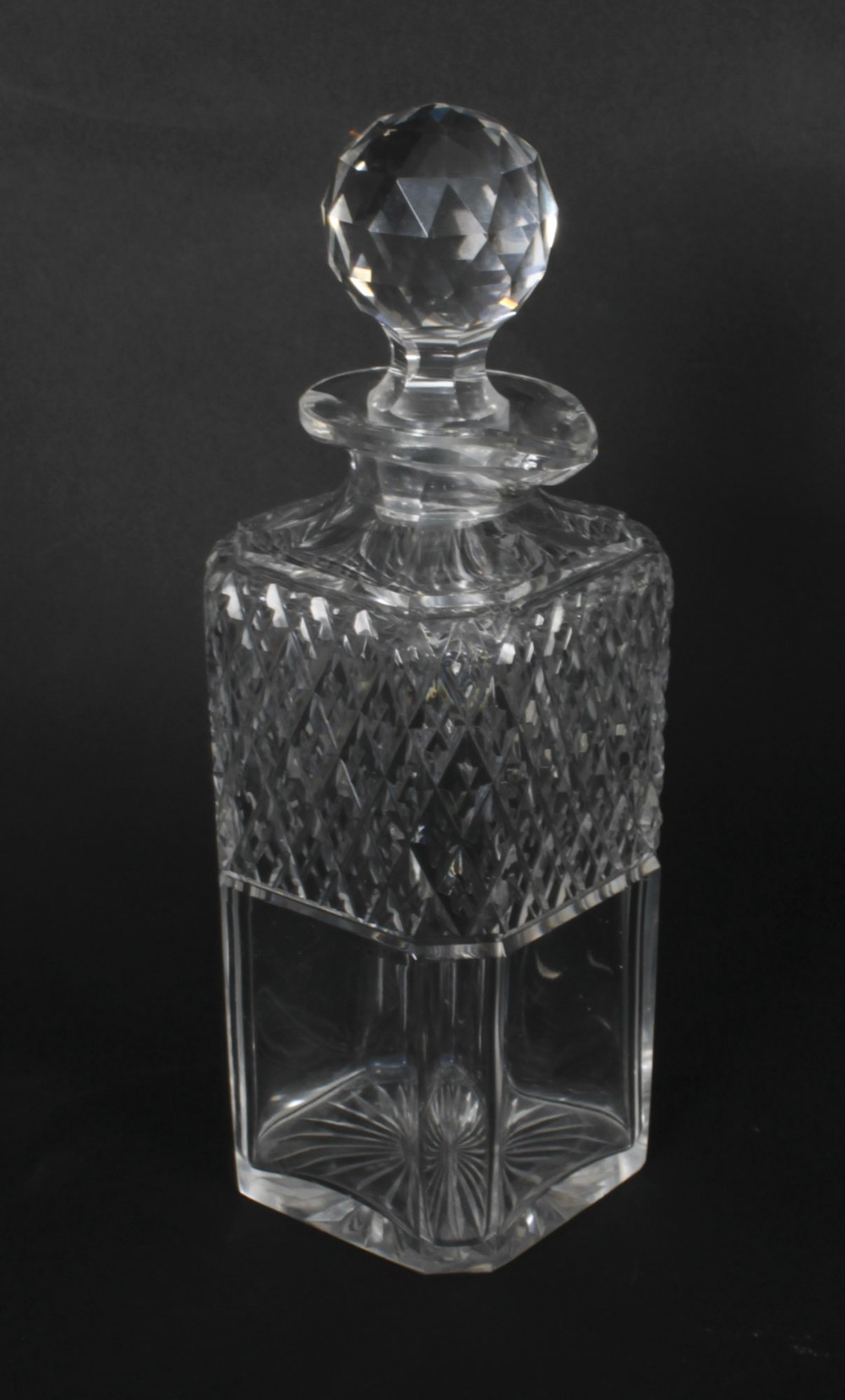
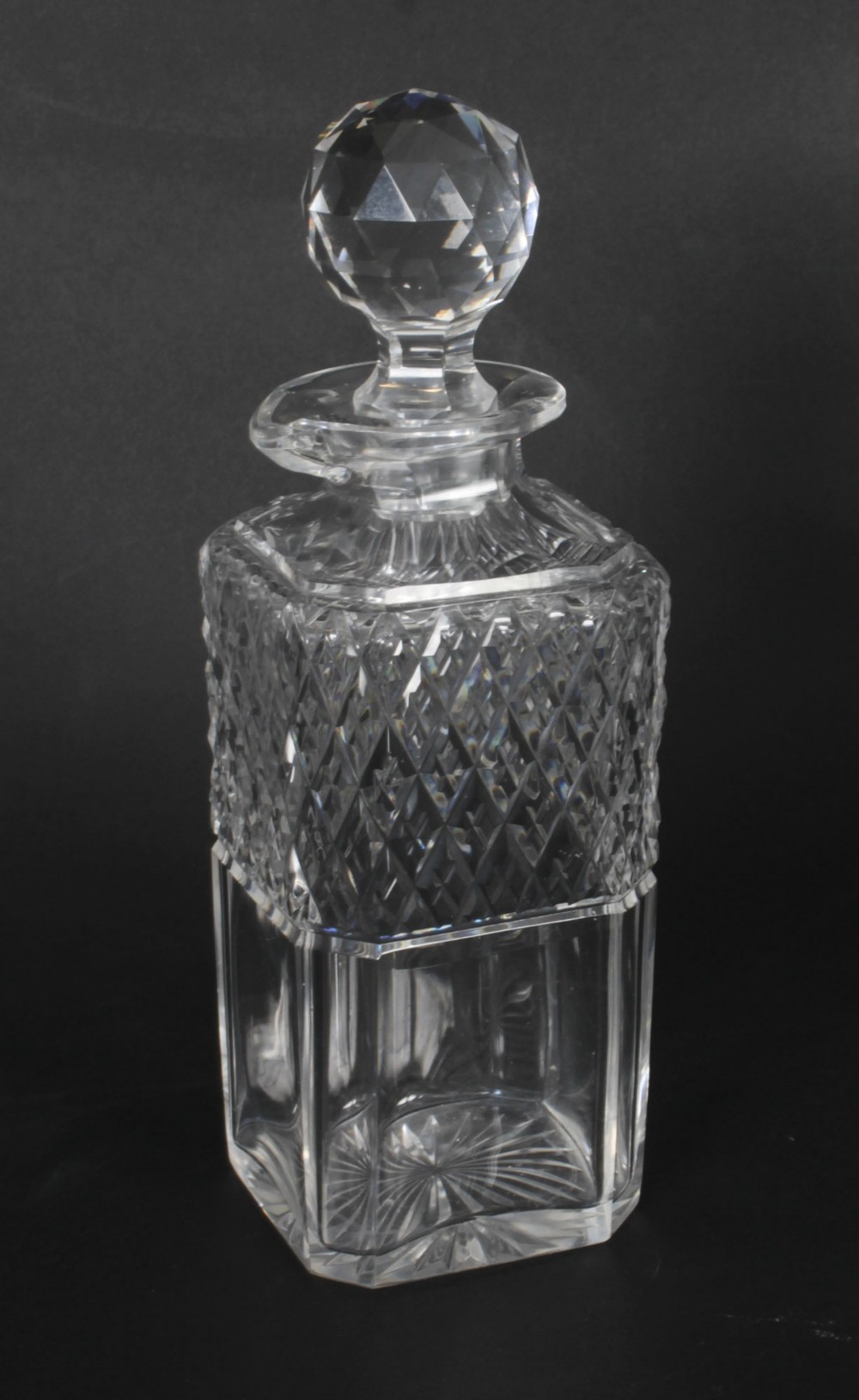
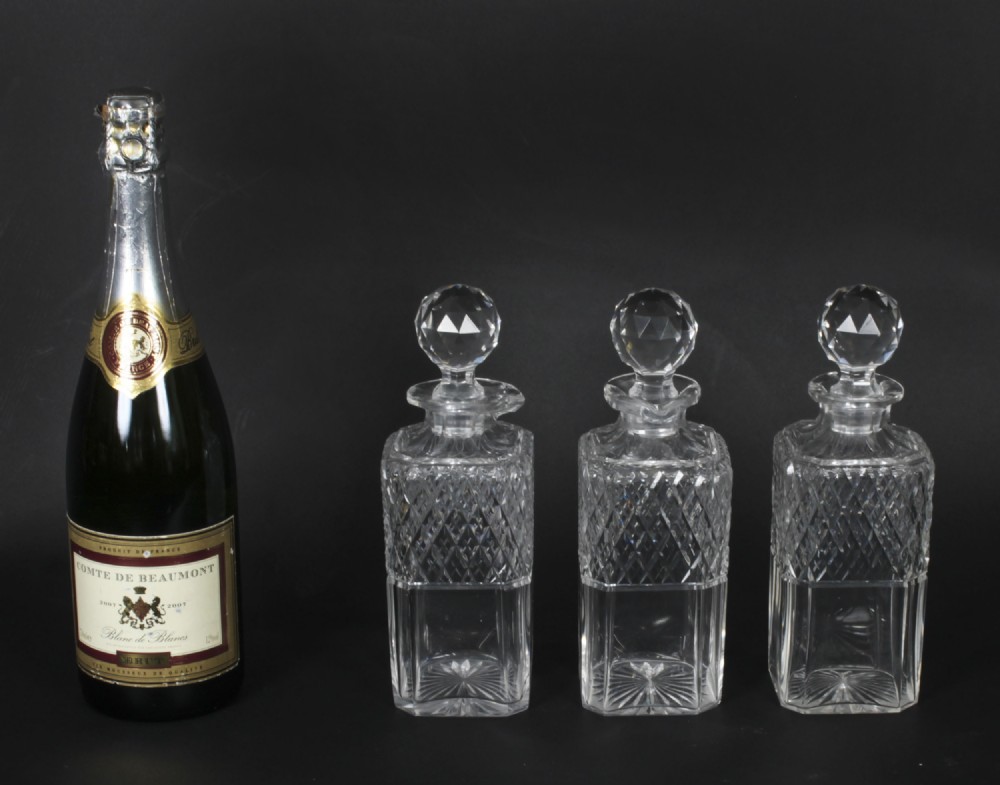
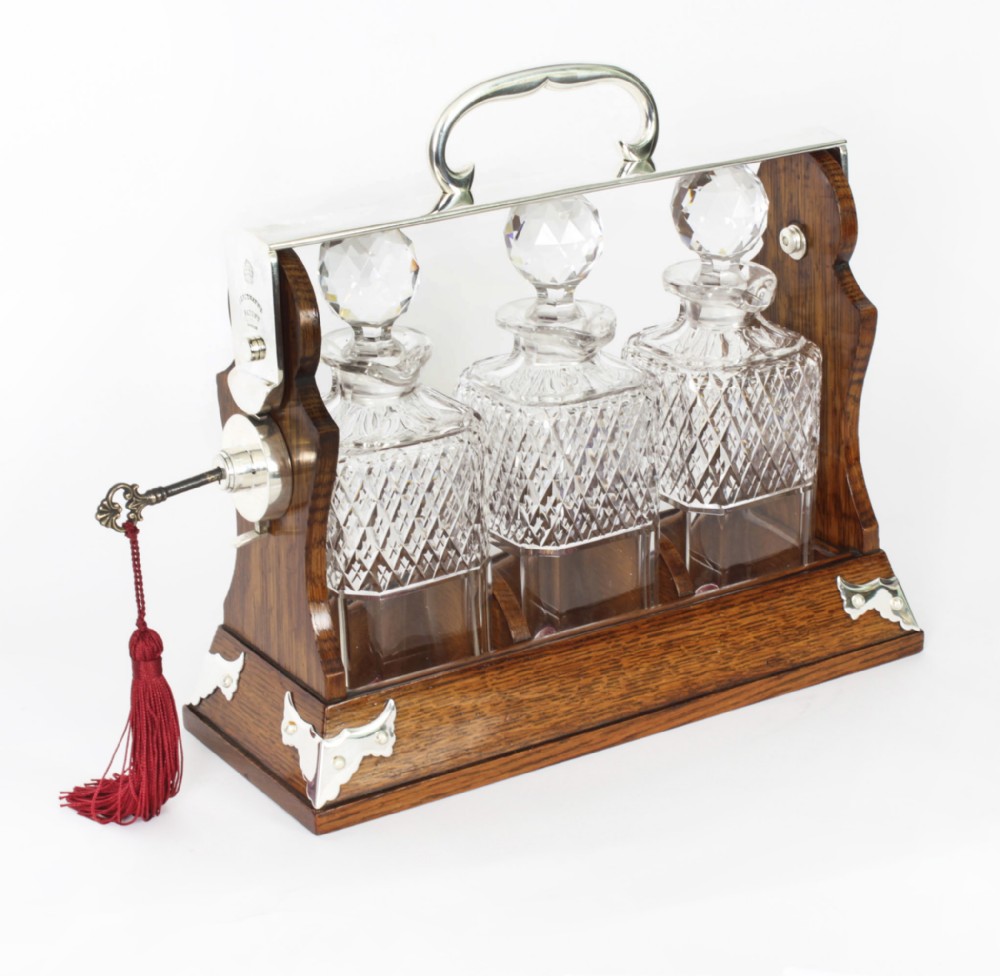
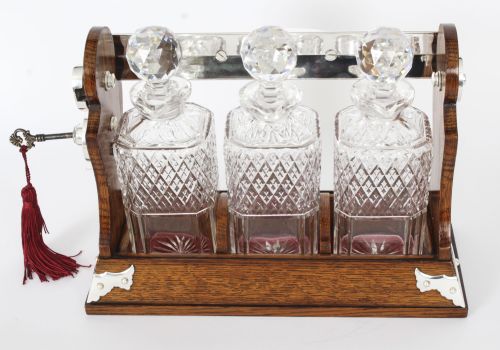
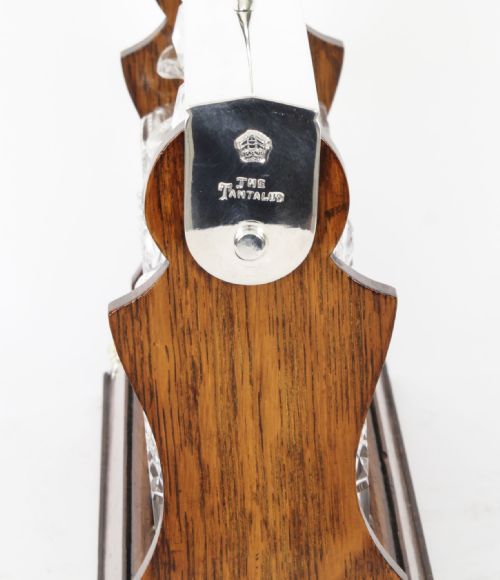
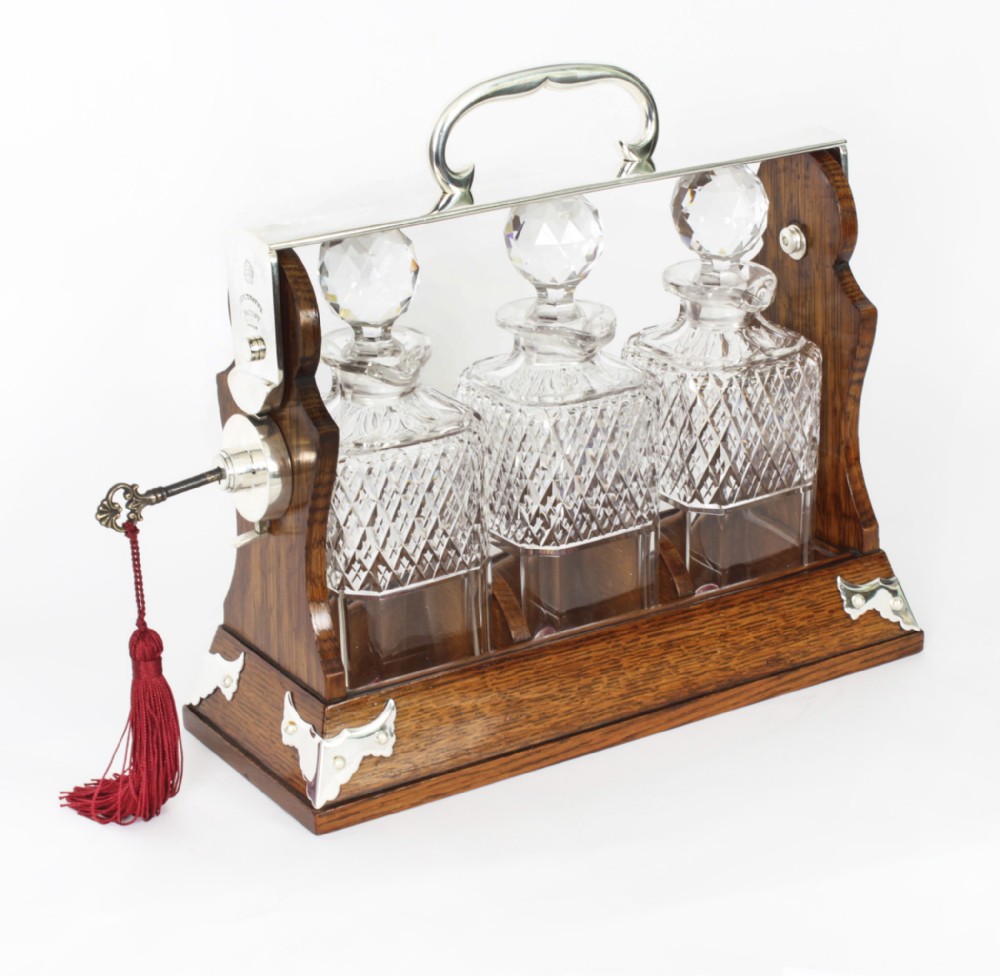
This is a superb antique Victorian oak cased three decanter Betjemann’s patent tantalus , C1870 in date.

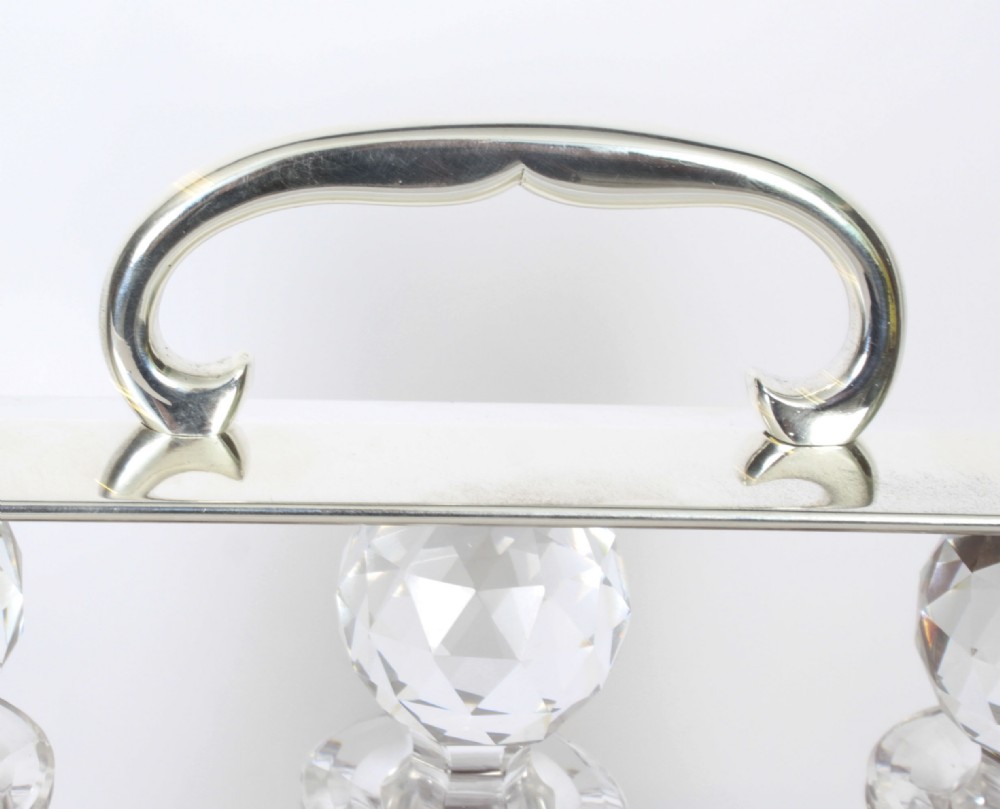
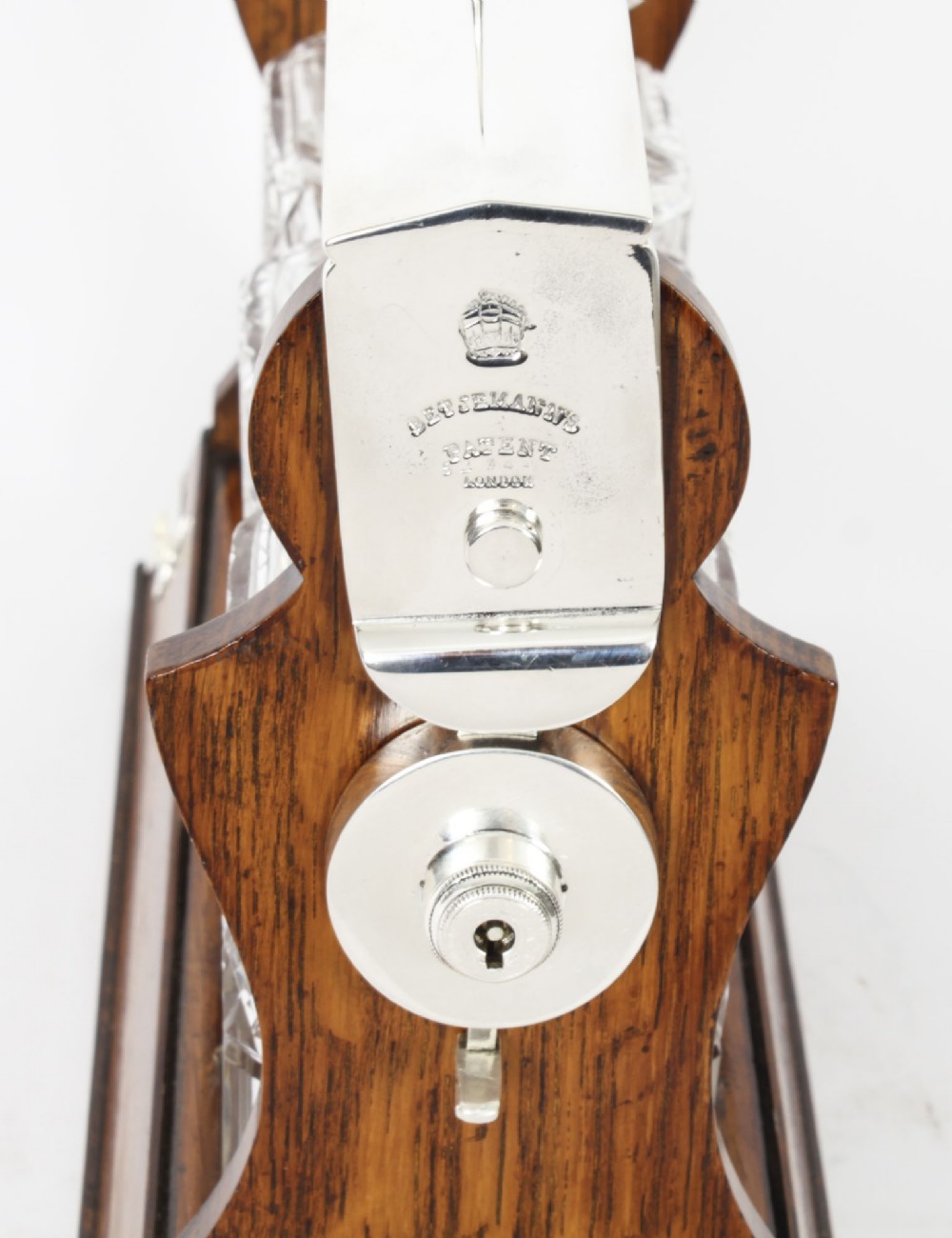
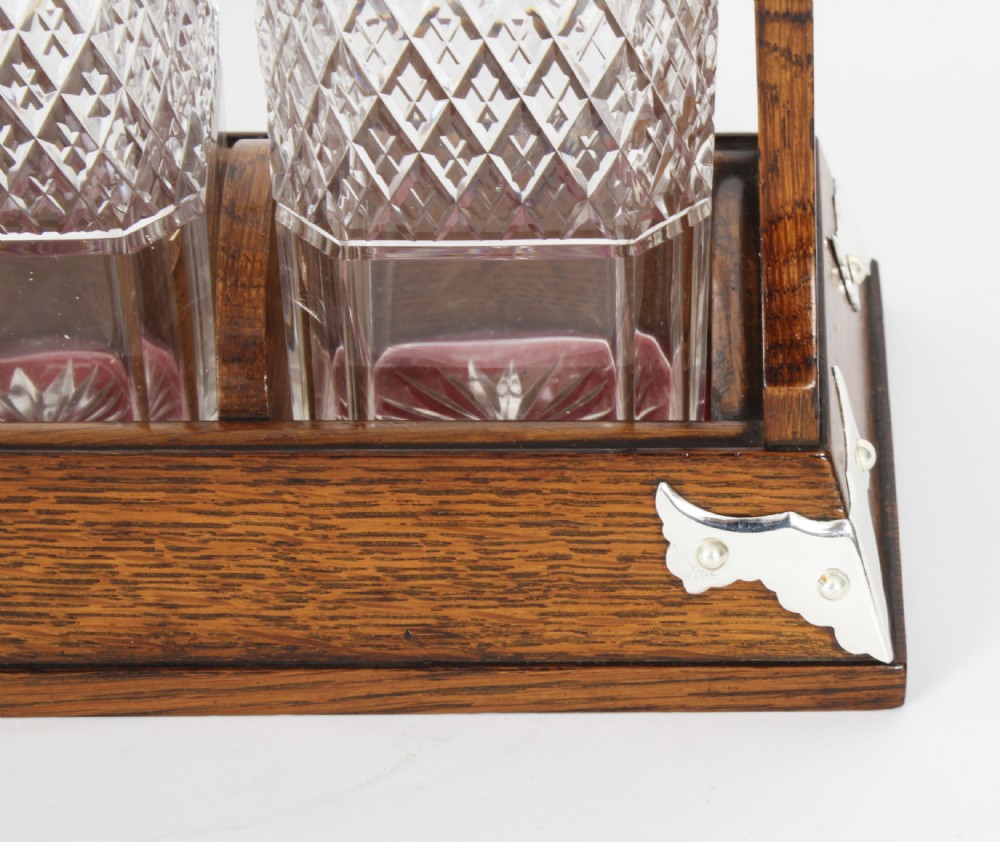
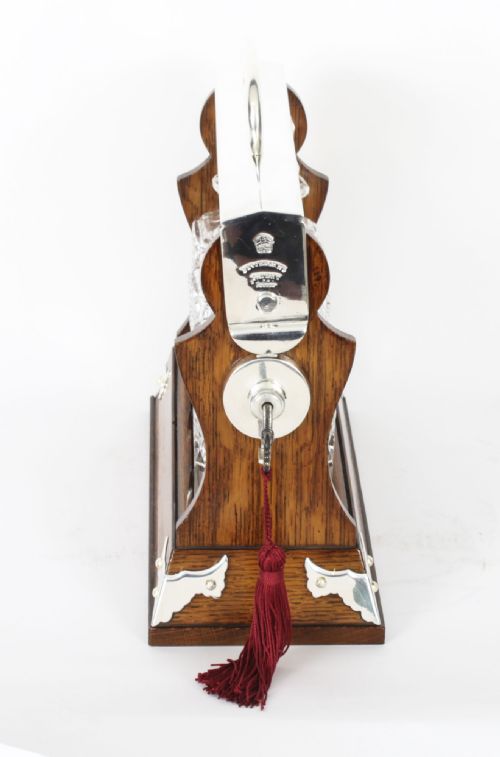
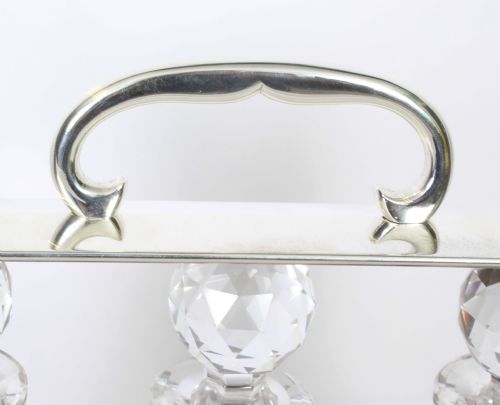
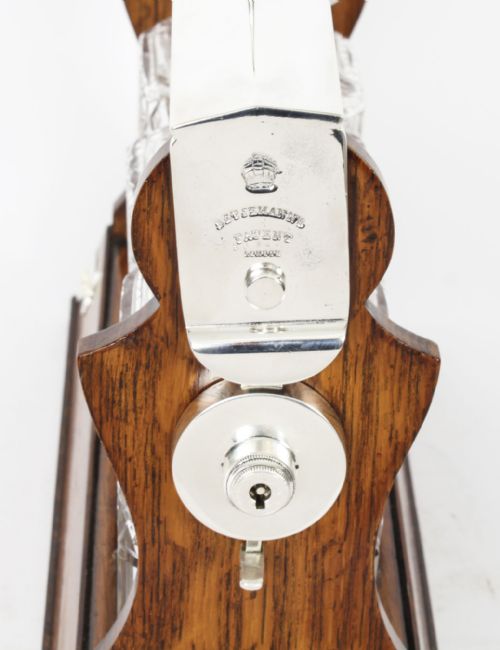
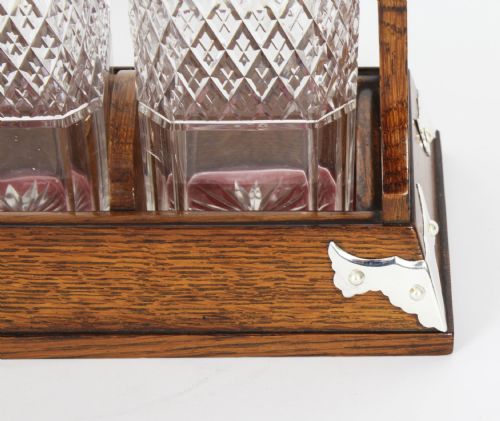
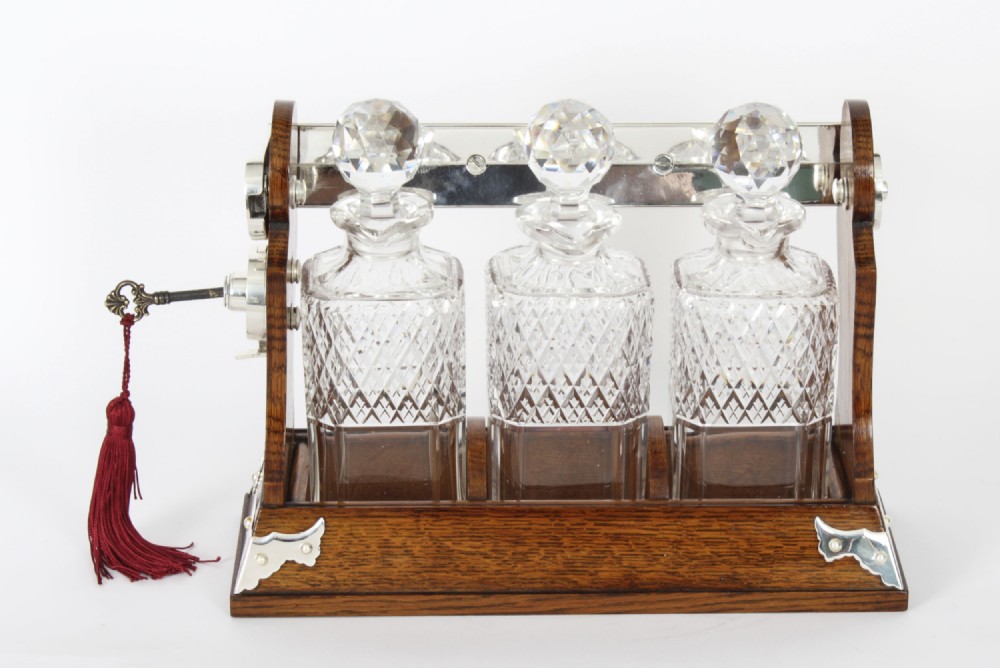
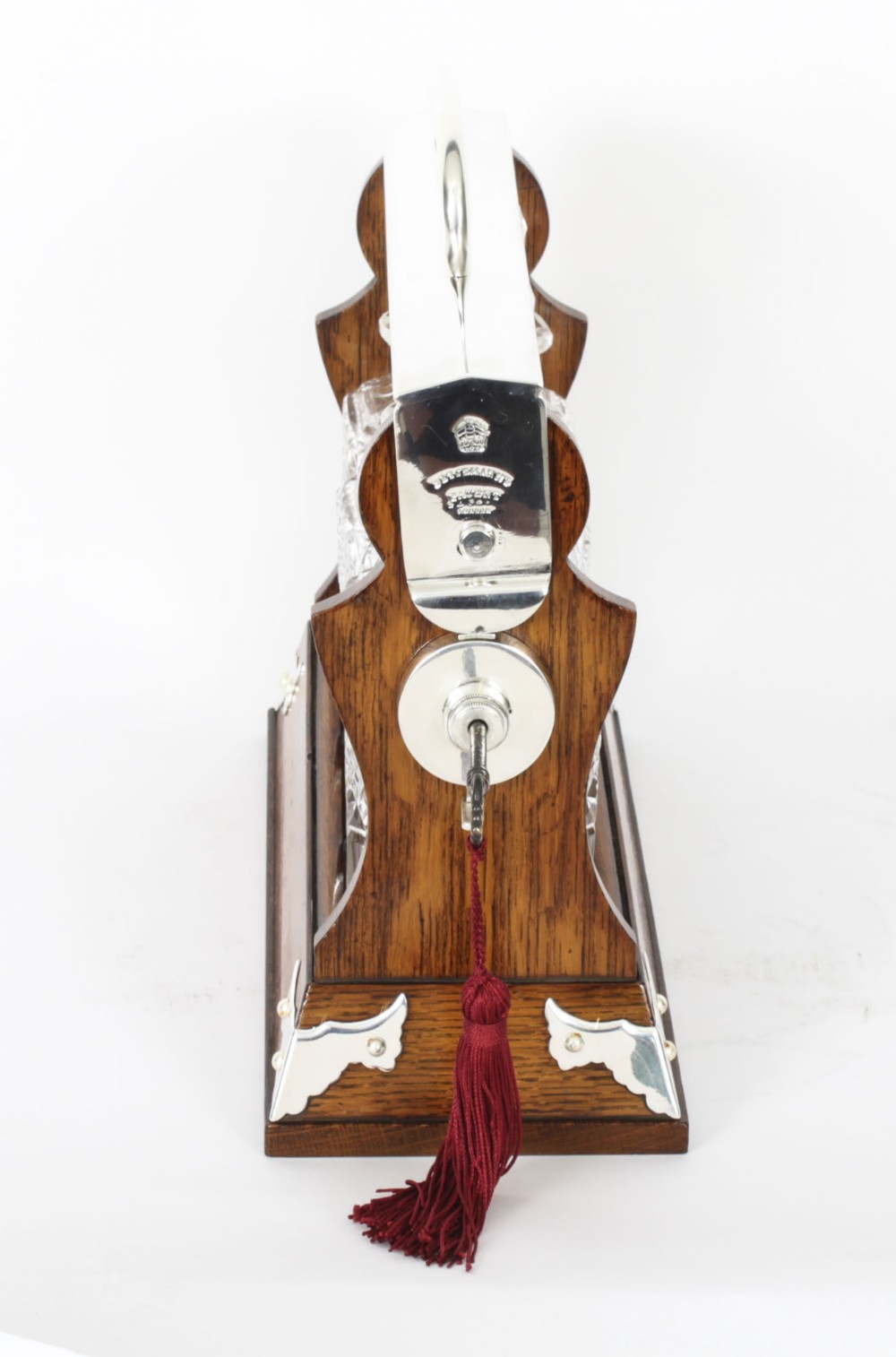
It was skillfully crafted in oak with a stylish silver plated handle with three cut crystal decanters with stoppers. It is fitted with a Betjemann’s Bramah locking system, complete with key.
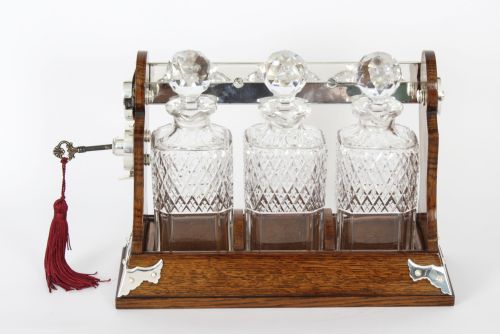
It is a decorative piece which is also very practical, and would make a lovely gift.

Condition:

In excellent condition having been beautifully cleaned and waxed in our workshops.

Dimensions in cm:

Height 29 cm x Width 32 cm x Depth 13 cm
Dimensions in inches:

Height 11 inches x Width 1 foot, 1 inch x Depth 5 inches

Betjemann & Sons

In 1812 George Betjemann started apprenticing as a cabinet maker with his uncle, Gilbert Slater at his premises on Carthusian Street, London. In 1834, George then joined his father-in-law, William Merrick’s cabinet making business on Red Lion Street, Clerkenwell, London. George brought his sons, George William Betjemann and John Betjemann to apprentice with him from 1848. He began his own business at 6 Upper Ashby Street, Clerkenwell, London, and with his two sons having completed their apprenticeships in 1855, expanded to 7 Upper Ashby Street shortly after.
In 1859, George moved into 36 Pentonville Road, London where he continued his business, now called George Betjemann & Sons, alongside his two sons. George William never married but instead was ‘married’ to his work, being a true artist and perfectionist. Their work was on display at the International Exhibition of 1862, and the International Exposition of 1867 in Paris. They took the art of cabinet, box and book slide making to new heights. They specialised in designs for operating the way that different compartments in vanity boxes opened and also the sprung system for book slides.
By 1871, they had expanded their residence to incorporate 38 Pentonville Road and were employing 119 people. Records show that by 1875 a further incorporation of 40 Pentonville Road was undertaken. George died in 1886 at the age of 88 and George William and John ran George Betjemann & Sons in partnership until John’s death in 1893. George William then established a business partnership with John’s sons, John George Betjemann and Ernest Edward Betjemann. Around 1896, John George and Ernest Edward established an offshoot company called Betjemann Brothers, based at 2 Newcastle Place, Clerkenwell, London. This company ran alongside George Betjemann & Sons until they were merged in 1903, following the death of George William. In 1909, they became a limited company, known as George Betjemann & Sons Ltd.
With Ernest’s son John (the future poet Sir John Betjeman) having no interest in carrying on the family business, George Betjemann & Sons Ltd finally wound up in 1939.

Oak

is a tree or shrub in the genus Quercus - Latin "oak tree" having approximately 600 extant species. Oak wood has a density of about 0.75 g/cm3, great strength and hardness, and is very resistant to insect and fungal attack because of its high tannin content. It also has very appealing grain markings, particularly when quartersawn. Oak wood is very durable, easy to maintain and resistant to wear and tear which is why it can be easily handed to the next generations if taken well care of.
Oak wood virtually lasts forever and you can still admire oak furniture in museums and palaces even if it was made many centuries ago. Oak has been prized since the Middle Ages for use in interior panelling of prestigious buildings such as the debating chamber of the House of Commons in London and in the construction of fine furniture.
Bramah

is London's oldest security company. Established at 124 Piccadilly, London in 1784, and today based in Marylebone, London and Romford, Essex.

Bramah made their first lock in 1784 and the patent was awarded in 1787. The designer was Joseph B

Date of Manufacture

Regent Antiques has dated this Antique Oak Tantalus to the 1870s.

Physical Dimensions
Height
29cm (11.42")
Width
32cm (12.60")
Depth
13cm (5.12")
Reference Numbers
Sellingantiques Reference
SA1084417
Dealers Internal Reference
A3997
Description
This is a superb antique Victorian oak cased three decanter Betjemann’s patent tantalus , C1870 in date.
“
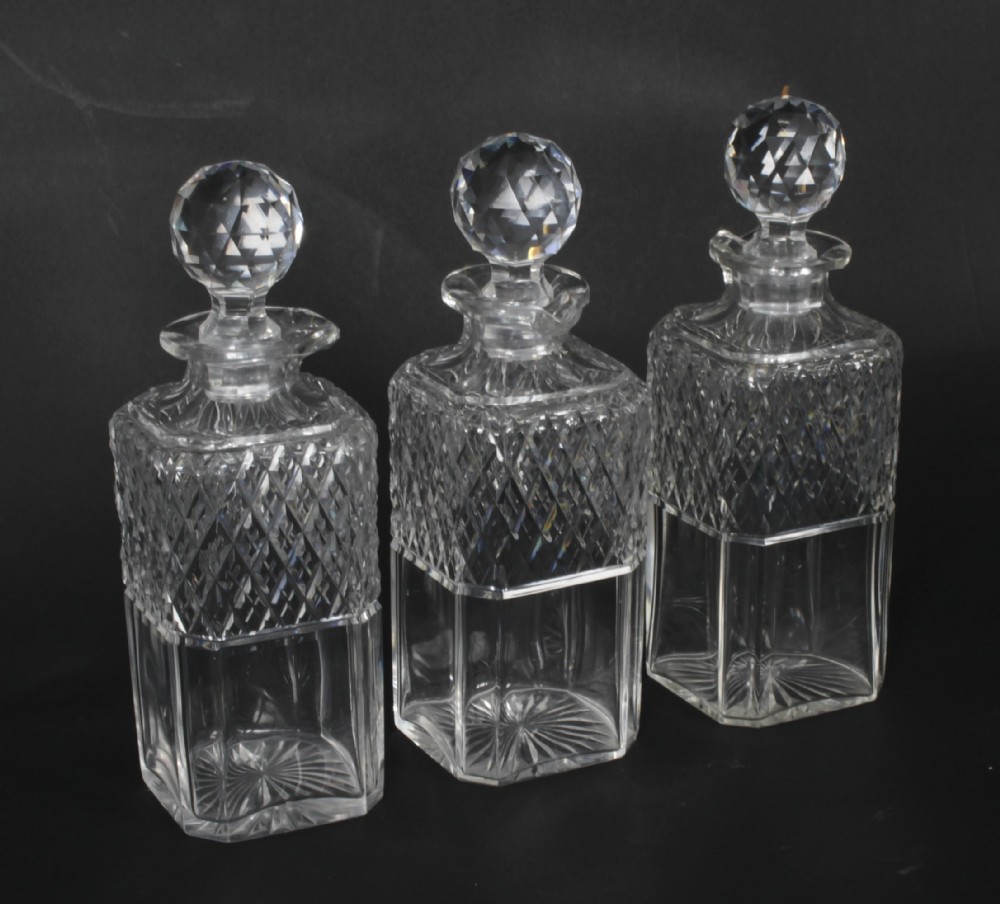
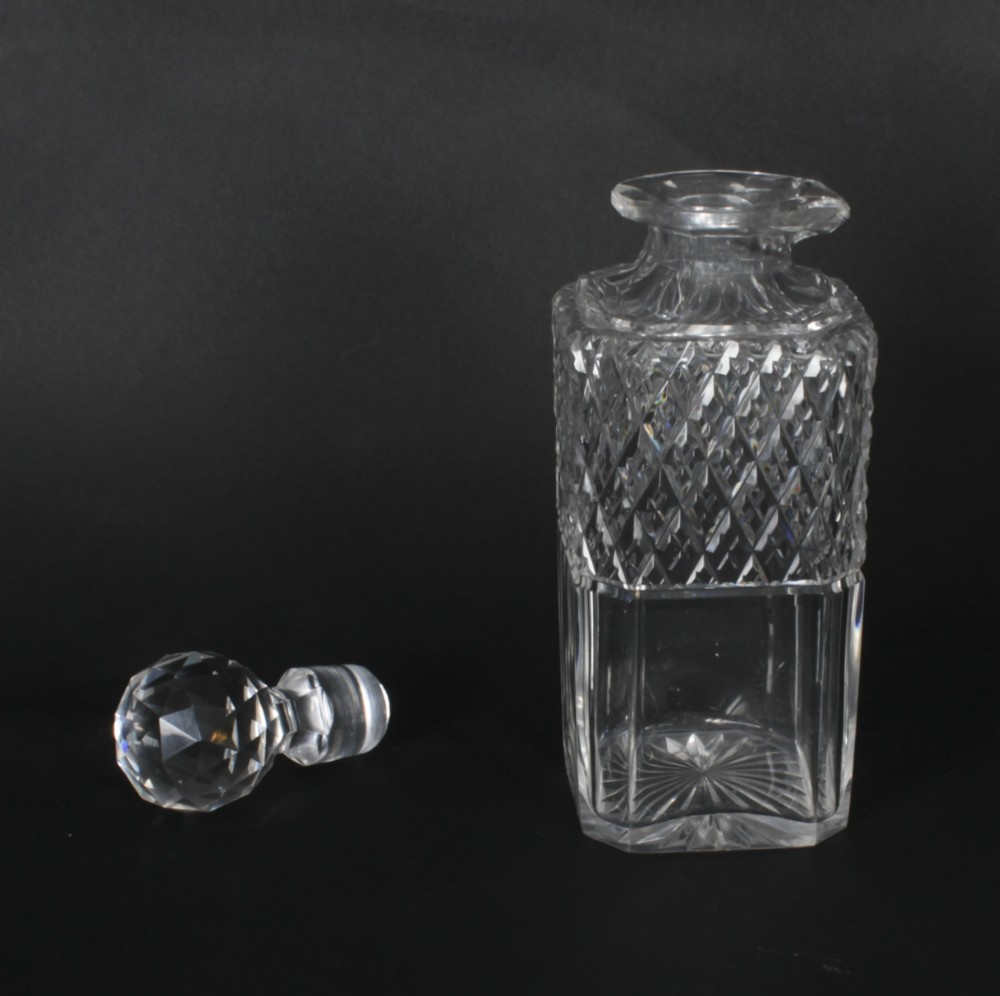
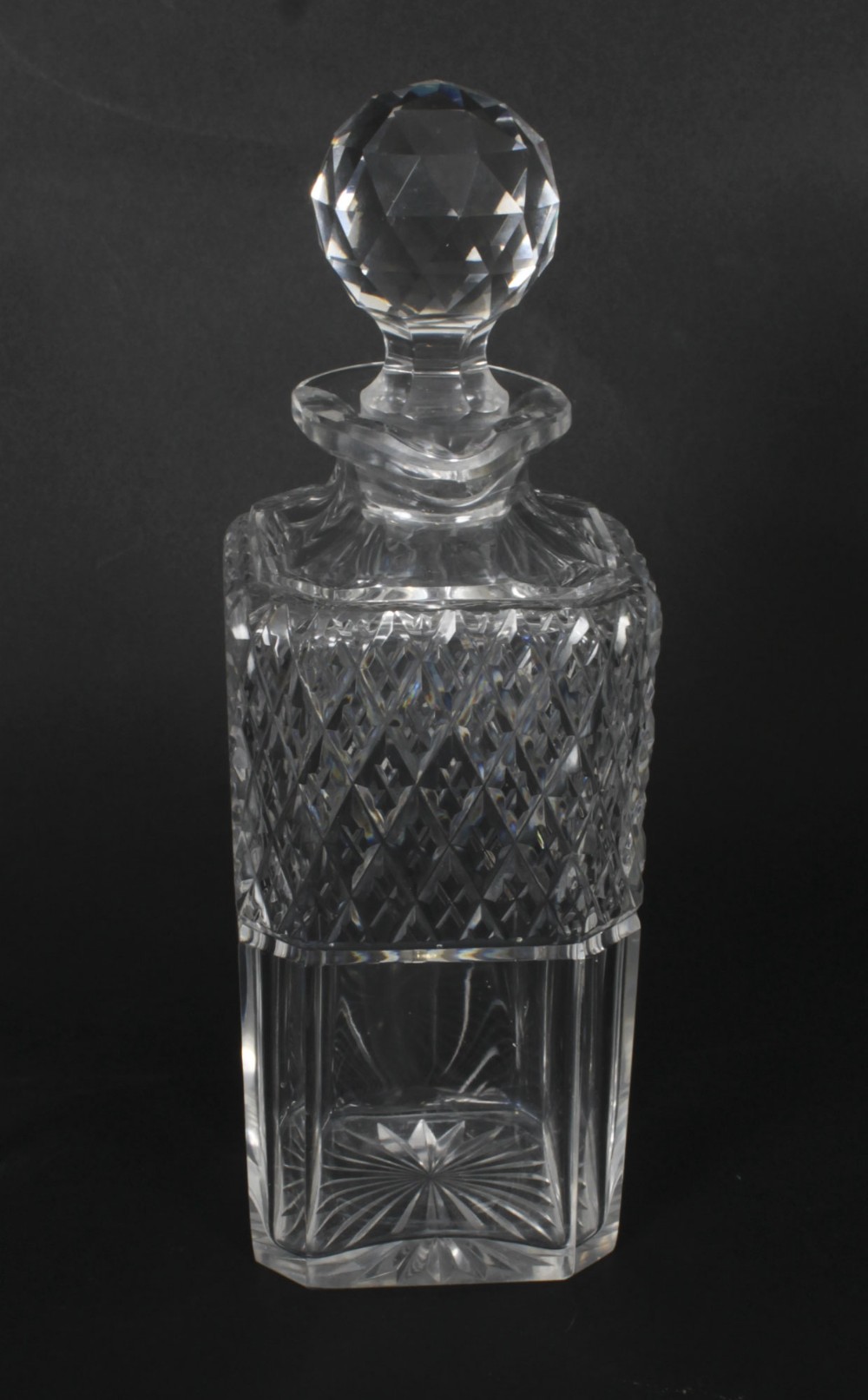
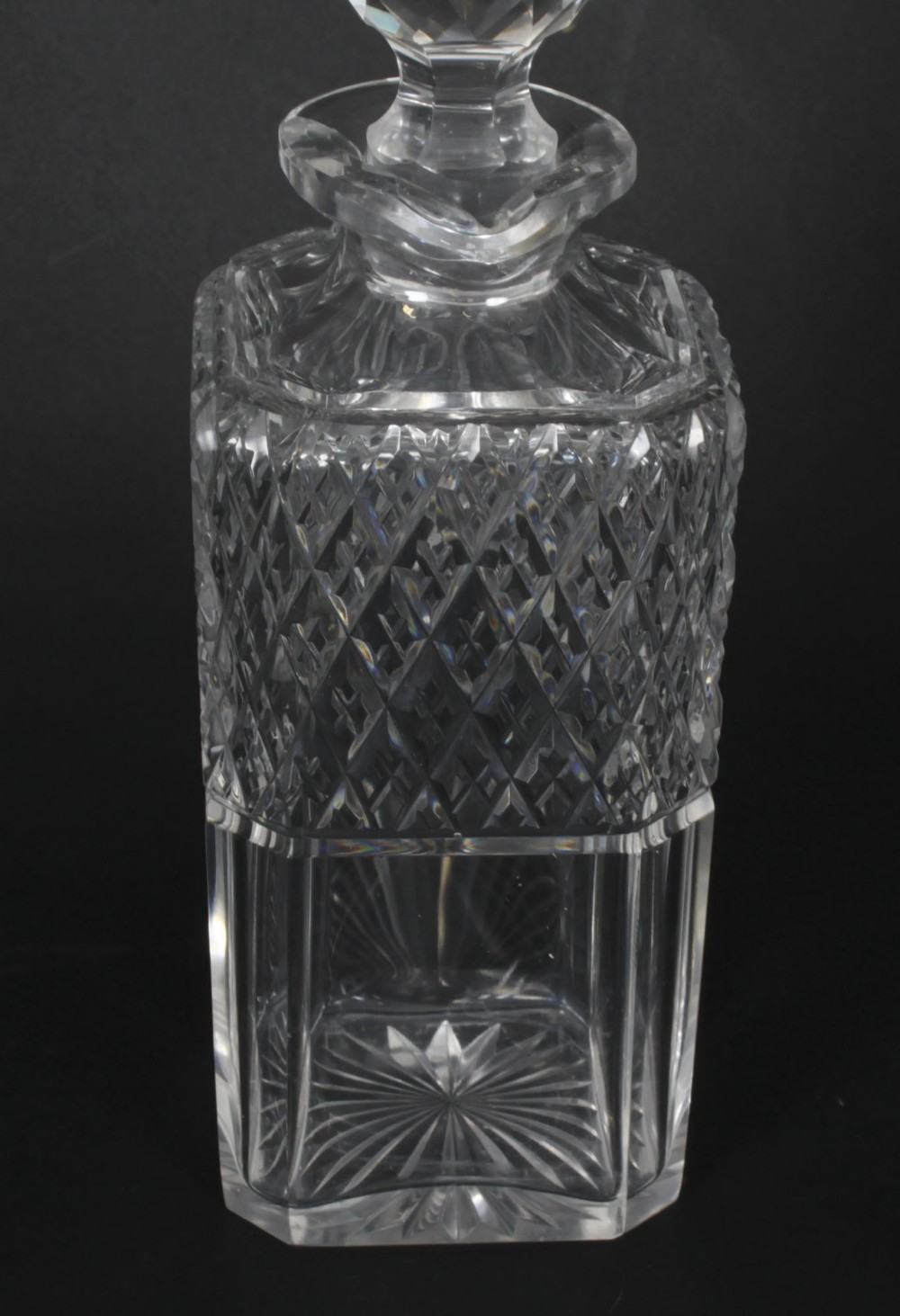
It was skillfully crafted in oak with a stylish silver plated handle with three cut crystal decanters with stoppers.
Regent Antiques

It is fitted with a Betjemann’s Bramah locking system, complete with key.

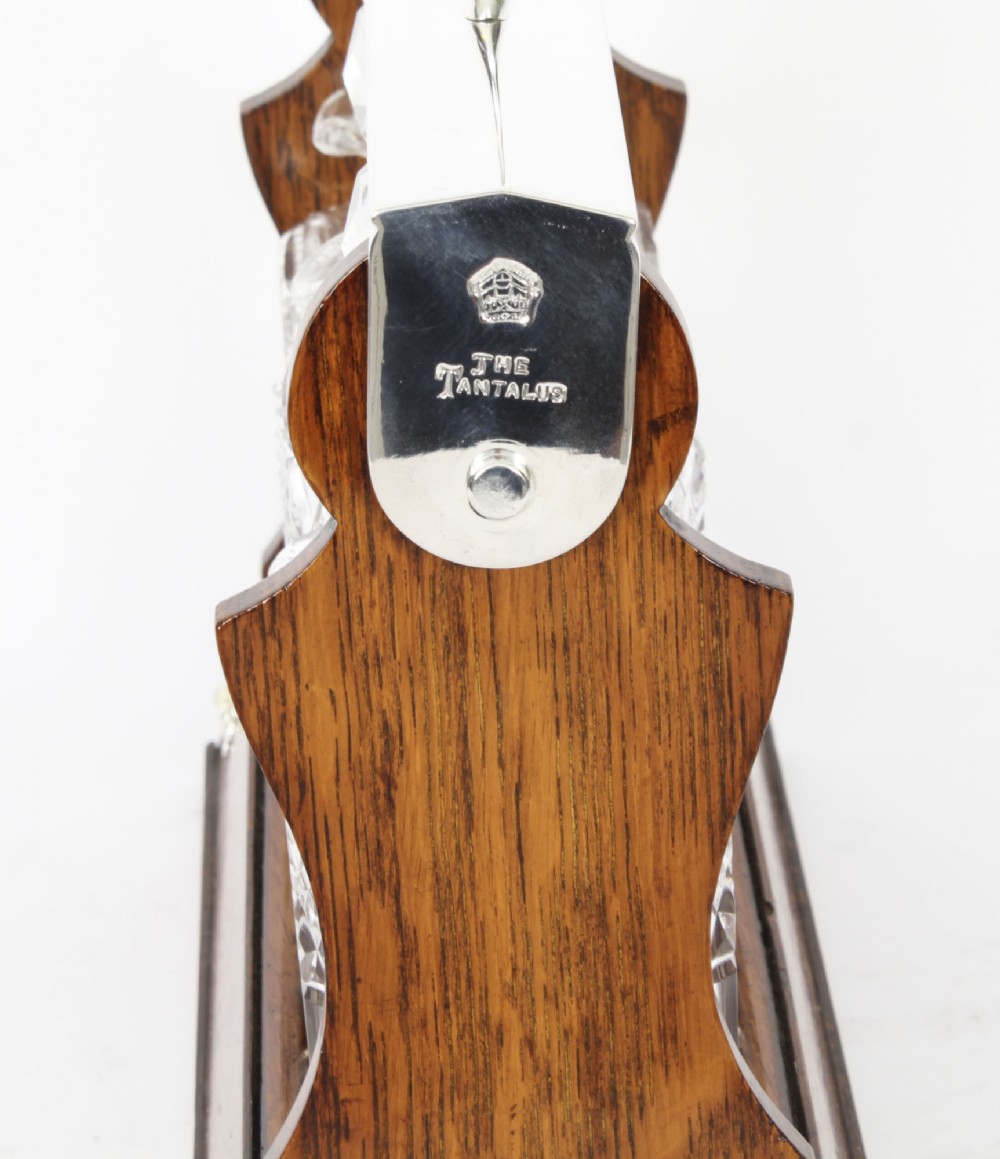
fig 1. An antique oak three-bottle tantalus featuring a locking mechanism, silver-plated mounts, a red tassel key, and three cut crystal decanters.
fig 1. Antique Betjemann’s Oak Three Cut Crystal Decanter Tantalus C1870 19th C

It is a decorative piece which is also very practical, and would make a lovely gift.

Condition:

In excellent condition having been beautifully cleaned and waxed in our workshops.

Dimensions in cm:

Height 29 cm x Width 32 cm x Depth 13 cm

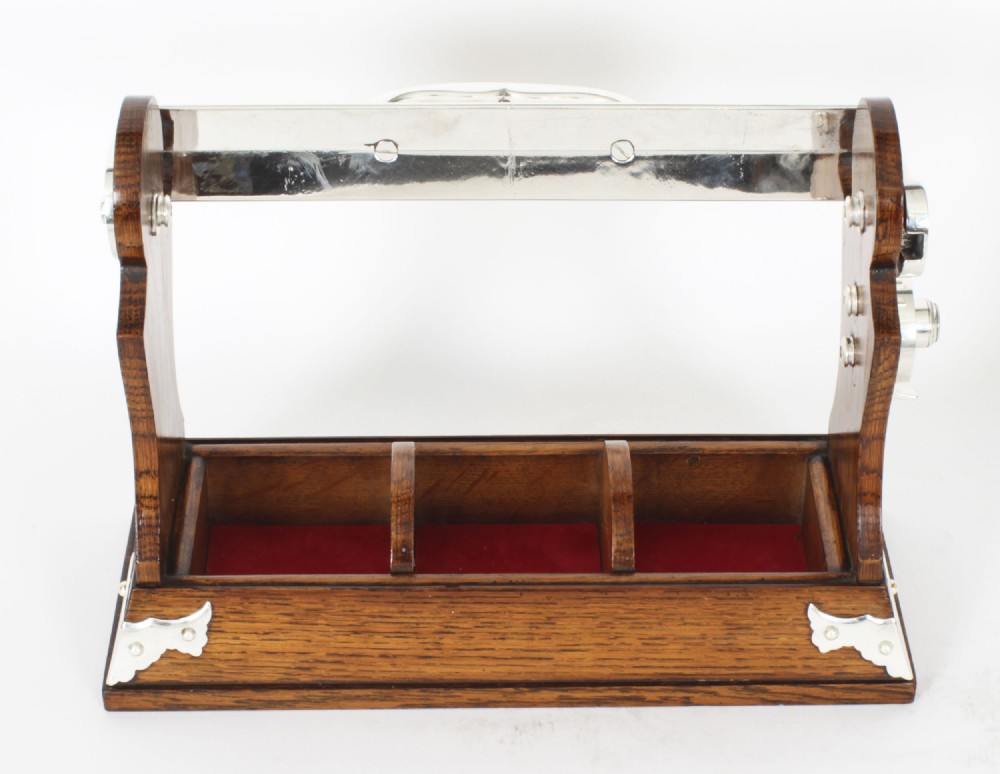
fig 2. An antique oak three-bottle tantalus featuring a locking mechanism, silver-plated mounts, a red tassel key, and three cut crystal decanters.
fig 2. Antique Betjemann’s Oak Three Cut Crystal Decanter Tantalus C1870 19th C

Dimensions in inches:

Height 11 inches x Width 1 foot, 1 inch x Depth 5 inches

Betjemann & Sons

In 1812 George Betjemann started apprenticing as a cabinet maker with his uncle, Gilbert Slater at his premises on Carthusian Street, London. In 1834, George then joined his father-in-law, William Merrick’s cabinet making business on Red Lion Street, Clerkenwell, London. George brought his sons, George William Betjemann and John Betjemann to apprentice with him from 1848. He began his own business at 6 Upper Ashby Street, Clerkenwell, London, and with his two sons having completed their apprenticeships in 1855, expanded to 7 Upper Ashby Street shortly after.

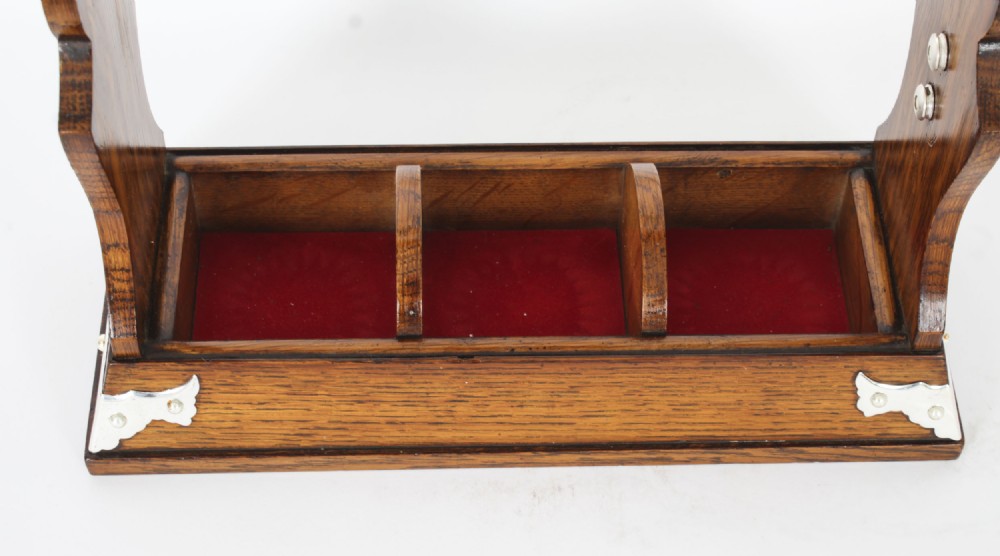
fig 3. An antique oak three-bottle tantalus featuring a locking mechanism, silver-plated mounts, a red tassel key, and three cut crystal decanters.
fig 3. Antique Betjemann’s Oak Three Cut Crystal Decanter Tantalus C1870 19th C

In 1859, George moved into 36 Pentonville Road, London where he continued his business, now called George Betjemann & Sons, alongside his two sons. George William never married but instead was ‘married’ to his work, being a true artist and perfectionist. Their work was on display at the International Exhibition of 1862, and the International Exposition of 1867 in Paris. They took the art of cabinet, box and book slide making to new heights. They specialised in designs for operating the way that different compartments in vanity boxes opened and also the sprung system for book slides.

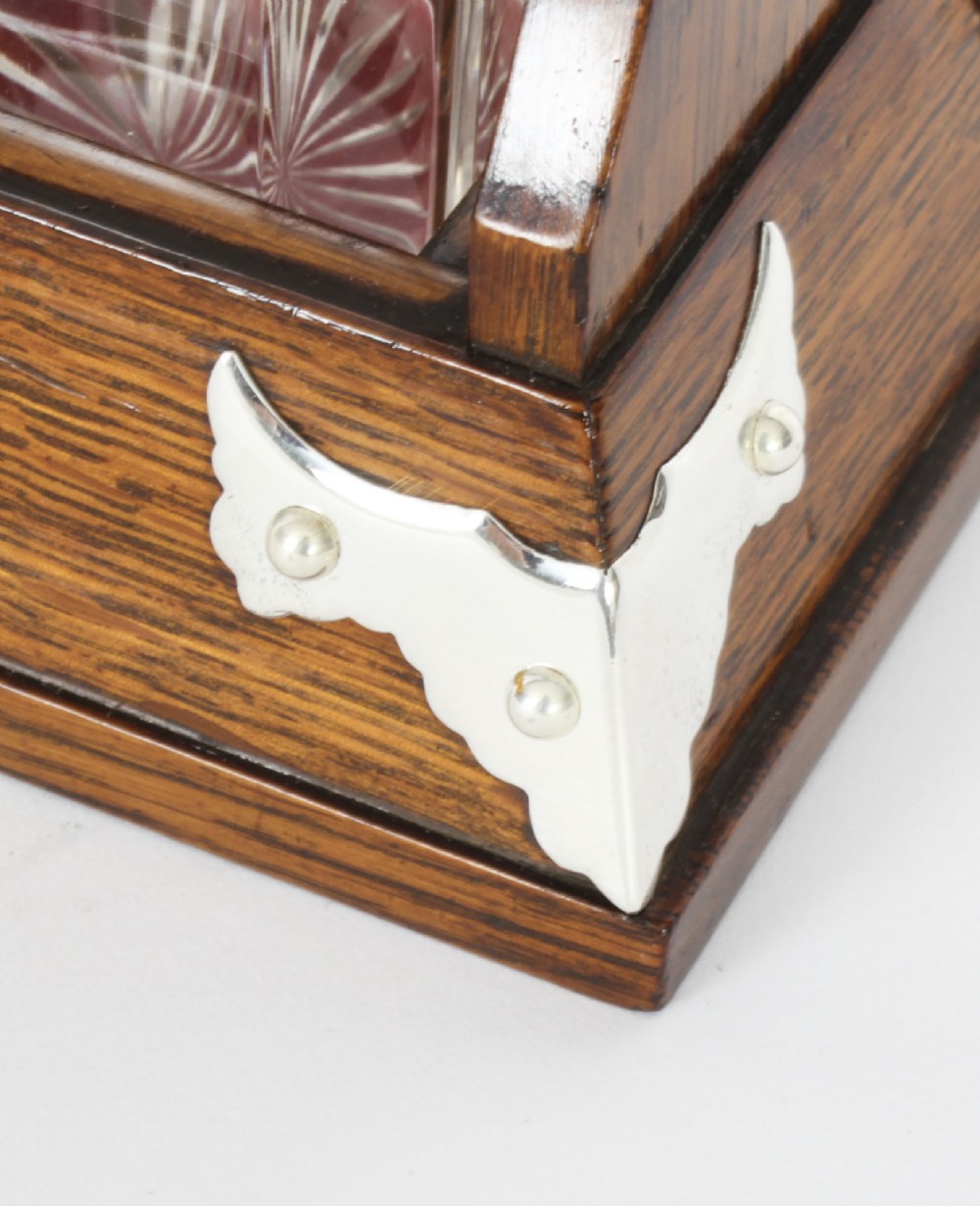
fig 4. An antique oak three-bottle tantalus featuring a locking mechanism, silver-plated mounts, a red tassel key, and three cut crystal decanters.
fig 4. Antique Betjemann’s Oak Three Cut Crystal Decanter Tantalus C1870 19th C

By 1871, they had expanded their residence to incorporate 38 Pentonville Road and were employing 119 people. Records show that by 1875 a further incorporation of 40 Pentonville Road was undertaken. George died in 1886 at the age of 88 and George William and John ran George Betjemann & Sons in partnership until John’s death in 1893. George William then established a business partnership with John’s sons, John George Betjemann and Ernest Edward Betjemann. Around 1896, John George and Ernest Edward established an offshoot company called Betjemann Brothers, based at 2 Newcastle Place, Clerkenwell, London. This company ran alongside George Betjemann & Sons until they were merged in 1903, following the death of George William. In 1909, they became a limited company, known as George Betjemann & Sons Ltd.

fig 5. An antique oak three-bottle tantalus featuring a locking mechanism, silver-plated mounts, a red tassel key, and three cut crystal decanters.
fig 5. Antique Betjemann’s Oak Three Cut Crystal Decanter Tantalus C1870 19th C

With Ernest’s son John (the future poet Sir John Betjeman) having no interest in carrying on the family business, George Betjemann & Sons Ltd finally wound up in 1939.

Oak

is a tree or shrub in the genus Quercus - Latin "oak tree" having approximately 600 extant species. Oak wood has a density of about 0.75 g/cm3, great strength and hardness, and is very resistant to insect and fungal attack because of its high tannin content. It also has very appealing grain markings, particularly when quartersawn. Oak wood is very durable, easy to maintain and resistant to wear and tear which is why it can be easily handed to the next generations if taken well care of.

fig 6. An antique oak three-bottle tantalus featuring a locking mechanism, silver-plated mounts, a red tassel key, and three cut crystal decanters.
fig 6. Antique Betjemann’s Oak Three Cut Crystal Decanter Tantalus C1870 19th C

Oak wood virtually lasts forever and you can still admire oak furniture in museums and palaces even if it was made many centuries ago. Oak has been prized since the Middle Ages for use in interior panelling of prestigious buildings such as the debating chamber of the House of Commons in London and in the construction of fine furniture.

fig 7. An antique oak three-bottle tantalus featuring a locking mechanism, silver-plated mounts, a red tassel key, and three cut crystal decanters.
fig 7. Antique Betjemann’s Oak Three Cut Crystal Decanter Tantalus C1870 19th C

Bramah

is London's oldest security company. Established at 124 Piccadilly, London in 1784, and today based in Marylebone, London and Romford, Essex.

Bramah made their first lock in 1784 and the patent was awarded in 1787. The designer was Joseph B

Date of Manufacture

Regent Antiques has dated this Antique Oak Tantalus to the 1870s.

Height
29cm (11.42")
Width
32cm (12.60")
Depth
13cm (5.12")
Reference Numbers
Sellingantiques Ref
SA1084417
Dealers Internal Ref
A3997
Regent Antiques
Regent Antiques
Sellingantiques verified Since Sep 2016

We specialise in english and continental furniture, silver, porcelain and decorative items.

Dealer Profile

You can view the stock and full dealer information on the Regent Antiques Profile Page

Trade Associations

Regent Antiques is a registered member of LAPADA  CINOA
PDF SHARE
SAVE
An antique oak three-bottle tantalus featuring a locking mechanism, silver-plated mounts, a red tassel key, and three cut crystal decanters. SOLD6+ MONTHS AGO
1 / 20
Archive I An antique oak three-bottle tantalus featuring a locking mechanism, silver-plated mounts, a red tassel key, and three cut crystal decanters. SOLD6+ MONTHS AGO

Antique Betjemann’s Oak Three Cut Crystal Decanter Tantalus C1870 19th C
Archive II An antique oak three-bottle tantalus featuring a locking mechanism, silver-plated mounts, a red tassel key, and three cut crystal decanters. View II
Archive III An antique oak three-bottle tantalus featuring a locking mechanism, silver-plated mounts, a red tassel key, and three cut crystal decanters. View III
Archive IV An antique oak three-bottle tantalus featuring a locking mechanism, silver-plated mounts, a red tassel key, and three cut crystal decanters. View IV
Archive V An antique oak three-bottle tantalus featuring a locking mechanism, silver-plated mounts, a red tassel key, and three cut crystal decanters. View V
Archive VI An antique oak three-bottle tantalus featuring a locking mechanism, silver-plated mounts, a red tassel key, and three cut crystal decanters. View VI
Archive VII An antique oak three-bottle tantalus featuring a locking mechanism, silver-plated mounts, a red tassel key, and three cut crystal decanters. View VII
Archive VIII An antique oak three-bottle tantalus featuring a locking mechanism, silver-plated mounts, a red tassel key, and three cut crystal decanters. View VIII
Archive IX An antique oak three-bottle tantalus featuring a locking mechanism, silver-plated mounts, a red tassel key, and three cut crystal decanters. View IX
Archive X An antique oak three-bottle tantalus featuring a locking mechanism, silver-plated mounts, a red tassel key, and three cut crystal decanters. View X
Archive XI An antique oak three-bottle tantalus featuring a locking mechanism, silver-plated mounts, a red tassel key, and three cut crystal decanters. View XI
Archive XII An antique oak three-bottle tantalus featuring a locking mechanism, silver-plated mounts, a red tassel key, and three cut crystal decanters. View XII
Archive XIII An antique oak three-bottle tantalus featuring a locking mechanism, silver-plated mounts, a red tassel key, and three cut crystal decanters. View XIII
Archive XIV An antique oak three-bottle tantalus featuring a locking mechanism, silver-plated mounts, a red tassel key, and three cut crystal decanters. View XIV
Archive XV An antique oak three-bottle tantalus featuring a locking mechanism, silver-plated mounts, a red tassel key, and three cut crystal decanters. View XV
Archive XVI An antique oak three-bottle tantalus featuring a locking mechanism, silver-plated mounts, a red tassel key, and three cut crystal decanters. View XVI
Archive XVII An antique oak three-bottle tantalus featuring a locking mechanism, silver-plated mounts, a red tassel key, and three cut crystal decanters. View XVII
Archive XVIII An antique oak three-bottle tantalus featuring a locking mechanism, silver-plated mounts, a red tassel key, and three cut crystal decanters. View XVIII
Archive XIX An antique oak three-bottle tantalus featuring a locking mechanism, silver-plated mounts, a red tassel key, and three cut crystal decanters. View XIX
Archive XX An antique oak three-bottle tantalus featuring a locking mechanism, silver-plated mounts, a red tassel key, and three cut crystal decanters. View XX
Enlarged Archival View
Location
Manor Warehouse
318 Green Lanes
London
N4 1BX
United Kingdom
Verified Since Sep 2016
Items For Sale 637
Items Sold 2,752
Regent Antiques
Regent Antiques
Verified Since Sep 2016
View Dealer Info
Location: Manor Warehouse, 318 Green Lanes, London, N4 1BX, United Kingdom
Verified
Sep 2016
For Sale
637
Sold
2,752
An antique oak three-bottle tantalus featuring a locking mechanism, silver-plated mounts, a red tassel key, and three cut crystal decanters.
Antique Betjemann’s Oak Three Cut Crystal Decanter Tantalus C1870 19th C
Ref: SA1084417
An antique oak three-bottle tantalus featuring a locking mechanism, silver-plated mounts, a red tassel key, and three cut crystal decanters.
Detail View 1
Detail View 2
Detail View 3
Detail View 4
Detail View 5
Detail View 6
Detail View 7
Detail View 8
Detail View 9
Detail View 10
Detail View 11
Detail View 12
Detail View 13
Detail View 14
Detail View 15
Detail View 16
Detail View 17
Detail View 18
Detail View 19
Archival Detail
Every single antique dealer on our platform is individually approved by our internal team. We verify their professional trade history, ethical standards, and photographic quality to ensure a secure, high-standard buying environment. Upon joining, every dealer agrees to a strict 9-point code of conduct. While issues can occasionally arise, our dealers typically resolve them swiftly and directly with the buyer. In fact, since our founding in 2002, Sellingantiques has only had to step in to help resolve an issue on roughly five occasions—a true testament to the quality of our dealers and their dedication to your happiness.
Our dealers are highly experienced in packing and shipping fragile, high-value antiques. Because you are in direct contact with the dealer, you will be able to easily go through all available shipping and insurance options together to ensure your item arrives safely.
Antiques are the ultimate green purchase. By choosing historical pieces over newly manufactured goods, you completely eliminate the carbon footprint of modern mass production while preserving exceptional, timeless craftsmanship.
Written by Sellingantiques from the dealer’s photographs and listing
  • ObjectBarware
  • Period19th century
  • StyleVictorian
  • MaterialOak, Cut Crystal, Silver-Plated Metal
  • ColourWarm Brown
  • MotifsLocking security bar, Diamond-cut crystal pattern, Silver-plated corner mounts, Turned wooden base
  • SizeH 29 cm (11 in) x W 32 cm (13 in) x D 13 cm (5 in)

A tantalus is a locking drinks cabinet designed to hold decanters securely while preventing unauthorized access to the contents. Patented by George Betjemann in the late 19th century, they became popular fixtures in Victorian and Edwardian middle-class homes.

Traditional tantalus units typically feature a sturdy wooden base and frame made from oak, walnut, or mahogany, fitted with silver-plated or nickel-plated brass locking mechanisms, and accompanied by cut crystal decanters.

Authentic period pieces often feature maker marks such as Betjemanns patent stamps on the locking mechanism, high-quality heavy-gauge silver plating, hand-cut crystal decanters with star-cut bases, and precise dovetail or tongue-and-groove joinery in the wooden frame.

This type of accessory works well placed upon a sideboard, home bar, or office credenza, serving as a functional focal point that bridges traditional craftsmanship with sophisticated entertaining spaces.

The wooden frame should be dusted regularly and treated periodically with microcrystalline wax to nourish the grain, while the crystal decanters ought to be hand-washed in lukewarm water using a mild detergent and dried with a lint-free cloth.
items
Add keywords to the filter
Price
£100
£250000
Era
Period
Style
Material
Origin
Stock Location
Recently Added
Online Payments
Categories