It was listed by Exhibit Antiques. Sold pieces stay on Sellingantiques as a record of what has passed through, and the next one is rarely far away.
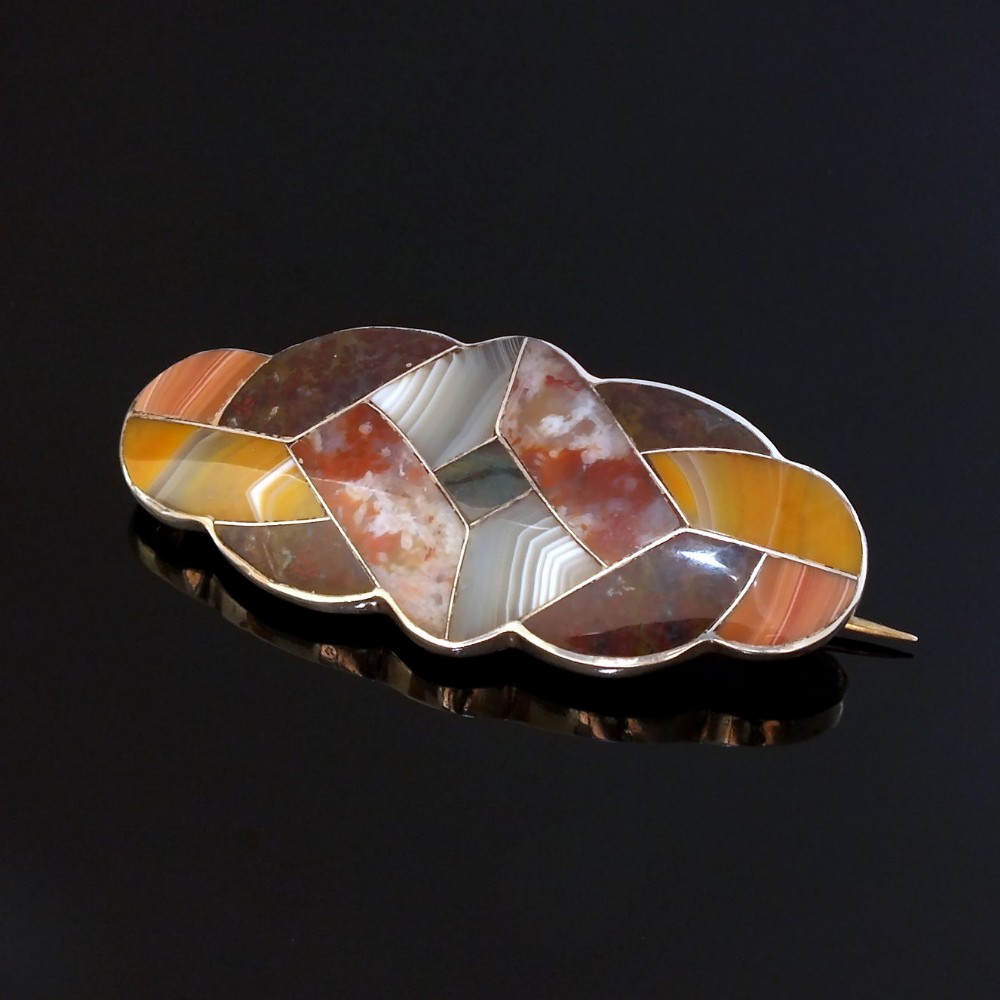
Exhibit Antiques has dated this Victorian Scottish Pebble Brooch to the 1850s.
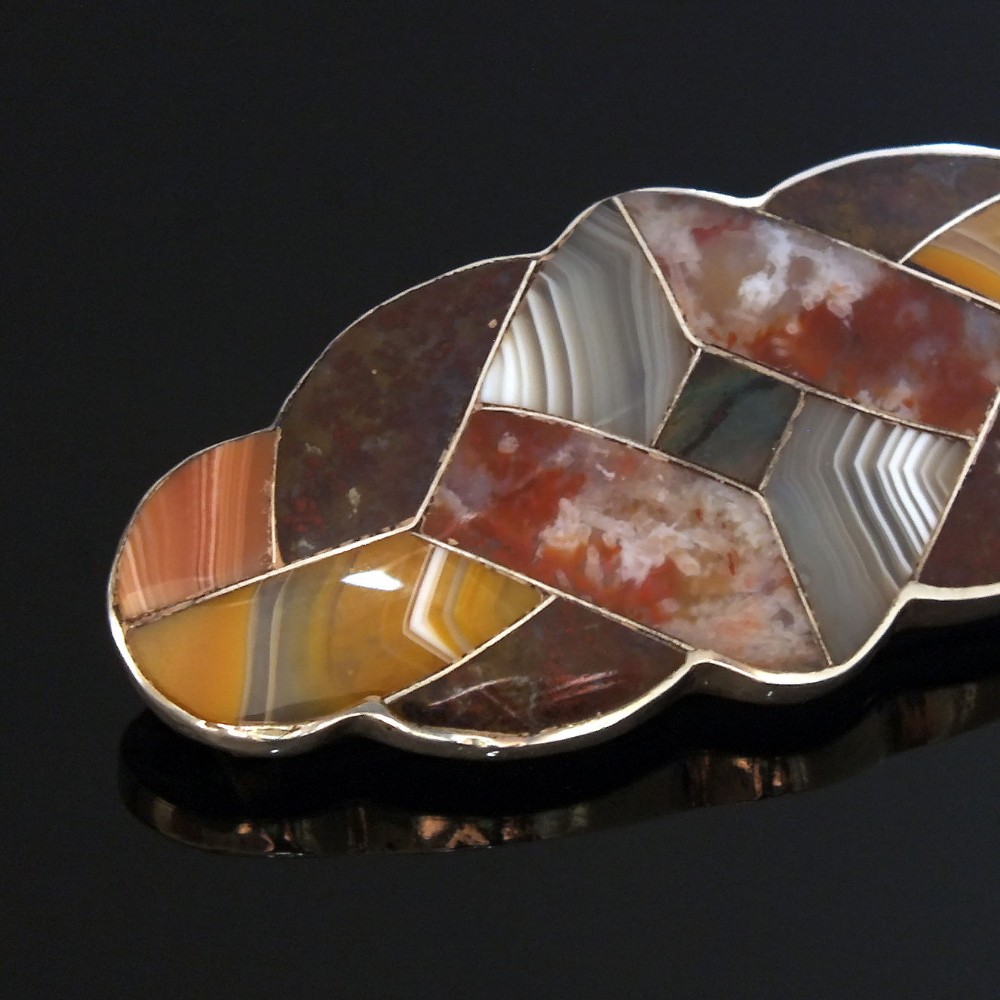
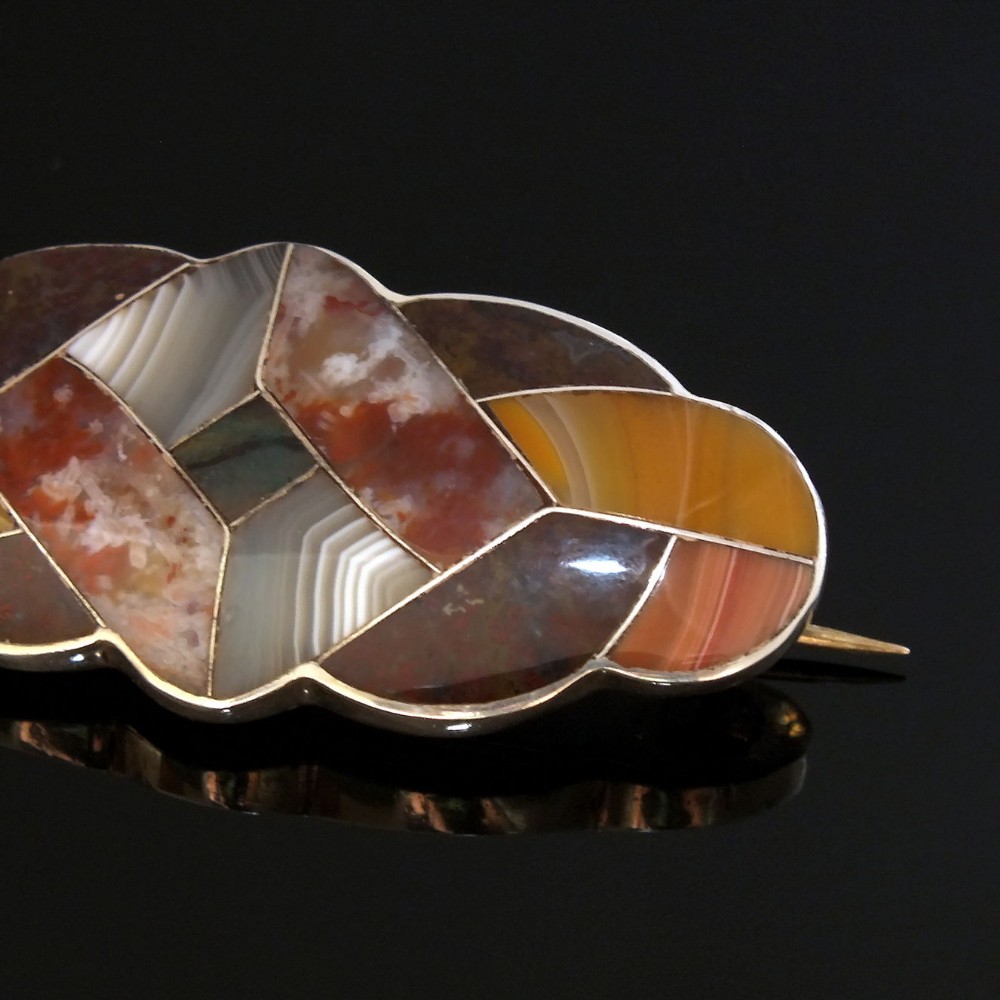
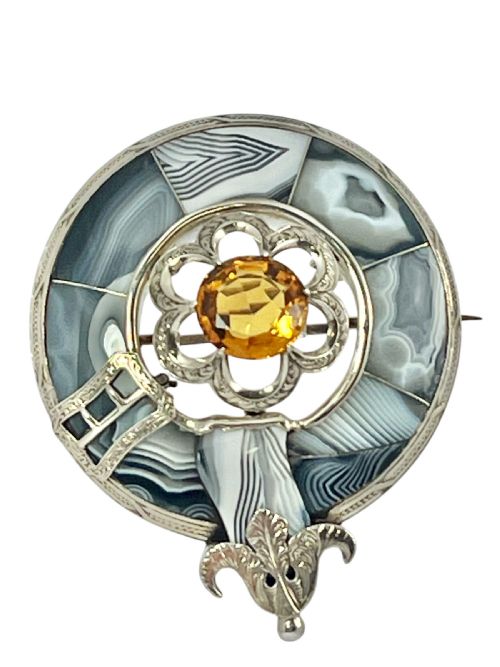
The pattern shows two inner circles with a figure of eight wrapping around and connecting to a squared-off border containing a small carefully chosen central gemstone; this may symbolise a joining of two parts and indicate a love or marriage motif.
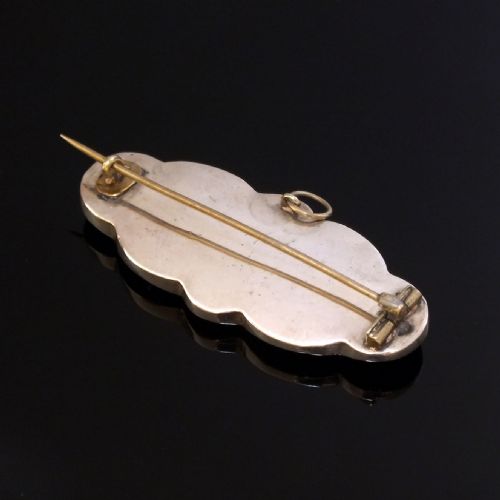
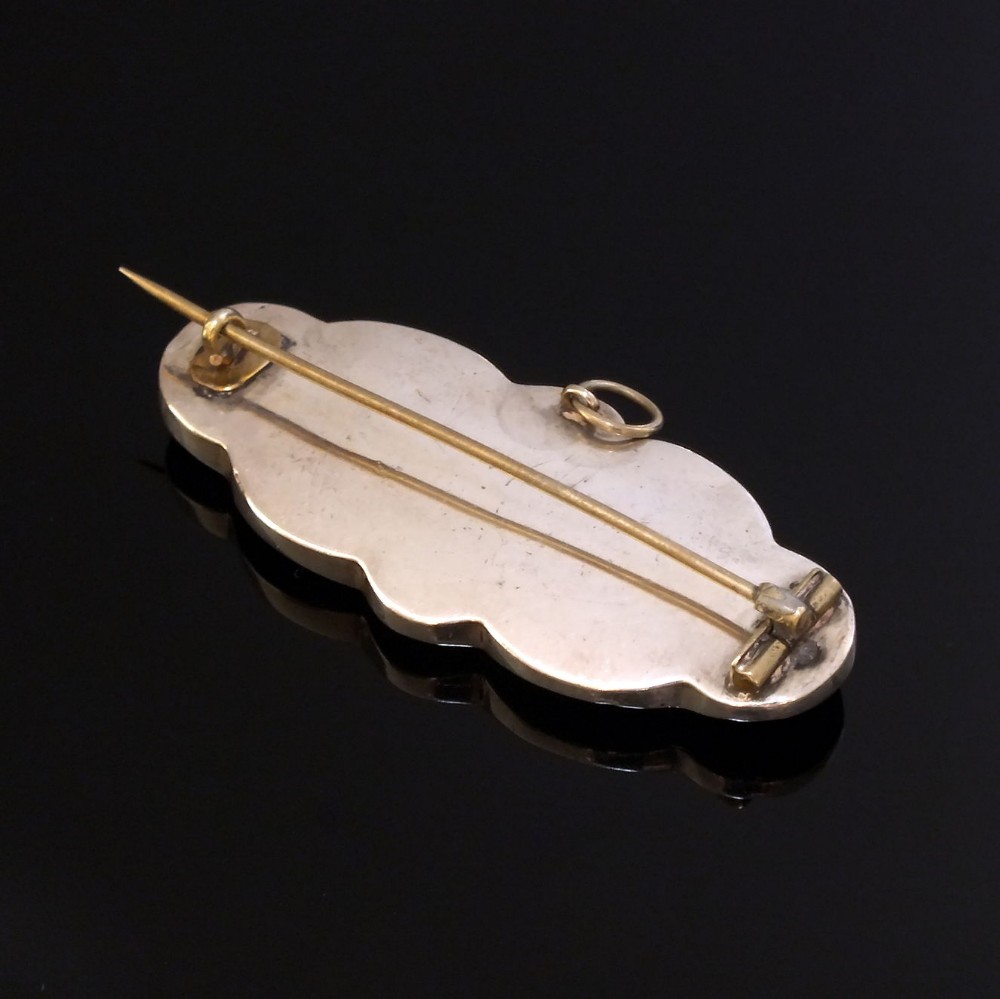
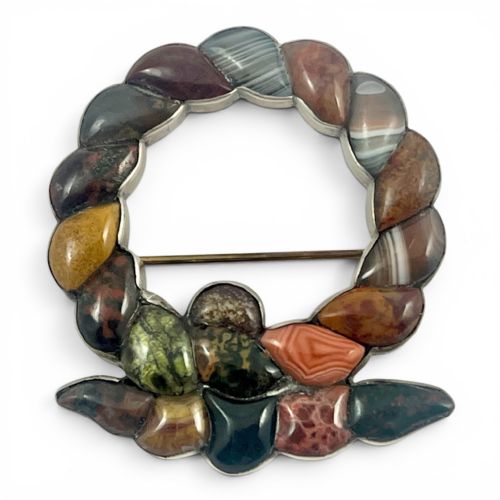
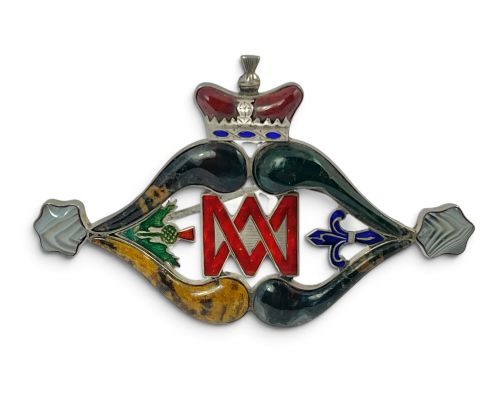
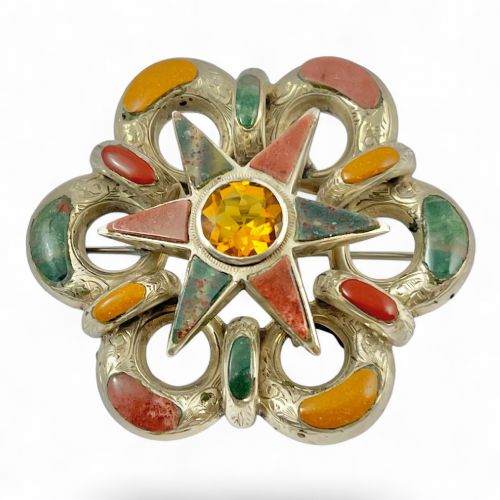
A combination of thirteen colourful Scottish gemstones have been expertly carved and set flush to the silver. Mounted with a handmade scrolling c-clasp on a pad, an extended pin and a tube hinge. The small attachment loop is intact. Unmarked, as is the case with much of the Scottish silver jewellery produced during the mid-Victorian era.
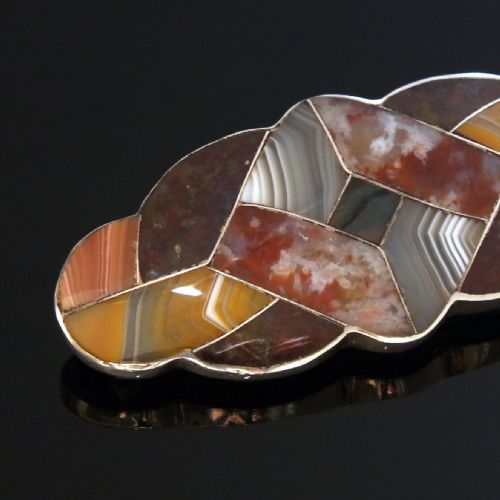
The agates exhibited on this brooch are;
A choice central agate shows a deep blue vein on teal and yellow streaked transparent quartz.
Two banded agates of grey, white and translucent quartz border the centre, these are specimens found typically in Tayside, Montrose and Aberdeen on the Eastern Scottish coast.
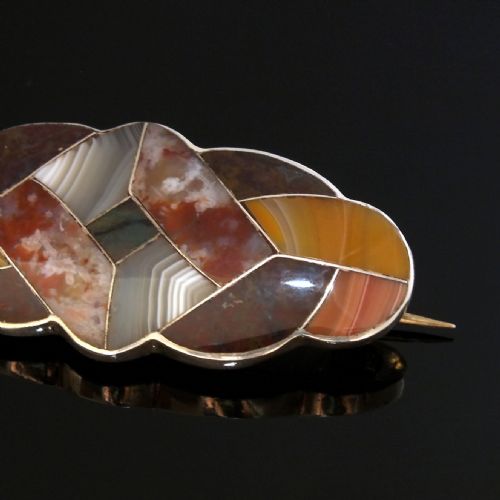
Two mottled red, white and translucent agates complete the centre square, this type is far more uncommon with examples found at Burn Anne in Ayrshire and Kintyre.
The darker circles are comprised of four jasp-agates, tiny fortifications can be identified amongst the subtly mottled red and yellow on deep grey undertones.
The twisted ends contain two banded agates of salmon pink found prominently in Balmerino (Fife), Perth and the Ayrshire coast.
The final two pieces are yellow-banded agates, found in relatively fewer places and are most likely specimens from Burn Anne.
Date & Origin
Scotland. Period of Queen Victoria, c1850.
Condition
Excellent. The clasp is in full working order.
Dimensions
Diameter: 6.4cm x 2.8cm
Historical Context
Queen Victoria and Prince Albert visited Scotland in 1842 returning annually after being swept away by the charm and splendour of the Perthshire hills. The Royals' admiration towards the land and people promoted a similar reaction from their subjects.
The boom in trade between the nations saw that Scottish trinkets and motifs became very popular, especially the so-called ‘pebble jewellery’ that Queen Victoria had collected as souvenirs. The rarer Aberdeen granite may be classed as one such ‘pebble’, however, most are semi-precious chalcedony quartz gemstones that include agate and jasper, with some specimens being exclusively collected from particular regions of Scotland.
Exhibit Antiques has dated this Victorian Scottish Pebble Brooch to the 1850s.
Specialists in 18th & 19th century antique glass
You can view the stock and full dealer information on the Exhibit Antiques Profile Page
2024031305