






Vintage Decorative Platter
A vintage decorative platter brings rich texture and colour to a room, offering an immediate focal point on a wall or table.
Vintage Decorative Platter
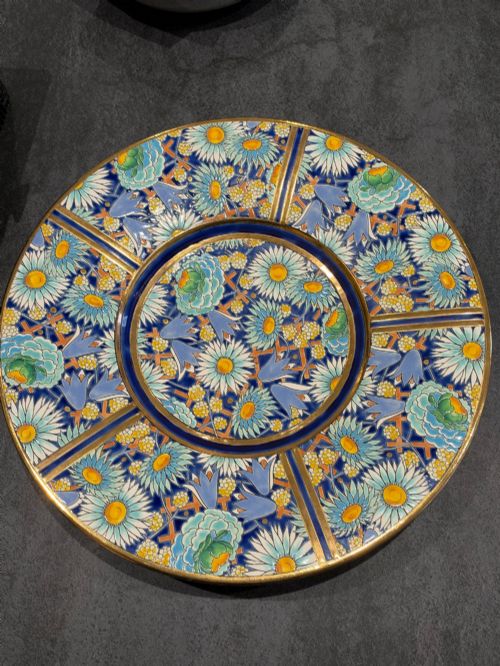
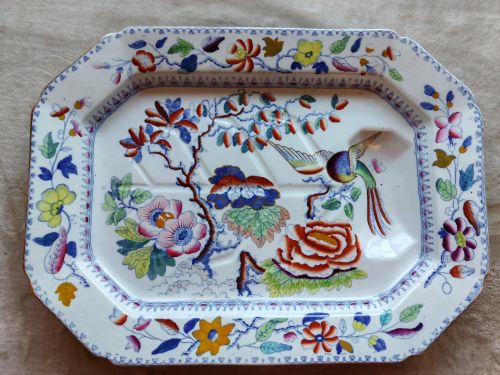
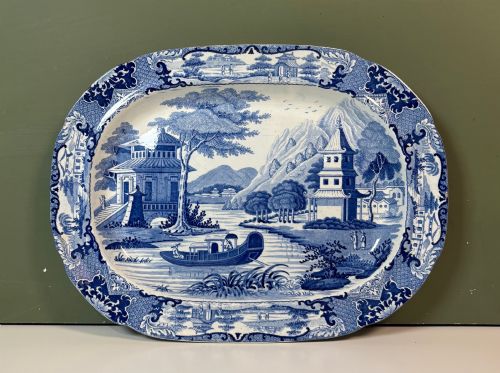
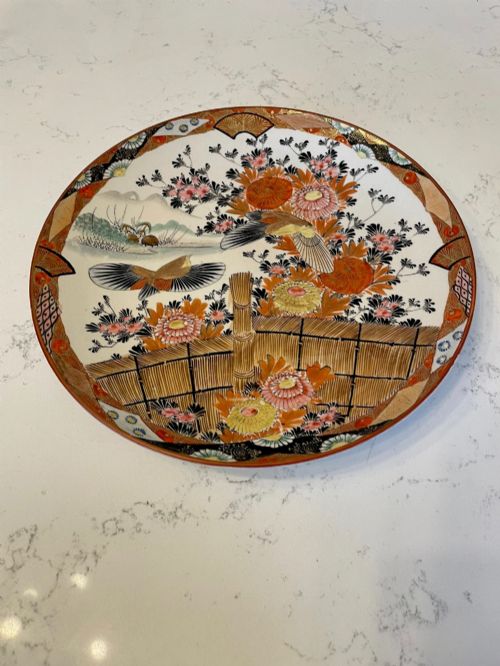
A vintage decorative platter encompasses an eclectic mix of chargers, serving dishes, and trays spanning from the eighteenth century through the art deco period. Buyers encounter everything from Japanese Imari porcelain and intricate cloisonné enamel to English transferware and papier-mâché.
The objects served diverse historical functions, moving between formal dining tables, afternoon tea displays, and purely ornamental wall hanging. Most examples originate from British, European, Middle Eastern, and East Asian traditions.
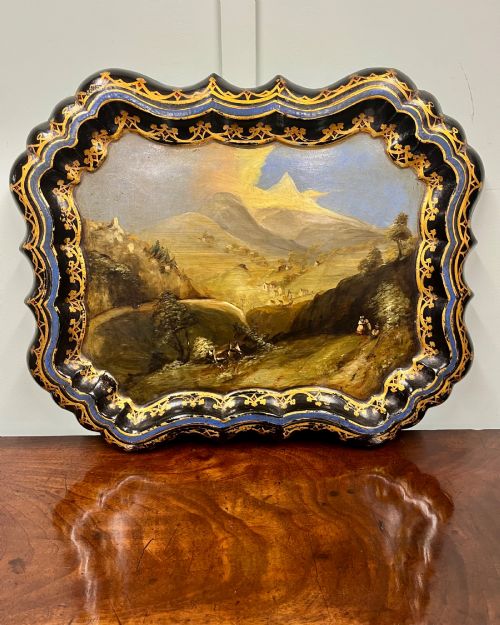
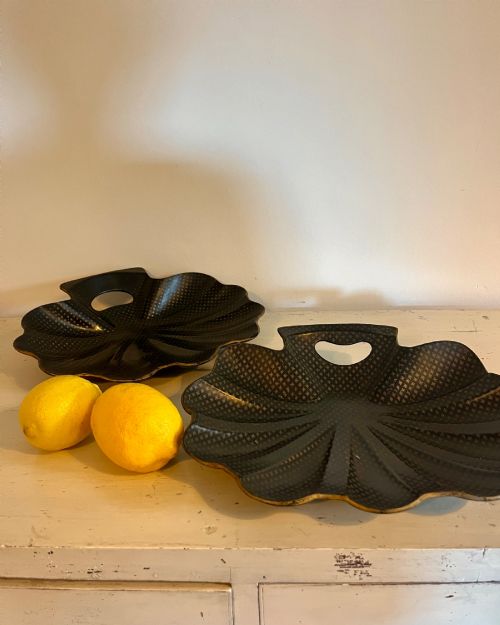
Papier-mâché trays from the Regency and Victorian eras sit alongside crisp blue and white Delft chargers and hand-painted Japanese Kutani ware. This variety allows collectors to curate displays ranging from stark monochrome to vibrant polychrome finishes.
Materials and construction
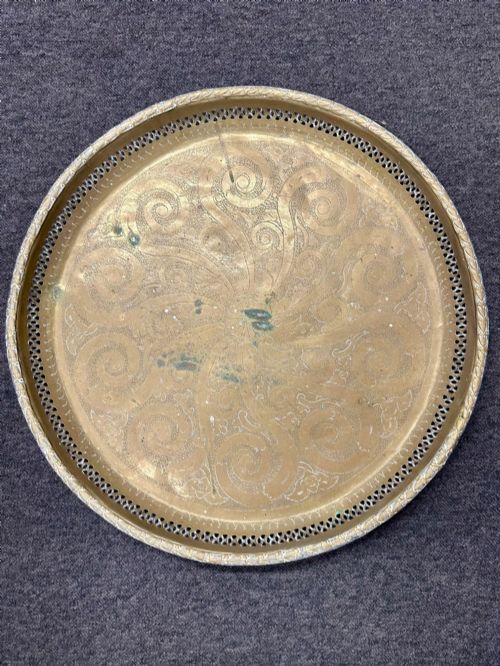
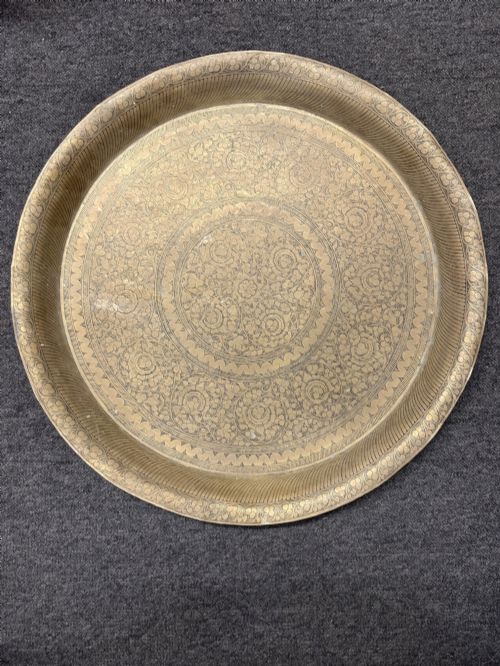
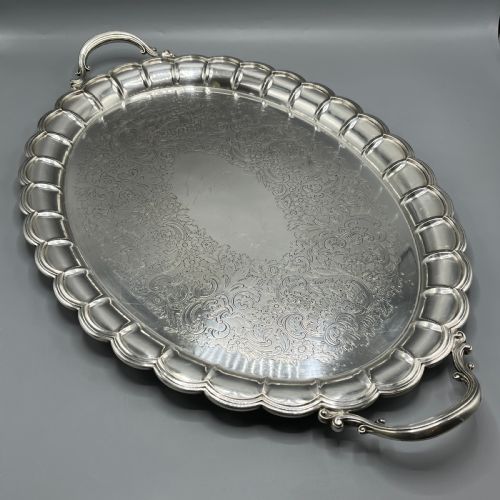
Ceramic pieces rely on earthenware, porcelain, and delft faience, often finished with transfer printing, cobalt blue pigments, or hand-painted enamel details. Artisans shaped metal objects using copper, brass, and silver plating, frequently applying repoussé hammering or intricate silver inlay.
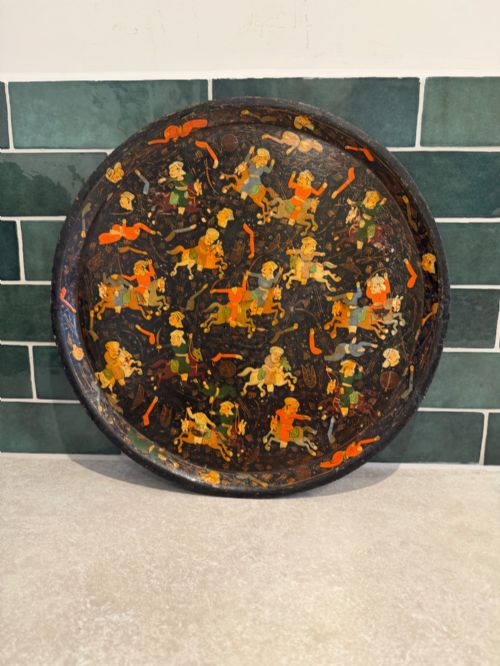
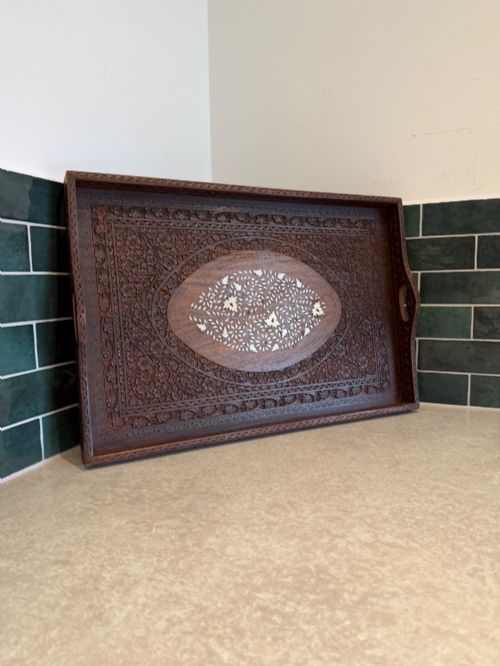
Papier-mâché items required layers of paper pulp bonded with glue, pressed into moulds, and finished with deep japanned lacquers and gold leaf gilding. Wood pieces utilised teak, mahogany, and burr walnut, sometimes enhanced with coopered construction or delicate inlay work.
Vintage Decorative Platter Retail Price Guide 2026
Typical asking prices for vintage decorative platter among the pieces listed under this phrase on Sellingantiques today, from the lower quarter to the upper quarter. They describe what is for sale here now, not the wider market.
The listings span eight distinct materials, with porcelain and copper appearing alongside traditional papier-mâché and lacquer.
Assessing craftsmanship
The distinction between standard utility items and exceptional pieces rests upon the precision of the hand-painting and the depth of the materials used. Superior ceramic and enamel works display crisp registration, delicate brushwork, and rich, stable glaze colours without blurring.
For metal and papier-mâché items, quality reveals itself in the crispness of repoussé relief, the intactness of original japanning, and the structural integrity of the substrate. Pieces retaining their original gilding or uncommon decorative schemes command greater attention.
Royal Crown Derby·Coalport·Christofle·Royal Doulton·Rene Lalique
The Vintage Decorative Platter Glossary
- Charger
- A large decorative plate traditionally used for ceremonial dining or placed beneath service courses. They frequently measure significantly larger than standard dinner plates.
- Cloisonne
- A decorative metalwork technique where enamel paste is applied within compartments created by soldered flat metal wires. Firing hardens the glass paste into vibrant coloured patterns.
- Transferware
- Pottery decorated by applying a monochrome design from an engraved copper plate onto tissue paper, which is then transferred onto the unglazed ceramic body.
- Repousse
- A metalworking technique where the artisan hammers the reverse of a sheet of copper or brass to form a raised design in relief on the front.
Vintage Decorative Platter: Frequently Asked Questions
How were these platters originally displayed?
Many large chargers and metal trays were designed to sit flat on sideboards or dining tables to hold ceremonial items. Others featured integrated pierced rims or mounting loops specifically intended for hanging on walls as decorative art.
Over time, owners transitioned these items from functional dining service to purely ornamental displays, utilising plate stands and wall hooks to showcase the intricate artwork.
How do I identify a papier-mache piece?
Papier-mâché items feel surprisingly light yet rigid, constructed from compressed paper pulp layered with binders rather than solid wood or heavy metal. They typically feature smooth, dark japanned surfaces decorated with gold leaf or mother-of-pearl inlay.
When handled, these pieces lack the resonant ring of ceramics and the cold weight of brass or copper, offering a warm and tactile finish.
Can I use these vintage plates for serving food?
While many ceramic and metal platters were originally created for culinary use, antique pieces require careful consideration. Older glazes and metal platings can be sensitive to modern detergents, acidic foods, and thermal shock.
Most collectors choose to utilise these items for dry display, decorative storage, or occasional service rather than daily dining.