




Gilt Painted Lacquer Tray
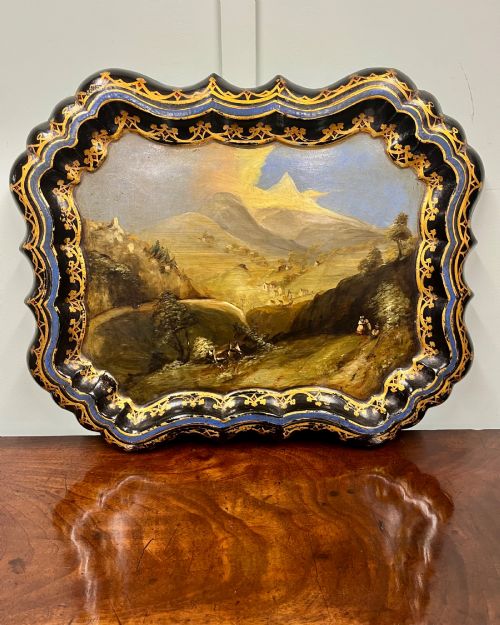
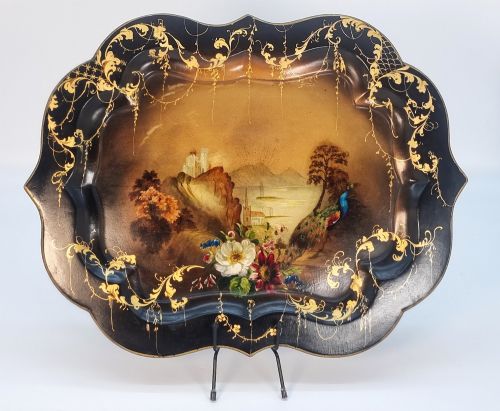
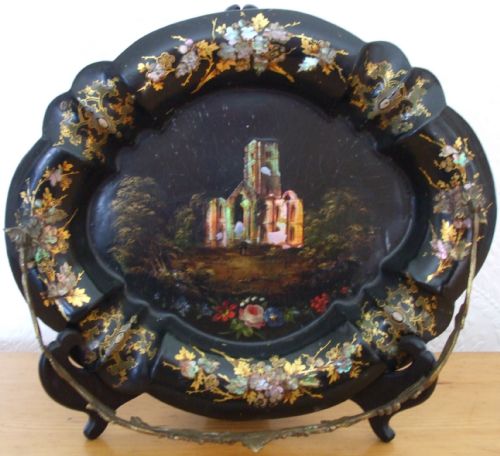
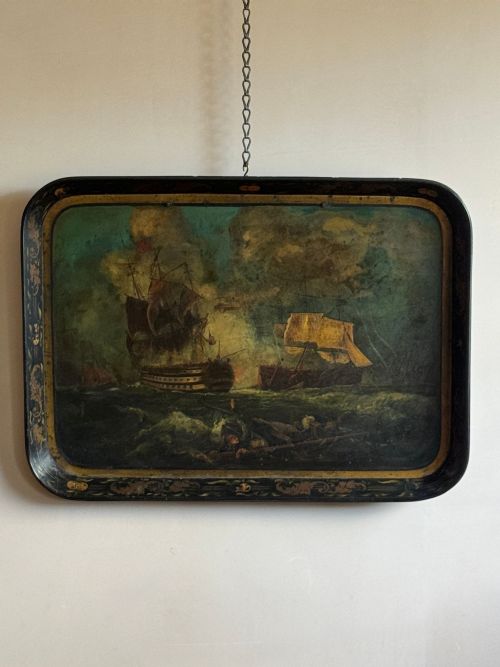
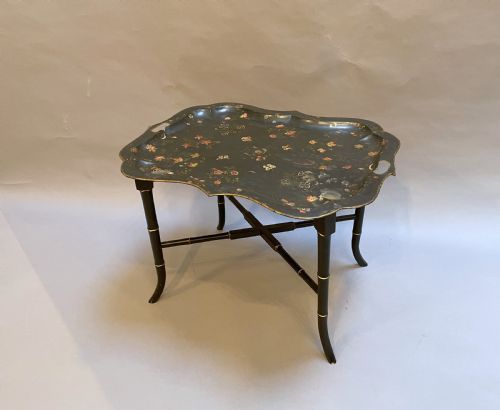
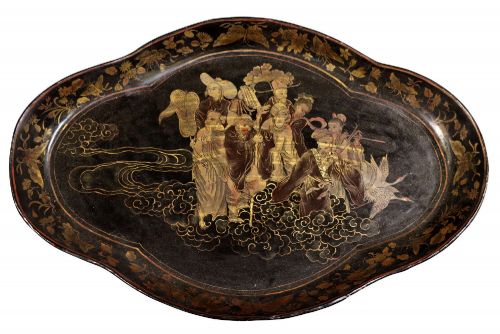
These gilt painted lacquer tray examples bring hand-painted motifs and dark glossy surfaces into domestic interiors as serving pieces or mounted tables.
Gilt Painted Lacquer Tray
A gilt painted lacquer tray combines a dark built-up surface with gold leaf ornamentation, appearing in formats ranging from serving trays to occasional coffee tables on stands. When searching for a gilt painted lacquer tray, collectors encounter pieces spanning the Georgian, Regency, and Victorian eras, alongside Edwardian Chinoiserie revivals.
The primary forms include large oval or octagonal serving vessels, circular tabletop accessories, and specialised items such as card baskets or game boards. Many survive fitted to later wooden or iron stands, converting portable servingware into permanent low tables.
English production during the nineteenth century dominates the selection, alongside Japanese export pieces from the early twentieth century. Decoration frequently leans towards Chinoiserie landscapes, floral arrangements, and narrative hunting scenes executed in gold and colour upon black, green, or scarlet grounds.
Materials and construction
Papier-mâché and lacquered wood form the structural foundation of these objects, shaped through layered paper pulps or solid timber bases before hardening. Tôle peinte provides an alternative metallic base of painted tinplate for specific serving trays and toleware articles.
The finishing process relies upon successive coats of lacquer polished to a smooth sheen, upon which artisans applied gold leaf and hand-painted pigments. Brass handles, iron floor stands, and wooden support frames often complement the primary lacquer bodies.
Gilt Painted Lacquer Tray Retail Price Guide 2026
Typical asking prices for gilt painted lacquer tray among the pieces listed under this phrase on Sellingantiques today, from the lower quarter to the upper quarter. They describe what is for sale here now, not the wider market.
Several trays swap polite floral bouquets for massive illustrations of freshwater fishing and nineteenth-century card games.
Distinctions in craftsmanship
The refinement of the hand-painted detailing dictates visual standing, separating hasty decorative applications from meticulous pictorial work. Superior pieces display crisp brushwork in the gold leaf and balanced compositions across complex subjects such as figures, architecture, or natural history.
Structural integrity of the lacquer surface remains paramount, as extensive crazing or flaking diminishes the visual impact of the decorative scheme. The harmony between the original tray and any subsequent stand also influences the overall cohesion of the piece.
Jennens and Bettridge
The Gilt Painted Lacquer Tray Glossary
- Papier-mâché
- A composite material made from paper pulp or sheets of paper mixed with glue and resin, pressed into moulds and dried to form a rigid base for lacquer.
- Chinoiserie
- European artistic style reflecting Chinese aesthetic influences, characteristically featuring pavilions, exotic figures, and imaginative landscapes rendered in gold paint.
- Tôle peinte
- Painted sheet metal or tinware utilised for decorative trays and domestic accessories during the Georgian and Victorian periods.
- Japanned
- European lacquerwork imitating traditional Asian finishes, typically executed on wood or papier-mâché grounds using dark varnishes and metallic powders.
- Pope Joan
- A traditional eighteenth and nineteenth-century card game played on specially painted boards or trays divided into partitioned compartments.
Gilt Painted Lacquer Tray: Frequently Asked Questions
How do I clean a lacquer tray?
Dust the surface gently with a soft, dry microfibre cloth to remove loose particles. Avoid all water, moisture, and chemical cleaning agents, which quickly damage aged lacquer.
Keep the piece away from direct sunlight and heat sources to prevent the varnish from drying out or cracking over time.
Are these trays suitable for serving?
Many historic trays retain structural strength, but delicate painted surfaces and gold leaf decoration suffer easily from moisture and heat. Using them for display or dry items preserves the finish.
Placing coasters or protective liners on the surface helps prevent scratching if utilised for light entertaining.
How to date a papier-mâché tray?
Examination of the rear surface, edge wear, and stylistic motifs provides key clues to the period of manufacture. Georgian and Regency pieces often feature heavier, hand-moulded bases with distinctively worn green, scarlet, or black grounds.
Later Victorian and Edwardian examples incorporate brighter pigments and distinct Chinoiserie revival patterns.