




Gilded Black Lacquered Tray
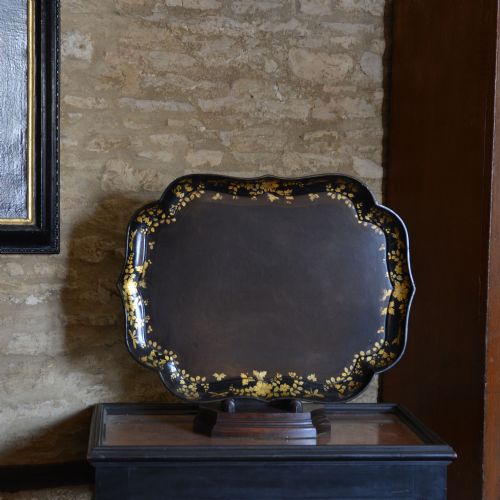
A gilded black lacquered tray brings a rich, reflective surface and classical hand-painted detail into a room, whether set upon a stand or used for serving.
Gilded Black Lacquered Tray
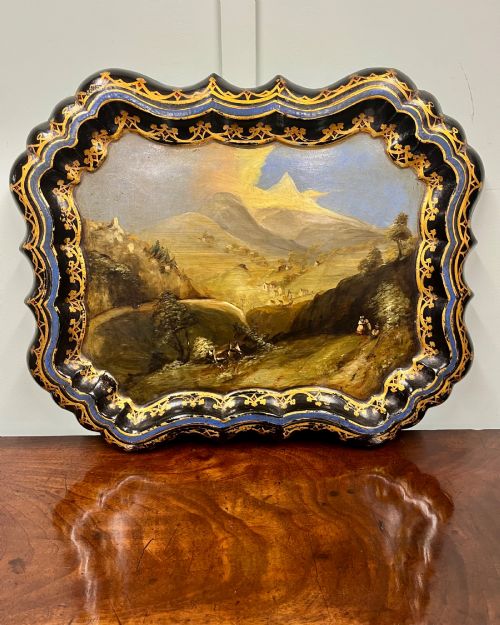
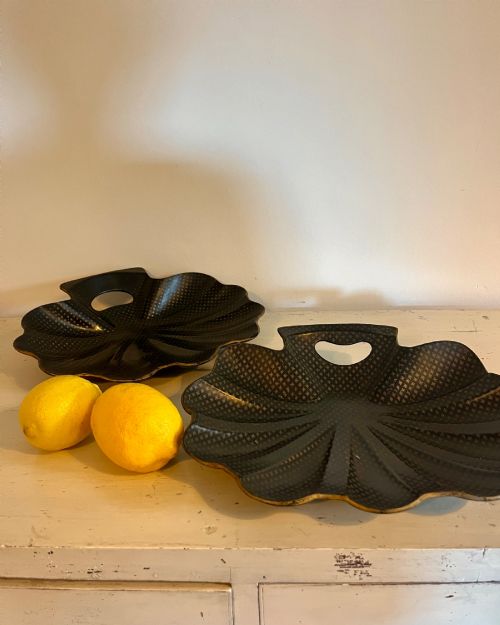
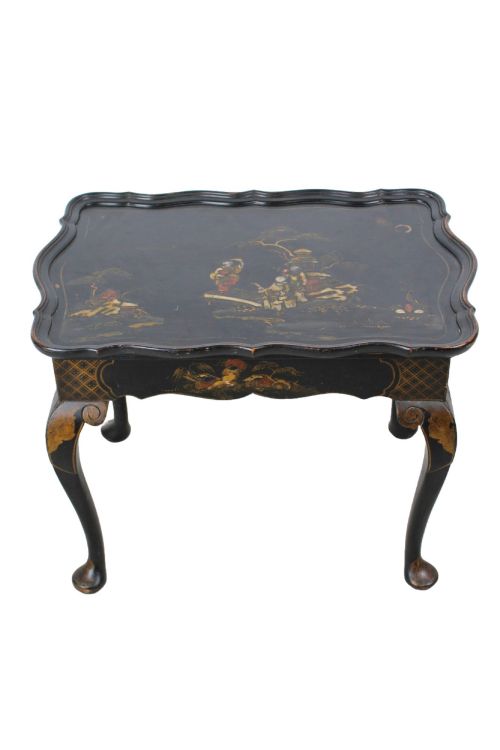
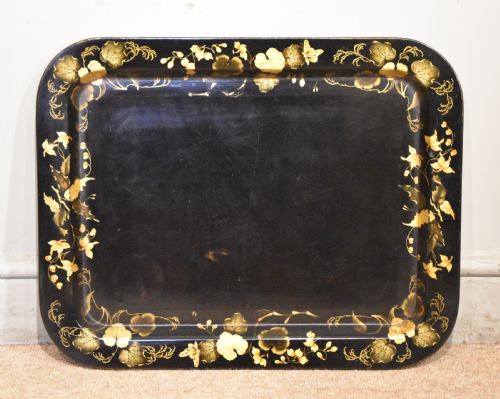
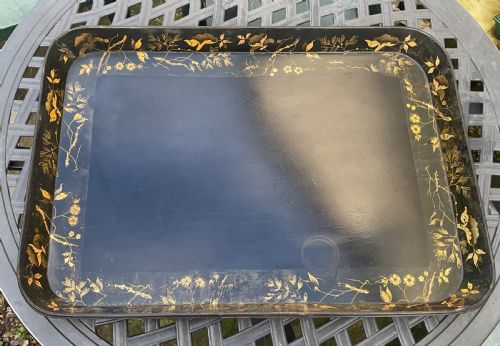
A gilded black lacquered tray combines a dark, polished ground with metallic leaf or paint, most frequently found in forms dating from the Regency and Victorian periods. These pieces appear as large serving trays, oval desk accessories, and occasional tray tables supported on folding stands.
The selections span from late eighteenth-century Georgian examples through to Edwardian and George V interpretations. The typical form encountered is the papier-mâché or toleware tray, shaped with raised edges and decorated with painted or gilt motifs.
Materials and Construction
Papier-mâché serves as the primary base for many of these pieces, formed from layers of paper pulp and binders pressed into heavy, durable moulds. Toleware, made from painted or japanned sheet metal, provides an alternative rigid foundation for painted and gilded surfaces.
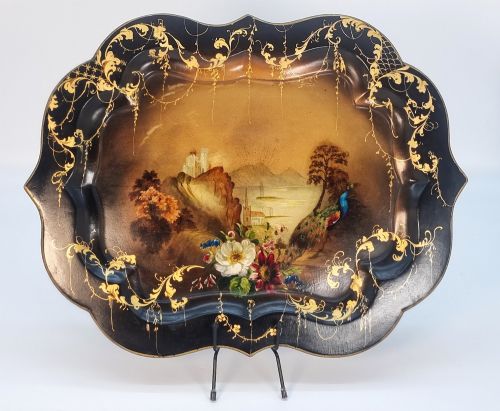
Makers applied layers of dark lacquer before executing hand-painted details and gold leaf application. Gilding and pigment build up the pictorial scenes, landscapes, and borders that define the visual character of each piece.
Gilded Black Lacquered Tray Retail Price Guide 2026
Typical asking prices for gilded black lacquered tray among the pieces listed under this phrase on Sellingantiques today, from the lower quarter to the upper quarter. They describe what is for sale here now, not the wider market.
Object forms range from traditional serving trays and desk organisers to tray tables and side tables supported on stands.
Quality Variations
The refinement of the hand-painted decoration and the depth of the gilding separate standard production from exceptional examples. Finer pieces demonstrate precise brushwork in pastoral or Chinoiserie scenes alongside crisp tooling in the gold leaf.
The structural integrity of the papier-mâché or metal foundation and the preservation of the original lacquered surface dictate the overall desirability of a tray. Untouched surfaces retain a deeper lustre and sharper detail than those subjected to heavy restoration.
Henry Clay·Jennens & Bettridge
The Gilded Black Lacquered Tray Glossary
- Papier-mâché
- A composite material made from paper pulp, waste paper, or layers of paper bonded with glue or resin, then pressed and dried into a rigid form. It provides a lightweight yet remarkably strong base for lacquered serving pieces.
- Japanning
- A European imitation of East Asian lacquerwork involving layers of dark varnish heat-cured and polished. It creates the characteristic glossy black ground found on these trays.
- Chinoiserie
- The European interpretation of Chinese and East Asian artistic traditions, popular in decorative arts during the Georgian and Regency eras. It frequently appears as painted pavilions, figures, and landscapes rendered in gold.
- Gilding
- The application of gold leaf or gold powder to a surface to provide metallic enrichment. It highlights borders, pictorial elements, and handles.
Gilded Black Lacquered Tray: Frequently Asked Questions
How are these trays cleaned safely?
Dust surfaces gently with a dry, soft cloth to prevent scratching the delicate lacquer and gilt details. Avoid liquid cleaners, harsh chemicals, or soaking, as moisture compromises the historic paper and metal bases.
Keep pieces away from direct sunlight and excessive heat sources to protect the black lacquer finish from fading or crazing over time.
Were these trays used for serving food?
Many larger examples served drinks and food in formal reception rooms during the Regency and Victorian periods. Others functioned as decorative desk organizers, card baskets, or tabletop displays.
Today, many owners repurpose them as coffee table tops by mounting the trays onto custom wooden or metal stands.
How do I identify a Regency period tray?
Regency pieces often feature robust papier-mâché construction with classical or Chinoiserie gilt borders and deep black lacquer grounds. Look for maker stamps or impressed marks on the underside, though many unsigned examples rely on stylistic markers of the early nineteenth century.
The weight, thickness of the moulded edge, and style of the hand-painted landscape or floral motif help distinguish these earlier pieces from later Edwardian or twentieth-century revivals.
Can I place items directly on the surface?
Placing soft felt pads under objects helps protect the polished lacquer and delicate gilding from abrasion. Heavier items or rough ceramics can scratch the finish if dragged across the tray.
Using coasters or linen mats preserves the hand-painted scenes while allowing the piece to function in daily use.