





Painted Lacquered Platter
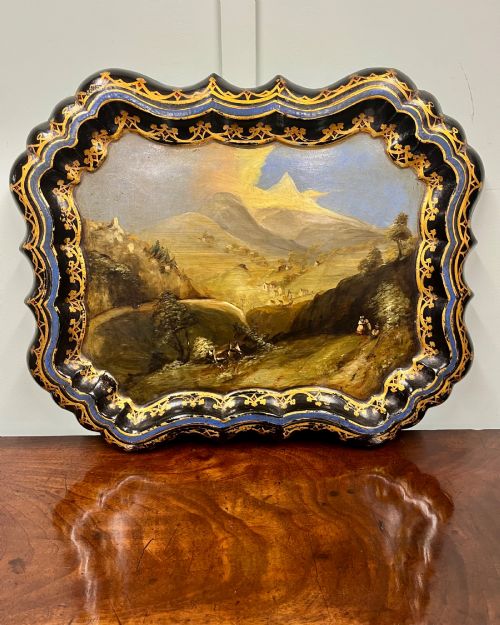
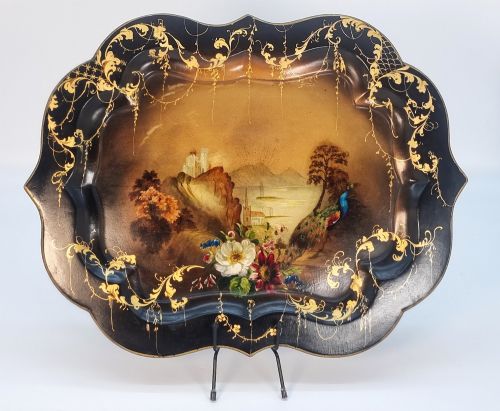
A painted lacquered platter brings functional beauty to a room, offering rich surfaces decorated with scenes of hunting, fishing, and landscapes.
Painted Lacquered Platter
When you search for a painted lacquered platter, you encounter serving trays, decorative trays, and large oval trays produced across several centuries. The examples here span periods from the Georgian and Regency eras through the nineteenth century to around nineteen hundred.
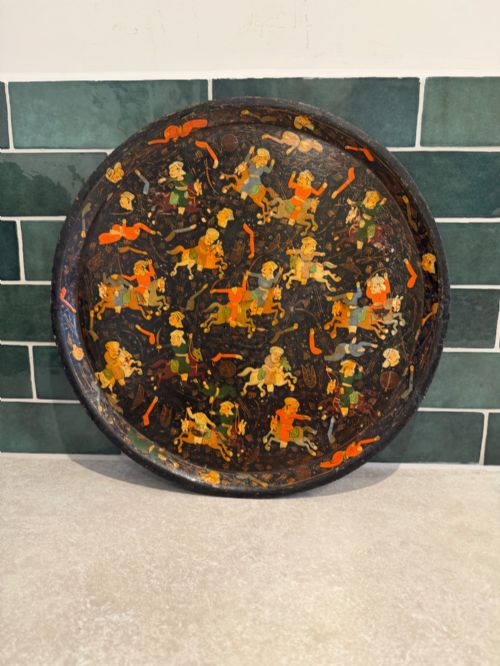
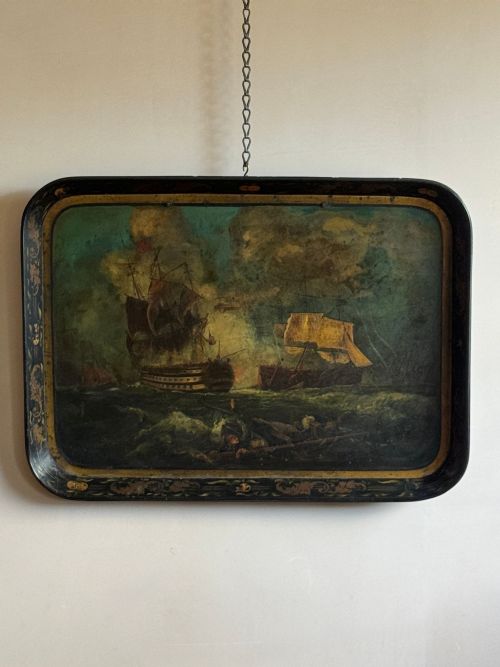
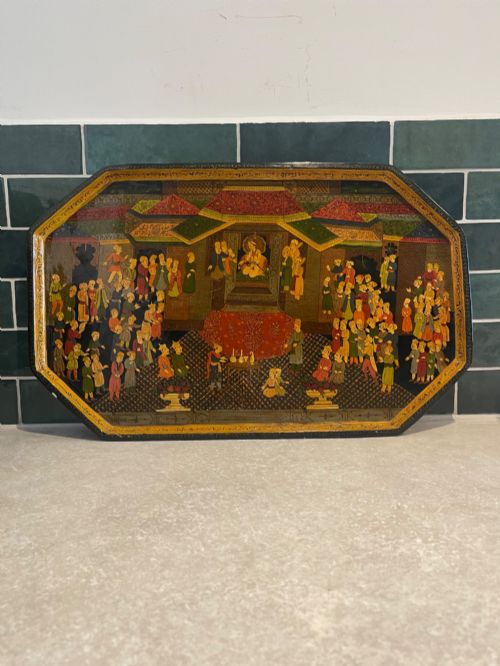
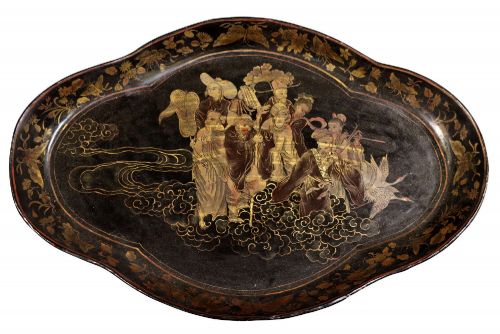
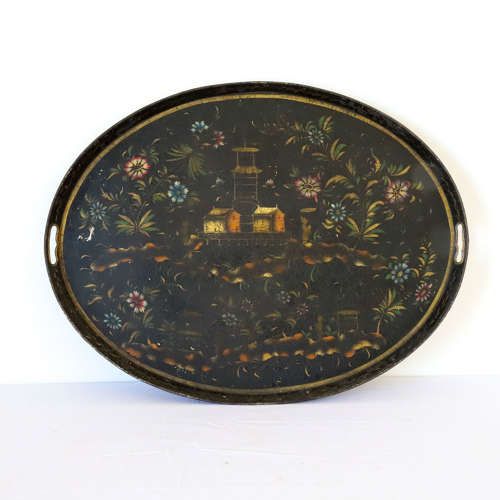
The assortment includes English pieces, Swedish items, and Kashmiri works showing distinct regional aesthetic choices. You meet Chinoiserie compositions alongside naive depictions of fishing and detailed landscape hunting scenes.
Victorian and early Victorian designs dominate the selection, often utilising sturdy papier-mâché foundations. These forms served practical dining functions originally while remaining decorative objects for display today.
Materials and construction
Papier-mâché serves as the primary structural material across these platters, providing a lightweight yet remarkably robust body for daily use. Makers built up layers of paper and binder before shaping and hardening the substrate into deep oval forms.
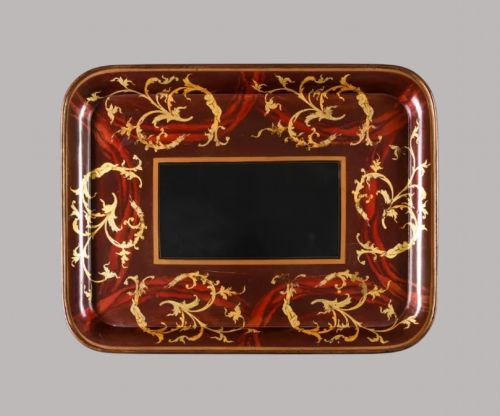
Surfaces received dark lacquer finishes enriched with paint, gold leaf, and occasionally mother-of-pearl inlay. Artisans applied detailed pictorial motifs by hand, capturing landscapes, figures, and wildlife directly onto the lacquered ground.
Painted Lacquered Platter Retail Price Guide 2026
Typical asking prices for painted lacquered platter among the pieces listed under this phrase on Sellingantiques today, from the lower quarter to the upper quarter. They describe what is for sale here now, not the wider market.
The selection includes pieces spanning the Georgian era, Regency period, nineteenth century, and around nineteen hundred.
Assessing quality and character
Quality rests upon the preservation of the original hand-painted decoration and the integrity of the lacquered surface. Pieces retaining their unconventional or untouched early ornamentation stand apart from heavily restored examples.
The complexity of the artistic subject matter influences distinction, ranging from charmingly naive compositions to finely executed landscape and hunting narratives. Maker attribution also elevates certain works, particularly when associated with established nineteenth-century manufacturers like Jennens and Bettridge.
Jennens and Bettridge
The Painted Lacquered Platter Glossary
- Papier-mâché
- A composite material made from paper pulp or layers of paper reinforced with glue, which dries to form a hard, smooth surface ideal for painting. This substance allowed makers to mould large, robust trays with curved edges.
- Chinoiserie
- A European artistic style reflecting Chinese aesthetic influences, characteristically featuring imaginary landscapes, figures, and pavilion structures. It appears frequently on decorated trays from the eighteenth and nineteenth centuries.
- Japanned
- European work imitating East Asian lacquer techniques, using dark varnishes and applied metallic decoration. The process creates a glossy, durable finish that protects the painted scenes beneath.
- Mother-of-pearl
- The iridescent inner layer of certain mollusc shells, sometimes inlaid into lacquered surfaces to catch the light. This material adds subtle highlights to architectural details or floral motifs within a painted scene.
Painted Lacquered Platter: Frequently Asked Questions
What were painted lacquered platters used for?
These pieces served primarily as serving trays for beverages and food in domestic settings. Their decorative surfaces also made them suitable for display on stands or tables when not in active use.
Over time, their role shifted toward decorative display as interior fashions changed. Today they function largely as decorative accents or wall pieces.
How do I care for a papier-mâché tray?
Keep these items away from direct sunlight and damp environments to protect the lacquer and painted surfaces. Dust them gently with a dry, soft cloth rather than using liquid cleaners.
Avoid placing hot items directly onto the lacquer finish to prevent crazing or scorching. Handle them with care to preserve the original edges and decoration.
How can I tell a Georgian tray from a Victorian one?
Georgian and Regency pieces often feature simpler structural lines or distinct Chinoiserie motifs. The materials remained consistent, but the painting styles evolved across the nineteenth century.
Later Victorian examples frequently incorporate more elaborate landscape scenes or narrative subjects like hunting. Examining the depth of the lacquer and the style of the brushwork helps clarify the period.
Where were these trays made?
Production centred heavily in England, particularly within manufacturing hubs producing papier-mâché goods. Other origins represented include Sweden and Kashmir, each bringing distinct regional painting traditions.
English examples often reflect the stylistic shifts of the Georgian and Victorian periods. Kashmiri pieces typically display characteristic local floral or compositional details.