


Victorian Silver Plate Barrel
When you search for a victorian silver plate barrel, you are entering a world of ingenious nineteenth-century dining vessels designed to keep dry goods fresh or spirits flowing.
Victorian Silver Plate Barrel
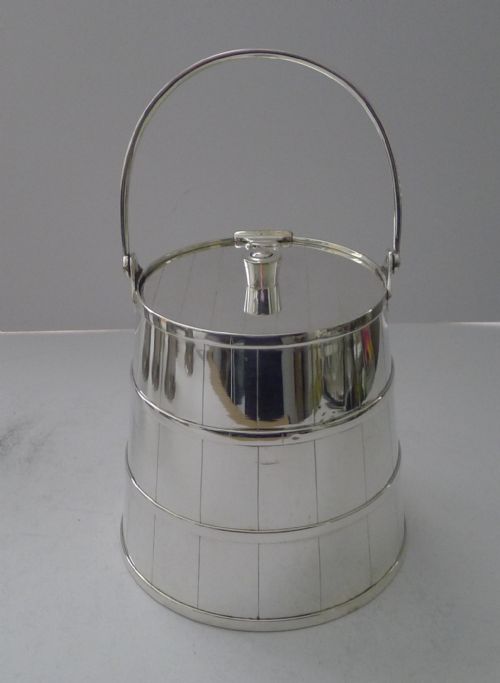
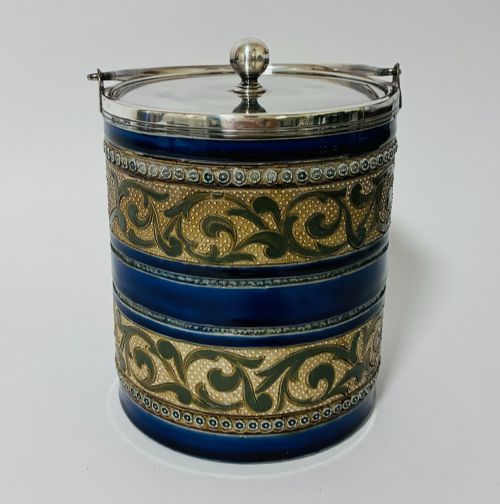
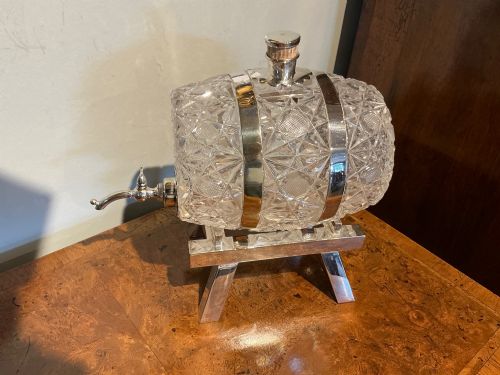
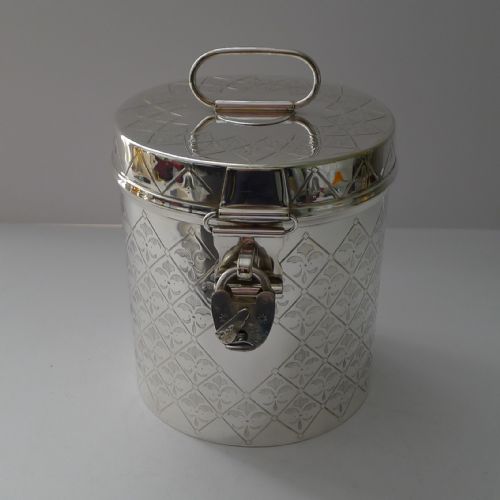
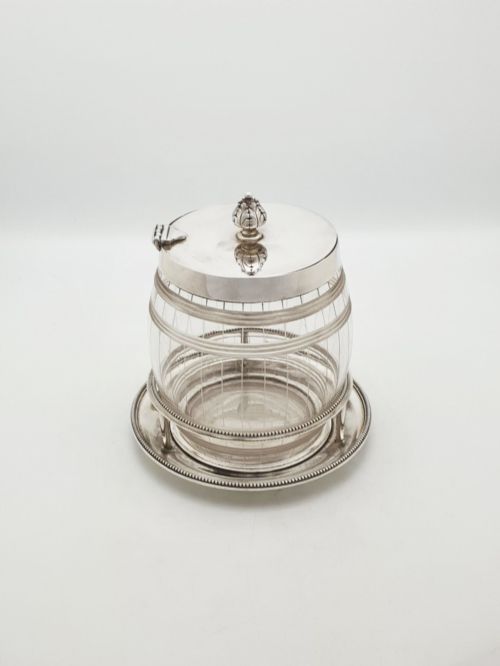
A victorian silver plate barrel is most commonly found as a biscuit box or container, engineered during the nineteenth century to grace the formal dining table. These domestic vessels served primarily to store dry biscuits, keeping them crisp behind a tightly fitted lid, though variations also functioned as ice buckets or spirit dispensers.
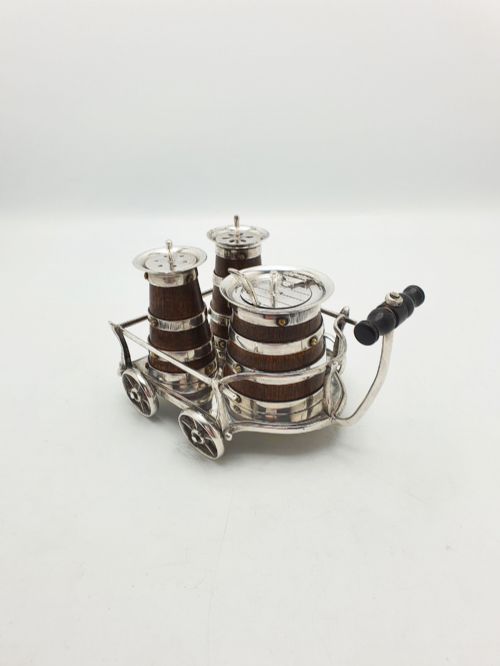
The selection on this page draws heavily from the Victorian and Edwardian eras, spanning periods from the 1860s through to 1900. Alongside traditional horizontal and upright barrel forms, buyers frequently encounter novelty interpretations, such as casks resting on miniature carriages or shaped like weights.
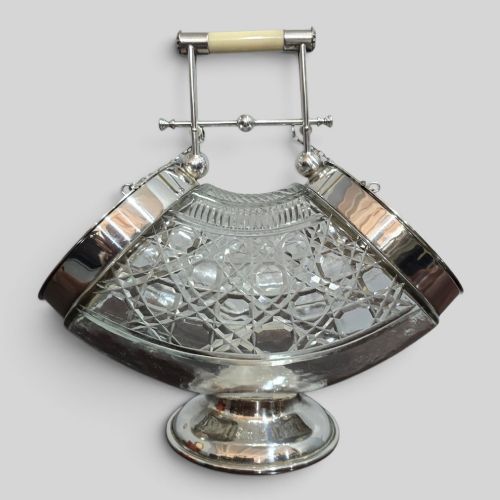
Makers utilised a combination of sturdy internal liners and gleaming outer mounts, leading to forms that ranged from straightforward cylindrical containers to elaborate cruet sets and triple shell-shaped boxes. These pieces reflect the Victorian obsession with specialised dining accessories and domestic comfort.
How they were made
The construction of a victorian silver plate barrel relied on fusing electroplated nickel silver or standard silver plate onto a foundational base of metal, oak, or ceramic. Coopers and silversmiths collaborated to bind staves of solid oak with metal hoops, or to blow heavy glass and crystal into distinct hobnail and cut patterns.
Makers fitted these bodies with hinged lids, internal ceramic creamware liners, and cast mounts, frequently incorporating detailed heraldic finials or engraved foliate bands. The application of silver plating via electroplating techniques allowed workshops to achieve a bright, uniform finish across complex geometric and organic forms.
One exceptional novelty barrel takes the physical form of an iron weight, proving the Victorians loved a heavy joke.
What varies in quality
The distinction between standard domestic items and the finest pieces lies in the weight of the metal, the precision of the mechanical action, and the integrity of the materials. Superior examples possess heavy-gauge silver plate that resists thinning, alongside smooth, well-balanced hinges on automated or folding mechanisms.
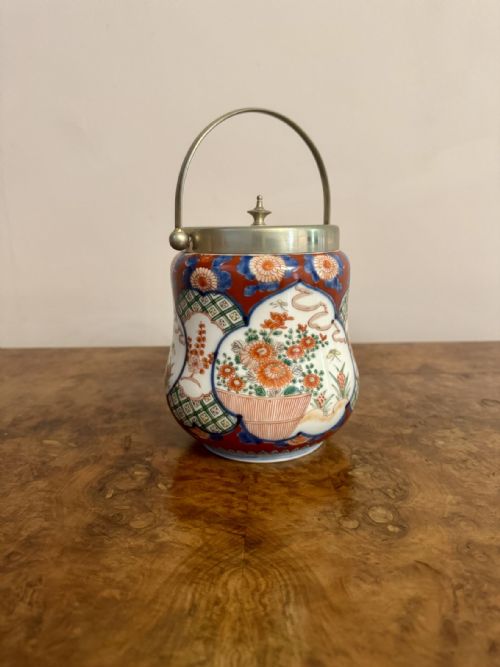
The choice of body material also dictates the tier of the piece, with deep-cut crystal, flashed cranberry glass, or finely coopered oak banded with carved leaves representing higher levels of artisanal effort. Makers who integrated complex ceramic bodies like Wedgwood Jasperware or Doulton Lambeth stoneware elevated simple containers into important decorative works.
Mappin and Webb·Elkington and Co·Robert and Belk·Walker and Hall·John Grinsell and Son·Wedgwood·Fenton Brothers
The Victorian Silver Plate Barrel Glossary
- Electroplated nickel silver
- A base metal alloy of copper, nickel, and zinc coated with a layer of pure silver through an electrolytic process. This technique became widespread during the mid-nineteenth century for domestic tableware.
- Biscuit barrel
- A covered container designed to hold dry baked goods on the Victorian sideboard or dining table. They frequently feature internal ceramic liners to maintain freshness.
- Jasperware
- A type of fine stoneware developed by Wedgwood, characterised by a matte finish and contrasting applied white reliefs over a coloured ground.
- Finial
- A decorative knob or ornament attached to the top of a lid or cover. On these barrels, they often take the form of heraldic animals or cast foliage.
- Cranberry glass
- A rich red transparent glass coloured with gold chloride during production. It gained immense popularity in Victorian tableware and decorative accessories.
Victorian Silver Plate Barrel: Frequently Asked Questions
What were biscuit barrels used for?
These containers were kept on the dining table or sideboard to hold dry biscuits and crispbreads during afternoon tea or after dinner.
The tight-fitting lids and ceramic liners helped protect the contents from moisture in the dining room air.
Are these barrels waterproof?
Many examples featuring glass, crystal, or glazed ceramic liners were designed to hold ice or liquids, functioning as ice buckets or spirit barrels.
Wood and silver plate combinations with unglazed interiors should generally be kept away from standing water to protect the joins.
How do I tell the period?
Stylistic clues such as heavy hobnail cutting, aesthetic movement motifs, and registry marks point toward specific decades within the nineteenth and early twentieth centuries.
Maker stamps and patent numbers stamped into the metal mounts often provide a reliable guide to the date of manufacture.