


Victorian Blush Ivory
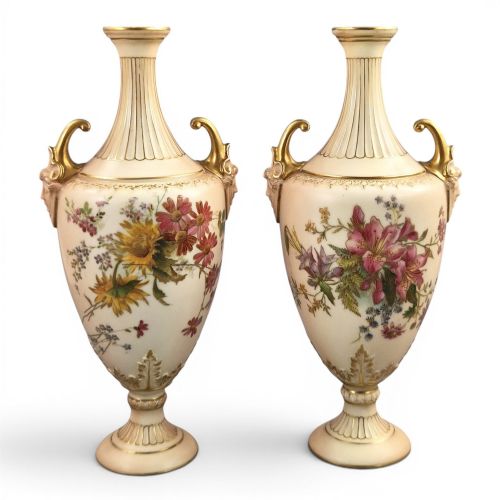
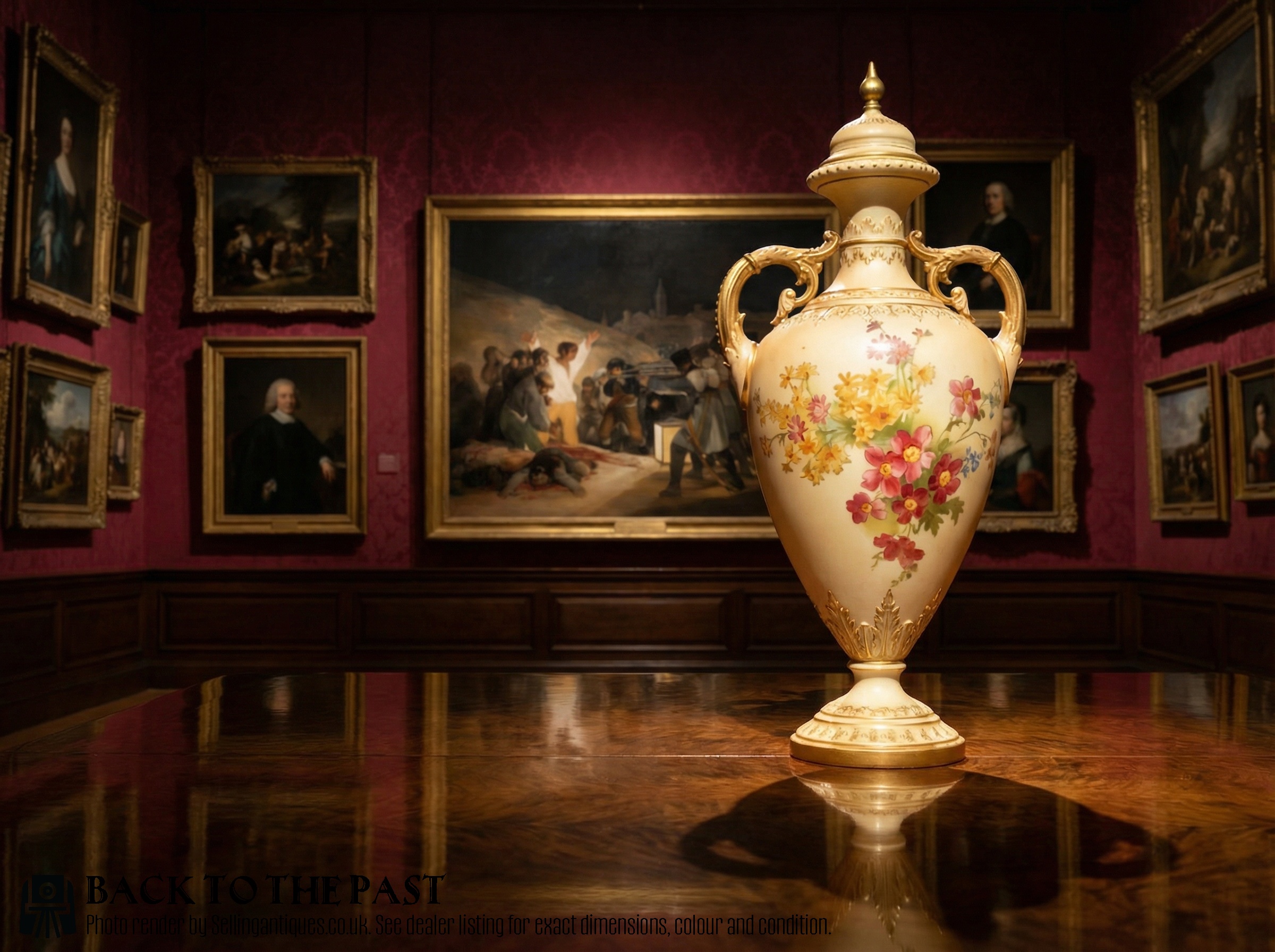
Victorian blush ivory brings together delicate peach and cream porcelain tones, often enriched with hand-painted floral sprays and gilt highlights.
Victorian Blush Ivory
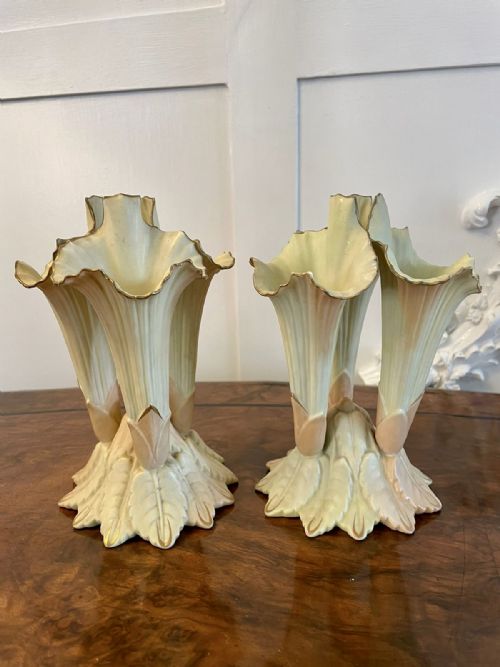
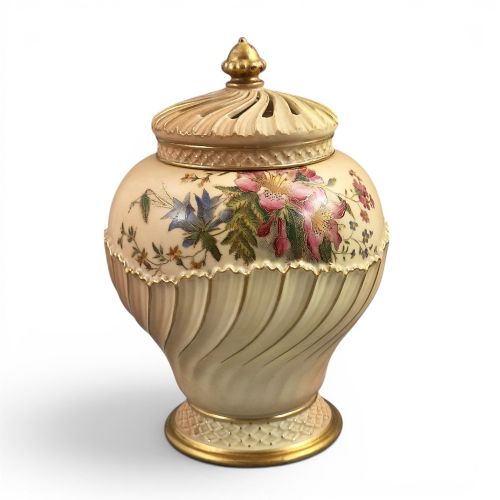
When searching for Victorian blush ivory, collectors encounter a range of functional and decorative ceramic forms made primarily in the late nineteenth and early twentieth centuries. Vases, jugs, ewers, and pot-pourri jars dominate the selection, alongside decorative figurines and candlesticks.
The aesthetic is rooted in the nineteenth century, spanning Victorian and Edwardian periods with pieces produced into the 1920s and 1930s. The most common manifestations on this page are Royal Worcester vessels and figures displaying the signature soft-tinted ground.
Makers drew on diverse design vocabularies, producing items within Victorian Classical Revival and Victorian Orientalism styles, alongside Aesthetic Movement creations. Forms vary from simple spill vases and serving trays to elaborate figural groups and pierced ewers.
Materials and manufacture
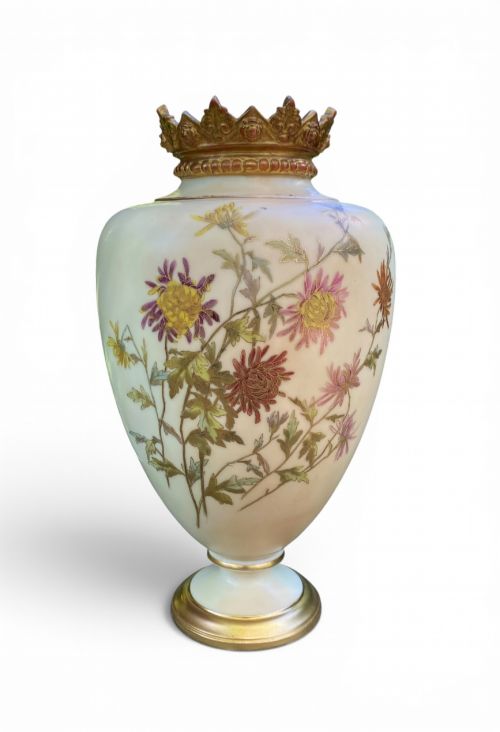
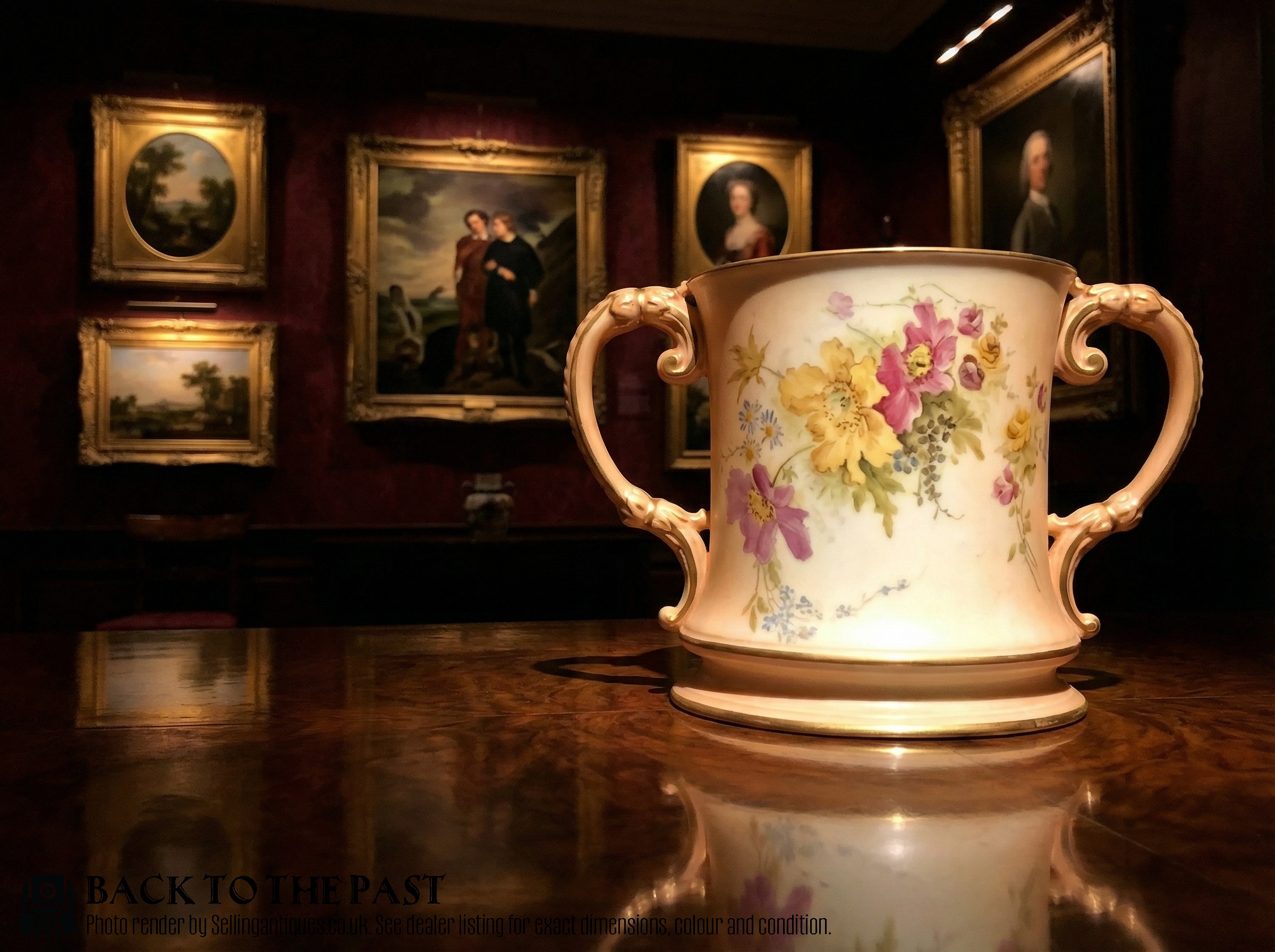
Potters achieved the distinctive blush ivory surface by applying tinted ceramic glazes over a fine porcelain body to create a matte, flesh-toned ground. This base surface provided a muted backdrop for hand-painted botanical motifs and delicate enamel work.
Gilding and gold leaf accents were frequently applied by hand to handles, rims, and moulded details, catching the light against the pale porcelain. Pierced handles and openwork elements required skilled craftsmanship during the shaping stage before firing.
Victorian Blush Ivory Retail Price Guide 2026
Typical asking prices for victorian blush ivory among the pieces listed under this phrase on Sellingantiques today, from the lower quarter to the upper quarter. They describe what is for sale here now, not the wider market.
Surface decoration frequently combines hand-painted floral motifs with gold leaf accents and glazed ceramic bodies.
Assessing quality
Quality in these ceramics rests on the crispness of the moulding and the delicacy of the hand-painted decoration. Pieces featuring intricate brushwork on floral sprays or complex figural modeling stand apart from simpler utilitarian vessels.
The precision of the gilding and the intact preservation of enamel details contribute to a piece's standing. Elaborate structural forms, such as pierced handles or multi-part ewers, demonstrate a higher tier of factory output.

Royal Worcester·Locke & Co·Carlton Ware·Doulton Burslem·James Hadley
The Victorian Blush Ivory Glossary
- Blush ivory
- A matte ceramic glaze combining pale cream and peach tones, used primarily by late nineteenth-century porcelain manufacturers as a ground for hand-painted decoration. It provides a soft, non-reflective surface that sets off gilt highlights.
- Ewer
- A large jug with a wide spout and a curved handle, traditionally used for holding water or wine. In decorative porcelain, it functions primarily as an ornamental vase.
- Pot-pourri jar
- A covered ceramic vessel pierced with holes or designed to hold dried scented plant material. The pierced cover allowed fragrance to diffuse into a room.
- Gilding
- The application of gold leaf or gold paint to ceramic surfaces to accentuate rims, handles, and moulded reliefs. It provides a warm contrast to the pale porcelain body.
- Spill vase
- A tall, narrow container designed to hold wooden splints used for lighting fires or candles. They were common mantelpiece ornaments in nineteenth-century households.
Victorian Blush Ivory: Frequently Asked Questions
What is blush ivory porcelain?
Blush ivory is a specialised ceramic finish developed in the late nineteenth century, characterised by a soft, matte cream and peach-toned glaze. It served as a pale canvas for hand-painted floral designs and gilt detailing.
Manufacturers used this technique across various ornamental forms, making the soft-toned surface a defining feature of the period's decorative output.
How were these pieces used?
Many items served dual decorative and practical roles in period interiors, from holding flowers to containing scented pot-pourri. Ewers, jugs, and vases were displayed on mantelpieces, tables, and sideboards as ornamental centerpieces.
Figurines and candlesticks added domestic decoration and illumination, reflecting the tastes of Victorian and Edwardian drawing rooms.
How do I date these items?
Dating relies on factory date codes stamped or painted on the underside of the porcelain, alongside stylistic indicators. Victorian and Edwardian pieces often incorporate registration numbers or specific pattern identifiers.
Stylistic shifts, such as the transition from Victorian revival forms to Aesthetic Movement designs, also help narrow down the period of manufacture.
How should I care for blush ivory?
Care requires gentle dusting with a soft, dry cloth to protect the matte glaze and delicate hand-painted enamel details. Harsh cleaning agents and abrasive materials should be avoided entirely to preserve the fragile surface.
Items should be kept away from direct moisture and handled carefully by their main bodies rather than protruding handles or delicate gilt rims.