


Ivory Porcelain Vase
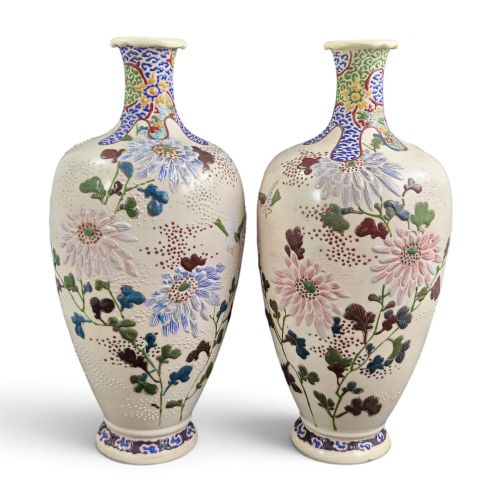
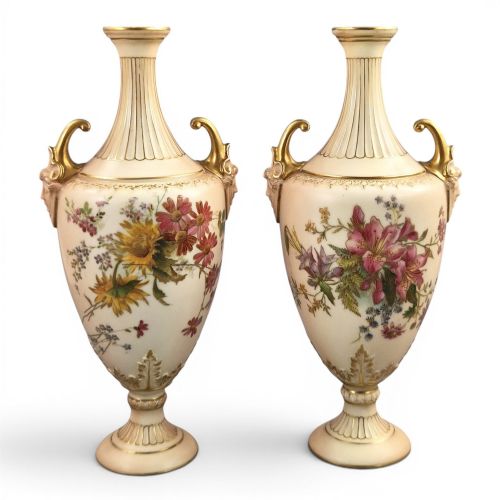
An ivory porcelain vase brings a delicate warmth to a room, especially when finished with subtle floral painting and gilt details.
Ivory Porcelain Vase
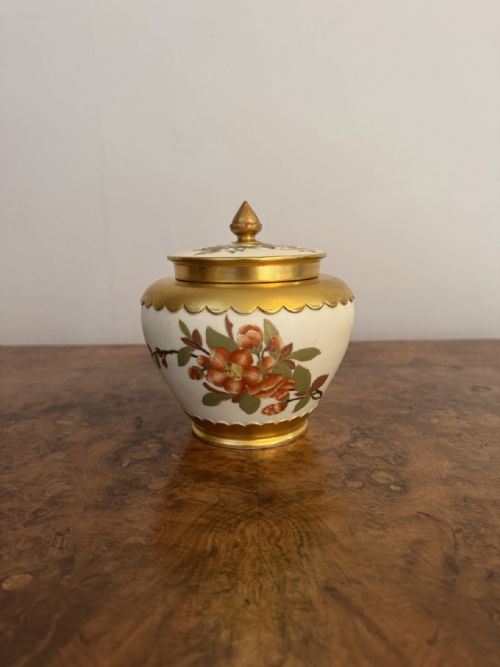
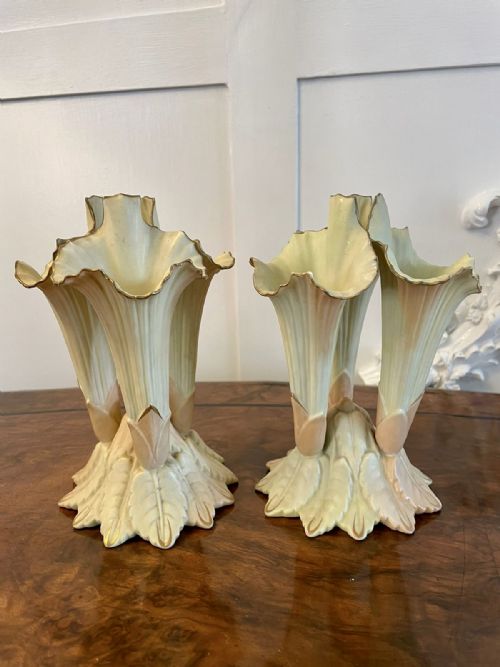
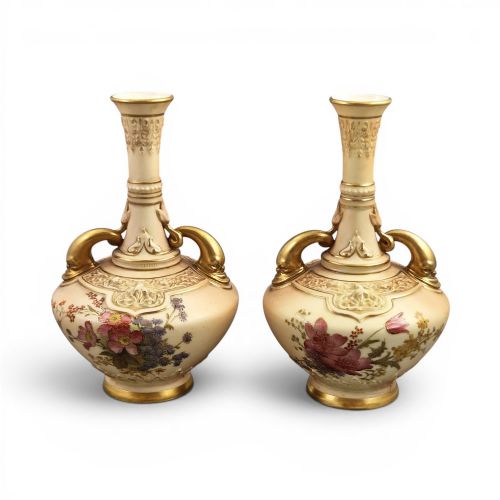
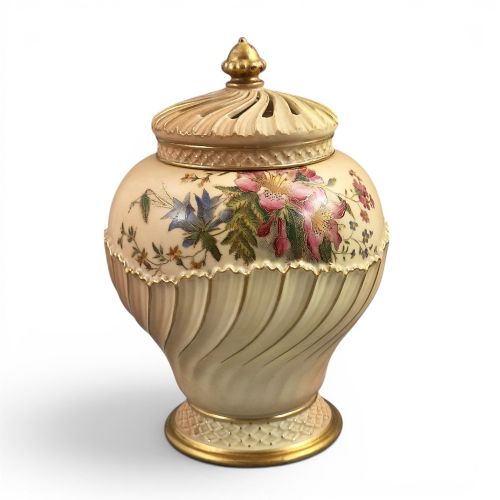
An ivory porcelain vase sits firmly within the Victorian and Edwardian periods, where delicate ceramic bodies and warm ground colours defined the aesthetic. These pieces range from compact spill vases and cabinet vessels to large lidded potpourri jars and pedestal ewers.
The most common examples encountered on this page date from the late nineteenth century up to the 1920s, predominantly originating from English potteries. Collectors find these forms in pairs or as single statement pieces, often featuring blush ivory finishes.
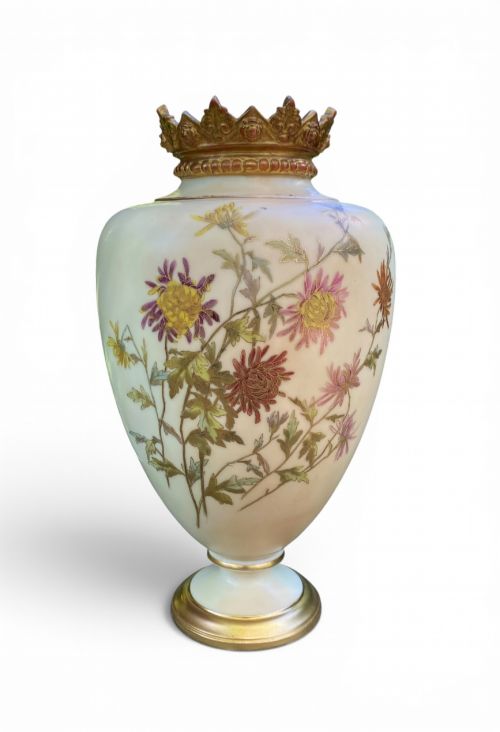
Makers utilised various traditional shapes, incorporating pierced handles, dolphin motifs, and crown covers into the ceramic body. The variety spans standard floral vases through to elaborate ornamental urns.
Materials and technique
Potters formed these pieces using fine ceramic porcelain, applying a soft ivory-toned glaze that provided a muted ground for subsequent decoration. Artists then hand-painted floral motifs directly onto this porous surface before firing.
Gilding and gold leaf accentuation were applied to handles, rims, and borders, often accompanied by raised enamel details. Skilled decorators created the characteristic blush effect by blending pastel enamel colours into the wet glaze.
Listings feature porcelain pieces spanning from the 1870s through to the 1920s, covering Victorian and Edwardian aesthetic periods.
Separating the ordinary from the exceptional
Quality rests upon the skill of the hand-painting and the crispness of the moulded ceramic form. Pieces featuring named artists or intricate, detailed floral work stand apart from standard factory production.
The preservation of the delicate gilding and the original enamel work dictates the desirability of a piece. Well-balanced proportions and undamaged pierced handles complete the higher tier of these ceramics.
Royal Worcester·Locke And Co
The Ivory Porcelain Vase Glossary
- Blush ivory
- A soft, creamy porcelain glaze developed during the late nineteenth century to mimic the warm tone of human skin. It served as a muted background for floral hand-painting.
- Potpourri jar
- A decorative vessel featuring a pierced or crown cover designed to hold dried scented petals. These lidded pots often included inner liners.
- Ewer
- A large jug-shaped vase with a flared spout and a decorative handle, historically modelled on classical water vessels. They frequently appeared in matched pairs.
- Spill vase
- A narrow, upright ceramic cylinder used to hold thin wooden spills for lighting candles and fires. They represent some of the smaller domestic forms available.
- Gilding
- The application of gold leaf or gold paint to ceramic rims, handles, and raised motifs. It provides a bright contrast against the matte ivory glaze.
Ivory Porcelain Vase: Frequently Asked Questions
How do I clean an ivory porcelain vase?
Dust the surface gently with a soft, dry brush to prevent accumulation in recessed areas and around pierced handles. Avoid using water or chemical cleaners, which can damage delicate hand-painted enamel and subtle gilding.
Keep these ceramic vessels away from direct sunlight and damp environments to protect the integrity of the glaze. Handle them by the body rather than protruding handles or thin rims when moving them.
Were these vases used for fresh flowers?
Many of these vessels were created purely for decorative display on mantelpieces and cabinets rather than practical utility. Spill vases and cachepots served specific functional purposes in period homes, but larger potpourri jars held dried aromatics.
Water can seep into unglazed portions or hairline crazing on older ceramics over time. Using a modern glass insert inside the vessel protects the historic interior if displaying fresh stems.
How do I date an ivory porcelain vase?
Makers stamped underside bases with specific shape numbers, pattern codes, and date ciphers that changed annually. Comparing these factory marks against period reference records provides an accurate year of production.
Stylistic cues such as the Victorian Aesthetic movement influence or Edwardian floral arrangements also help narrow down the decade. Hand-written pattern numbers and artist signatures offer further clues to the exact era.
Why are some vases marked blush ivory?
The term describes a specific proprietary ceramic finish that created a warm, matte cream background resembling ivory. Potteries popularised this aesthetic during the late nineteenth century to appeal to contemporary tastes.
This finish allowed botanical artists to paint delicate roses and chrysanthemums directly onto a soft, non-reflective surface. It remains one of the most recognisable signatures of late Victorian ceramic design.