


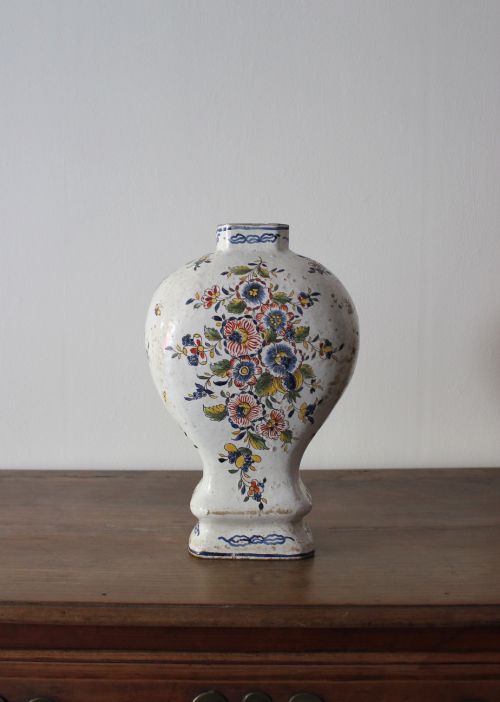
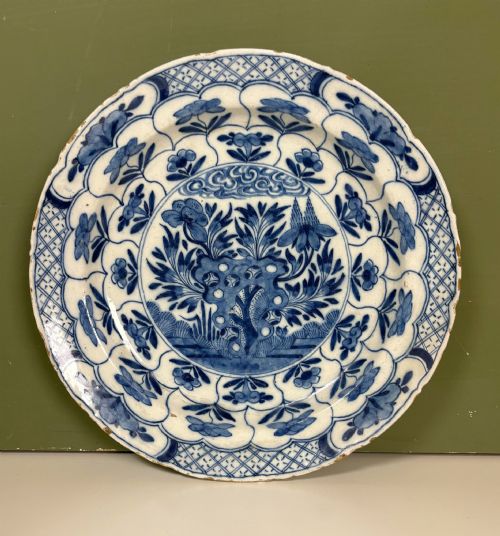
Tin Glaze Earthenware Pottery
Tin glaze earthenware pottery spans centuries of European vessels, tiles and chargers shaped by tin oxide glazes and painted cobalt.
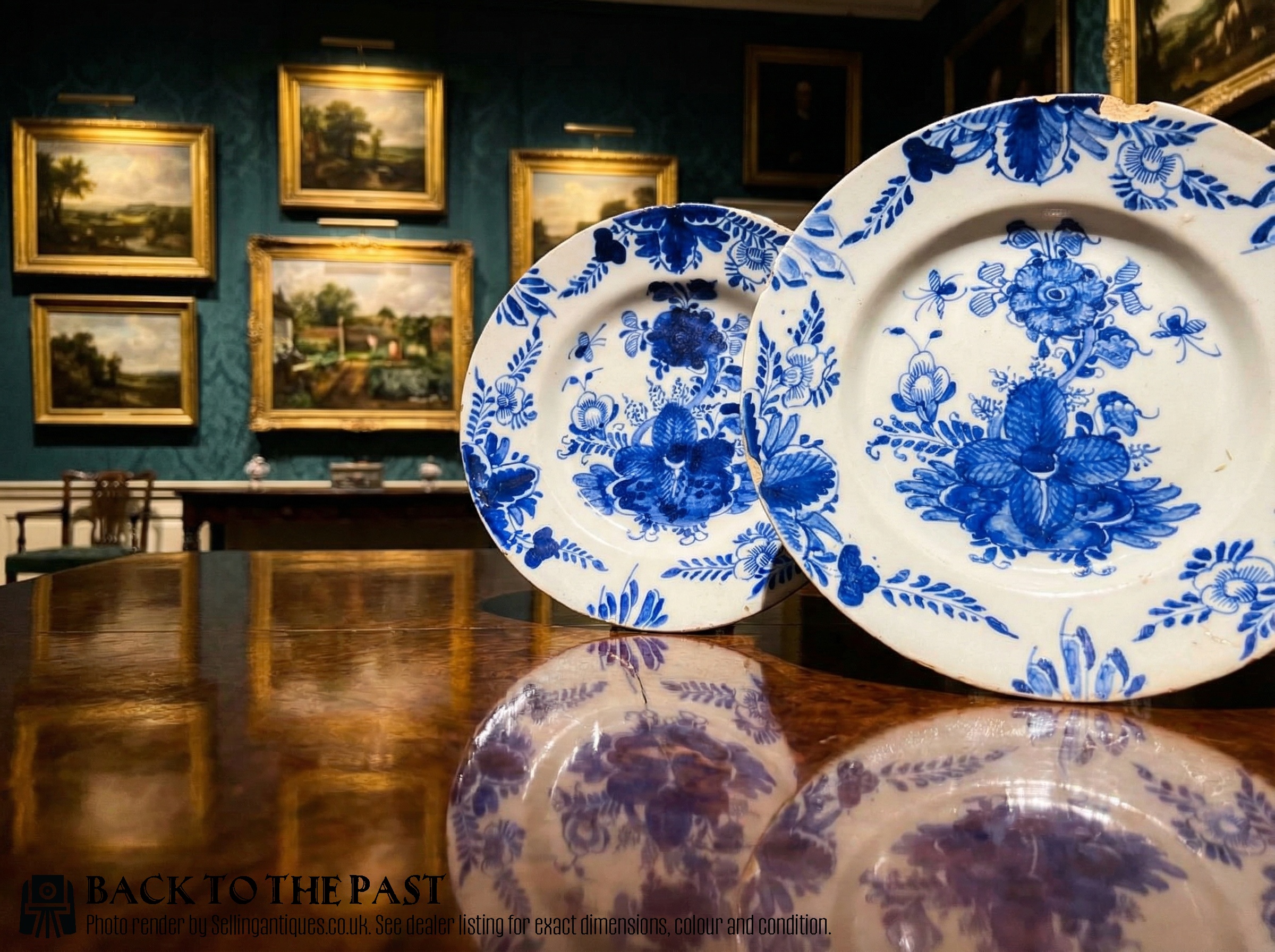
Tin Glaze Earthenware Pottery
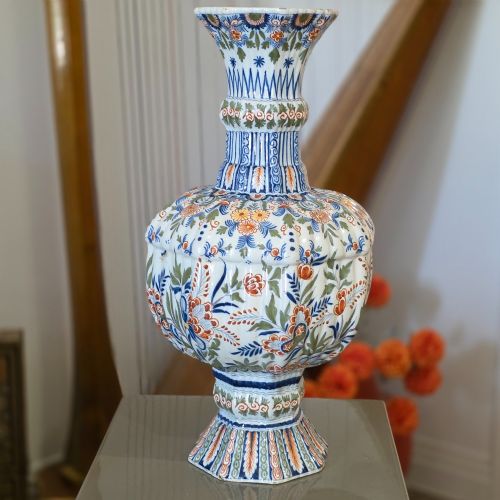
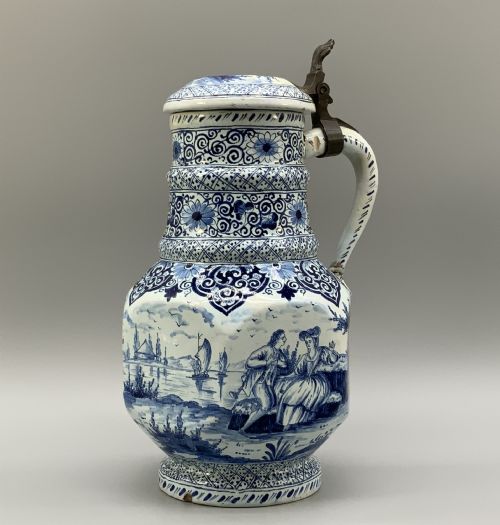
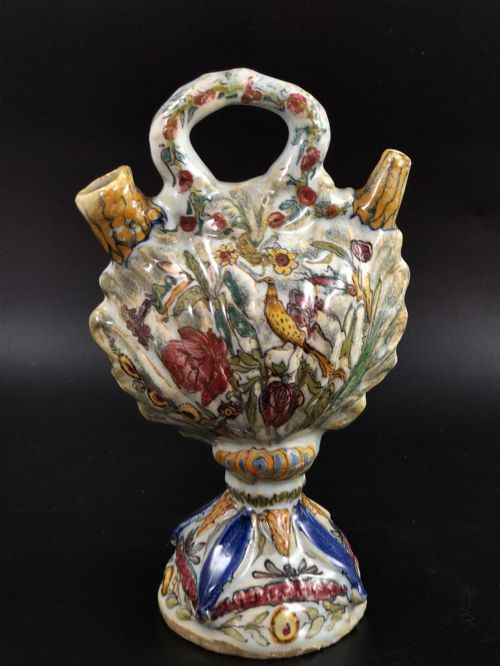
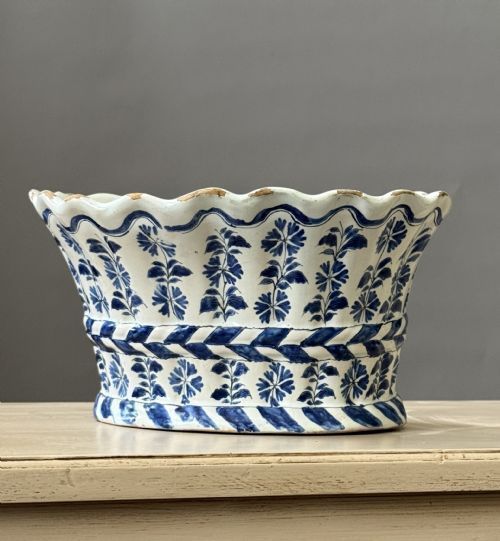
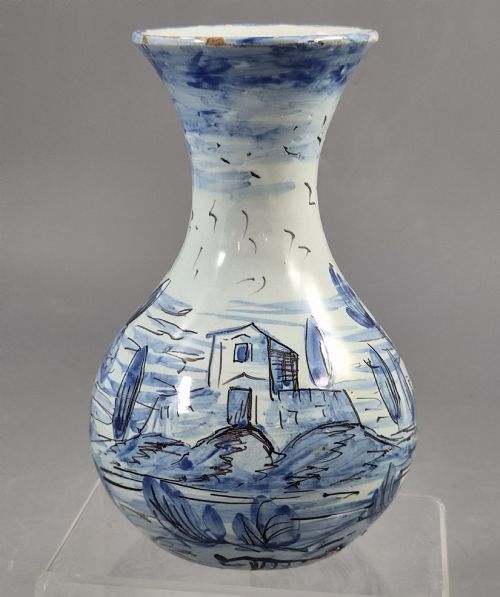
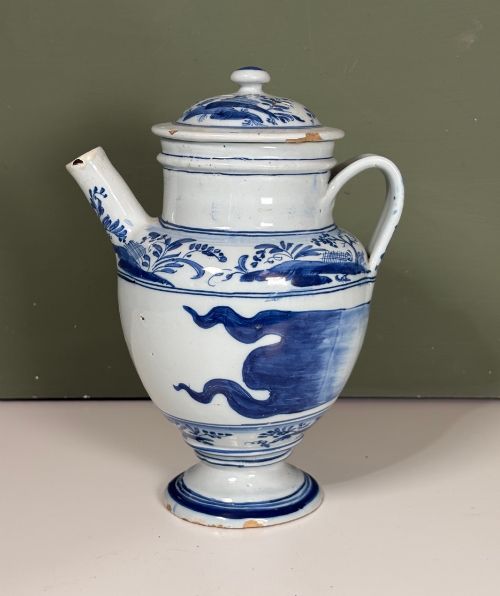
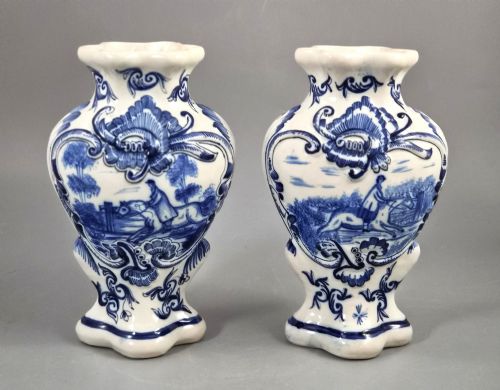
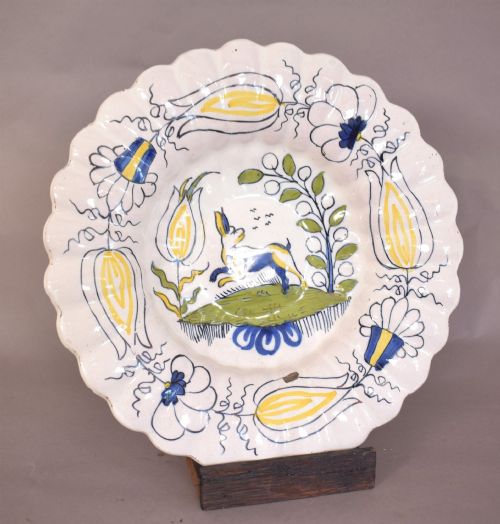
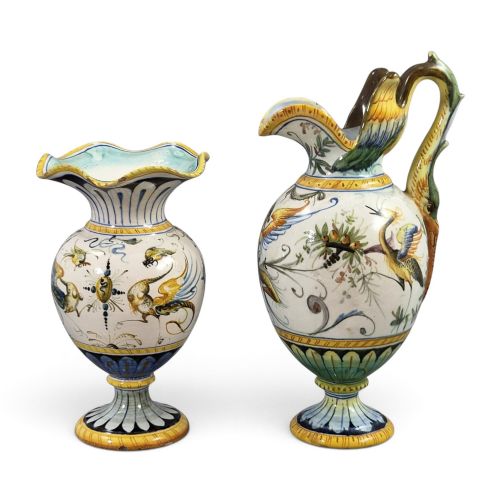
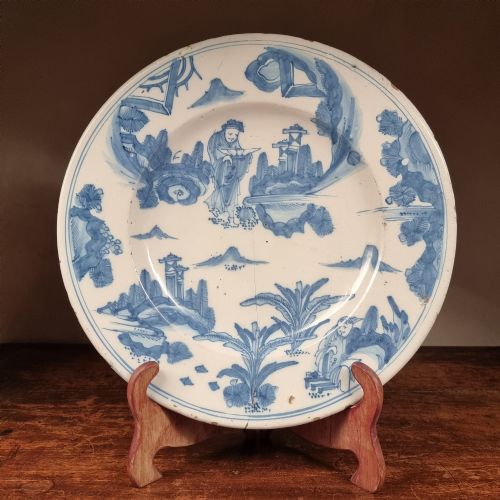
Tin glaze earthenware pottery encompasses centuries of European ceramics, from large chargers and wall plates to lidded vases, apothecary jars and posset pots. Buyers encounter substantial 17th and 18th century Dutch Delftware alongside 19th century French faience and Italian majolica adaptations. These objects serve primarily as decorative vessels, wall displays and tablewares painted in blue and white or polychrome palettes.
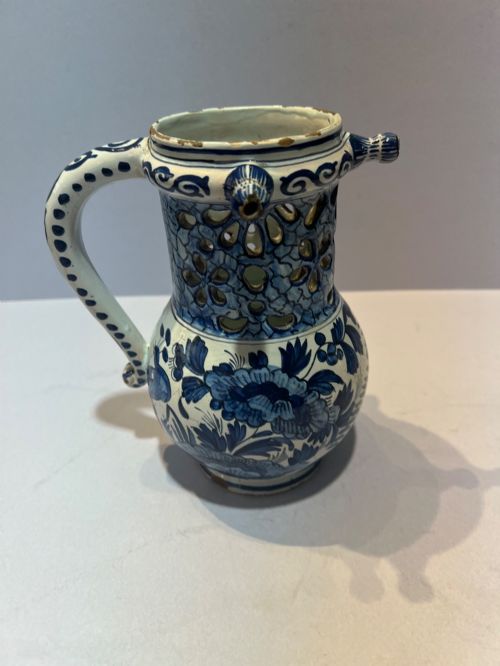
The selection here draws heavily on continental European traditions, particularly Dutch Delft, French regional wares from Desvres and Quimper, and Italian majolica styles. Forms range from utilitarian barbers' bowls and puzzle jugs to grand bough pots, ewers and animal figures. Collectors select these items for their historic domestic utility and the painted surface narratives that define tin-glazed earthenwares.
How they were made
Potters shaped local clays into vessels and plates before firing them to create a porous bisque body. Artisans then dipped each piece into an opaque white glaze containing tin oxide, which provided a smooth, flat canvas for painting. Cobalt pigment and other metallic oxides were brushed directly onto this unfired glaze surface, absorbing into the coating before a final high-temperature kiln firing fixed the design.
This direct painting technique required immense skill because the porous raw glaze absorbed pigments instantly, leaving no room for correction or alteration of brushstrokes. Potters frequently applied a clear lead glaze overcoat, known as a translucid, to deepen the gloss and protect the painted decoration during the second firing.
Listings feature tin glaze earthenware pottery spanning the seventeenth to the twentieth century, encompassing Dutch, French and Italian origins.
What varies in quality
Quality rests upon the crispness of the hand-painted design and the uniformity of the opaque white tin glaze. Superior examples display confident, fluid brushwork with sharp cobalt definition, whereas lesser pieces suffer from blurred pigment edges or muddy glaze pooling. The complexity of the vessel form also dictates merit, separating standard plates from intricate lidded vases, puzzle jugs and sculptural figures.
The refinement of the underlying earthenware body contributes significantly to the overall standard of the object. Finer pieces possess thinner, more evenly thrown walls and minimal warping from the kiln firing process. Historical significance, intact original covers, and well-preserved polychrome enamel detailing elevate specific examples above standard blue and white production.
Fourmaintraux-Courquin·Cantagalli
The Tin Glaze Earthenware Pottery Glossary
- Tin glaze
- An earthenware ceramic glaze rendered opaque and white by the addition of tin oxide. It serves as the traditional absorbent ground for painted cobalt decoration.
- Majolica
- A type of Italian tin-glazed earthenware decorated with colourful metallic oxides. Renaissance Revival versions recreate these vibrant 15th and 16th century aesthetic traditions.
- Faience
- The French and continental European term for tin-glazed earthenware pottery. Production centres such as Desvres, Rouen and Quimper developed distinct regional decorative styles.
- Charger
- A large decorative plate intended for display on a wall or dresser rather than functional dining use. These wide surfaces often feature elaborate narrative or floral paintings.
- Puzzle jug
- An interactive drinking vessel featuring a perforated neck and a hollow rim connected to a handle. Drinkers must solve the riddle of liquid flow through hidden channels to imbibe without spilling.
Tin Glaze Earthenware Pottery: Frequently Asked Questions
What is tin glaze earthenware pottery?
Tin glaze earthenware pottery refers to ceramic objects coated in an opaque white glaze containing tin oxide and decorated with painted pigments. This technique originated in the Middle East before spreading through Italy, the Netherlands, England and France.
Artisans painted directly onto the porous unfired glaze, creating detailed blue and white or polychrome scenes before a final kiln firing fixed the surface.
How do I care for tin glazed antiques?
Tin glazed antiques require gentle handling because the earthenware body beneath the glaze is relatively soft and porous. Keep these pieces away from moisture and humidity to prevent moisture migration through tiny glaze cracks.
Clean them only with a dry or very lightly dampened soft cloth, avoiding abrasive cleaners or prolonged soaking in water.
How do I tell Dutch Delft from French faience?
Dutch Delft typically relies on cobalt blue painting inspired by Chinese porcelain, often utilising distinct local floral and architectural motifs. French faience from regions like Quimper or Desvres frequently incorporates broader polychrome palettes and distinct regional human figures.
Examining the clay body weight, glaze tone and any base markings helps distinguish between these European manufacturing traditions.
Were chargers used for dining?
Chargers were primarily designed for decorative display on walls, sideboards or dressers during the 17th and 18th centuries. Their wide surfaces provided artisans with a large canvas for elaborate historical, floral or heraldic paintings.
While some large plates saw occasional service at wealthy dining tables, their primary role was visual display.