


Antique Earthenware Dishes
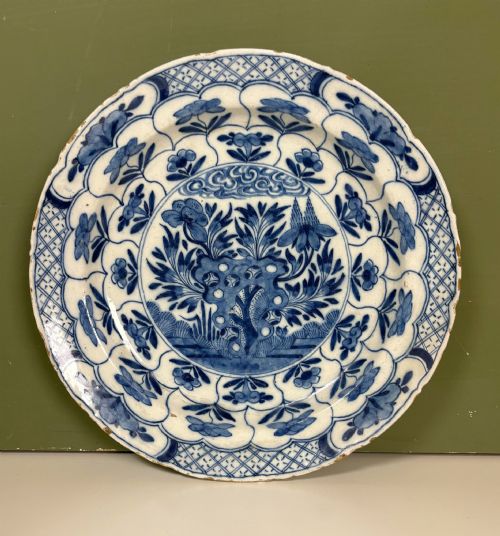
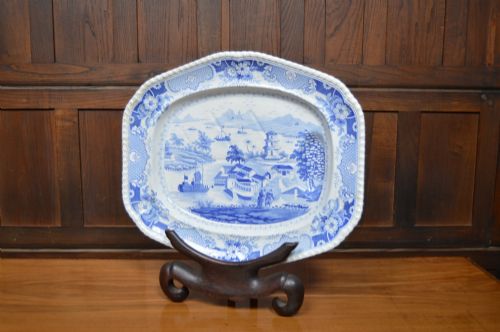
These antique earthenware dishes span centuries of table service, offering collectors hand-painted tin glazes, rich blue and white transfer prints, and robust creamware forms.
Antique Earthenware Dishes
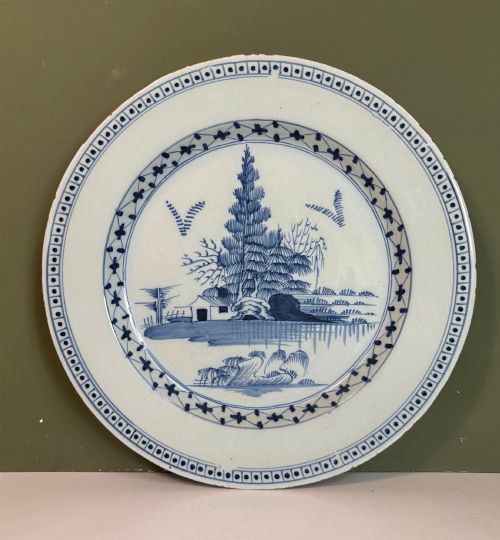
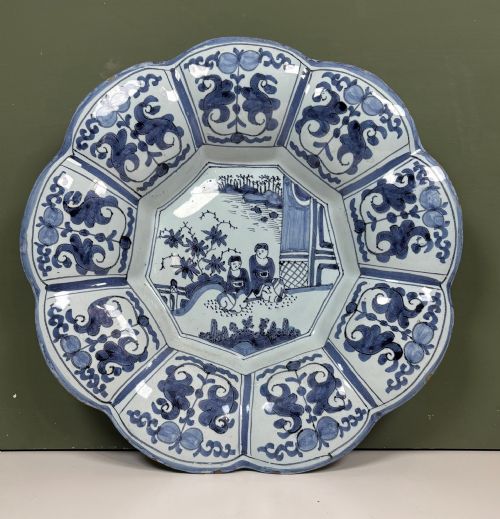
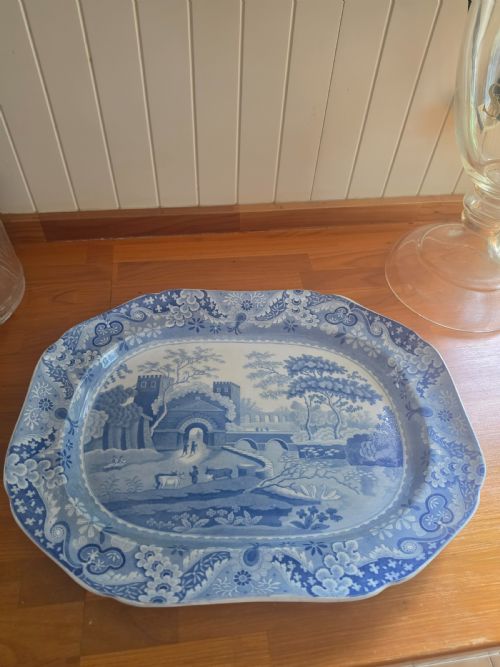
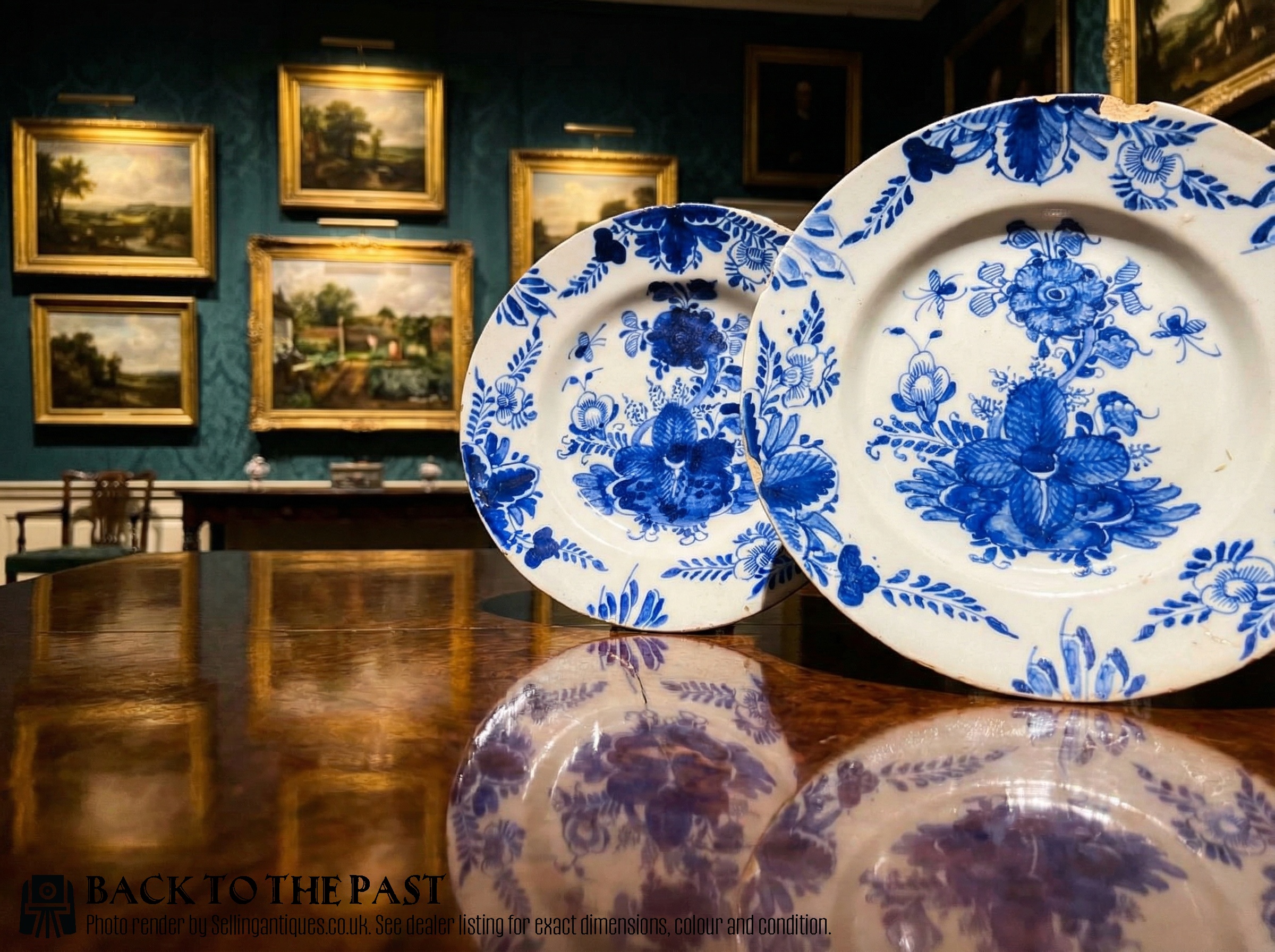
Antique earthenware dishes encompass a broad range of utilitarian and decorative tablewares, including chargers, platters, tureens, and serving dishes produced across British, Dutch, and French potteries. Buyers exploring this category frequently encounter large chargers and platters dating from the seventeenth, eighteenth, and nineteenth centuries, finished with tin glazes or transfer printing.
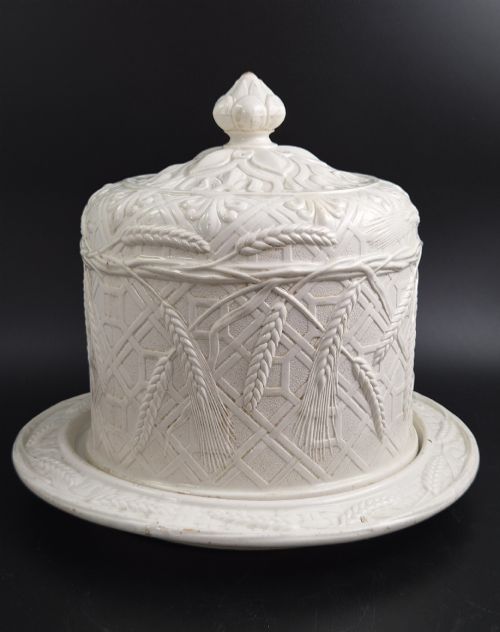
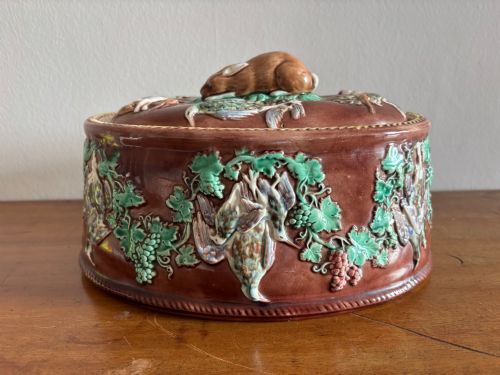
Forms range from deep serving bowls and cheese domes to flat meat plates and lobed dishes. These items reflect the shifting domestic dining habits and ceramic technologies of the Georgian and Victorian eras.
How they were made
Potters shaped native clays on the wheel or pressed them into moulds to create plates, chargers, and hollowware forms like tureens and cheese domes. These shaped bodies underwent a primary firing to produce porous biscuit earthenware ready for surface treatment.
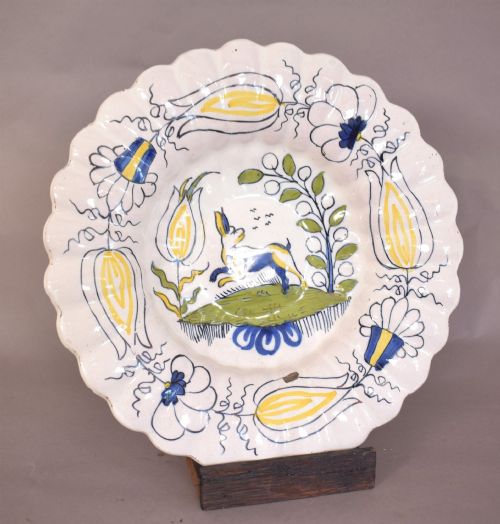
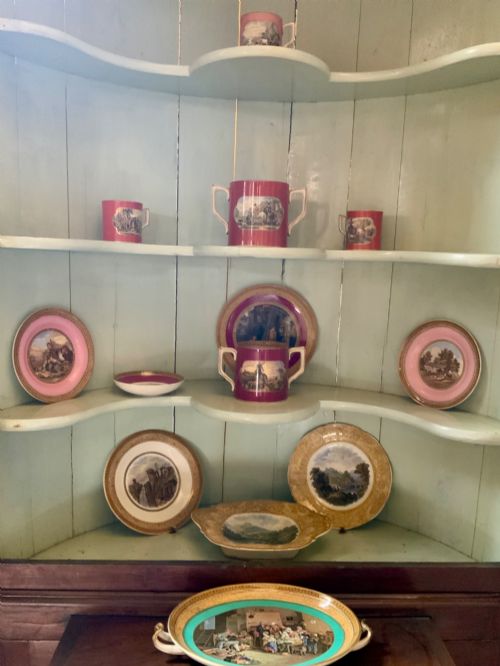
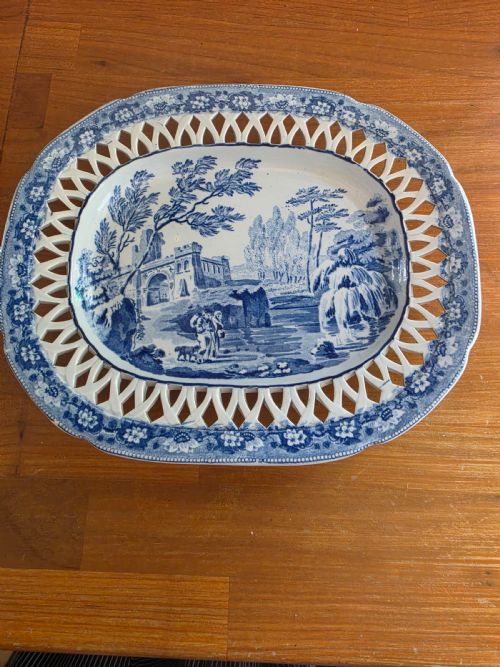
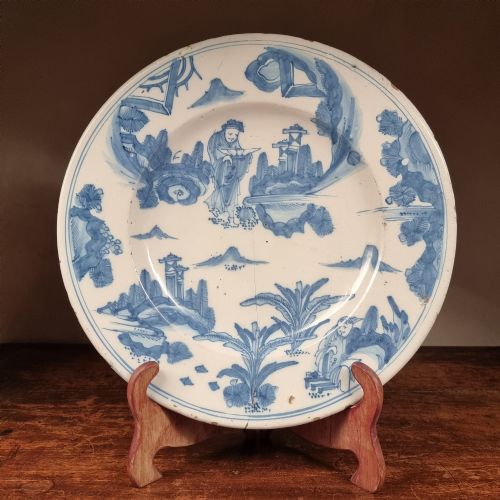
Surface decoration relied heavily on tin glaze, lead glaze, and cobalt pigment applied directly to the porous body or over an opaque white enamel background. Polychrome examples incorporated additional enamel colours, while transferware utilised engraved copper plates to press printed patterns onto the ceramic surface before a final gloss firing.
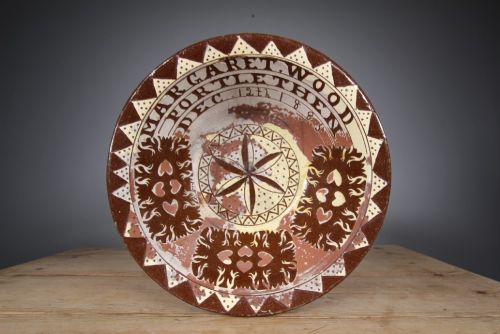
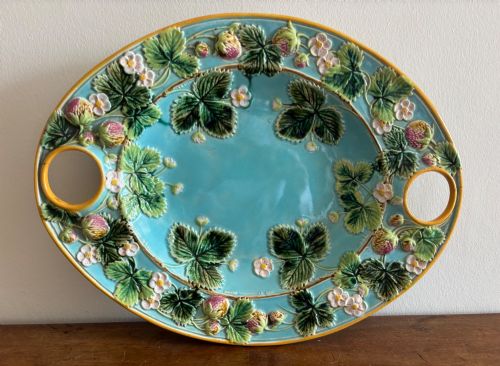
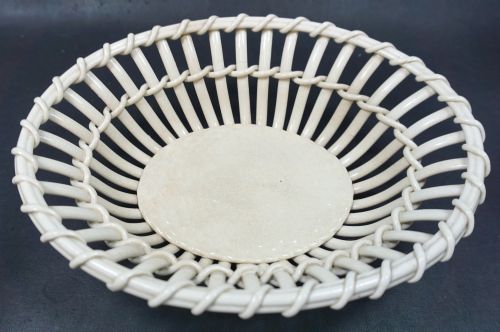
Object forms include cheese domes, chestnut baskets, hot-water plates, and commemorative dishes alongside traditional flat chargers and serving platters.
What varies in quality
Quality in these earthenware pieces is dictated by the crispness of the transfer print or the skill of the hand-painted brushwork. Superior items exhibit controlled pigment application, balanced composition in decorative scenes, and well-defined moulded details such as basket weave or lobed borders.
The stability of the glaze and the uniformity of the initial clay body also determine a piece's standing. Finer examples display minimal kiln distortion, even glaze coverage without excessive pooling, and well-preserved polychrome or cobalt hues that remain vibrant against the base enamel.
Spode·Wedgwood·Davenport·George Jones·John Rogers and Son·J. and R. Clews·Koshida·Seaton Pottery
The Antique Earthenware Dishes Glossary
- Earthenware
- Porous pottery fired at lower temperatures than stoneware or porcelain, requiring a glaze to achieve impermeability. It forms the primary body material for traditional delftware, creamware, and majolica pieces.
- Tin Glaze
- An opaque white glaze containing tin oxide, used as a smooth surface for hand-painted cobalt or polychrome decoration. It characterises European delftware and faience production.
- Transferware
- Ceramic pottery decorated by pressing a paper design inked from an engraved copper plate onto the bisque body. This technique enabled intricate blue and white scenic patterns to be produced in large quantities during the nineteenth century.
- Creamware
- A refined, pale yellow earthenware developed in England during the eighteenth century and perfected by potteries such as Wedgwood. It is prized for its warm tone and light weight.
- Charger
- A large ornamental or serving plate, typically measuring over thirty centimetres in diameter, designed to be displayed on walls or used centrally at the dining table.
Antique Earthenware Dishes: Frequently Asked Questions
How do I care for antique earthenware?
These ceramic items require gentle hand washing in warm water using mild soap, avoiding abrasive sponges or dishwashers entirely. Because the underlying earthenware body is porous, any existing hairline cracks can absorb moisture and weaken the structure over time.
Display these dishes away from direct sunlight and sudden temperature shifts to protect the historical glazes and enamels. Wall-mounted chargers should be secured with padded brackets designed specifically for heavy antique ceramics.
Were these dishes used for daily dining?
Many examples served practical roles in period households, holding meats, cheeses, game pies, and vegetables during formal meals. Large chargers and platters were central to communal table service before individual plating became standard practice.
Other pieces, particularly finely painted delftware chargers and decorative plates, were primarily intended for display on walls or sideboards. The presence of stacking marks or surface wear often indicates genuine domestic use.
How can I tell an eighteenth-century charger from a nineteenth-century copy?
Early pieces from the eighteenth century typically exhibit hand-thrown potting irregularities, foot rings with visible kiln grit, and organic variations in hand-painted cobalt or enamel pigments. The tin glazes on these older items often show subtle surface crinkling or fine crazing.
Nineteenth-century and later interpretations often feature mechanical transfer printing, more uniform paste bodies, and factory marks stamped into the ceramic base. Examining the weight, foot rim construction, and pigment application helps clarify the period of production.