


Hand Painted Creamware
Hand painted creamware brings together the light body of the Georgian potter and the sure brush of the enamel painter.
Hand Painted Creamware
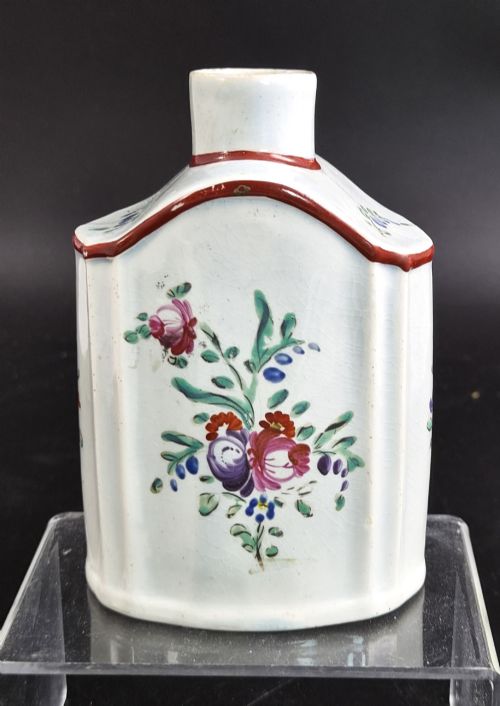
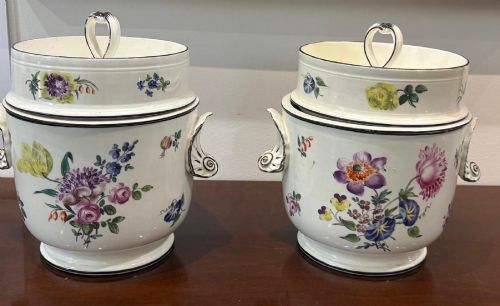
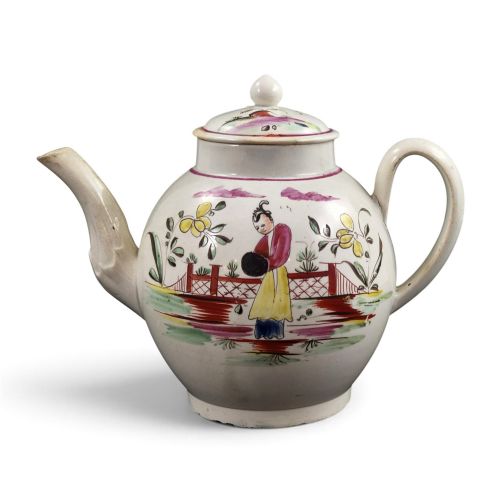
Hand painted creamware comprises domestic and dining vessels produced in earthenware with a pale, warm glaze, decorated with enamel colours by hand. Collectors searching for hand painted creamware encounter pieces spanning the eighteenth and nineteenth centuries, including Georgian tablewares and later nineteenth-century earthenwares.
The forms on this page range from tea caddies, teapots, and cups and saucers to dinner plates, pudding bowls, sauce tureens, ice pails, and mugs. Many examples reflect Georgian Neoclassical tastes, botanical subjects, armorial bearings, Chinoiserie scenes, and floral enamels.
Origins include notable English potteries such as Leeds and Wedgwood, alongside Staffordshire and Swansea productions. Alongside standard creamware, related earthenwares such as pearlware appear in the selection.
How hand painted creamware was made
Potters formed these items from earthenware bodies, applying lead glazes that created the characteristic pale, cream-coloured surface finish. This body provided a smooth ground for subsequent decoration.
Painters applied enamel colours directly over or under the glaze by hand, executing botanical studies, armorials, floral sprays, and figurative scenes. Kiln firing then fixed the pigments into the glazed surface.
Listings feature eighteenth and nineteenth-century earthenwares, including creamware and pearlware, decorated with hand-painted enamels.
What varies in quality
The standard of hand painted creamware rests upon the crispness of the earthenware potting and the control of the glaze. Finer vessels display thinner walls and an even, warm tone without heavy pooling.
Brushwork dictates the visual distinction between pieces. Superior examples exhibit confident, detailed enamel painting in floral, botanical, or armorial motifs, whereas simpler items show more casual execution.
Leeds Pottery·Wedgwood·Swansea·Staffordshire
The Hand Painted Creamware Glossary
- Creamware
- A refined earthenware developed in eighteenth-century England, featuring a pale yellow or cream-coloured lead glaze. It superseded heavier salt-glazed stonewares on dining tables.
- Pearlware
- A fine earthenware introduced in the late eighteenth century, possessing a bluish-tinted glaze that pooled slightly in recesses to mimic Chinese porcelain.
- Enamel
- Opaque coloured glass fused to the ceramic surface by firing. It provided the vibrant palette used for floral and figurative painting on creamware.
- Armorial
- Decoration featuring a family crest, coat of arms, or heraldic shield. Such designs were frequently commissioned by landed families for their dining services.
- Chinoiserie
- European interpretations of Chinese artistic motifs and landscapes. This style appeared frequently on eighteenth-century ceramics.
Hand Painted Creamware: Frequently Asked Questions
What is creamware made from?
Creamware is produced from refined earthenware clay bodies covered with a transparent lead glaze that yields a warm, pale yellow hue.
Potters shaped these bodies into domestic vessels before firing them and applying hand-painted enamel decoration.
How do I date hand painted creamware?
Dating relies on the form of the vessel, the tone of the cream glaze, and the style of the hand-painted enamel decoration. Eighteenth-century pieces often display lighter potting and distinct neoclassical or Chinoiserie motifs.
Later nineteenth-century examples may shift towards pearlware bodies or incorporate specific dates and names, as seen on commemorative mugs.
Can I use antique creamware daily?
Most collectors treat antique hand painted creamware as display or cabinet pieces rather than for everyday dining. The historic lead glazes and delicate enamel paints can suffer from modern dishwasher use and cutlery wear.
Gentle hand washing in warm water preserves the fragile ceramic body and the surface pigments.