


18th Century Creamware
These 18th century creamware pieces offer the refined warmth of Georgian earthenware, prized by collectors for their buttery glaze and delicate painted or moulded details.
18th Century Creamware
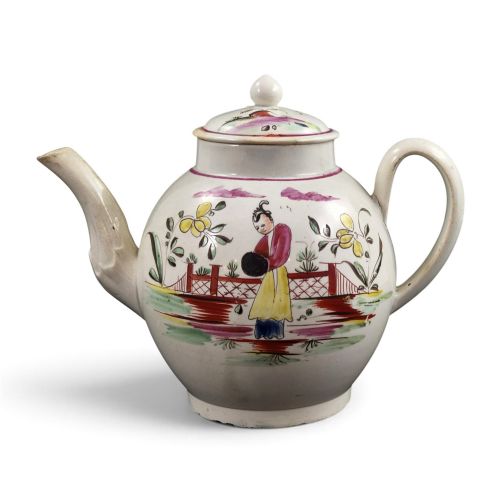
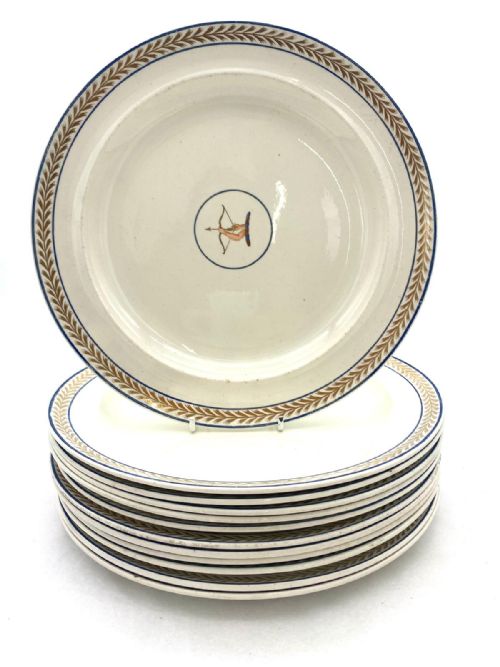
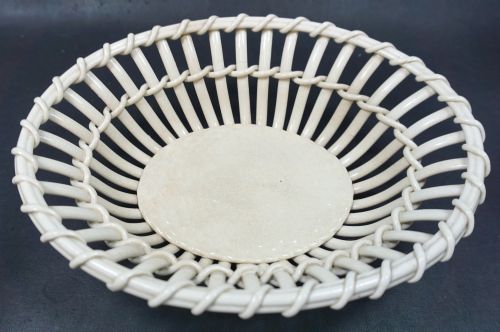
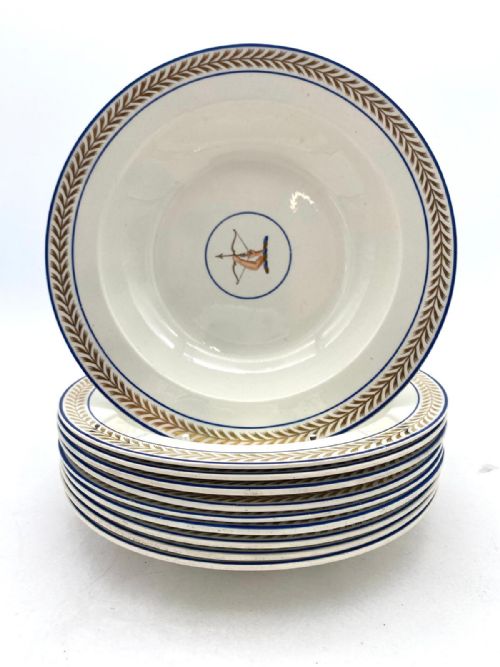
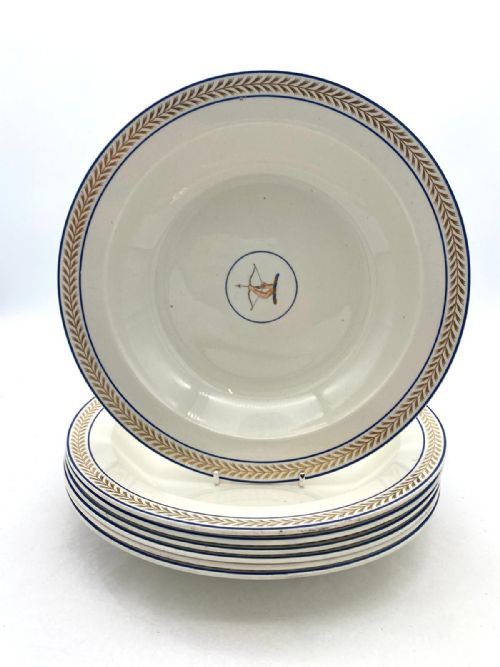
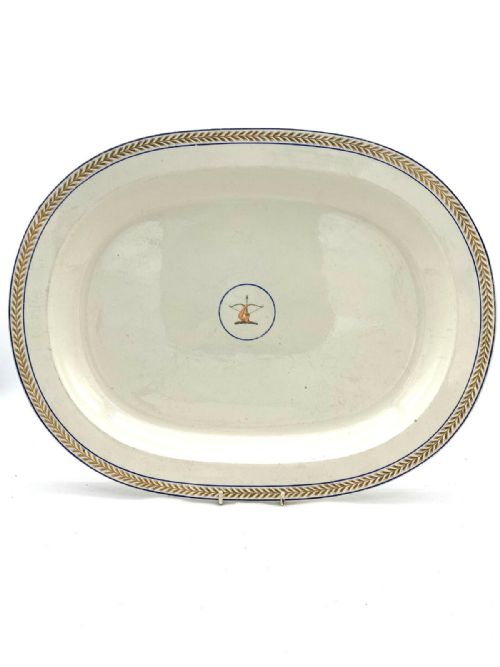
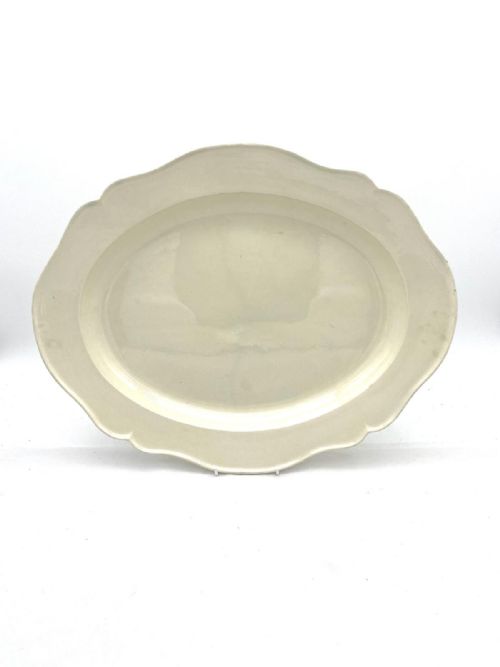
18th century creamware encompasses a range of domestic and decorative earthenware produced during the Georgian period, including dinner plates, soup bowls, pudding bowls, tea bowls, pickle dishes, dessert dishes, figures of cats and cockerels, tea caddies, and crucifix plates. These items reflect the domestic habits and decorative tastes of the Georgian era, spanning utilitarian tablewares and display pieces.
On this page, buyers are most likely to encounter tablewares such as dinner plates and soup bowls alongside specialist forms like armorial pudding bowls and feather edged plates. The inventory also includes figurative subjects and transfer-printed or hand-painted patterns like the buffalo pattern and classical ruins.
Objects originate primarily from English potteries, capturing the shift from early lead-glazed earthenwares to refined cream-coloured bodies and later pearlware developments around the turn of the nineteenth century.
Materials and manufacture
Potters built these pieces from refined ceramic earthenware bodies, coated with a transparent lead glaze that pooled to a warm cream tone in recesses. Artisans utilised moulded and thrown techniques to shape bowls, plates, hollowware figures, and tea caddies.
Decoration relied on enamel colours, hand-painted details in puce and other pigments, and transfer-printing. Potters applied distinct surface treatments including feather edging, armorial crests, and classical ruin scenes.
18th Century Creamware Retail Price Guide 2026
Typical asking prices for 18th century creamware among the pieces listed under this phrase on Sellingantiques today, from the lower quarter to the upper quarter. They describe what is for sale here now, not the wider market.
Potters captured domestic life in clay by shaping spirited figures of cats and cockerels alongside formal armorial dinner plates.
Qualities that distinguish pieces
Quality rests on the crispness of moulding and the evenness of the pale glaze across the earthenware body. Superior examples display finely rendered armorial painting, delicate feather-edged borders, or intricate modelling in figures such as cats and cockerels.
Condition and completeness elevate individual items, particularly within sets of plates or bowls where matching glazes and consistent enamel preservation maintain the integrity of the service.
Wedgwood·Leeds Creamware Pottery·Whieldon·Neale and Co
The 18th Century Creamware Glossary
- Creamware
- A refined earthenware developed in the eighteenth century, characterised by its pale yellow or cream-coloured lead glaze. It superseded heavier salt-glazed stonewares for domestic dining.
- Pearlware
- An earthenware body introduced in the late eighteenth century containing a small amount of cobalt in the glaze to create a bluish-white tint that imitated Chinese porcelain. It bridges the transition from creamware into the nineteenth century.
- Armorial
- A ceramic decoration featuring a painted or printed coat of arms or heraldic crest. These bespoke commissions were ordered by landed families for formal dining.
- Feather edged
- A style of plate border featuring moulded feathered or lobed indentations, often picked out in green or blue enamel. It remains a characteristic Georgian table service decoration.
- Whieldon type
- Earthenware associated with the potter Thomas Whieldon, utilising mottled oxide glazes in manganese, green, and brown over cream-coloured bodies. These pieces display a tortoiseshell or variegated surface effect.
18th Century Creamware: Frequently Asked Questions
What is 18th century creamware?
This ceramic ware is a refined English earthenware developed during the Georgian era, noted for its light-coloured body and transparent lead glaze. Potteries used it to create durable yet elegant tablewares and decorative figures.
Items range from everyday dinner plates and tea bowls to armorial service pieces and sculptural animal figures.
How do I care for creamware?
Wash these earthenwares gently by hand in warm water using mild soap, avoiding harsh detergents or modern dishwashers. Protect the historical glaze from thermal shock by keeping water temperatures moderate.
Store pieces with adequate spacing to prevent rim chips, especially on feather-edged plates and delicate handles.
How are periods and types distinguished?
Distinctions rely on glaze tint, body weight, and decorative techniques characteristic of specific decades. Early pieces often feature warmer cream glazes and Whieldon-type mottling, while later examples transition towards pearlware tones.
Maker marks, armorial crests, and documented patterns provide further clues to dating and attribution.
How was creamware used originally?
Households utilised these earthenwares for serving meals, dining, and displaying social status through matching armorial services. Tea bowls and caddies served the burgeoning Georgian tea culture.
Figural pieces and shell-shaped dessert dishes occupied dining tables and mantlepieces as decorative conversation items.