


Earthenware Dinner Plates
These earthenware dinner plates bring centuries of table history to your home, offering tactile weight and diverse patterns from Georgian to Edwardian periods.
Earthenware Dinner Plates
Earthenware dinner plates span several centuries of British ceramic production, covering utilitarian table services, armorial pieces, and decorative sets. When searching for earthenware dinner plates, collectors encounter diverse styles including Georgian, Victorian, and Edwardian examples.
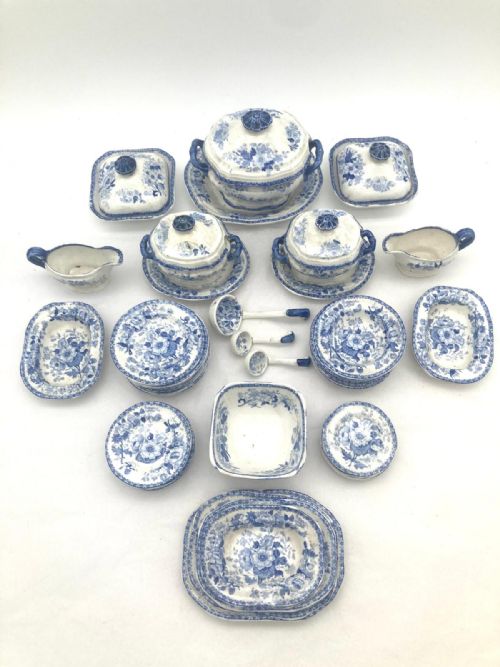
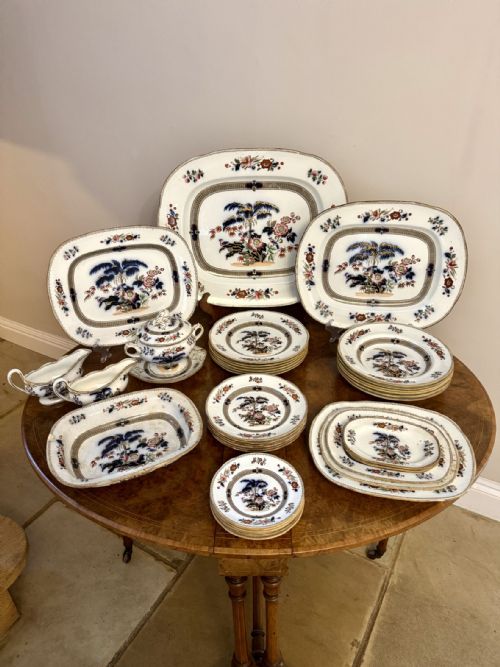
The selections on this page feature forms ranging from single plates and platters to extensive dinner services and child's sets. Origins trace through periods such as the eighteenth and nineteenth centuries, displaying notable patterns like Spode Italian and blue and white transfer.
The most common formats met here are nineteenth-century ironstone and creamware dinner plates. These pieces demonstrate the evolution of domestic dining wares across Georgian, Regency, and later eras.
Materials and production methods
Makers shaped earthenware, creamware, pearlware, and ironstone into dinner plates using traditional ceramic techniques. These porous bodies were fired and then finished with smooth glazes to create functional dining surfaces.
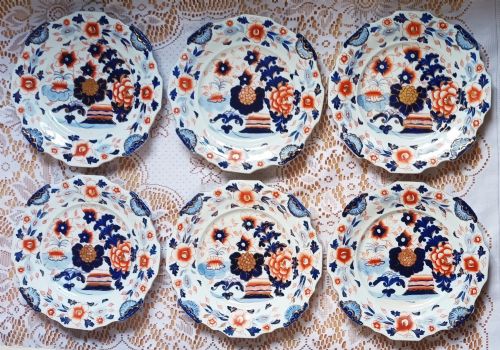
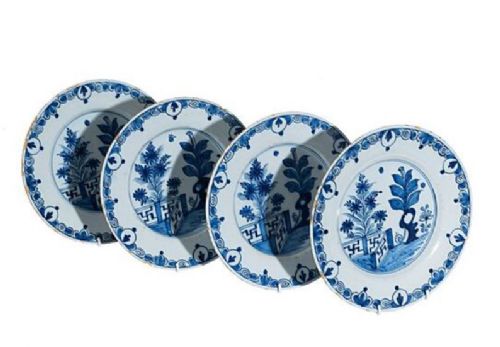
Decoration relied heavily on blue and white transfer printing, hand-painted enamel colours, and occasional gold leaf accents. Pattern applications like the Japan, London Bridge, and floral sheet designs defined the aesthetic of these plates.
Listings feature earthenware dinner plates spanning the eighteenth, nineteenth, and early twentieth centuries, incorporating creamware, ironstone, and pearlware.
Evaluating quality and condition
Quality rests in the crispness of the transfer printing or the precision of hand-painted enamel details across the plate surface. Stronger examples maintain clear pattern registration and even glaze coverage without excessive firing flaws.
The depth of the body material, whether creamware, pearlware, or heavier ironstone, dictates the physical presence of the plate. Superior sets display uniform colour consistency and well-preserved decorative motifs.
Wedgwood·Minton·Booths·Spode·Masons·Leeds
The Earthenware Dinner Plates Glossary
- Creamware
- A refined earthenware with a pale yellowish straw-coloured glaze, developed in Yorkshire and Staffordshire during the eighteenth century.
- Ironstone
- A durable type of heavy earthenware patented in the early nineteenth century to imitate Chinese porcelain.
- Pearlware
- An earthenware body featuring a bluish-tinted glaze designed to mimic the whiteness of true porcelain.
- Transfer printing
- A method of applying engraved decorative patterns onto ceramic surfaces using paper transfers from copper plates.
- Armorial
- A ceramic design featuring a family coat of arms or heraldic crest, typically commissioned for elite households.
Earthenware Dinner Plates: Frequently Asked Questions
Can I use antique earthenware dinner plates for dining?
While these plates were originally created for functional use, their age and glaze composition often mean hand washing is essential. Many collectors prefer to reserve them for special occasions or display.
Heavier ironstone pieces withstand gentle modern use better than porous eighteenth-century creamware or delftware.
How do I identify creamware from ironstone?
Creamware has a warm, pale yellow hue beneath a translucent glaze, characteristic of eighteenth-century Staffordshire and Yorkshire production. Ironstone is noticeably heavier, denser, and whiter.
Ironstone was engineered in the nineteenth century to resist chipping far better than earlier earthenware bodies.
What is blue and white transfer printing?
Transfer printing involved engraving a copper plate with a detailed pattern, applying cobalt blue pigment, and transferring it onto the ceramic body via tissue paper before glazing and firing.
This technique allowed potteries to produce intricate landscapes and floral motifs consistently across large dinner services.
How do I date an antique dinner service?
Dating relies on stylistic clues, ceramic body characteristics, and maker marks stamped or painted on the reverse of the plate. Blue and white transfer patterns and botanical motifs often align with specific decades.
Comparing glaze textures and rim shapes helps distinguish Georgian forms from later Victorian pieces.