
Transfer Printed Ceramics
Transfer printed ceramics bring together utility and narrative design, spanning jugs, tureens, and platters from the eighteenth and nineteenth centuries.
Transfer Printed Ceramics
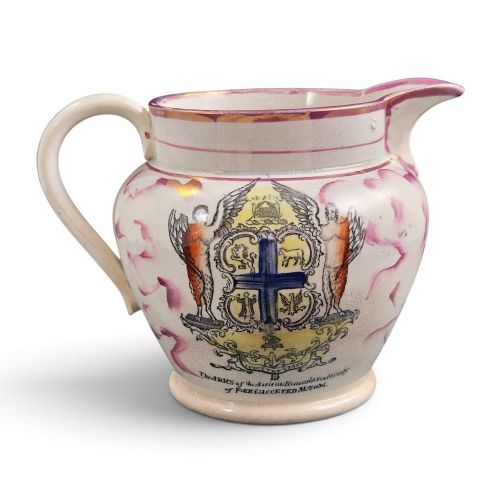
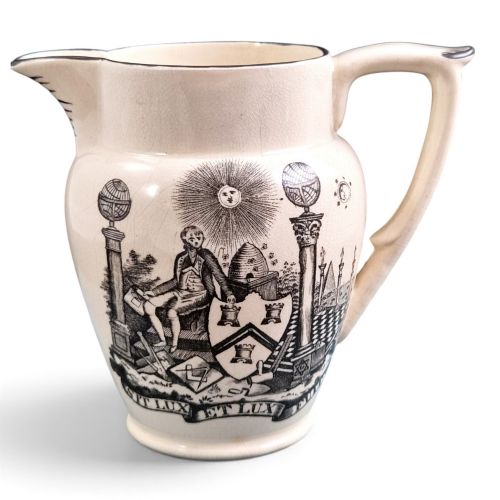
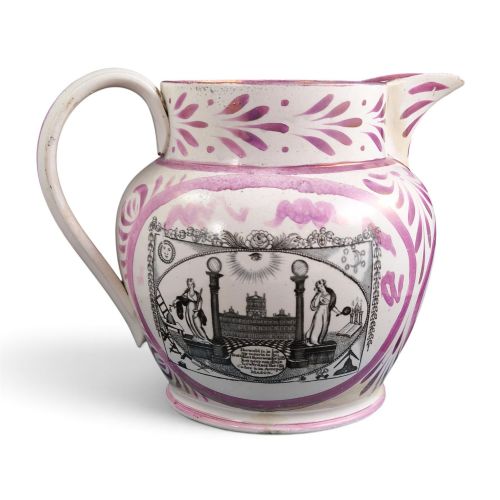
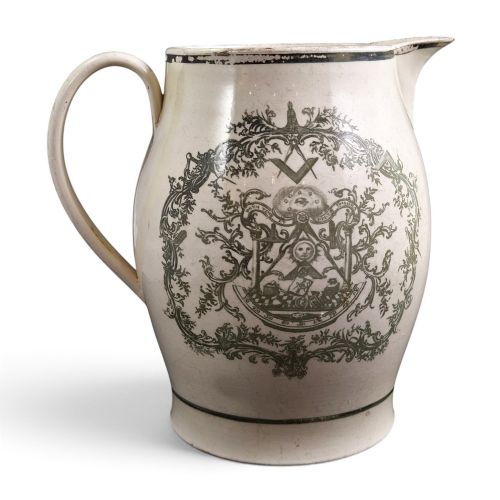
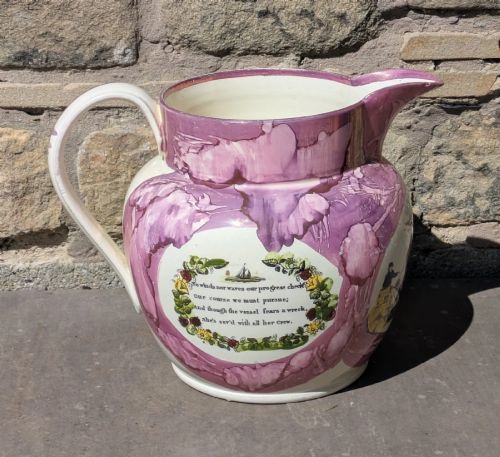
Transfer printed ceramics encompass a wide array of domestic and decorative earthenware, creamware, and pearlware objects designed for everyday use or display. When exploring transfer printed ceramics, buyers encounter everything from large meat platters and footbaths to commemorative jugs featuring maritime themes and Masonic symbols.
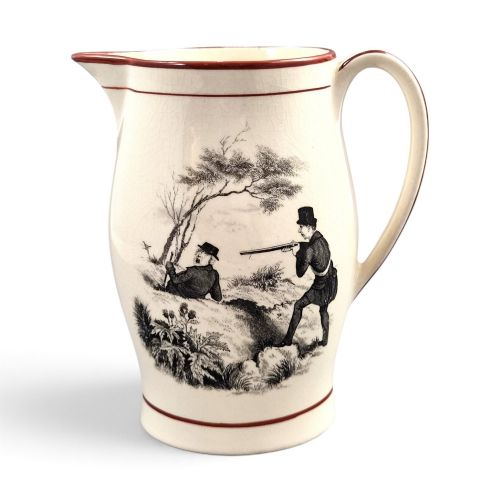
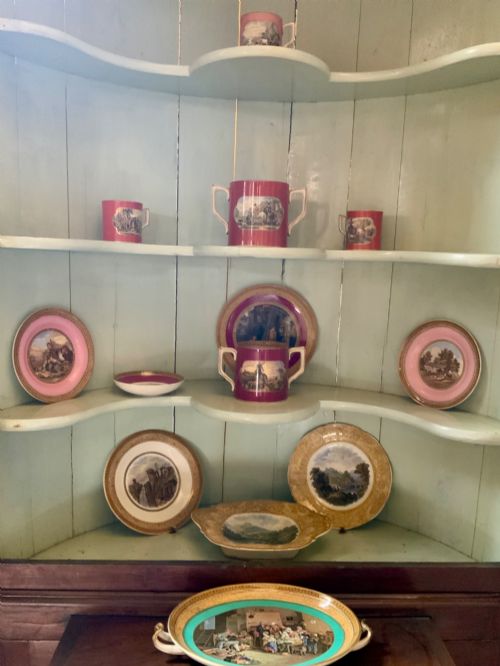
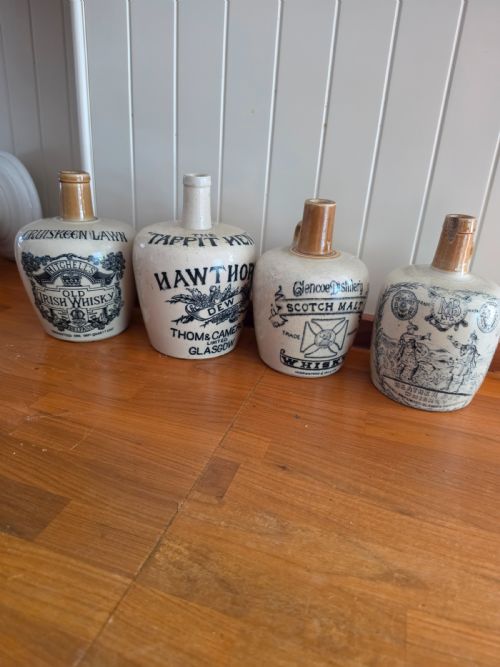
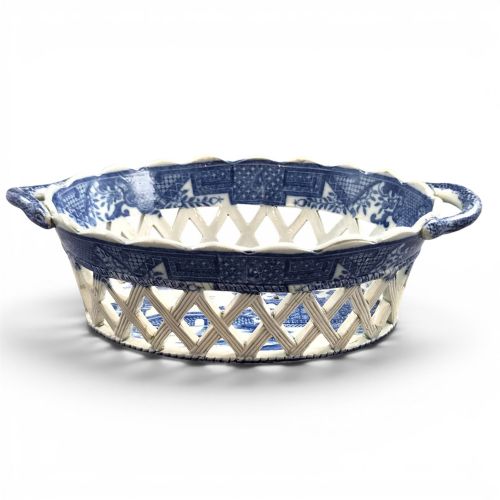
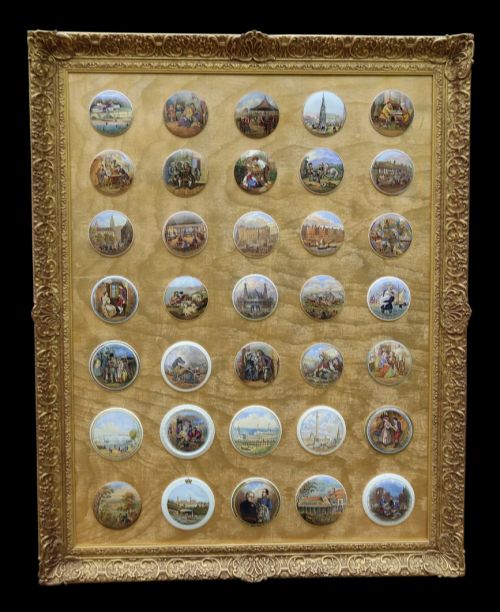
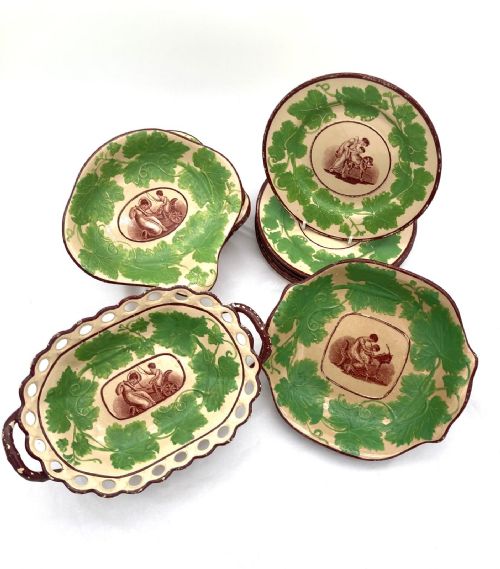
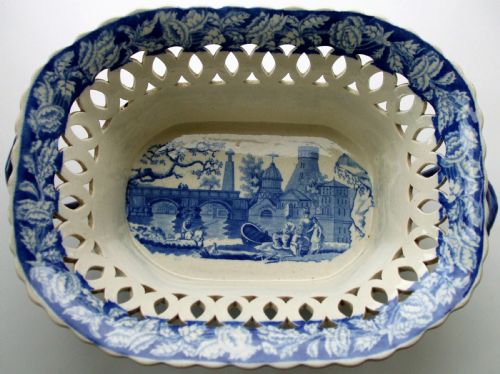
The pieces appearing on this page stretch primarily across the Georgian and Victorian periods, showcasing blue and white patterns alongside pink lustre and black prints. Forms range from reticulated chestnut baskets and dessert services to advertising flasks and framed pot lids, reflecting the diverse output of nineteenth-century English potteries.
Materials and production techniques
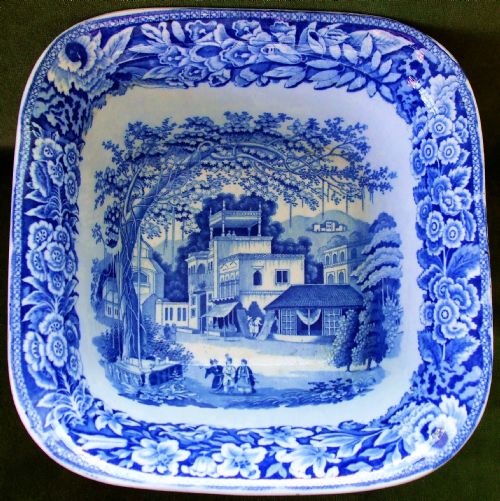
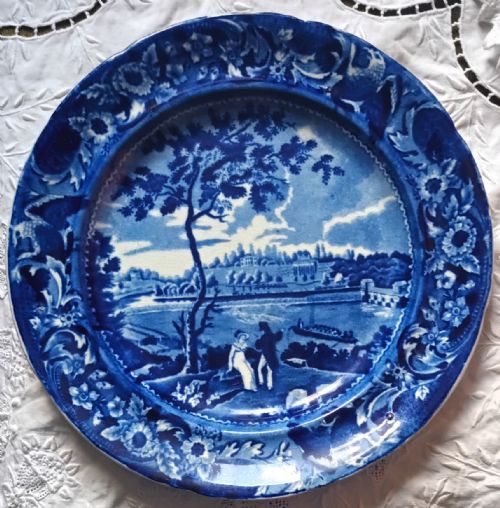
Potters utilised earthenware, creamware, and pearlware as bodies, applying cobalt pigment and other metallic glazes to create the characteristic monochrome or polychrome scenes. The transfer printing process involved engraving a design onto a copper plate, pulling it onto tissue paper, and pressing it onto the ceramic surface before glazing and firing.
Specialised decorative effects such as pink lustre required additional metallic applications and firings to achieve the characteristic iridescent sheen found on maritime jugs and commemorative pieces.
Several nineteenth-century mugs conceal ceramic frogs and newts inside the rim to startle drinkers as they finish their ale.
Factors of quality and distinction
Quality in these ceramics rests on the crispness of the transfer print, the clarity of the underlying glaze, and the precision of the modelling on forms such as baskets and tureens. Crisp lines without blurring or smudging indicate careful execution by the transfer printer.
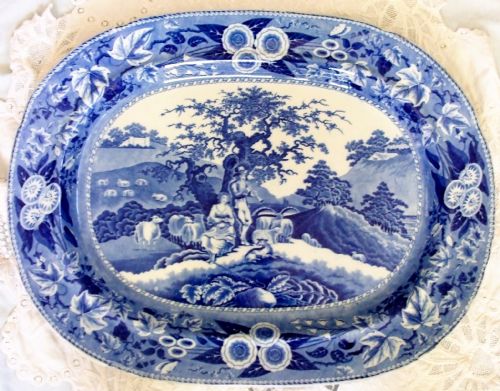
The complexity of the form and the ambition of the pattern also separate standard domestic wares from exceptional exhibition pieces, such as large meat platters with detailed architectural or pastoral scenes.
Spode·J. & R. Clews·J. & R. Riley·Stubbs·Mintons·Copeland·Heathcote·William Adam
The Transfer Printed Ceramics Glossary
- Pearlware
- A refined earthenware developed by Josiah Wedgwood, characterised by a subtle blueish-white glaze that sits in pooling areas.
- Creamware
- A fine-grained, pale yellow earthenware perfected in the eighteenth century, serving as a primary canvas for early transfer printing.
- Lustreware
- Pottery finished with a metallic glaze that produces a coppery, golden, or pink iridescent sheen upon firing.
- Reticulated
- Openwork or lattice decoration cut into the clay body before firing, frequently seen on chestnut baskets and fruit dishes.
- Tureen
- A deep, covered serving vessel for soups, vegetables, or sauces, often accompanied by an integral or separate matching platter.
Transfer Printed Ceramics: Frequently Asked Questions
How do I date transfer printed ceramics?
Dating relies on stylistic clues, ceramic bodies such as creamware or pearlware, and specific maker marks or pattern names recorded in historical archives. Earlier pieces from the eighteenth century typically feature softer pearlware bodies and hand-mixed cobalt pigments.
Later Victorian examples often incorporate brighter white earthenware bodies and diverse transfer colours including magenta, light olive-green, and black. Comparing the pattern name and registry marks helps narrow the decade of production.
What were transfer printed jugs used for?
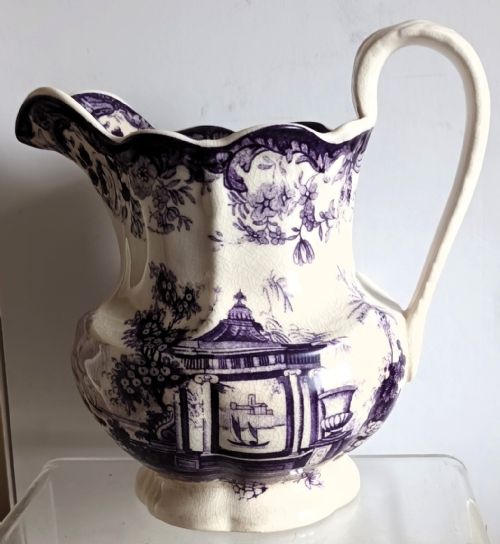
Large jugs and pitchers served practical functions at table for water, beer, or cider, while specialised pieces fulfilled commemorative roles. Masonic jugs and maritime vessels celebrated fraternities, clipper ships, and naval victories with detailed pictorial transfers.
Many of these jugs also feature poetic verses or personal inscriptions, suggesting they functioned as presentation pieces or permanent display items in homes and gathering spaces.
How do I care for antique transferware?
Gentle hand washing in lukewarm water with mild soap preserves the delicate glaze and prevents the underlying earthenware body from absorbing moisture. Avoid dishwashers, harsh abrasives, and prolonged soaking, which can damage historic ceramic bodies.
Display pieces, particularly those with lustre finishes or fine openwork like chestnut baskets, benefit from stable environmental conditions away from direct sunlight.
What is the difference between pearlware and creamware?
Creamware displays a warm, buttery yellow tone resulting from its specific clay composition and lead glaze, dominating eighteenth-century production. Pearlware was introduced to mimic the whiteness of Chinese porcelain by adding a small amount of cobalt to the transparent glaze, which pools with a faint blue tint in crevices.
Both bodies provided smooth surfaces ideally suited for receiving detailed copper-plate transfer prints.