

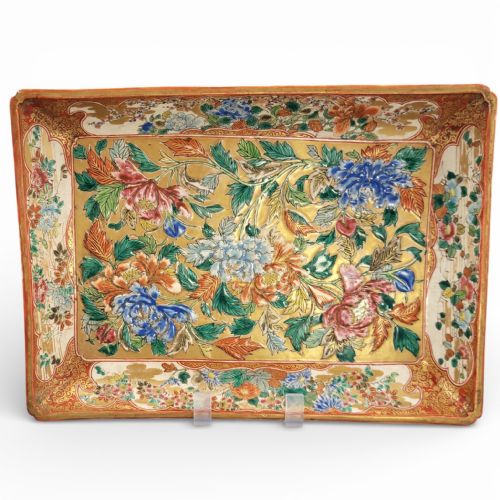


Gold Ceramic Tray
A gold ceramic tray brings gilded decoration and fine porcelain together for serving or display, spanning centuries of craftsmanship.
Gold Ceramic Tray
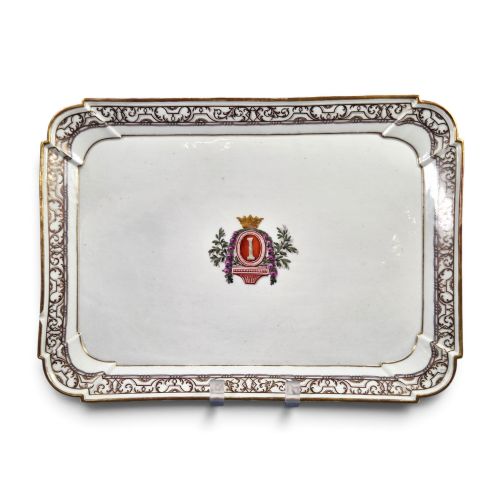
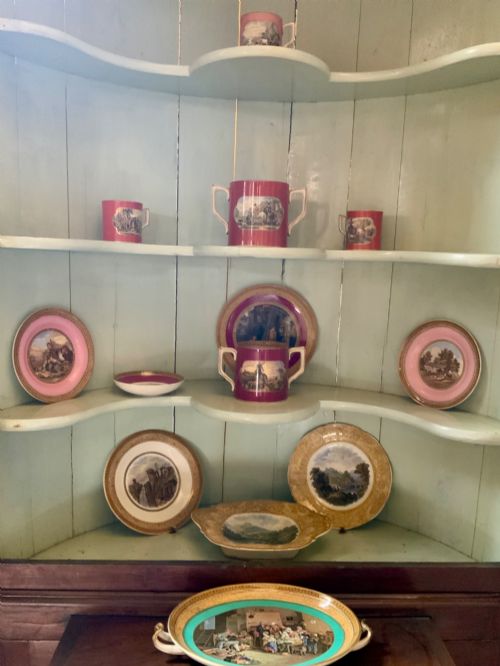
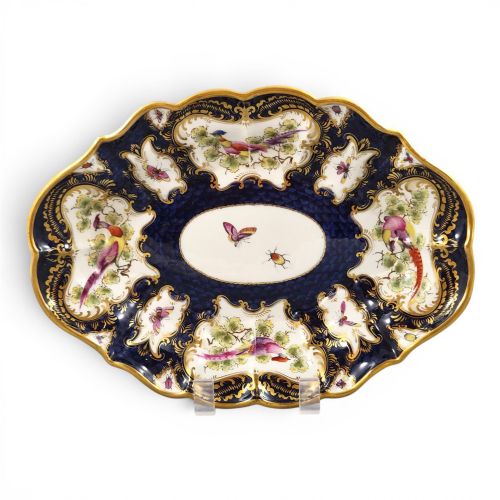
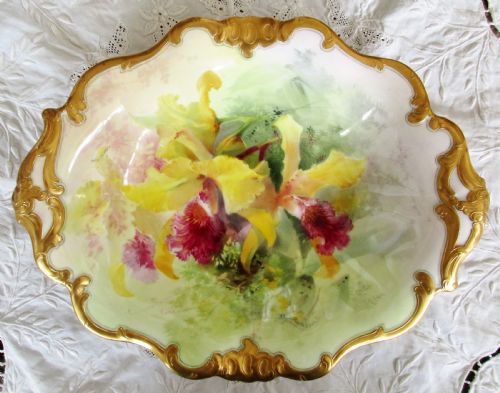
A gold ceramic tray unites glazed earthenware, porcelain, or bone china with gilded accents, operating as a serving dish, cabinet piece, or centrepiece. These items appear across eighteenth, nineteenth, and early twentieth century periods, reflecting diverse stylistic movements from Rococo revival to Art Nouveau and traditional English design.
The pieces on this page lean heavily towards European porcelain factories and international makers, taking forms such as oval dessert dishes, shaped trays, inkstands, and decorative platters. Buyers encounter everything from early eighteenth century Japanese Kutani plates to late Victorian French porcelain mounted in gilt bronze.
Materials and manufacture
Makers shaped fine ceramic bodies including porcelain, bone china, and Staffordshire earthenware, applying glazes before firing the pieces in kilns. Artisans then hand painted intricate details such as botanical studies, mythological scenes, and floral motifs directly onto the ceramic surface.
Gilding was applied using gold leaf, liquid gold, or gilt bronze mounts to highlight rims, handles, and moulded reliefs. Champlevé enamel and brass elements also appear alongside the ceramic bodies on select nineteenth century French and English pieces.
Several trays managed to survive centuries of household dining by looking so pretty people hid them away.
Assessing quality and execution
Quality rests upon the crispness of the porcelain moulding, the refinement of the ceramic body, and the precision of the hand painting. Superior pieces display finely detailed brushwork by named artists or established studios rather than generic transfer printing.
The integrity of the gilding and the weight of any metal mounts or bronze work indicate the original cost of production. Well preserved enamel work, crisp relief moulding, and stable handling all distinguish high tier examples from standard utilitarian wares.
Royal Worcester·Royal Doulton·Chamberlain s Worcester·Coalport Porcelain
The Gold Ceramic Tray Glossary
- Cabinet dish
- A decorative ceramic plate intended for display in a cabinet rather than for serving food at table.
- Gilding
- The application of gold leaf or gold powder to the surface of ceramics, bronze mounts, or woodwork to create a metallic finish.
- Champlevé enamel
- A technique where troughs are dug into a metal surface and filled with enamel paste before firing.
- Bone china
- A type of soft paste porcelain containing bone ash, known for its high strength, chip resistance, and translucent quality.
Gold Ceramic Tray: Frequently Asked Questions
How were these trays used originally?
Many of these items served as dessert dishes, sweetmeat trays, or pen trays for desks during the Georgian and Victorian eras. Others functioned purely as cabinet pieces to showcase wealth and artistic taste in drawing rooms.
Larger versions acted as centrepieces for formal dining tables, holding fruit or sweet confections during multi course meals.
How do I date a porcelain tray?
Dating relies on factory backstamps, impressed marks, and stylistic clues such as the heavy gilding of the Regency period or the organic lines of Art Nouveau. Hand painted signatures and pattern numbers also help narrow down the decade of production.
Comparing the paste quality and glaze characteristics to documented factory timelines provides further chronological accuracy.
Can I use an antique tray for food?
While technically possible, historical pieces with delicate hand painted enamel and surface gilding are generally reserved for display. Daily use and modern dishwashing detergents can wear away vulnerable gold leaf and historic glazes.
Gentle hand washing in lukewarm water is necessary if occasional use is preferred over pure collection.
What is the difference between porcelain and bone china?
Traditional porcelain is made from petuntse and kaolin clay fired at extremely high temperatures, resulting in a vitreous and white body. Bone china incorporates animal bone ash into the mixture, which lowers the firing temperature slightly while increasing durability and translucency.
Both materials accept hand painted polychrome decoration and gold leaf exceptionally well.