


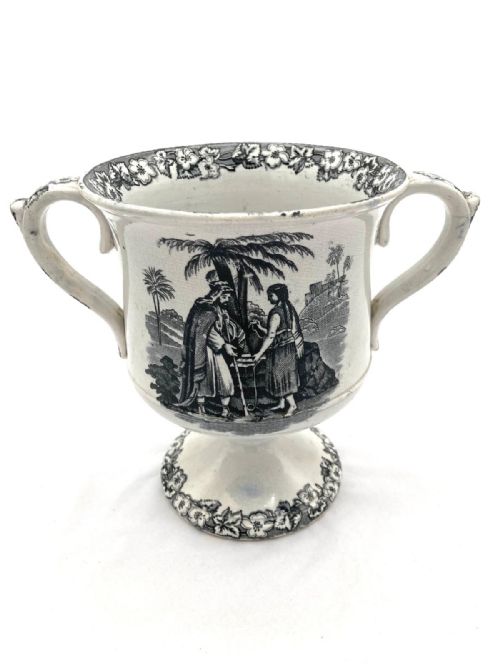


Victorian Printed Earthenware
Victorian printed earthenware brings domestic service and parlour display together through transfer-printed scenes transferred onto utilitarian and ornamental ceramics.
Victorian Printed Earthenware
Victorian printed earthenware comprises serving platters, tureens, jugs, chamber pots, and plates produced across the nineteenth century. These objects served utilitarian household functions alongside decorative purposes in dining rooms and parlours. The pieces originate primarily from English potteries working in Staffordshire, Sunderland, and other regional centres.
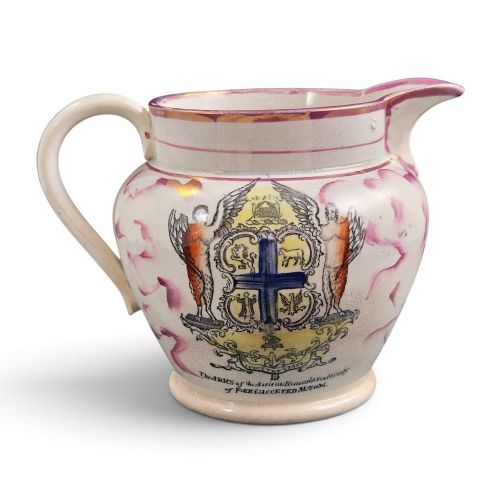
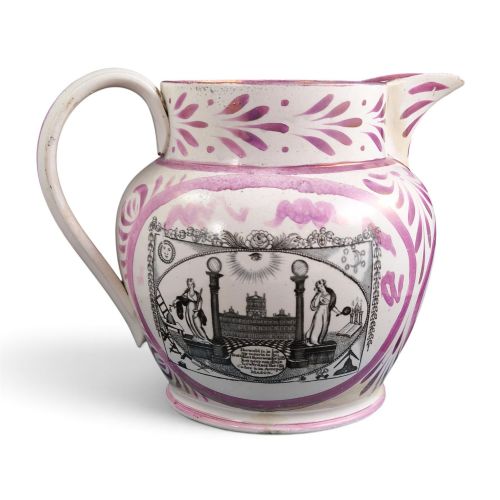
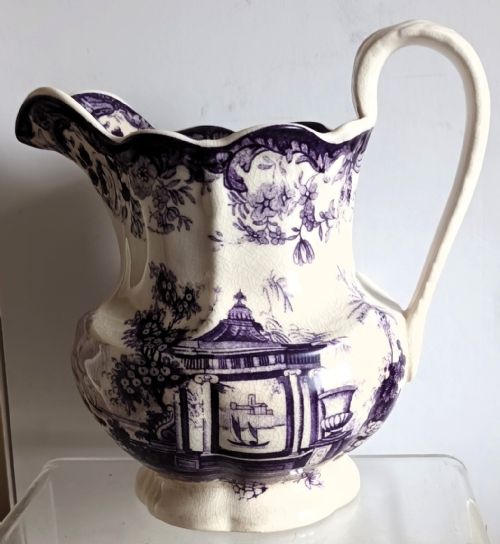
Blue and white transfer printing dominates the selection on this page, accompanied by magenta, black, and polychrome prints. Buyers regularly encounter large meat platters, lidded tureens with ladles, and drinking vessels including loving mugs and jugs. Scenic patterns, topographical views, and historical subjects appear frequently across the tableware.
Materials and Technique
Potters formed the body using refined earthenware clay before applying a liquid glaze to seal the porous surface. Decoration relied on copper-plate transfer printing, where an engraved design was inked onto tissue paper and pressed onto the unglazed or biscuit-fired ceramic. Artisans occasionally added metallic or lustre glazes, such as pink lustre or gold leaf accents, prior to secondary kiln firing.
The combination of transfer printing and transparent glaze created durable surfaces suitable for daily domestic use. Pigments absorbed into the glaze during firing, protecting the printed narrative from wear. Potteries controlled kiln temperatures to fix cobalt blue and other transfer colours reliably.
Listings feature earthenware from the nineteenth century, incorporating transfer-printed designs in blue and white, magenta, and black.
Craftsmanship and Distinction
Quality rests in the crispness of the transfer print and the registration of the design across complex forms. Superior examples maintain sharp lines without blurring or smudging where the paper joined the ceramic curve. The clarity of detail in architectural views, figures, and botanical borders distinguishes finer productions from standard commercial output.
The ambition of the ceramic form itself separates standard domestic items from exhibition pieces. Modelled elements such as handles shaped like animal paws, figural reliefs, and multi-piece custard sets demand advanced potting skill. Potteries invested greater care in bodies intended for prominent display rather than basic kitchenware.
Sunderland Garrison Pottery·Copeland and Garrett·Ridgways·James Wallace and Co
The Victorian Printed Earthenware Glossary
- Transfer printing
- A method of decorating ceramics by pulling an engraved design from a copper plate onto tissue paper, then pressing that paper onto the pottery body. This technique allowed potteries to reproduce intricate pictorial scenes consistently across large production runs.
- Earthenware
- A porous ceramic body fired at lower temperatures than stoneware or porcelain. It requires an impermeable glaze layer to hold liquids effectively.
- Lustre glaze
- A metallic film applied over the fired glaze to produce a reflective, iridescent sheen. Pink lustre variants appear frequently on Sunderland and northern wares.
- Tureen
- A deep covered vessel designed for serving soups, sauces, or vegetables at the dining table. They frequently incorporate matching ladles and decorative handles.
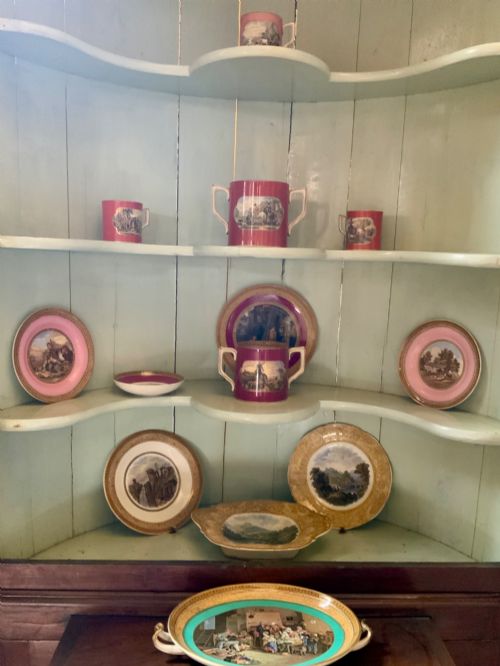
- Prattware
- A type of nineteenth-century earthenware associated with multi-coloured underglaze printing, often depicting genre scenes or historical portraits.
Victorian Printed Earthenware: Frequently Asked Questions
What is victorian printed earthenware?
Victorian printed earthenware comprises ceramic tableware and vessels decorated with ink-transferred patterns applied beneath or over the glaze. These items include plates, platters, jugs, and tureens produced by English potteries during the nineteenth century.
The medium allowed households to acquire domestic wares featuring detailed landscapes, topographical views, and narrative scenes at accessible prices. Manufacturers utilised copper plates to press designs onto the clay before firing.
How were transfer printed plates used?
Platters, soup plates, and tureens functioned primarily in nineteenth-century dining rooms for serving meats, vegetables, and broths during formal meals. Smaller vessels like jugs and mugs served water, ale, or milk in domestic and institutional settings.
Over time, many of these utilitarian objects transitioned from active kitchen and dining service into decorative cabinet displays. Their pictorial surfaces recorded contemporary interests, historical events, and popular scenery.
How do I care for antique earthenware?
Historic earthenware requires gentle handling because the ceramic body remains porous beneath the glaze and vulnerable to chipping along edges. Hand washing in warm water with mild soap preserves the glaze and prevents chemical damage from modern dishwasher detergents.
Sudden temperature changes should be avoided to prevent thermal shock and hairline cracking in the aged ceramic structure. Storing pieces safely on stable surfaces protects handles and spouts from accidental impact.
How do I date these ceramics?
Dating relies on identifying maker marks, registration diamonds, and stylistic indicators such as colour palettes and border designs. Copeland and Garrett, Ridgways, and other firms stamped their output with specific factory ciphers that changed across decades.
The evolution of transfer colours, from early cobalt blues to magenta and black prints, also helps narrow the production era. Shape profiles and mounting techniques provide further context when maker marks are absent.