
Staffordshire Earthenware Pottery
Staffordshire earthenware pottery encompasses expressive figures and utilitarian vessels that bring domestic history and character to any room.
Staffordshire Earthenware Pottery
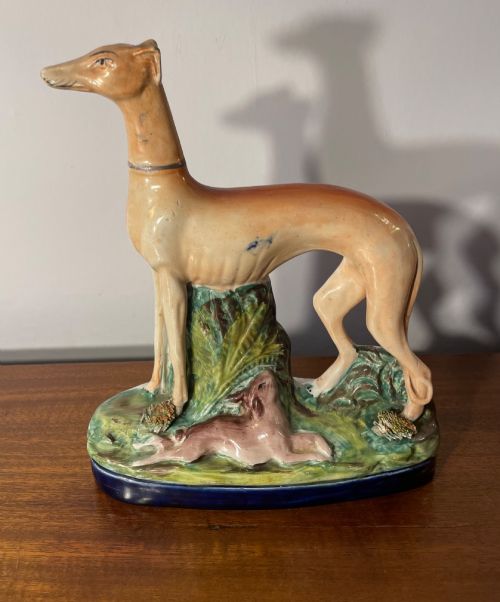
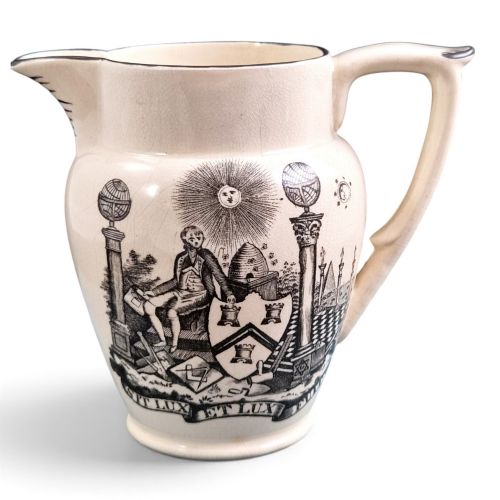
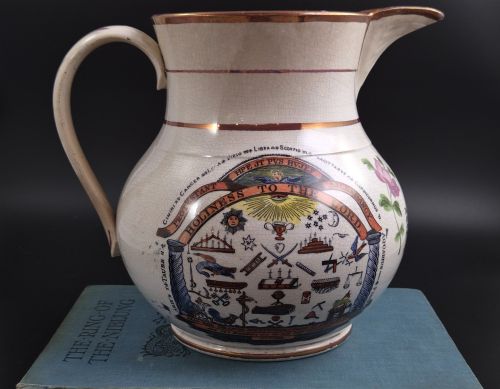
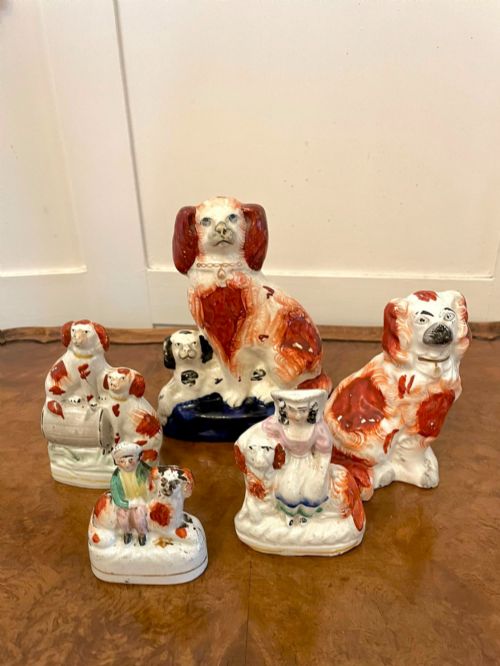
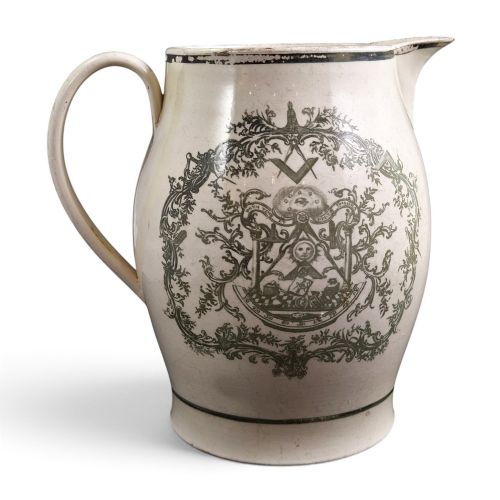
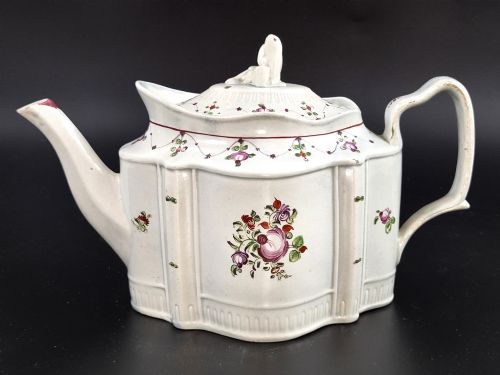
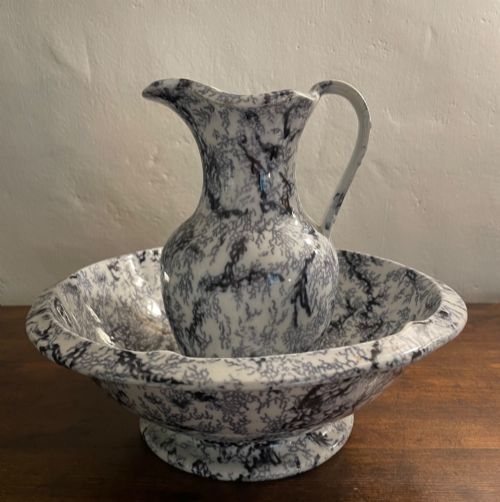
Staffordshire earthenware pottery ranges from utilitarian vessels like jugs and creamware chargers to decorative figures and spill vases made across the eighteenth and nineteenth centuries. Collectors frequently encounter Victorian flatback figures, spaniels, and historical characters alongside Georgian transfer-printed pitchers.
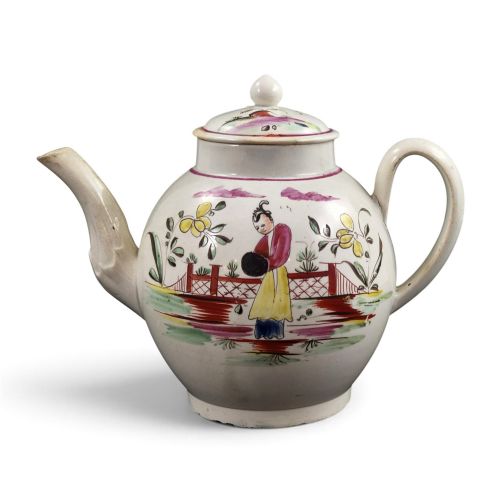
The objects reflect both rural utilitarian traditions and urban commemorative demands, shifting from early creamware and pearlware into robust Victorian folk art. These wares span domestic tableware, such as teapots and jelly moulds, alongside mantelpiece ornaments intended for display.
How they were made
Potters shaped ceramic bodies from local clays, utilising lead glazes to seal porous earthenware and creamware before applying enamel colours or transfer prints. Pigments were fixed through kiln firing, yielding distinctive blue and white motifs, polychrome details, and rich green or olive glazes.
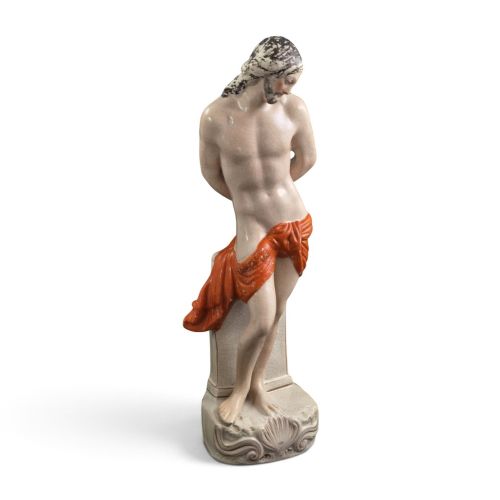
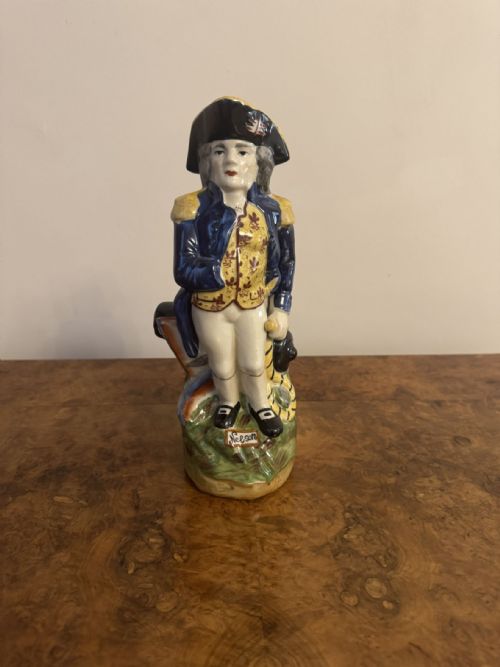
Moulds enabled the mass production of hollow figures, Toby jugs, and animal pairs, which workers hand-painted with varying degrees of precision. Relief decoration and pierced work, such as reticulated chestnut baskets, required skilled cutting before glazing.
Among the menagerie of Staffordshire animals, a ceramic lion jelly mould waits quietly to transform dessert into an architectural roaring success.
What varies in quality
The complexity of the form dictates standard, separating simple utilitarian creamware dishes from sculptural Toby jugs and layered Prattware subjects. Firing stability also plays a role, as successful glazes without excessive warping mark superior potting.
Spode·Robert Hamilton·John Rogers Son·J.W.R.
The Staffordshire Earthenware Pottery Glossary
- Creamware
- A refined earthenware with a pale yellowish lead glaze, developed during the eighteenth century for domestic tableware. It provided a smooth surface suitable for transfer printing and enamel painting.
- Pearlware
- An improved earthenware introduced in the late eighteenth century, featuring a bluish glaze that pooled in recesses to mimic Chinese porcelain. It bridged the transition from creamware to whiter Victorian ceramics.
- Prattware
- Earthenware decorated with distinctive low-firing underglaze colours, typically blue, ochre, orange, and brown. It appears frequently on jugs, plaques, and decorative vessels from the Georgian and Victorian eras.
- Flatback
- A Staffordshire figure modelled with a finished front and a plain, unglazed or partially glazed flat reverse designed to sit flush against a wall. This technique saved material and focused visual detail entirely on the front.
- Spill vase
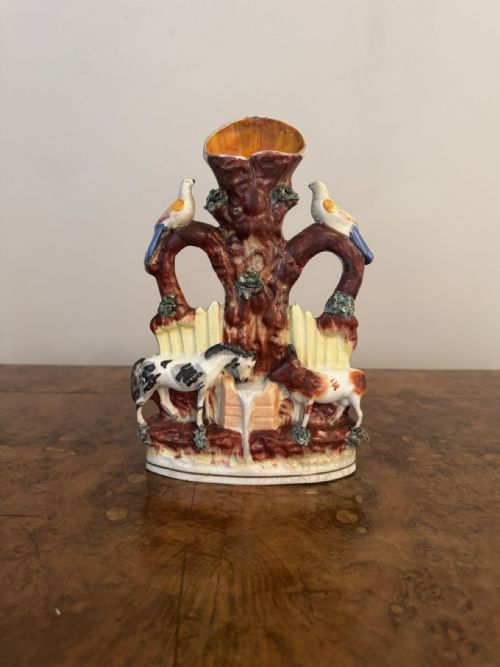
- A hollow ceramic cylinder incorporated into a figure group, intended to hold wooden spill-lighters for lighting pipes and candles. These functional ornaments remained popular throughout the Victorian period.
Staffordshire Earthenware Pottery: Frequently Asked Questions
What is Staffordshire earthenware pottery?
It is a diverse category of ceramic items produced in the Staffordshire potteries, ranging from utilitarian creamware jugs to decorative Victorian mantelpiece figures and animals.
These objects include both functional kitchenware and expressive folk art made for everyday domestic use and public display.
How do I date these figures?
Dating relies upon stylistic markers, clothing details, and technical shifts from eighteenth-century creamware to nineteenth-century pearlware and flatback construction.
Historical subjects, such as Crimean War commemoratives or specific political figures, also anchor pieces to precise historical decades.
Were Staffordshire dogs meant for display?
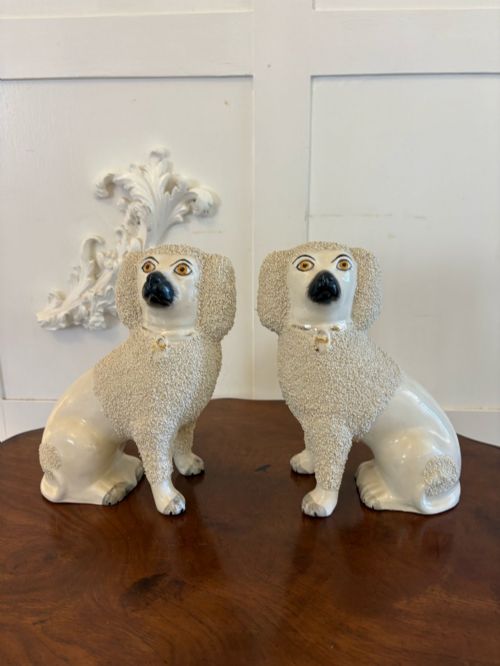
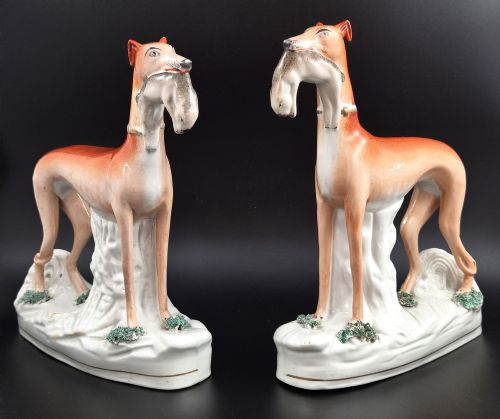
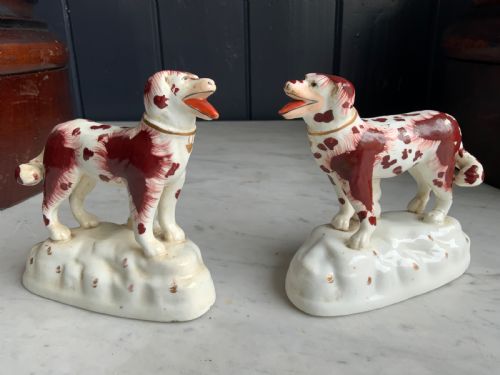
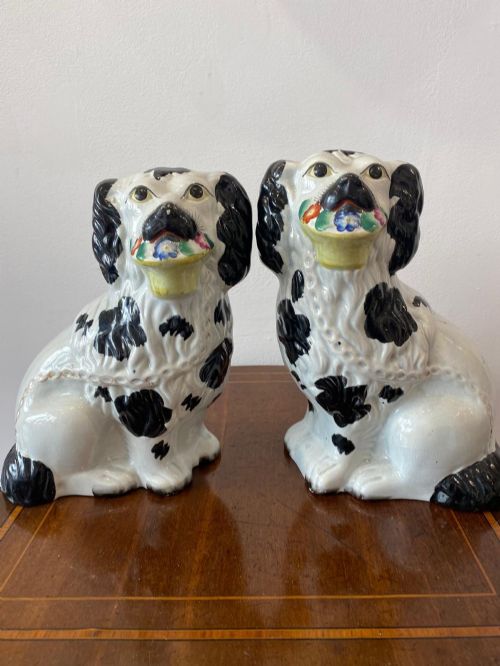
Pairs of Staffordshire dogs, including spaniels, poodles, and greyhounds, were traditionally placed on mantelpieces facing inward toward each other.
They served as popular domestic ornaments in Victorian parlours, reflecting contemporary tastes for loyal animal companions and comforting interior decor.
How should I clean antique earthenware?
Antique earthenware requires gentle dusting with a soft, dry brush to protect fragile lead glazes and delicate hand-painted enamel colours.
Submerging porous bodies in water should be avoided, particularly on pieces with historic hairline cracks or old repairs.