
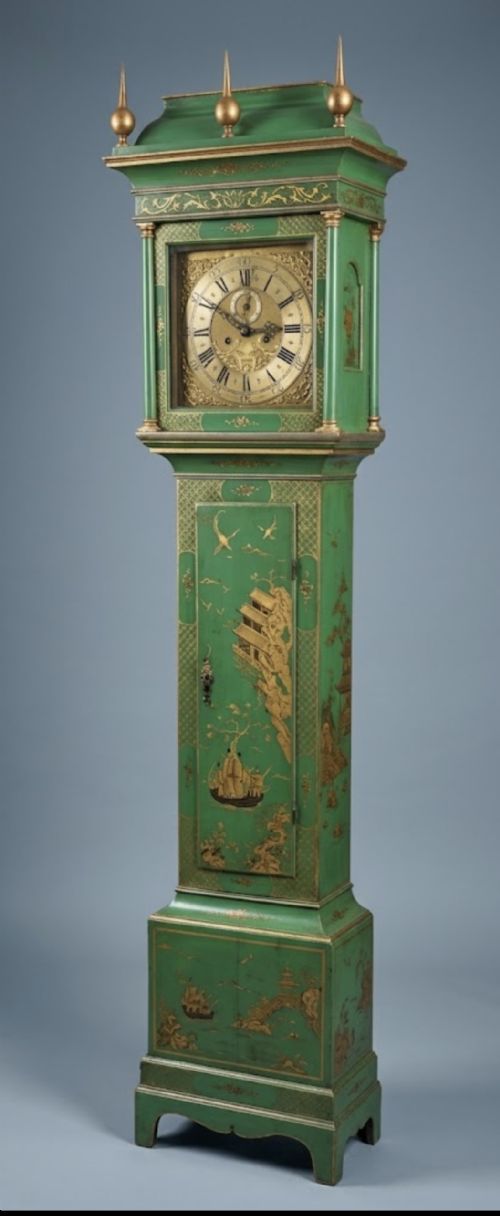
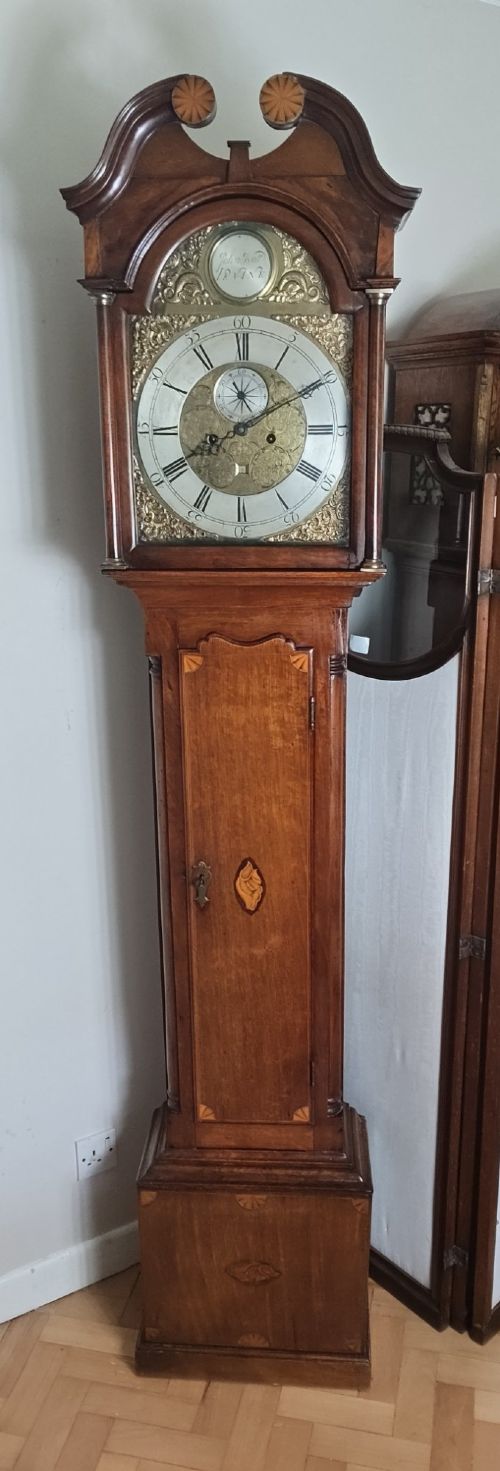
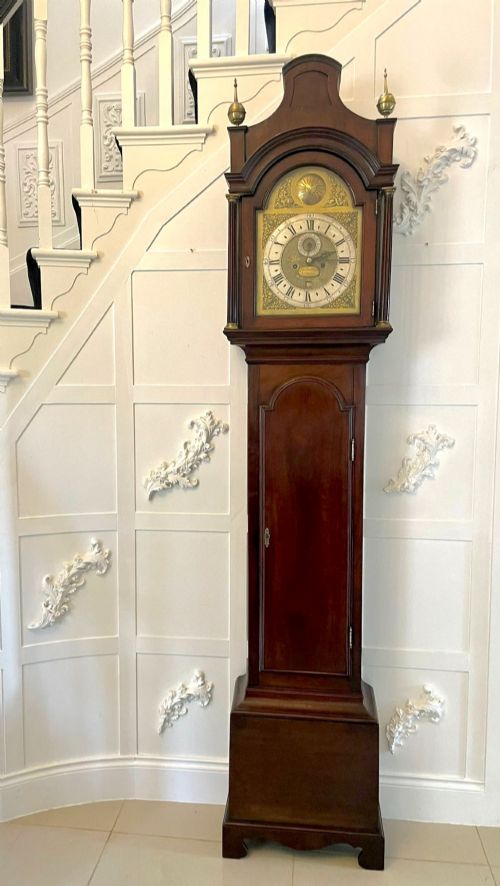
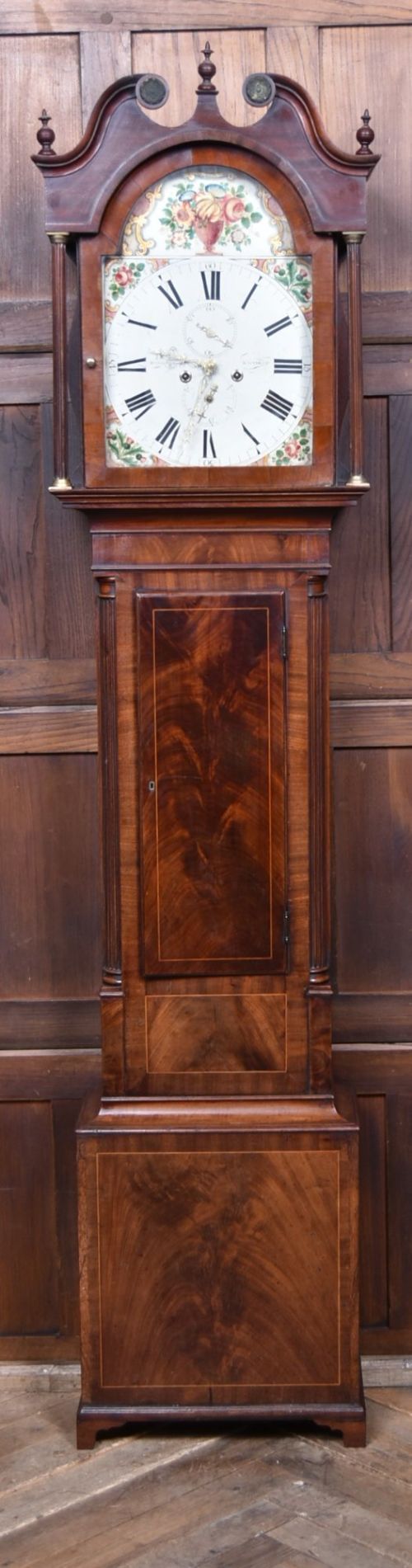
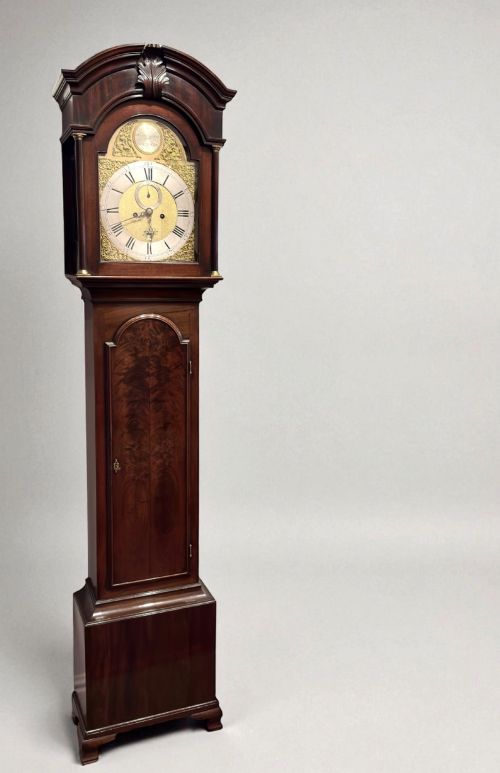
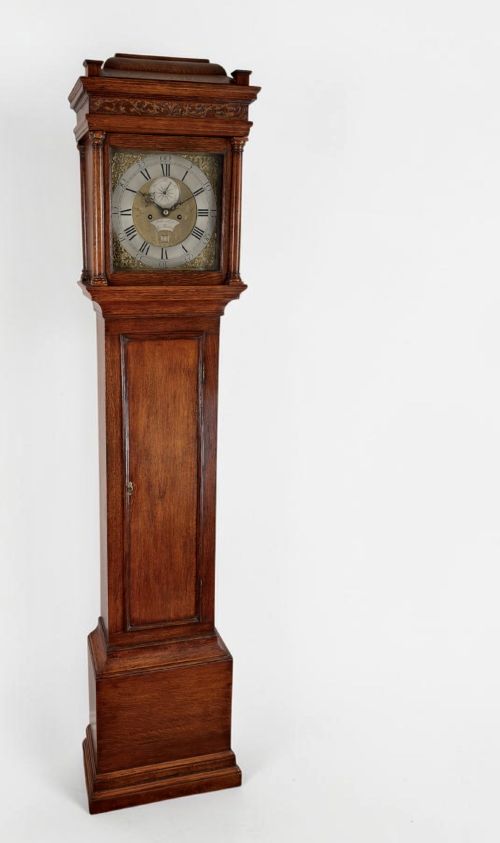
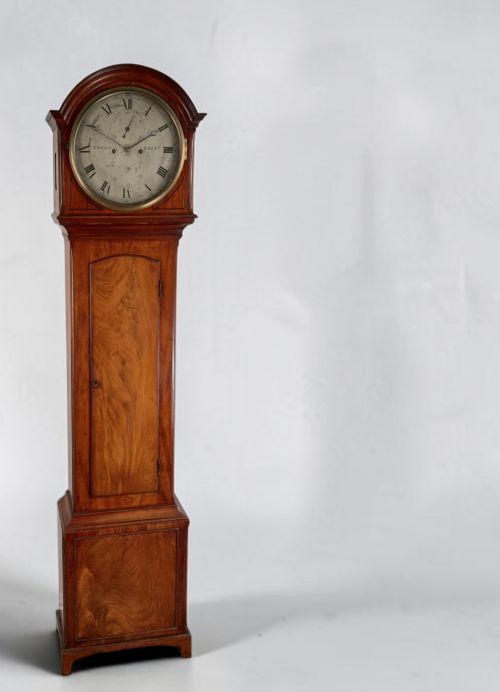
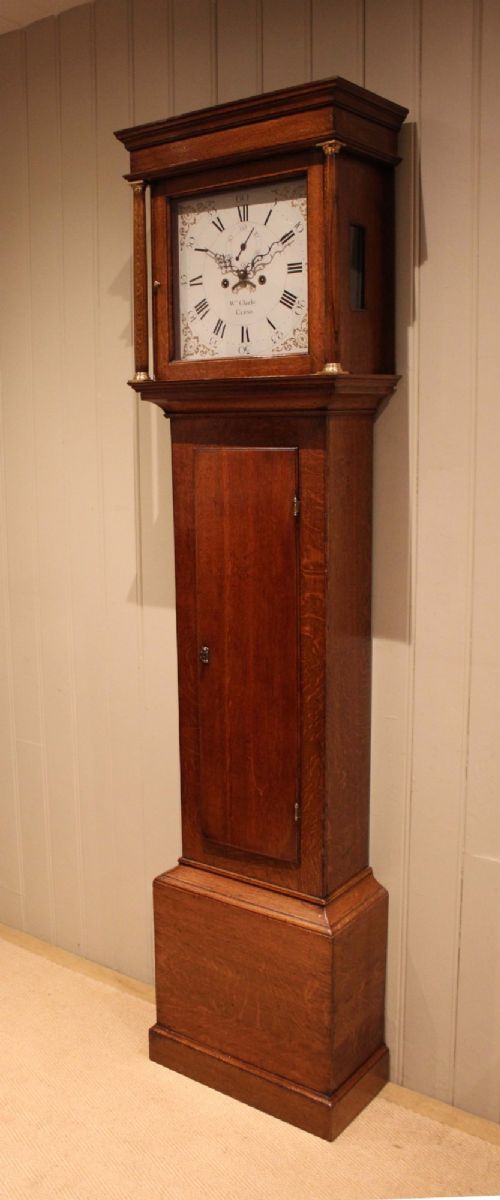
Standing Grandfather Clock
A standing grandfather clock commands a room with its height, steady beat and dial work.
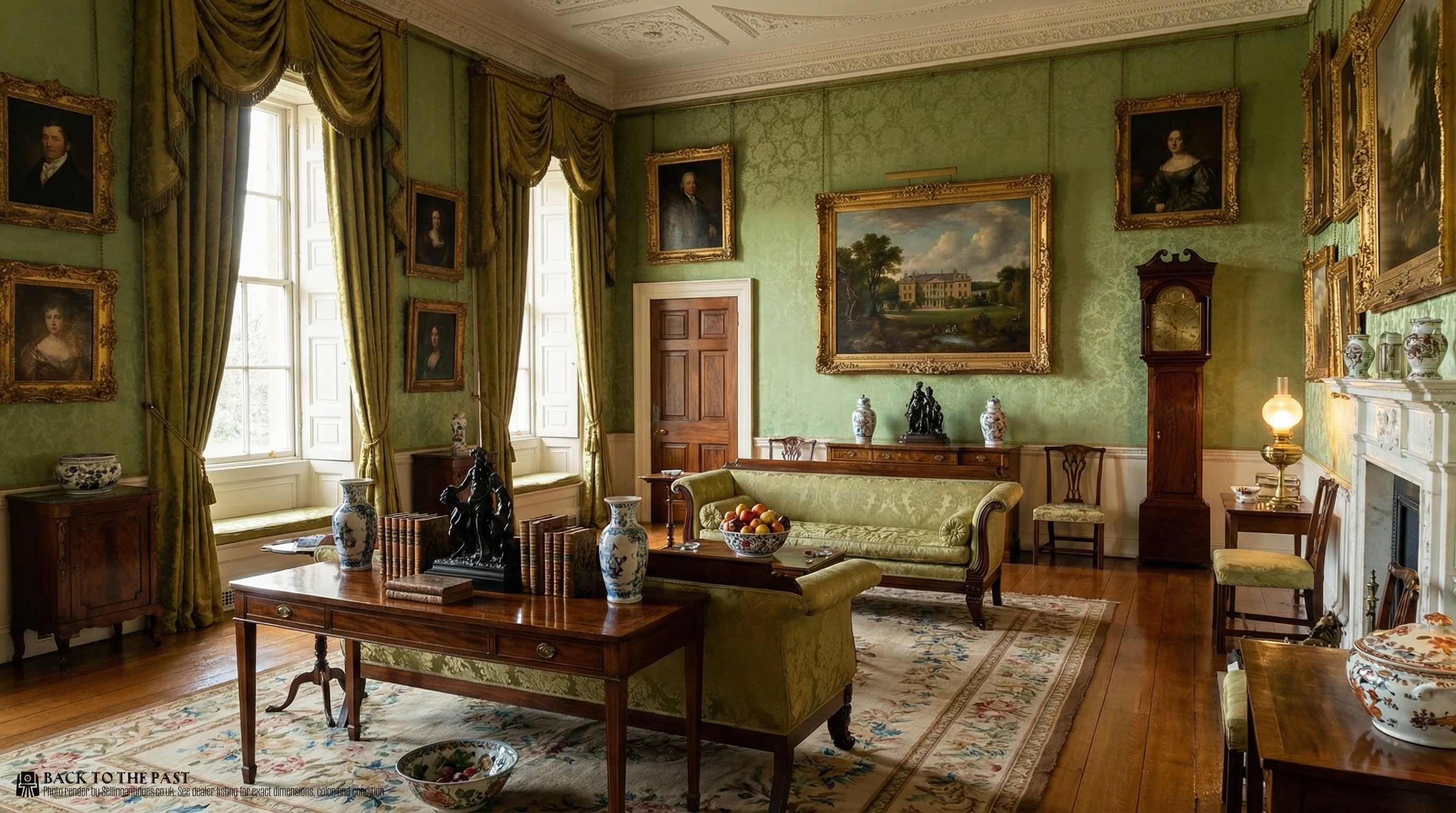
Standing Grandfather Clock
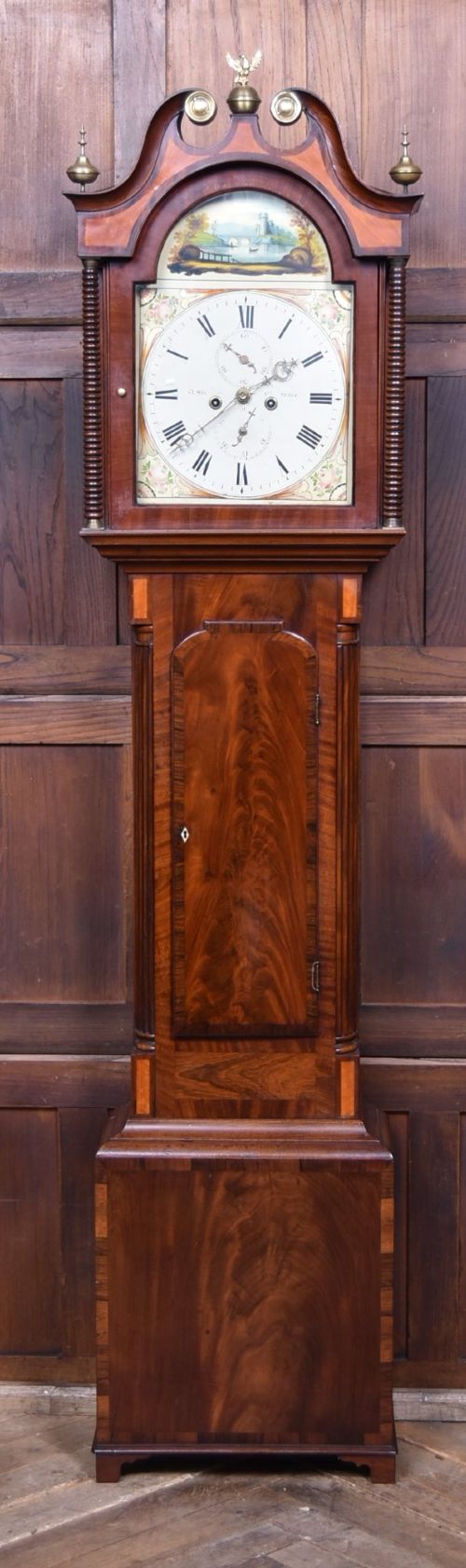
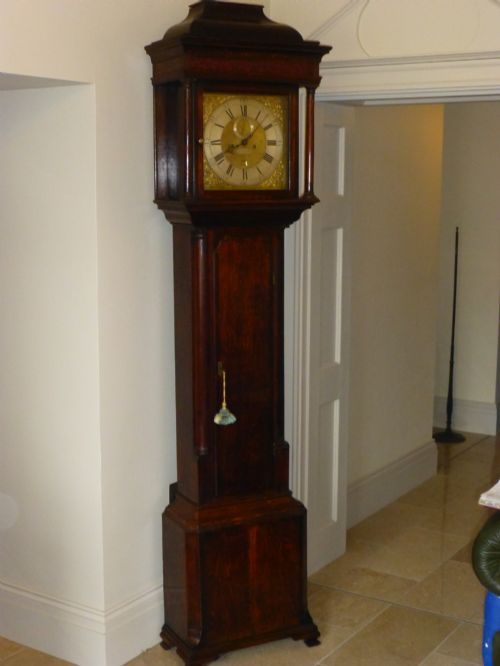
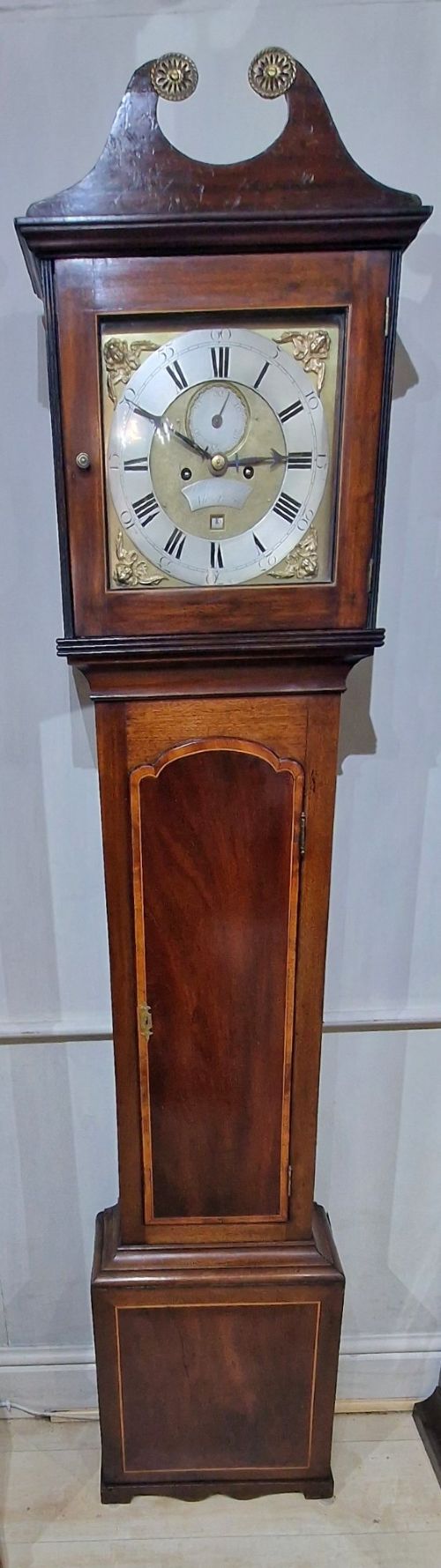
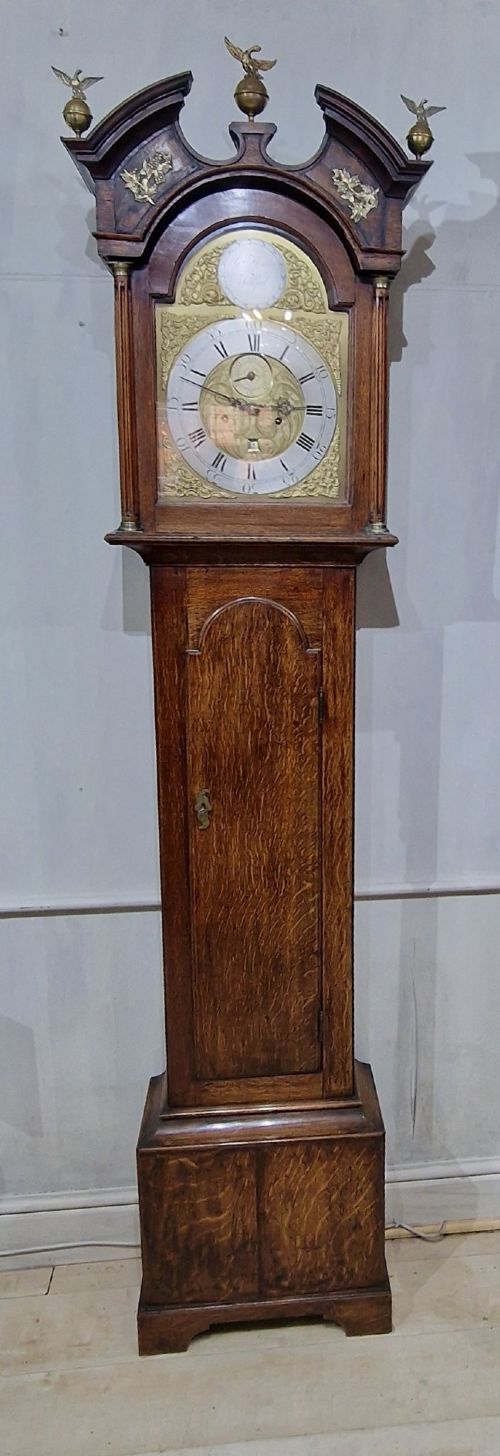
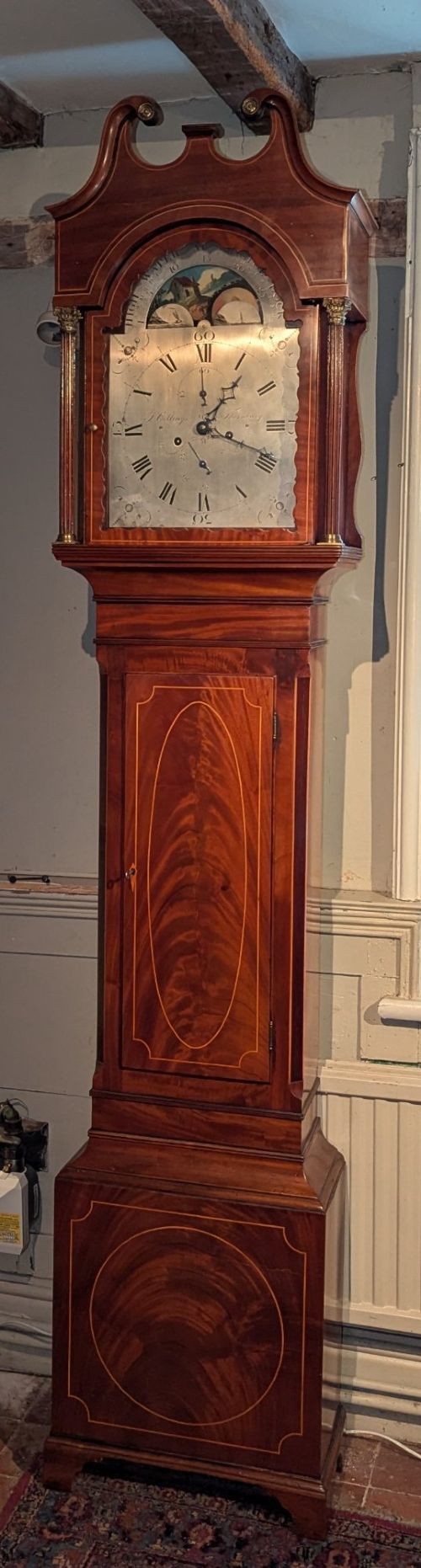
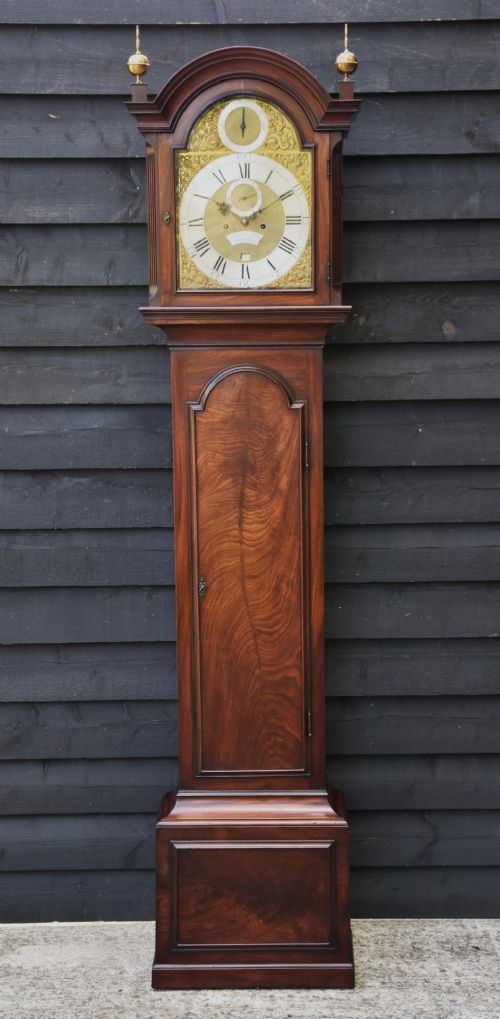
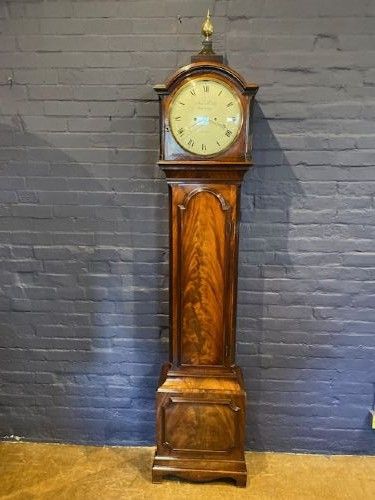
A standing grandfather clock, also known as a longcase clock, is a tall floor-standing timekeeper driven by falling weights. These pieces range from austere provincial oak cases to grand London mahogany examples with intricate dial movements.
Most pieces seen here hail from the Georgian and 19th-century periods, with occasional later Edwardian and Art Deco interpretations. Buyers encounter various scales, from full-sized floor models down to smaller grandmother and miniature clocks.
How they were made
Cabinetmakers built these tall cases primarily using native timbers like oak and walnut alongside imported mahogany and flame mahogany veneers. Brass formed the dials, bezels and movement plates, while glass protected the dial face.
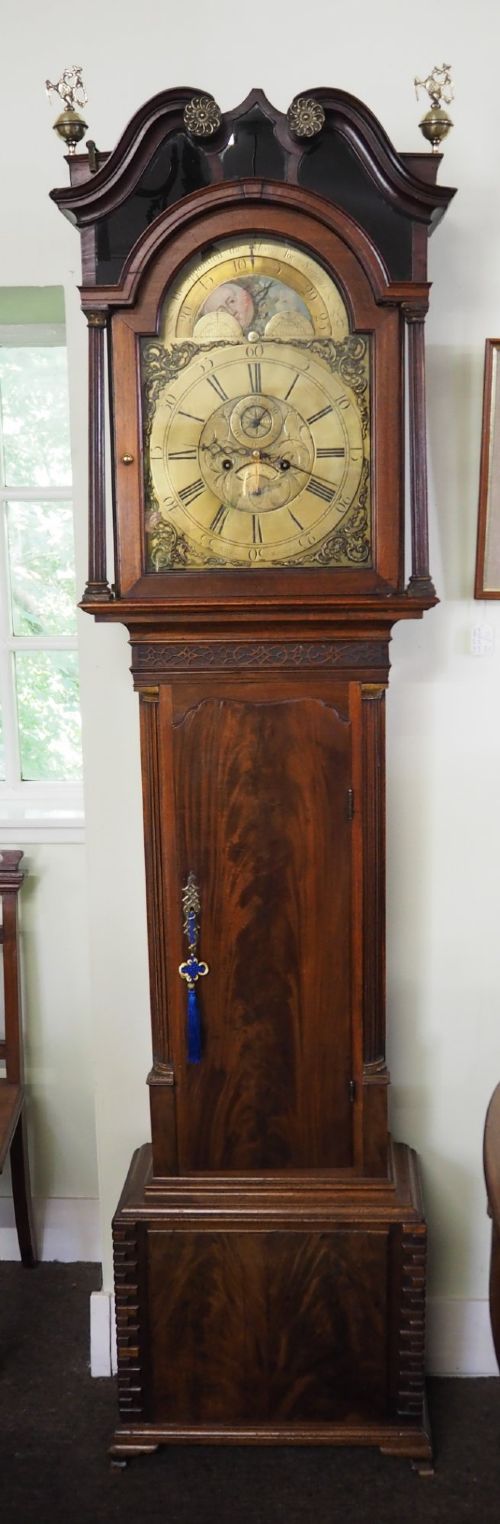
Clockmakers fitted mechanical gear trains driven by lead or cast iron weights suspended by cords or chains. Many incorporated specialised complications such as moon rollers, strike-silent mechanisms and musical bell or tube arrays.
Listings span multiple eras from the 18th century through to the 1930s, utilising oak, mahogany, walnut and brass.
What varies in quality
Quality rests in the harmony between the cabinetwork and the mechanical movement housed within. Finely figured timbers, crisp dial engraving and signed movements by known makers elevate a piece significantly.
Proportion and execution dictate value, from the architectural integrity of the hood and trunk to the complexity of the gear train, whether an eight-day movement or a musical chime.
Charles Shuckburgh·Hendrie Ogg·Gordon of Aberdeen·Lee of Great Marlow·Green of Edinburgh·D. Straiton·Richard Corless·Robb·James Hendrie·James McCabe·Winsor Bishop Norwich·Fisher Of Preston·Benjamin Taylor·Windmills and Wightman·Rickards·William Evans·W Wighton
The Standing Grandfather Clock Glossary
- Longcase clock
- An alternative term for a standing grandfather clock. It refers strictly to tall pendulum clocks housed in protective wooden cases.
- Moon roller
- A secondary dial mechanism that tracks the phases of the lunar cycle. It rotates behind an arched aperture on the main clock face.
- Strike-silent
- A mechanical function allowing the clock's striking train to be disengaged. This feature silenced the hourly chimes during the night.
- Grandmother clock
- A smaller, scaled-down version of the traditional longcase clock. These shorter pieces gained popularity during the 20th century.
Standing Grandfather Clock: Frequently Asked Questions
How do I wind a grandfather clock?
Most eight-day standing grandfather clocks require winding once a week using a matching crank key. You insert the key into the winding holes on the dial face and turn gently until the weights rise.
Take care not to over-wind the mechanism, stopping as soon as resistance increases. Ensure the pendulum hangs straight before setting the hands to the correct time.
Where should I place a longcase clock?
Select an interior wall away from direct sunlight, heating vents and exterior doors. Temperature fluctuations and vibrations can disrupt the delicate balance of the pendulum.
Ensure the floor beneath the clock is level and sturdy. Many tall cases include wall-fixing brackets behind the hood to prevent accidental tipping.
How do I tell an 18th-century clock from a later one?
Eighteenth-century standing grandfather clocks typically feature substantial oak or solid mahogany cases with square or arched brass dials. Movements often bear the signature of the maker engraved directly on the brass plate.
Nineteenth and 20th-century examples frequently display painted enamel dials, figured mahogany veneers, or specialised musical mechanisms. Case construction styles also shift toward Edwardian or Art Deco influences.
What is the difference between a grandfather and grandmother clock?
The primary distinction lies in overall height and proportion. Traditional grandfather or longcase clocks stand tall, typically measuring six to eight feet from base to crest.
Grandmother clocks are much shorter standing versions produced largely in the 20th century. They offer the traditional weight-driven mechanics in a compact scale suited for smaller rooms.