
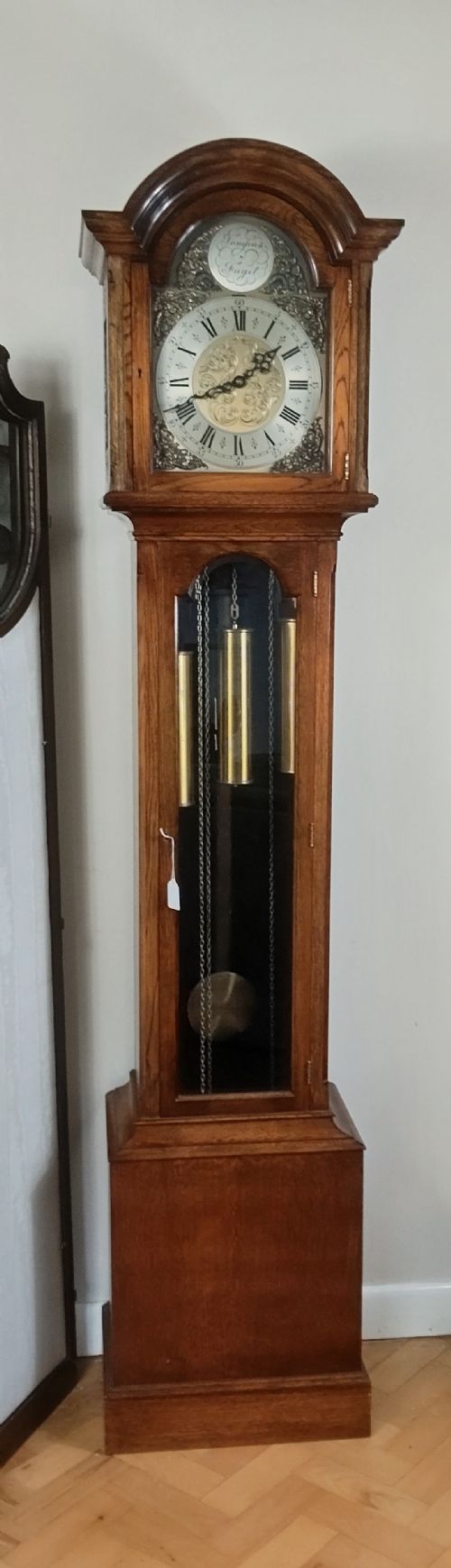


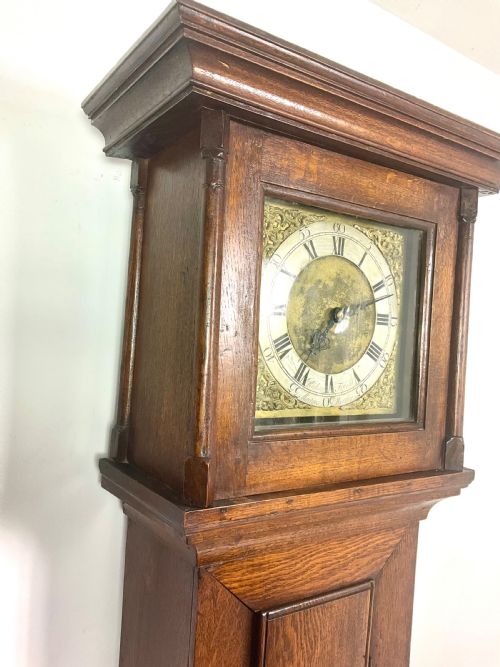

Warm Oak Floor Clock
These warm oak floor clock pieces bring true period presence into a room, offering the steady mechanical beat of a traditional grandfather timekeeper.
Warm Oak Floor Clock
A warm oak floor clock stands as a traditional tall timekeeper housed in a timber case, designed to measure hours through weighted movements suspended within. When searching for a warm oak floor clock, buyers encounter tall case structures ranging from early Georgian single-handed formats to later Victorian and twentieth-century interpretations.
The pieces appearing on this page draw from periods spanning the eighteenth, nineteenth, and early twentieth centuries. Regional variations and revival pieces also surface, showing shifts in proportion and dial treatment over successive generations.
How they were made
Cabinetmakers constructed the tall housing primarily from native oak, sometimes incorporating secondary timbers like mahogany for contrast or structural detail. Brass and iron formed the intricate wheels, plates, and weights of the mechanical movements housed within the trunk.
Glazed doors protected the painted or brass dials while allowing visibility of the face, whilst hinged wooden trunk doors provided access to the swinging pendulum and hanging weights.
One listed clock includes a dial bearing the maker Smith from Chester, proving that provincial timekeepers travelled far over the centuries.
What varies in quality
Quality rests upon the proportion of the timber case and the sophistication of the internal movement, separating standard production from finer horological work. Earlier examples often display single-handed movements or specific regional dial signatures that elevate their traditional character.
The richness of the oak grain and the crispness of any applied mouldings or brass dial engraving distinguish superior examples from plain utility pieces of later decades.
The Warm Oak Floor Clock Glossary
- Longcase clock
- A tall freestanding pendulum clock enclosed in a wooden case, commonly known as a grandfather clock. These standing timekeepers range from modest country workshop builds to grander urban productions.
- Eight day
- A movement requiring winding once a week via key holes on the dial face. This mechanism utilises two weights suspended on cords or chains.
- Single handed
- A dial configuration featuring only an hour hand, typical of earlier horological work before minute tracking became standard. This simpler display reflects seventeenth and early eighteenth-century production methods.
- Grandfather clock
- The popular designation for a tall floor-standing pendulum clock. The term emerged in common usage following the nineteenth-century song referencing such a timepiece.
Warm Oak Floor Clock: Frequently Asked Questions
How often do these clocks need winding?
Most eight day versions require winding weekly to keep the movement running accurately.
Single-handed or thirty-hour variants may require more frequent attention depending on their specific weight-driven train configuration.
Where should I place a floor clock?
These tall timekeepers require a stable, level floor away from direct sunlight and damp conditions to protect the timber case.
Placing the case against a solid interior wall helps prevent unwanted vibrations from affecting the pendulum swing.
How do I tell an earlier clock from a later revival piece?
Examining the construction methods within the timber case and the style of the dial reveals clues about the period of manufacture.
Earlier eighteenth-century pieces often feature simpler single-handed dials or distinct regional cabinet proportions compared to later Georgian revivals.
What maintenance do the movements require?
Periodic cleaning and oiling by a qualified horologist ensure the brass gears and iron pivots operate smoothly without excessive wear.
Keeping the case stable and ensuring the pendulum hangs straight maintains proper beat regulation between services.