




Late Georgian Clock
A late georgian clock brings the measured tick of the turn of the nineteenth century directly into a room.
Late Georgian Clock
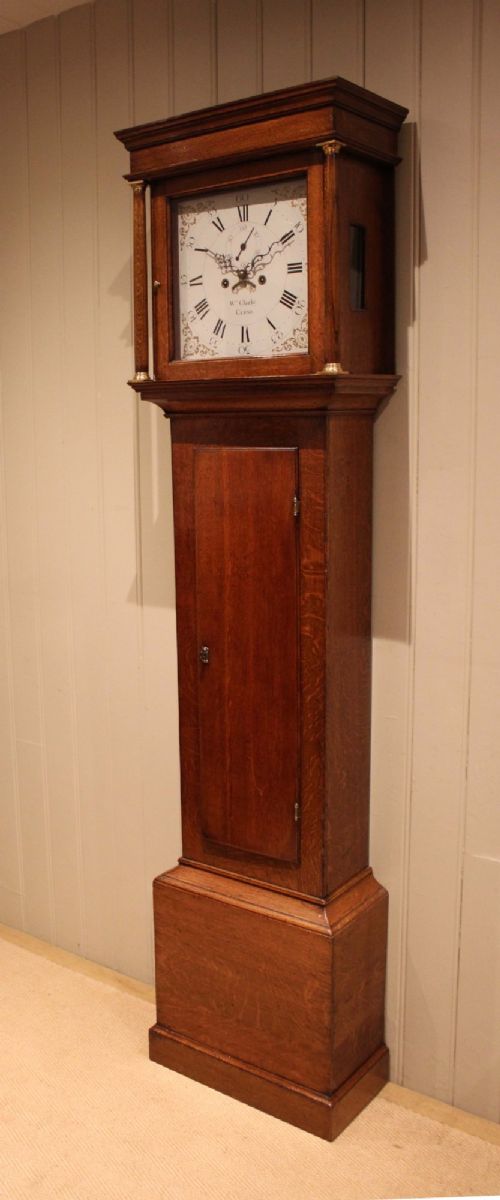
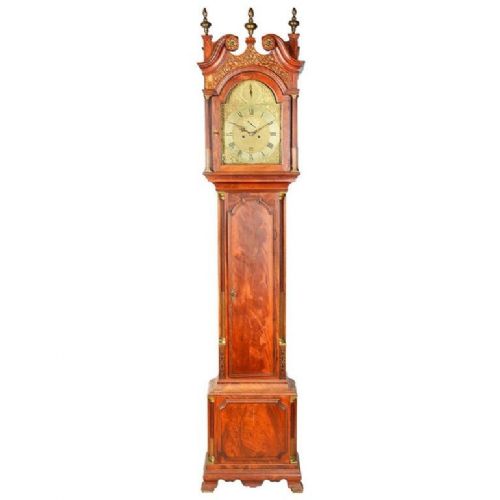
When you examine a late georgian clock, you encounter timepieces spanning longcase clocks, bracket clocks, wall clocks and dial clocks created across the eighteenth century, the year 1800, and the regency period.
The version you meet most frequently on this page is the floor-standing longcase clock, frequently housed in oak or mahogany cases, alongside smaller bracket and table clocks.
Makers from London, provincial English towns, Scotland, Wales and Switzerland signed dials that range from brass and painted surfaces to silvered metal.
How they were made
Cabinetmakers constructed the tall cases and table housings using native hardwoods such as oak and mahogany, often incorporating pine, painted finishes and banding.
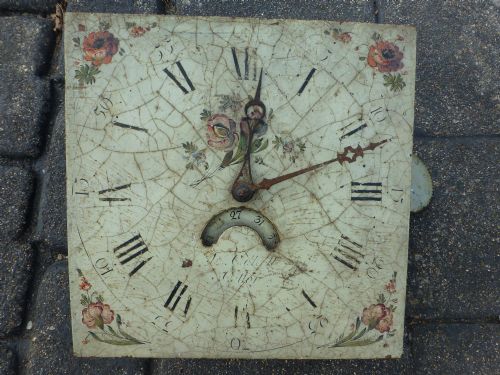
Horologists utilised brass, steel and iron for movements, featuring verge escapements and dial faces finished with silvered metal, brass or paint.
Late Georgian Clock Retail Price Guide 2026
Typical asking prices for late georgian clock among the pieces listed under this phrase on Sellingantiques today, from the lower quarter to the upper quarter. They describe what is for sale here now, not the wider market.
Some small oak longcase clocks feature hood columns carved to resemble narwhal or unicorn tusks.
What varies in quality
The distinction between tiers rests upon the crispness of the cabinetwork, the complexity of the movement such as quarter striking or moon phases, and the original integrity of the dial.
Signed movements by known makers working in London or provincial centres elevate a piece above standard workshop production.
Thomas Webbe of New Quay·David Morice of Auchtermuchty·Agar Of Malton·Francis Perigal·Chater and Son·James Rayner of Hull·John Welsh·Mark Pain of Ash·John Cook of Whitchurch·John Birtles·John Reynolds·Winterhalder and Hoffmeier
The Late Georgian Clock Glossary
- Longcase clock
- A tall weight-driven timekeeper housed in a wooden case standing on the floor. These pieces are often referred to as grandfather clocks.
- Bracket clock
- A portable table or mantel clock originally designed to sit upon a wall bracket. They frequently feature carrying handles and bell-striking mechanisms.
- Verge escapement
- An early mechanical regulating device controlling the release of gear train teeth. This mechanism predates the widespread anchor escapement.
- Silvered dial
- A metal dial face treated to produce a frosted silver finish. Engraved numerals and subsidiary seconds are filled with dark wax.
- Fusee
- A conical pulley used in spring-driven clocks to equalise the torque of the mainspring as it unwinds. This ensures consistent timekeeping power.
Late Georgian Clock: Frequently Asked Questions
Where were these clocks made?
Makers worked in London, regional English towns, Welsh and Scottish workshops, and continental centres like Switzerland.
Provincial clockmakers stamped or painted their names directly onto the metal or painted dials.
What is a bracket clock?
A bracket clock is a portable timepiece designed for a table, shelf or wall bracket rather than standing on the floor.
These pieces use spring-driven movements with fusees and frequently incorporate bell-striking functions.
How do dial materials differ?
Dials appear in brass, silvered metal, and painted white surfaces often decorated with moon phases or floral corners.
Early examples tend toward brass plates, while later pieces adopt painted iron or wooden dials.
Are these clocks eight day or thirty hour?
Longcase clocks operate on either thirty-hour or eight-day weight-driven movements.
Thirty-hour versions require daily or weekly winding, whereas eight-day movements run for over a week between settings.