




Silver Salt Cellar Set
A silver salt cellar set brings dining history to the table, offering paired vessels for salt and condiments shaped by Victorian, Georgian and Art Deco hands.
Silver Salt Cellar Set
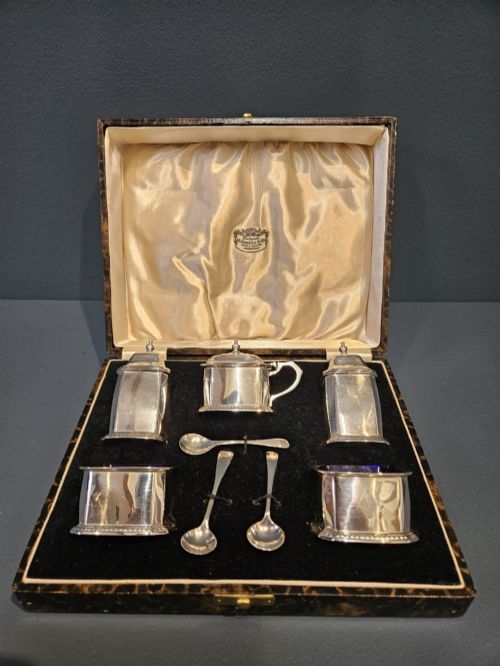
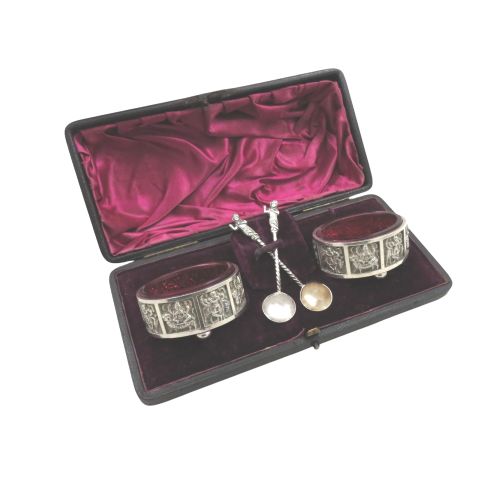
A silver salt cellar set comprises matched or boxed vessels designed to hold salt and other seasonings for the dining table. When searching for a silver salt cellar set, buyers encounter forms ranging from simple cauldron salts and boat-shaped dishes to elaborate novelty sets modelled as birds, chicks, owls, and farmyard animals.
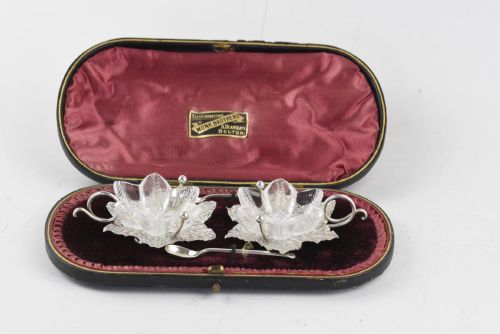
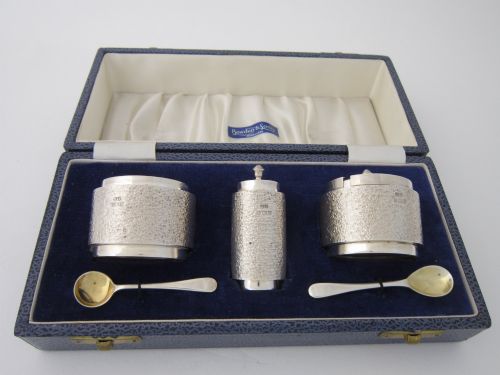
The selections span multiple eras, showing particular strength in Victorian and Georgian examples alongside Edwardian and Art Deco designs. Many of these groupings include fitted presentation cases, original spoons, or stands designed to hold multiple condiment bottles and jars together.
Materials and construction
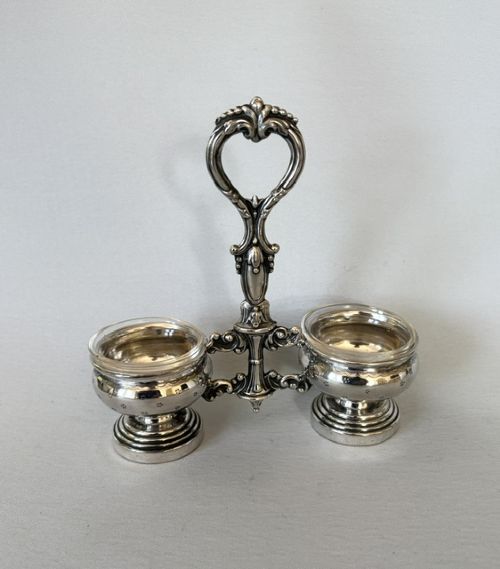
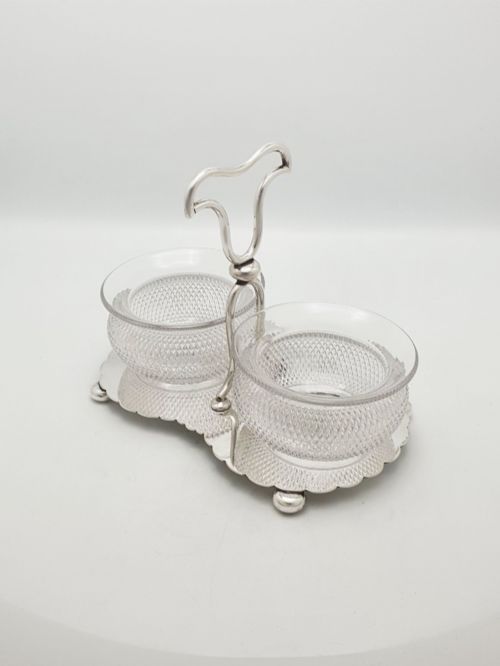
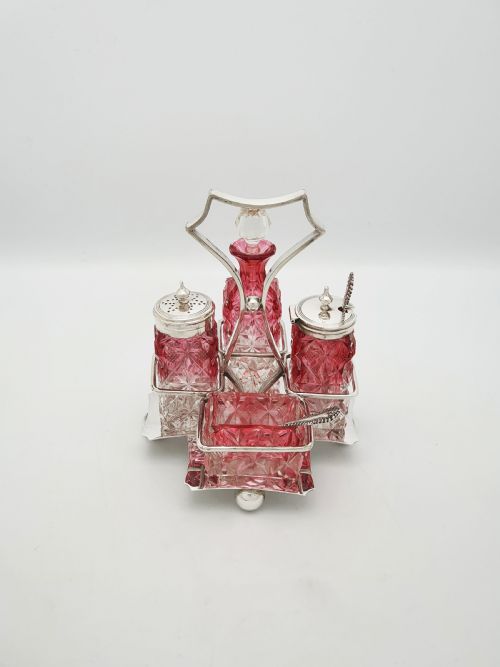
Silversmiths utilised sterling silver and silver plate for the primary bodies, often incorporating cast and chased decorative motifs such as shell designs, French Rococo scrolls, and Hindu deities. Many open salts rely on contrasting interior elements, pairing the metal frames with removable glass liners in cobalt blue or cranberry hues.
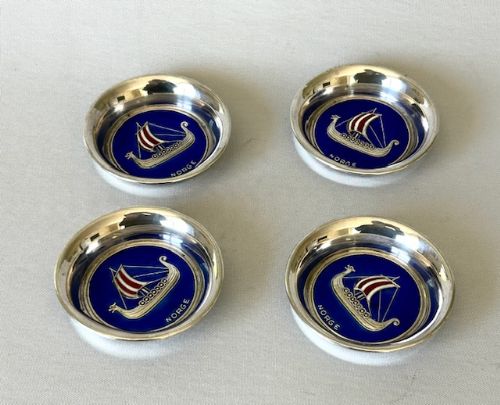
Makers also integrated alternative natural materials into the sets, including carved horn bowls with silver mounts, silk and velvet interior linings within presentation boxes, and vibrant enamel work applied to Norwegian Art Deco pieces.
Listings feature sterling silver, silver plate, and cut glass across periods spanning the Georgian era to the mid-twentieth century.
Distinctions in quality
Quality rests on the integrity of the design and the presence of matching components, such as original glass liners and corresponding spoons preserved within fitted cases. Finer examples display crisp chasings on novelty figures or robust casting on Georgian and Victorian cauldron forms by notable makers.
The distinction between standard utility sets and superior pieces often lies in the weight of the silver, the clarity and colour of the cut glass liners, and whether the set retains its complete original complement of matching implements.
Georg Jensen·William Neale·Bricks & Sons·Paul Storr·Thomas Smily·Sampson Mordan·James Dixon & Sons·S & C Younge & Co
The Silver Salt Cellar Set Glossary
- Cruet set
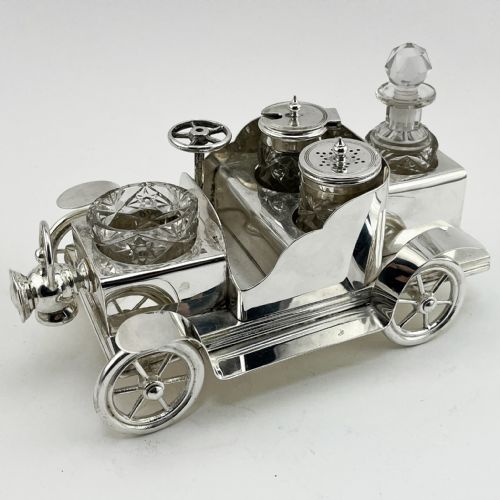
- A matched collection of bottles, jars, or cellars mounted on a stand for table condiments. These often hold oil, vinegar, mustard, and pepper alongside salt cellars.
- Cauldron salt
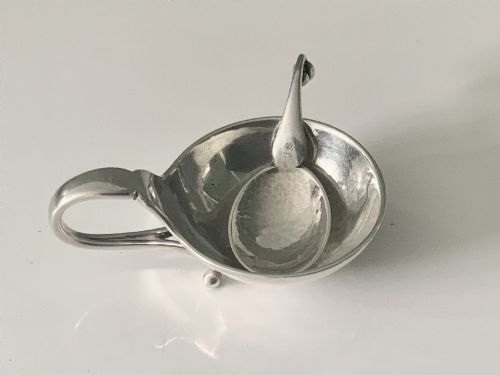
- A small, round bowl raised on three feet, frequently styled after traditional cooking pots. Victorian silversmiths produced these extensively in sterling silver.
- Liner
- A removable glass insert placed inside an open metal salt cellar to protect the silver from corrosive salt. Cobalt blue and cranberry glass are common historical variants.
- Novelty salt
- A condiment vessel shaped to represent an animal, bird, or carriage rather than adhering to traditional geometric vessel forms. Chicks, owls, and dolphins appear frequently in these designs.
Silver Salt Cellar Set: Frequently Asked Questions
What is the difference between an open salt and a salt shaker?
Open salts are small bowls designed to hold loose salt that diners scoop out using a miniature spoon. Shakers are enclosed vessels with perforated lids that dispense ground salt through tiny holes.
Open salt cellars dominate earlier Georgian and Victorian sets, while shakers appear more frequently in later twentieth-century condiment groupings.
Are glass liners original to antique salt cellars?
Original glass liners fit precisely into the interior contours of the silver frame without excessive movement or rattling. Coloured glass inserts, particularly cobalt blue and cranberry, were standard manufacturing choices for nineteenth-century sets.
Replacement liners occasionally appear in older sets, making liner fit and colour consistency useful indicators of originality.
How were salt cellar sets used historically?
Dining traditions placed salt cellars at intervals along the length of the table for guests to share, or assigned individual cellars to specific place settings. Servants filled them with coarse or fine table salt before meals.
Larger cruet stands accommodated multiple bottles and cellars together, allowing a complete range of seasonings to pass easily between diners.