
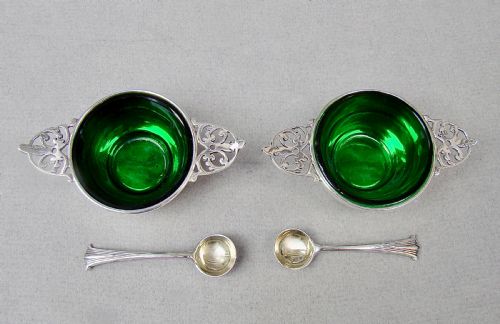


Cased Salt Cellar Spoons
These cased salt cellar spoons are matched to elegant table sets, offering a glimpse into formal dining rituals of past centuries.
Cased Salt Cellar Spoons
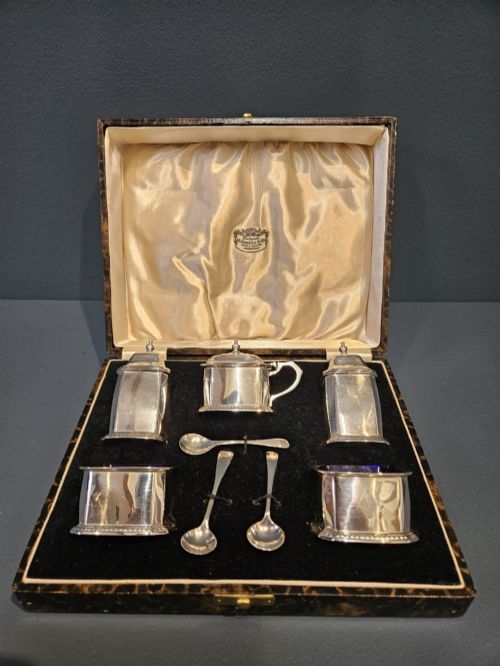
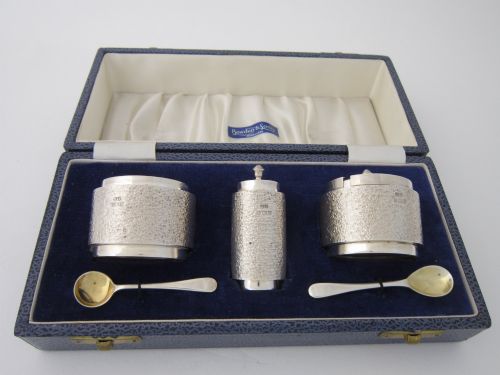
When you search for cased salt cellar spoons, you encounter small serving implements originally designed to accompany individual condiment bowls at the dining table. These items appear most frequently as part of matching sets housed within fitted presentation boxes lined with velvet or silk.
The selections available span from the ornate aesthetic movement and Victorian eras through to the streamlined forms of Art Deco and Mid-Century Modern. Cruet sets and condiment collections often incorporate these miniature spoons alongside glass liners and silver bowls.
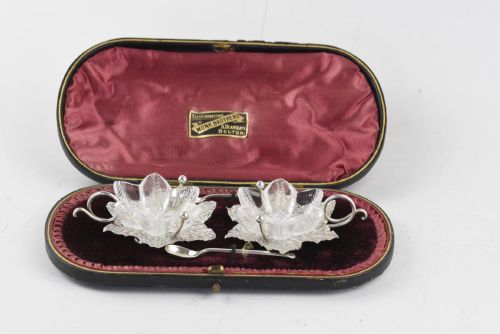
Victorian and Edwardian examples dominate the selection, frequently featuring detailed repoussé work or novelty designs such as birds and quaichs. Buyers looking for these pieces generally find complete sets that preserve their original fitted presentation cases.
Materials and construction
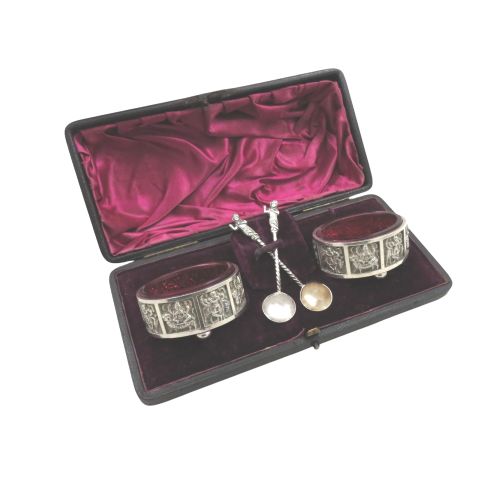
The construction of these pieces relies heavily on sterling silver and silver plate, shaped into delicate bowls and slender handles. Artisans utilised techniques such as casting and chasing to ornament the silver with motifs ranging from geometric patterns to figural deities.
Fitted presentation boxes employ rigid structures covered in leather and lined with soft fabrics like satin, velvet, or silk to protect the contents. Glass liners, often tinted in shades such as blue glass, accompany the metalwork to hold the salt securely.
Some Victorian birds managed to guard the salt without flying away from the table.
Factors determining quality
The distinction between standard items and superior examples lies in the crispness of the chasing and the weight of the silver used in the spoons and bowls. Higher grade sets retain original fitted cases with intact silk or velvet linings that show minimal wear.
Design complexity also influences the tier of the piece, with novelty forms and specific maker attributions elevating the item above standard utilitarian condiment sets. The integration of matched components, where spoons and cellars share identical hallmarks and periods, defines the finer examples.
Josiah Williams & Co·George Unite·Wilmot Manufacturing Co
The Cased Salt Cellar Spoons Glossary
- Cruet set
- A collection of small bottles, jars, or open cellars designed to hold condiments like salt, pepper, mustard, and vinegar at the table. These sets are frequently housed in dedicated stands or fitted presentation boxes.
- Aesthetic Movement
- A late nineteenth-century design style that emphasised visual beauty over narrative or moral content in the decorative arts. Pieces from this period often display stylised natural motifs and refined craftsmanship.
- Repoussé
- A metalworking technique where the artisan hammers the design from the reverse side to create a raised relief pattern on the front. This method was widely utilised during the Victorian era for ornate silver tablewares.
- Hallmark
- An official stamp applied to precious metals indicating the standard of purity, the assay office, and the year of manufacture. These marks provide definitive evidence for dating silver items accurately.
Cased Salt Cellar Spoons: Frequently Asked Questions
What are cased salt cellar spoons used for?
These miniature utensils were created to transfer salt from an open table cellar to an individual diner's plate. Their small scale allowed them to rest neatly beside or inside the condiment container.
In formal dining settings, each guest had access to their own salt cellar and spoon rather than sharing a single central container. This practice ensured cleanliness and added a decorative element to the table arrangement.
How do I care for silver salt spoons?
Silver utensils require gentle cleaning with a specialised cloth to remove tarnish without abrading the delicate metal surfaces. Avoid harsh chemical dips that can strip the natural patina accumulated over decades.
Storing the pieces inside their original fitted presentation cases protects them from atmospheric moisture and dust. Ensuring the velvet or silk linings remain dry prevents chemical reactions with the silver.
How can I date my salt cellar spoons?
Examining the hallmarks stamped onto the metal provides the most reliable method for determining the year and location of manufacture. Assay office symbols and date letters correspond to specific archival records.
Stylistic indicators, such as the geometric lines of Art Deco or the heavy ornamentation of the Victorian period, offer a secondary guide to the era of production. The construction of the fitted case can also reflect the prevailing tastes of the time.
Why do some sets include glass liners?
Salt is a corrosive substance that can pit and damage unprotected silver over extended periods of contact. Removable glass liners created a protective barrier between the condiment and the metal bowl.
Blue glass liners were particularly popular during the Victorian and Edwardian eras, adding a contrasting splash of colour to the polished silver tablewares.