


Silver Salt Cellar Spoons
Silver salt cellar spoons are miniature implements designed for dining tables, bringing precise historical craftsmanship and daily utility to modern collections.
Silver Salt Cellar Spoons
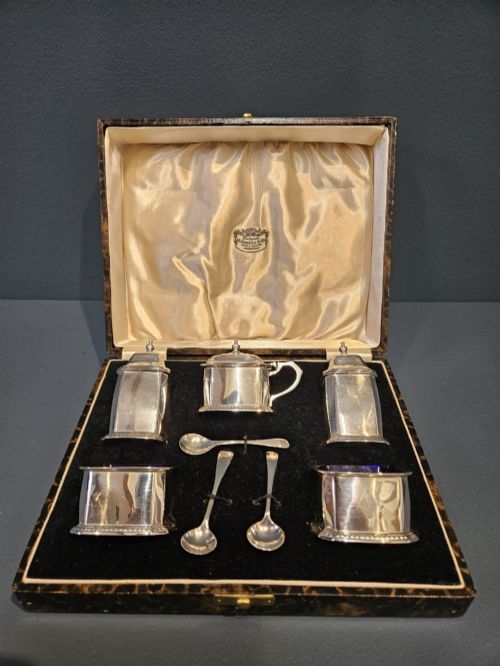
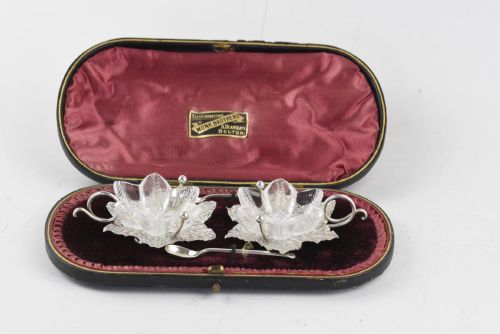
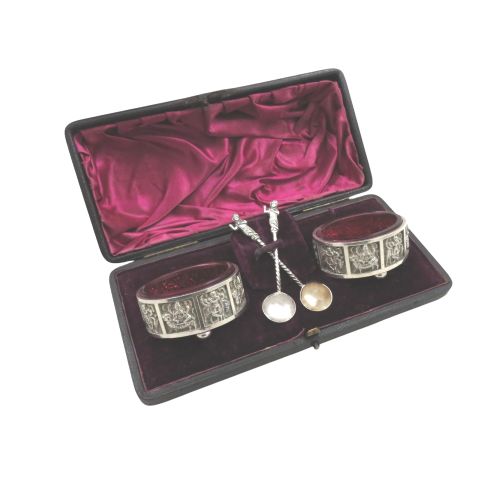
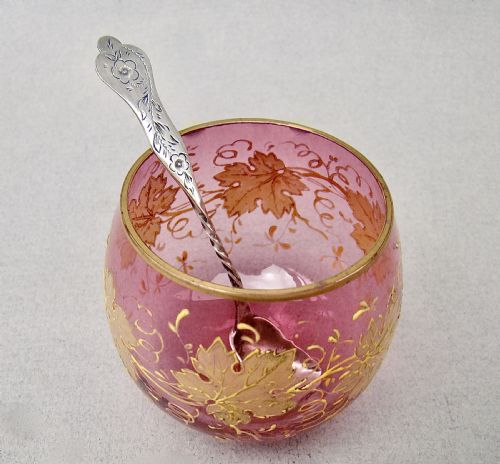
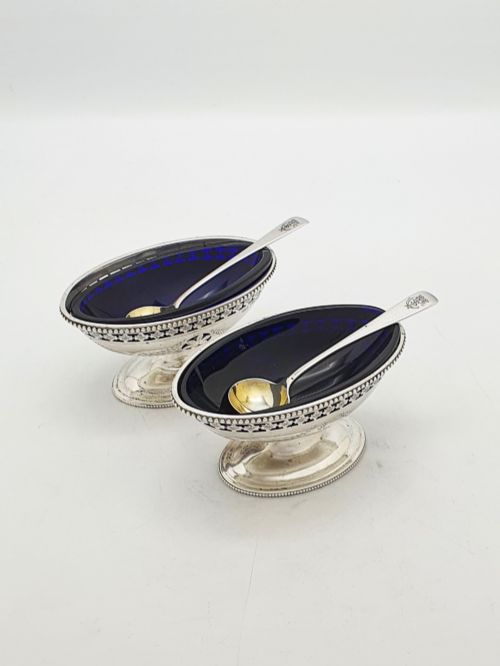
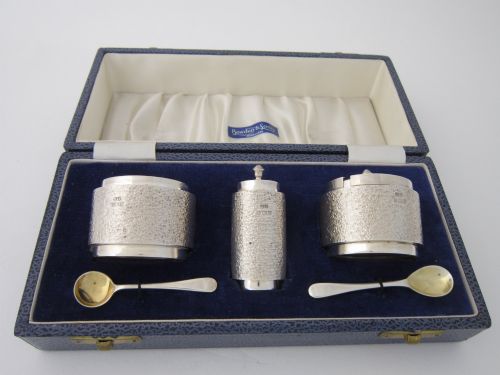
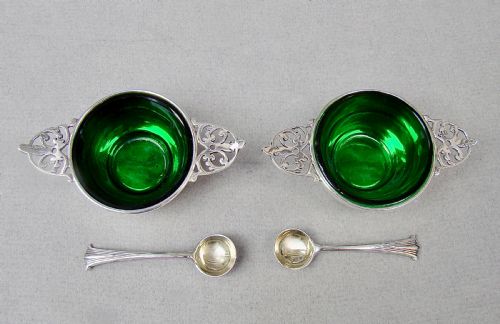
Silver salt cellar spoons are small utensils created to accompany open salt cellars, cruet sets, and condiment bowls on the dining table. When exploring silver salt cellar spoons, buyers encounter miniature spoons shaped to fit compact vessels, often appearing alongside glass liners, fitted presentation cases, and matched sets.
The specimens available span from the Victorian and Edwardian eras into the early twentieth century, reflecting shifting dining customs and table arrangements. Most examples emerge from British assay offices, predominantly taking the form of shovel-bowled, cauldron-matched, or novelty implements.
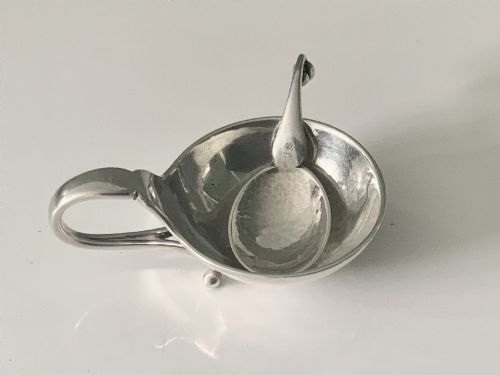
Many listings pair these spoons directly with open salt cellars, mustard pots, or complete cruet sets. The forms range from simple shovel bowls to figural bird and quaich designs, representing both domestic utility and decorative presentation.
Materials and methods
Makers shaped silver salt cellar spoons primarily from sterling silver or silver plate, utilising hammering, casting, and pressing techniques suited to miniature forms. Handle terminals often received hand-engraved decoration, cast figural details, or traditional hallmarks stamped directly into the metal.
Associated components incorporate blown glass liners in cobalt or cranberry hues, alongside fitted cases lined in velvet, silk, and leather. These materials combine to protect the small implements and display them effectively within presentation boxes.
Listings feature sterling silver and silver plate materials, frequently paired with cobalt glass, velvet, and leather cases across Victorian and Edwardian periods.
Evaluating quality and execution
Quality in silver salt cellar spoons rests upon the crispness of the casting, the legibility of the hallmarks, and the preservation of original matched pairings. Superior examples maintain unrubbed bowl details and clear maker marks rather than worn surfaces.
The presence of original fitted cases, intact cobalt or cranberry glass liners, and genuine matching spoons elevates certain sets. Pieces demonstrating unusual figural forms or specific silversmith attributions show higher levels of period execution.
Georg Jensen·Josiah Williams & Co·John Edmonstone·Wilmot Manufacturing Co·Vale Brothers and Sermon·George Unite·Joseph Gloster
The Silver Salt Cellar Spoons Glossary
- Hallmark
- An official stamp applied to precious metals indicating the maker, assay office, standard of purity, and year of manufacture. These marks provide the primary means for dating British silver accurately.
- Cruet set
- A matched collection of bottles, jars, or open cellars held in a stand for condiments and seasonings at the dining table. These assemblies frequently include dedicated salt spoons.
- Cauldron salt
- A small, round salt cellar raised on three short feet, mimicking the shape of a traditional cooking pot. This form remains common in Victorian tableware.
- Sterling silver
- An alloy consisting of ninety-two point five percent silver and seven point five percent other metals, typically copper. This standard ensures the durability required for functional tableware.
- Cobalt glass
- Deep blue glass utilised widely for liners inside open silver salt cellars to prevent direct contact between salt and metal. The rich colour creates a strong visual contrast against polished silver.
Silver Salt Cellar Spoons: Frequently Asked Questions
What are silver salt cellar spoons?
Silver salt cellar spoons are small utensils created to transfer loose salt from an open table cellar to a plate. They are scaled specifically to match miniature condiment vessels.
These implements appear in various historic styles, ranging from plain fiddle patterns to ornate figural designs and matched cased sets.
How were salt spoons used?
Diners used these small spoons to take salt from a shared open cellar and place it beside their food on the dining table. Before free-flowing salt and shakers became common, open salts were standard.
The miniature size prevented diners from taking excessive amounts of salt with a standard dining utensil.
How should I clean silver spoons?
Silver spoons require gentle cleaning with a specialised silver cloth to preserve the metal surface and any delicate hallmarks. Abrasive cleaners or harsh scrubbing will wear away fine engraving and historical details.
Staining can be minimised by washing the pieces promptly after use and storing them away from damp environments.
How do I identify Victorian salt spoons?
Victorian salt spoons often feature distinct hallmarks indicating London, Birmingham, or other British assay offices active during the nineteenth century. Stylistic markers include floral engraving, bead borders, and cast animal motifs.
Consulting the stamped date letters alongside maker marks reveals the exact year and workshop of origin.