


Silver Condiment Set Box
These silver condiment set box pieces bring matched sets of cruets, salts, and peppers safely housed in velvet and silk-lined cases to the table.
Silver Condiment Set Box
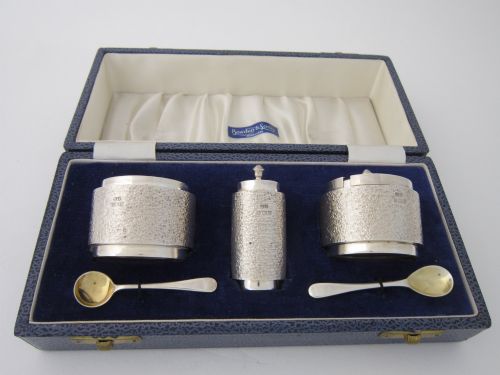
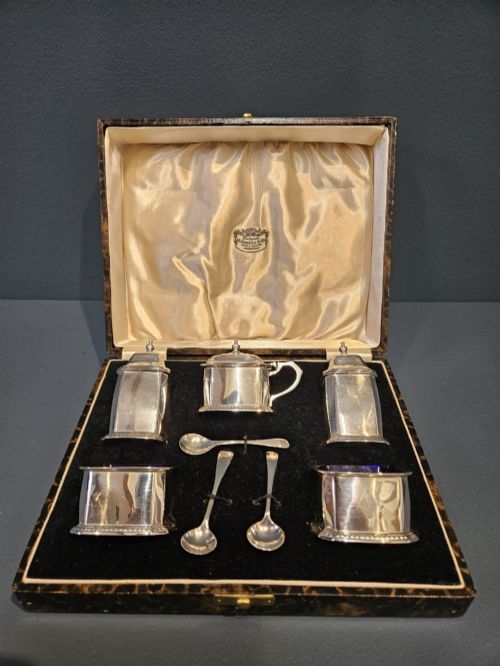
A silver condiment set box gathers matching salt cellars, pepper pots, and mustard pots alongside their spoons within a fitted case, protecting the metal from tarnish. The pieces encountered here span the Victorian, Edwardian, and Art Deco periods, ranging from simple three-piece sets to larger configurations with eight pieces.
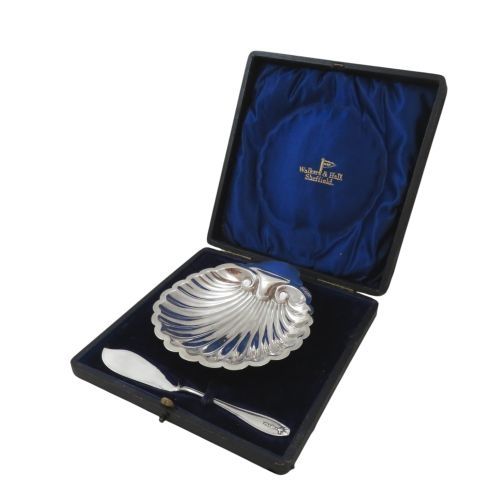
Most examples rely on fitted boxes lined with silk and velvet, often covered in leather, which secure each component in its own moulded recess. Formats vary from traditional Victorian cruet sets to geometric Art Deco designs from the 1930s and 1940s, alongside specialist butter dishes and hors d'oeuvres sets with mother-of-pearl handles.
How they were made
The components are manufactured from sterling silver or standard silver, often bearing hallmarks that record the assay office and year of production. Glass liners frequently accompany salt cellars and mustard pots to protect the silver from corrosive contents like salt and mustard.
Cases combine structural wooden or card carcases covered in leather or fabric, then finished with interior linings of silk and velvet. Metal hinges, clasps, and silk ribbons complete the presentation boxes designed to hold each item firmly in place.
Some sets hide tiny mustard spoons so small they look like silver pins.
What varies in quality
The grade of a set rests upon the completeness of the original contents, the weight and gauge of the silver components, and the preservation of the fitted box. Sets retaining every matching spoon, glass liner, and original lined case command greater interest than assembled groups.
The refinement of the box construction itself sets finer examples apart, particularly those retailed by notable establishments with bespoke velvet mouldings and sound leather exteriors. The crispness of the silversmith's punch marks and the structural integrity of the silver bodies also distinguish superior manufacturing.
Wilmot Manufacturing Co·Mappin & Webb·Harrods
The Silver Condiment Set Box Glossary
- Sterling silver
- A silver alloy containing 92.5 percent pure silver by mass, with the remainder usually copper. This standard is indicated by specific hallmarks on British silver.
- Cruet set
- A collection of small containers for holding table condiments such as oil, vinegar, salt, pepper, and mustard. In modern British terminology, it often refers specifically to salt, pepper, and mustard pots.
- Salt cellar
- An open vessel or small bowl used to hold salt at the dining table before the invention of the spring-loaded salt shaker. They are frequently paired with small mustard spoons.
- Hallmark
- An official mark stamped on items made of precious metals in the United Kingdom, verifying the purity of the metal, the maker, and the year of assay.
- Hors d'oeuvres set
- A collection of specialised small forks and serving pieces, sometimes featuring mother-of-pearl handles, housed within a presentation box.
Silver Condiment Set Box: Frequently Asked Questions
What is included in a silver condiment set box?
These sets typically contain a combination of salt cellars, pepper pots, and mustard pots, often accompanied by matching spoons and glass liners. The entire collection is arranged in a fitted case.
Larger configurations may also incorporate butter dishes, strawberry sets, or hors d'oeuvres forks, all secured within custom recesses inside the presentation box.
How do I identify the date of a silver condiment set box?
Dating relies primarily on the silver hallmarks stamped onto the condiment pieces, which indicate the exact year of assay and the maker. Stylistic clues such as Victorian ornamentation or Art Deco geometric lines also help determine the period.
The materials and construction of the box itself, including the style of the silk and velvet lining, provide further context for the age of the set.
Were these sets meant for daily dining use?
Presentation boxes suggest these sets were designed for formal dining occasions or as substantial gifts, kept safely stored in their cases between uses. The velvet and silk linings protected the polished silver from domestic tarnish and surface wear.
Today, owners continue to use them for special dinner parties or display the complete ensemble inside its original fitted box.
Why do some salt cellars have glass inserts?
Glass liners were introduced to protect the sterling silver from the corrosive chemical action of salt and mustard. Direct contact with these substances can pit and damage unprotected silver over time.
Original glass inserts that fit snugly within the silver salt cellars remain an important component of a complete and well-preserved set.