
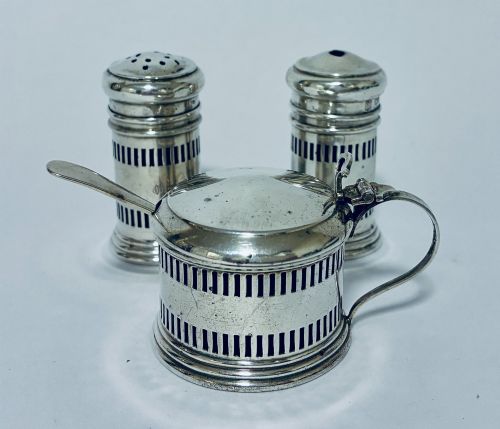
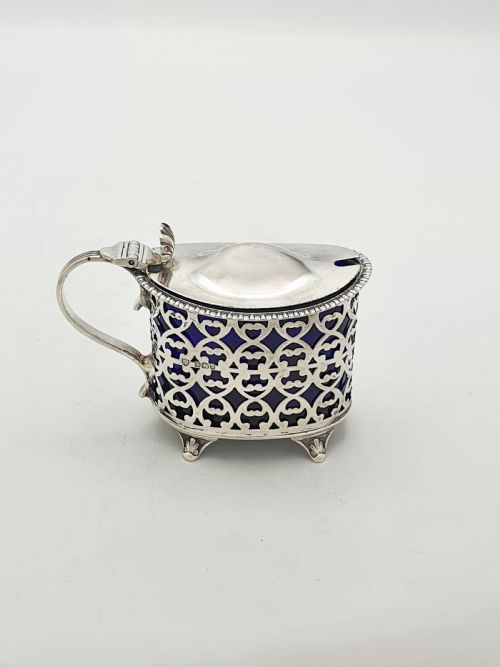


Pierced Silver Condiment Set
A pierced silver condiment set brings the formal dining table of the eighteenth, nineteenth, or early twentieth century to life with polished metalwork and coloured glass.
Pierced Silver Condiment Set
A pierced silver condiment set comprises vessels for salt, mustard, and pepper designed for the dining table. These collections appear in cruet stands, boxed sets, and matched pairs of table salts or mustard pots.
The pieces on this page span from the eighteenth century through the Victorian and Edwardian eras into the nineteen-twenties. Victorian examples predominate, alongside Georgian and later Edwardian variations.
Cruet stands hold multiple bottles or pots, while individual salt cellars and mustard pots often feature openwork silver galleries. Buyers select these sets for their historic table presence and functional design.
How they were made
Silversmiths constructed these vessels in sterling silver and silver, shaping boat forms, oval bodies, and stands through sheet metalworking and casting. Piercing work involved sawing and filing intricate patterns through the silver wall.
Glass liners in cobalt blue or other colours were blown and fitted inside openwork silver salt cellars and mustard pots to hold loose condiments safely. Fitted boxes occasionally accompanied complete cruet sets for secure storage.
Listings feature sterling silver, silver, and cut glass across Victorian, Edwardian, and Georgian periods.
What varies in quality
Quality rests upon the crispness of the pierced metalwork and the harmony of the matched or original components. Elaborate Victorian rococo revival chasing contrasts with the restraint of Georgian and Edwardian designs.
The presence of original coloured glass liners alters the desirability of openwork pieces significantly. Maker attribution to notable workshops also distinguishes standard cruet sets from exceptional examples.
Elkington & Co·Hester Bateman·William Hutton & Sons
The Pierced Silver Condiment Set Glossary
- Pierced work
- Metal pierced with decorative openwork patterns. Silversmiths used this technique to lighten heavy silver vessels and reveal coloured glass liners beneath.
- Cruet set
- A collection of cruet stands, bottles, and pots holding condiments for the table. These arrangements organise various liquids and dry seasonings.
- Cobalt glass
- Deep blue glass used for liners within openwork salt cellars and mustard pots. This material provides a strong visual contrast against polished silver.
- Table salt
- An open cellar used for holding salt at the dining place before the invention of the shaker. These pieces often rest upon small feet and require a salt spoon.
- Mustard pot
- A small covered pot designed for prepared mustard, usually featuring a handle and a matched spoon. Many examples include a glass liner to protect the silver interior.
Pierced Silver Condiment Set: Frequently Asked Questions
How do I clean tarnished silver condiment sets?
Use a specialised silver polish and a soft cloth to remove tarnish gently without damaging the pierced details or hallmarks. Avoid harsh abrasives that scratch the metal surface.
Remove glass liners before cleaning so that moisture and cleaning agents do not become trapped between the glass and the silver gallery.
Are glass liners original to the pieces?
Original glass liners fit snugly inside the pierced silver frame and match the period of manufacture. Replacements often fit less precisely or show different glass colours and weights.
Inspect the rim and base of the glass for characteristic wear that aligns with the age of the silver holder.
How were cruet sets used at the table?
Cruet sets held essential seasonings and condiments within reach of diners during formal meals. Servants placed stands or individual salt cellars directly onto the dining surface.
Mustard pots and salt cellars accommodated individual portions or shared condiments using small spoons.
What distinguishes Victorian condiment sets from Georgian ones?
Georgian condiment pieces typically display clean neoclassical lines, boat shapes, or simpler pierced patterns. Victorian examples often incorporate heavier cast elements, floral chased decoration, and rococo revival styling.
Later Victorian and Edwardian sets frequently returned to lighter pierced galleries reminiscent of earlier eighteenth-century work.