
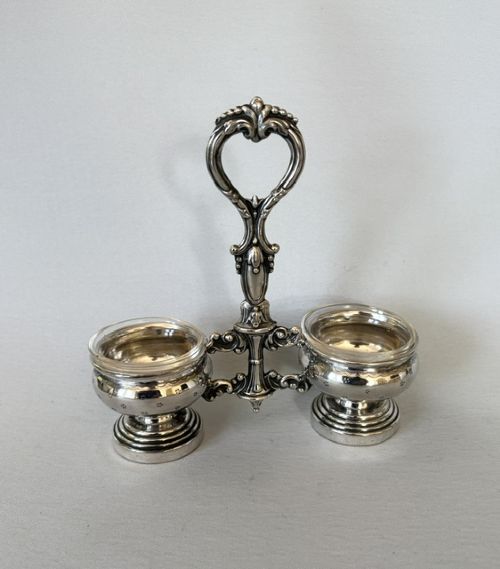


Sterling Silver Condiment Stand
These sterling silver condiment stands bring orderly elegance to any dining table, combining precious metal with fitted glass vessels.

Sterling Silver Condiment Stand
When you search for a sterling silver condiment stand, you encounter dining table frameworks designed to hold cruets, bottles, salt cellars and casters in one secure holder.
The versions met on this page range from compact George V cased four piece sets to extensive Georgian and Victorian multi-bottle cruet frames.
Originating across the eighteenth, nineteenth and early twentieth centuries, these pieces incorporate styles spanning Georgian, Victorian, French Rococo, Grand Regency, and George V.
What varies in quality
The distinction between ordinary production and top tier work rests on the weight of the solid silver framework and the complexity of the design, such as French Rococo or Grand Regency ornamentation.
Completeness dictates value, with sets retaining their original matching cut glass bottles, casters and dedicated condiment spoons achieving higher regard.
The reputation of the maker, including distinguished workshops like those of Hester Bateman or Elkington and Co, elevates the standing of individual pieces.
Some condiment stands include tiny silver spoons with bowls small enough to make a mouse reconsider his portion control.
Charles Thomas Fox·Michael Alexandrovich Romanov·Elkington and Co·Hester Bateman·Viners·William Hutton and Sons
The Sterling Silver Condiment Stand Glossary
- Cruet set
- A matched collection of glass bottles or jars for oil, vinegar, mustard and other seasonings held within a silver stand. These sets formed an essential part of formal dining arrangements.
- Caster
- A small silver vessel with a pierced top used for sprinkling sugar or dry spices over food. They frequently accompany larger condiment and cruet frames.
- Hallmark
- An official stamp applied to precious metals indicating the standard of silver, the assay office, and the date of manufacture. British pieces typically display a series of small punch marks.
- Salt cellar
- An open dish or small container used to hold salt at the table, often supplied with a dedicated spoon. They appear individually or grouped within a condiment stand.
Sterling Silver Condiment Stand: Frequently Asked Questions
What is a sterling silver condiment stand?
A sterling silver condiment stand is a decorative metal frame designed to hold multiple glass bottles, cruets, salt cellars and casters together for table service.
These pieces organise dining table seasonings into a portable unit featuring handles and fitted compartments.
How were antique condiment stands used?
Dinners placed these stands centrally on the table so guests could easily access oils, vinegars, mustards, salt and pepper during meals.
The fitted bottles and casters allowed diners to season dishes directly from the structured silver frame.
How do I date an antique silver cruet set?
Dating relies primarily upon official hallmarks stamped into the solid silver, which indicate specific assay offices and production years.
Stylistic indicators such as Georgian symmetry or Victorian ornate casting also help determine the period of manufacture.
How do I clean a sterling silver condiment stand?
Cleaning requires a soft cloth and a gentle silver polish formulated to remove tarnish without harming the underlying metal surface.
Glass bottles and liners should be washed separately in warm soapy water and dried thoroughly before returning them to the silver frame.
Are original glass bottles important?
Original matched cut glass bottles and casters significantly enhance the integrity and collectability of a period cruet set.
Many surviving stands retain their original glassware, though replacements do occur over centuries of domestic use.