


Victorian Glass Condiment Bottles
Victorian glass condiment bottles bring functional elegance to the table, offering collectors a tactile piece of nineteenth-century dining history.

Victorian Glass Condiment Bottles
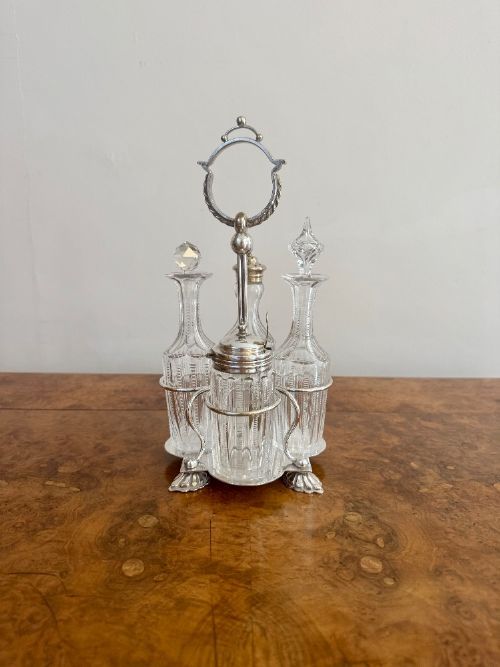
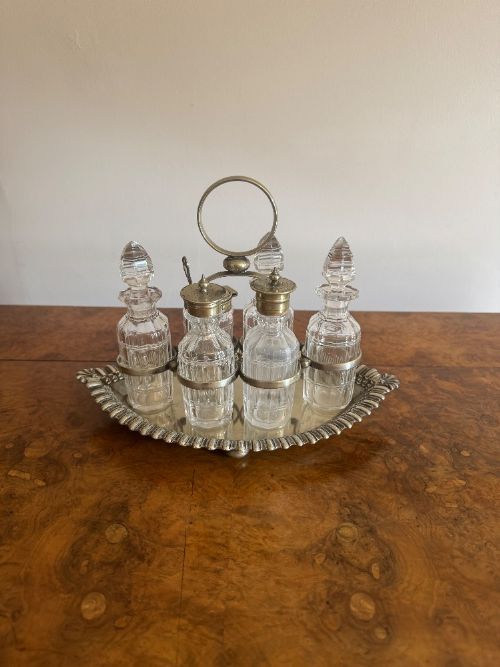
Victorian glass condiment bottles are the essential tablewares designed to hold oils, vinegars, and sauces during formal dining. When searching for victorian glass condiment bottles, a buyer encounters matching cruet bottles, individual cruet sets, and larger multi-bottle frames. These items most frequently appear as sets housed in silver plated or sterling silver frames.
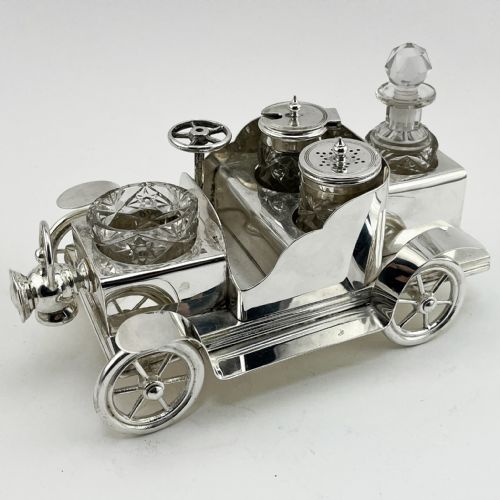
The objects span several decades, with pieces originating from the Georgian era through to the Edwardian period alongside Victorian examples. Forms range from standard four-bottle and six-bottle table frames to unusual novelty car cruet sets and paired oil and vinegar bottles. Most surviving examples combine moulded or cut glass vessels with metal mounts.
Originating primarily from English workshops, these tablewares reflect the dining customs of the nineteenth century. Buyers find that individual bottles often survive within larger cruet sets, though matched pairs also appear. Each piece demonstrates the domestic utility required by period households.
How they were made
Makers utilised clear and coloured glass, notably cobalt blue glass, shaped through pressing and cutting techniques. Cut glass facets catch the light on the body of the bottles, adding texture to the surface.
Mounts and frames combine silver plate and sterling silver, secured around the glass necks and bases. Metalwork components involve casting, plating, and delicate mounting to support the glass vessels safely.
Victorian travellers enjoyed dining on the move with unusual vintage car cruet sets designed to withstand bumpy carriage rides.
What varies in quality
Quality rests in the crispness of the glass cutting and the weight of the metal frame. Finer examples display deep, sharp facets on the glass and substantial silver plating or solid sterling silver mountings.
The distinction between standard domestic sets and top tier items also lies in maker attribution and decorative complexity. Marked pieces from notable makers command greater attention than unmarked utilitarian sets.
Walker & Hall·Elkington & Co·Wade Wingfield Wilkins
The Victorian Glass Condiment Bottles Glossary
- Cruet set
- A matched collection of glass bottles or jars designed for condiments, held within a metal frame for table service. These sets usually contained receptacles for oil, vinegar, mustard, and pepper.
- Silver plate
- A layer of silver fused to a base metal, commonly utilised for nineteenth-century frames and mounts. This technique provided the appearance of solid silver at a lower cost.
- Cut glass
- Glass decorated by grinding facets and patterns into the surface using a rotating wheel. This process created the sparkling finish seen on better period bottles.
- Cobalt blue glass
- Deeply coloured glass produced by adding cobalt oxide to the batch during manufacture. It was frequently chosen for bottles containing specific condiments to protect contents from light.
Victorian Glass Condiment Bottles: Frequently Asked Questions
What are victorian glass condiment bottles used for?
These bottles served to dispense oils, vinegars, and sauces at the dining table during formal meals. They kept table seasonings organised within a portable frame.
Today, collectors utilise them for display or repurpose individual bottles for modern dining tables. They remain functional items for serving oils and dressings.
How do I clean antique glass bottles?
Wash the glass gently in warm soapy water using a soft bottle brush. Avoid harsh abrasives that might scratch the surface.
Take care with silver plated or sterling silver mounts, keeping moisture away from glued joints or old cork stoppers. Polish the metal parts separately with a suitable silver cloth.
Are all cruet sets sterling silver?
Most surviving frames and mounts on these pieces consist of silver plate rather than solid sterling silver. Makers used base metals coated with a thin layer of silver for everyday household items.
Sterling silver mounts appear on higher end pieces and are usually stamped with official assay office hallmarks. Examining the metal closely reveals the presence of base metal underneath worn plating.
How do I date a cruet set?
Dating relies on the style of the metal frame, the shape of the glass bottles, and any associated maker marks or registry numbers. Victorian pieces often display ornate decorative motifs influenced by Gothic or classical revivals.
Later Edwardian examples tend to feature lighter frames, while Georgian items show earlier neoclassical proportions. Comparing the glass cutting style helps narrow down the decade of manufacture.