


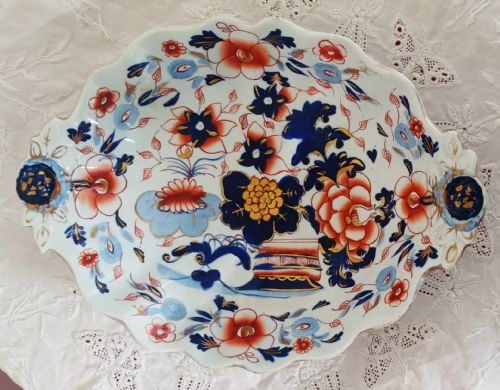
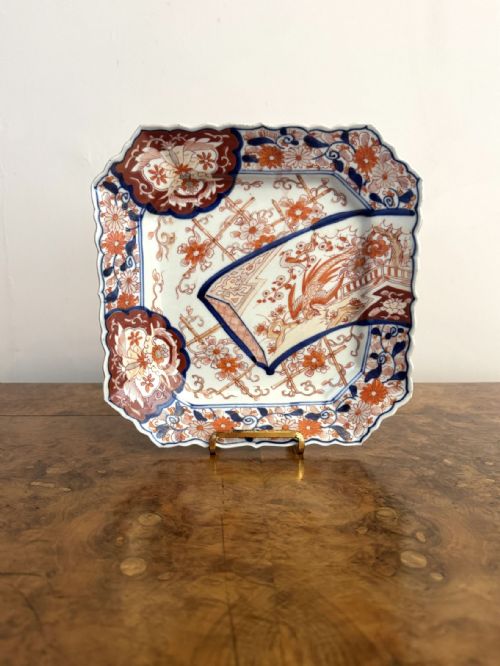
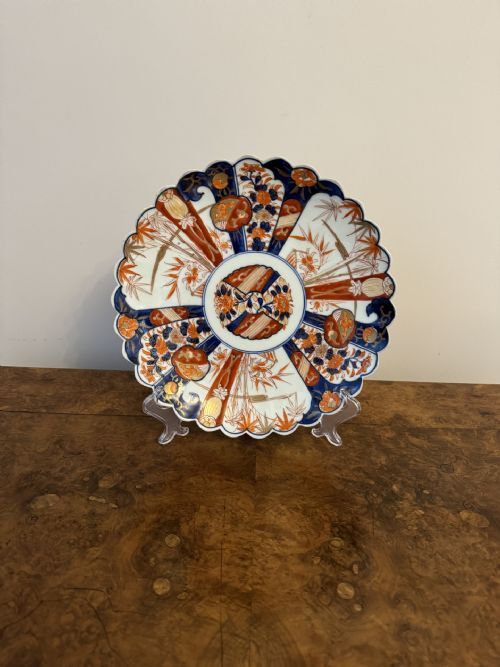

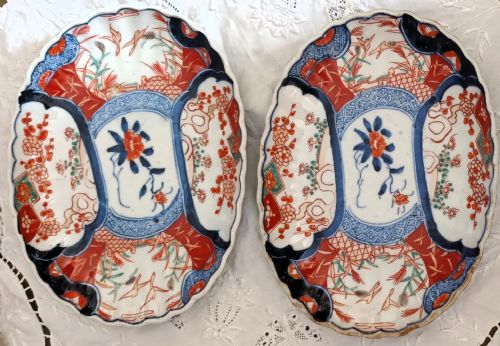
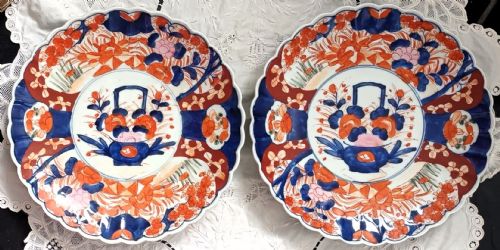
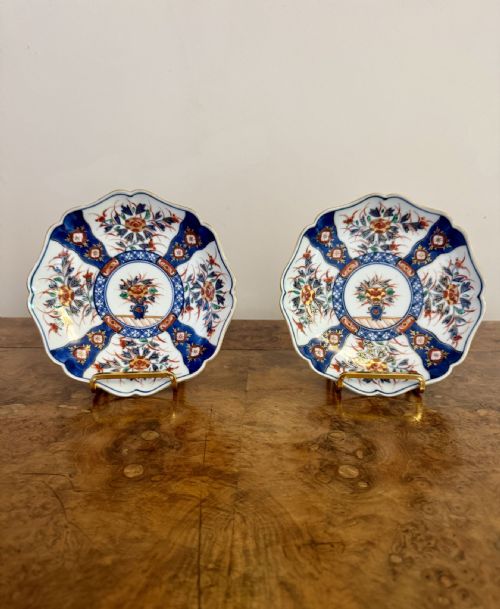
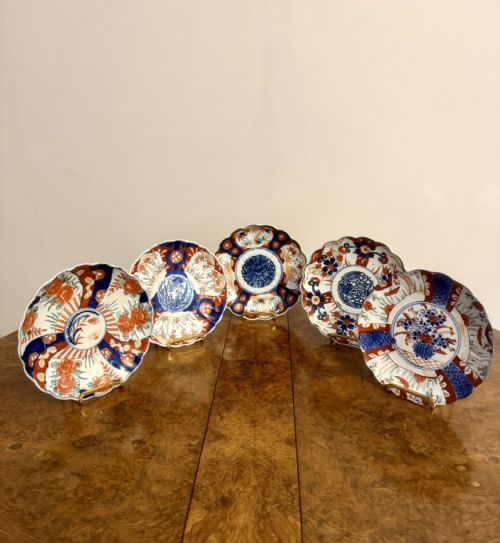
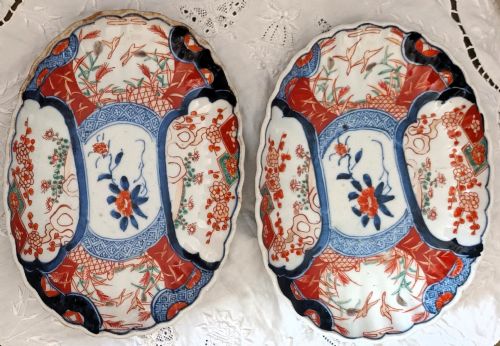
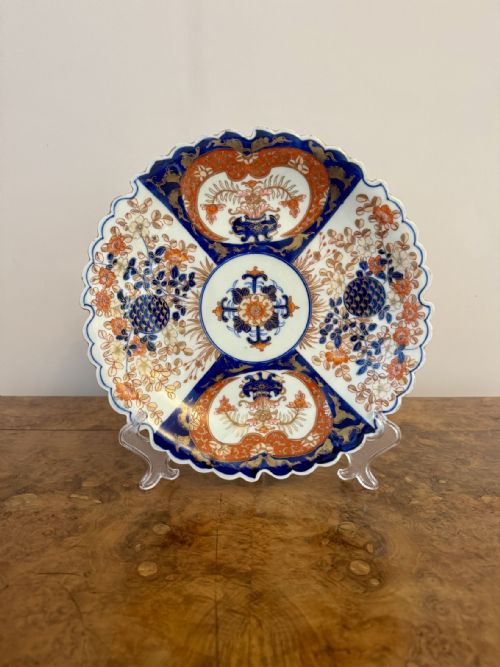
Scalloped Imari Plate
A scalloped imari plate brings together bold colour palettes and shaped edges that catch the eye instantly.
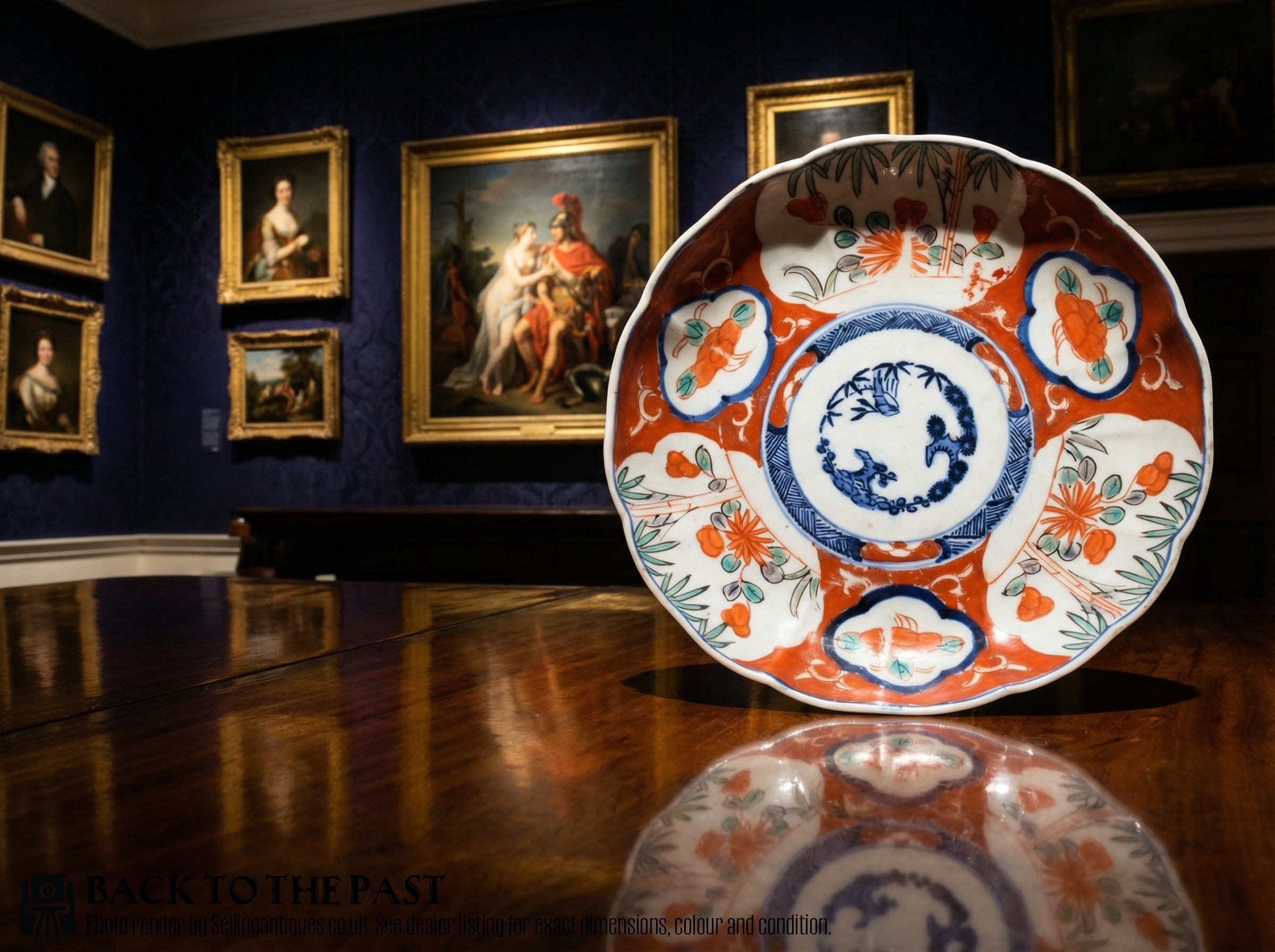
Scalloped Imari Plate
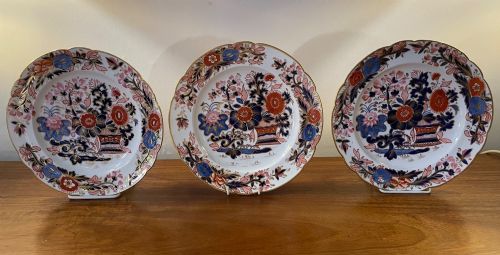
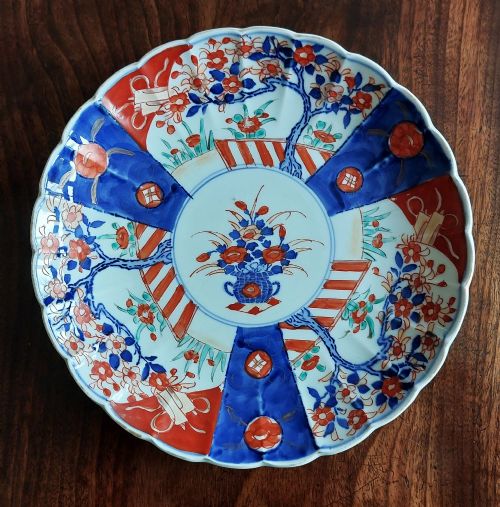
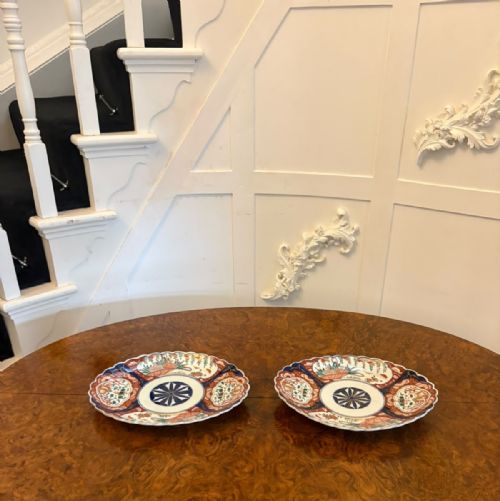
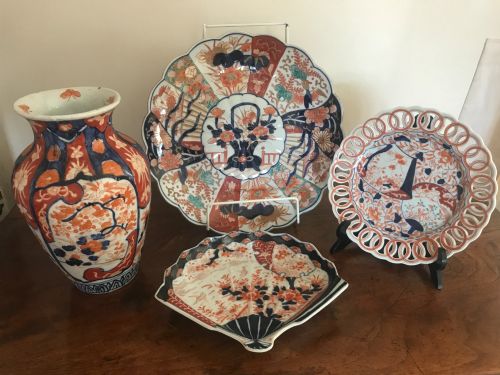
A scalloped imari plate is a decorative ceramic piece defined by its undulating rim and distinctive Japanese or English heritage. When exploring this selection, buyers encounter various forms including chargers, dishes, and low comports originating from the eighteenth, nineteenth, and early twentieth centuries.
Japanese Meiji period porcelain dominates the offerings alongside English interpretations from the Georgian and Victorian eras. These plates function primarily as decorative display items, wall plates, or table centerpieces rather than everyday tableware.
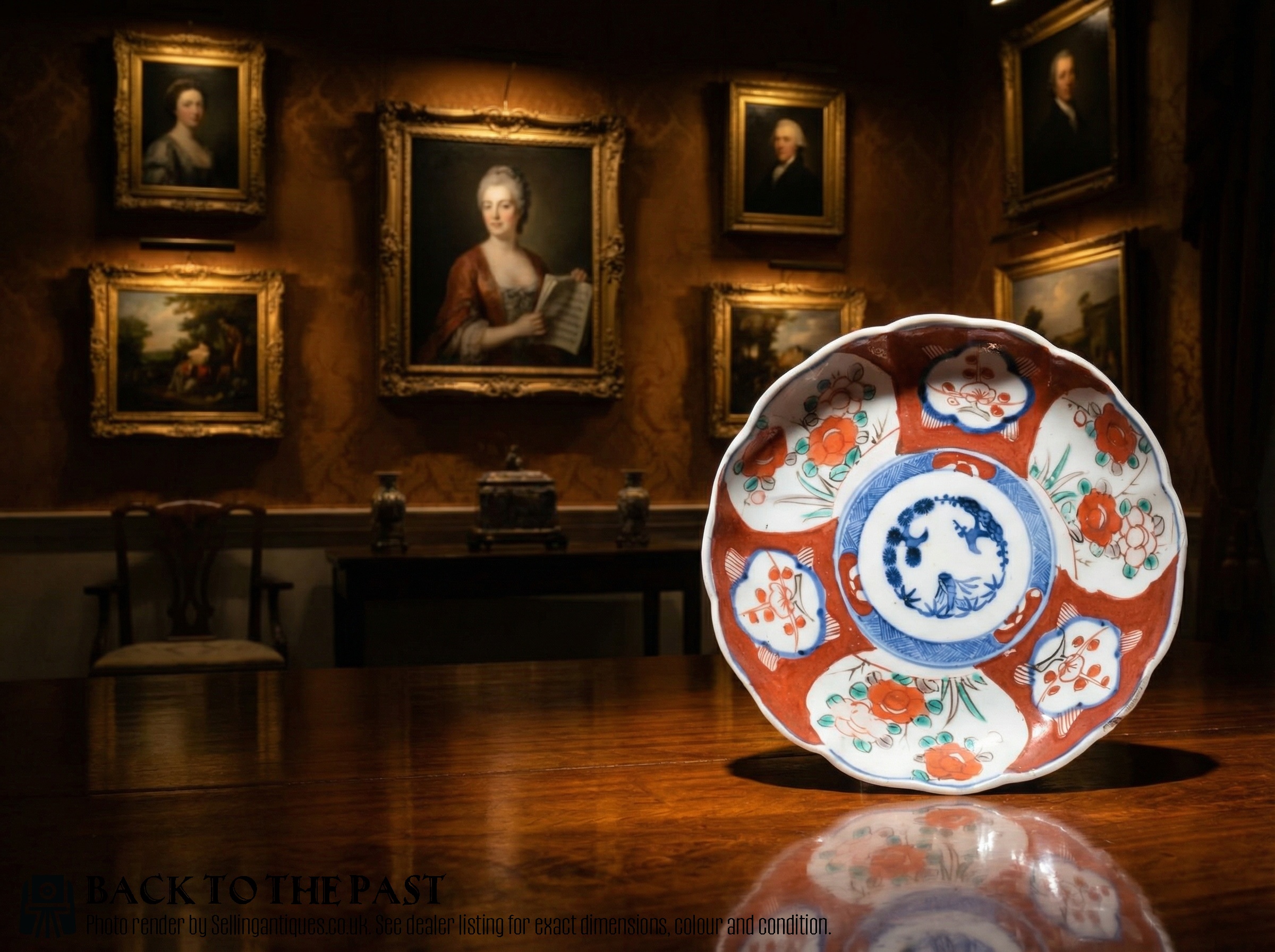
How they were made
Potters shaped porcelain or ironstone clay into circular, oval, square, and hexagonal forms with characteristic scalloped edges. Artisans then applied cobalt underglaze before firing the ceramic body to achieve deep blue tones.
Overglaze enamel and gold leaf or gilding were added in subsequent steps to create the vibrant floral, bird, and figural designs typical of the Imari palette. A final low-temperature firing sealed the colourful pigments and metallic details onto the surface.
Listings feature porcelain and ironstone materials decorated with cobalt underglaze, enamel, and gold leaf across the nineteenth and early twentieth centuries.
What varies in quality
The precision of the hand-painted motifs separates standard items from exceptional examples. Finer pieces display crisp botanical or avian details, such as exotic birds and floral arrangements, executed with confident brushwork.
The richness and preservation of the overglaze enamel and gold leaf influence the overall visual impact. Superior craftsmanship also appears in the crispness of the moulded scalloped edge and the balanced weight of the porcelain body.

The Scalloped Imari Plate Glossary
- Imari palette
- A traditional decorative scheme utilising cobalt blue, iron red, and gold as primary colours. This distinctive combination originated in Japan and heavily influenced European porcelain makers.
- Meiji period
- The era in Japanese history spanning from 1868 to 1912, noted for significant production of export ceramics. Pieces from this time often feature detailed hand-painted scenes.
- Cobalt underglaze
- A blue pigment applied to raw ceramic clay before glazing and firing. This technique creates durable designs that sit beneath the glossy surface layer.
- Ironstone china
- A type of durable heavy earthenware developed in nineteenth-century England. It served as a robust alternative to true porcelain for decorative and utility wares.
- Comport
- A raised dish or bowl traditionally used for serving fruit or sweets on a dining table. In antique ceramic collections, these often feature low pedestals or shaped rims.
Scalloped Imari Plate: Frequently Asked Questions
How do I hang a scalloped imari plate on the wall?
Use a coated spring-tension plate hanger that grips the scalloped rim securely without scratching the porcelain. Ensure the wall fixing matches the weight of the charger or plate.
Position the display away from direct sunlight to protect the overglaze enamels and gold leaf details from fading over time.
Are these plates safe for daily dining use?
Antique pieces with overglaze enamels and gold leaf are intended primarily for display and decorative purposes. Hand washing is essential to preserve the painted pigments.
Avoid using abrasive cleaners or dishwashers, which can damage the delicate historic glazes and metallic gilding.
What is the difference between an imari plate and a charger?
Chargers are significantly larger decorative plates, often measuring twelve inches or more in diameter. They were traditionally used as base plates for other courses or displayed upright on sideboards.
Standard plates are smaller in scale and more suited to grouping in sets or mounting directly onto walls.
How do I distinguish Japanese imari from English imari?
Japanese examples typically utilise fine translucent porcelain bodies with dense cobalt underglaze and iron red motifs characteristic of the Meiji period. English pieces frequently employ ironstone or softer earthenware bodies.
English interpretations often reflect Georgian or Regency design sensibilities while mimicking the popular Japanese colour scheme.