








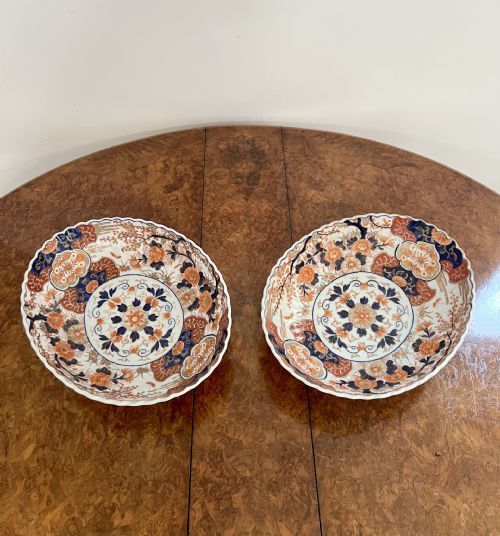
Scalloped Edge Decorative Dish
A scalloped edge decorative dish brings varied form and colour to a room, drawing the eye with its undulating profile.
Scalloped Edge Decorative Dish
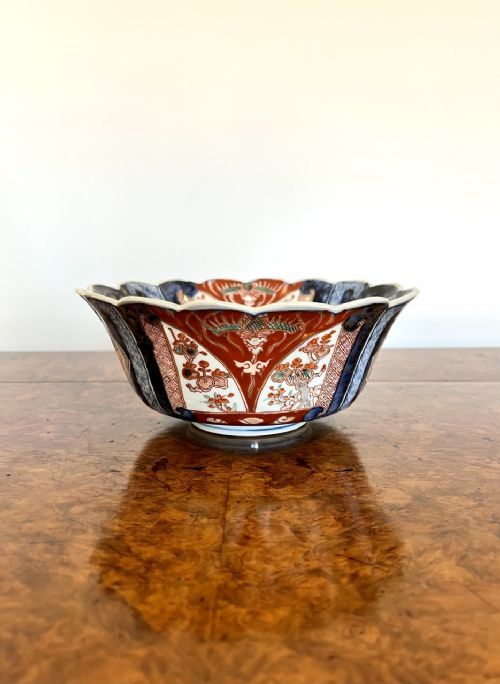
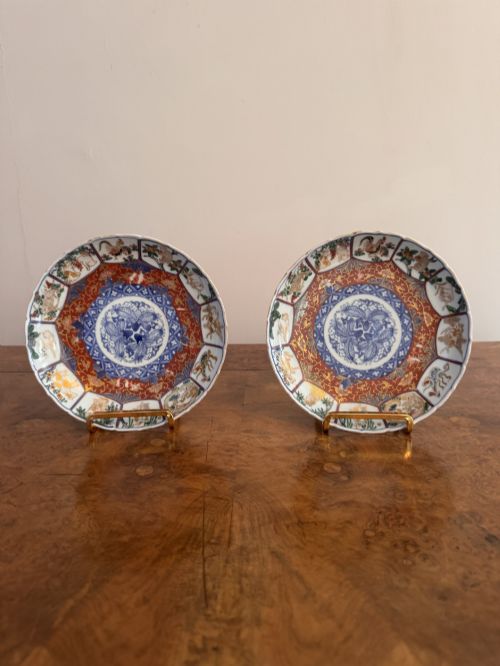
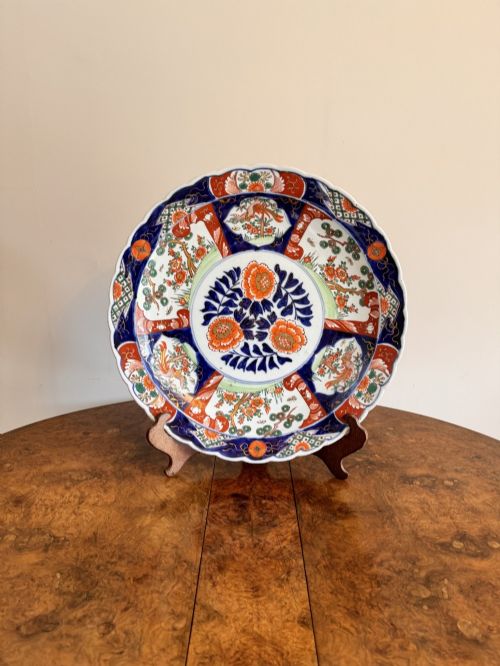
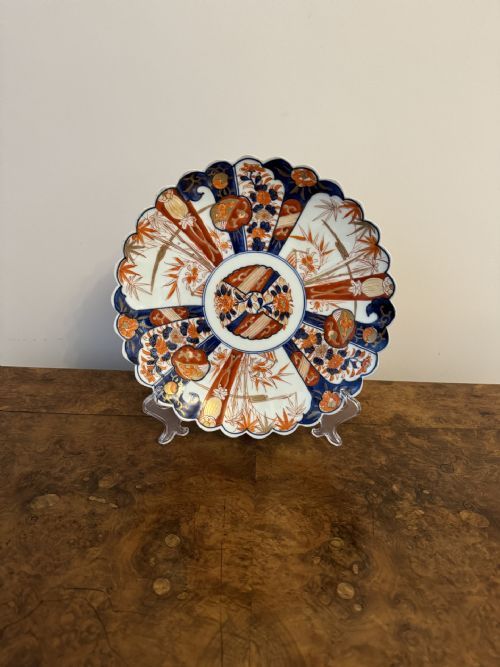
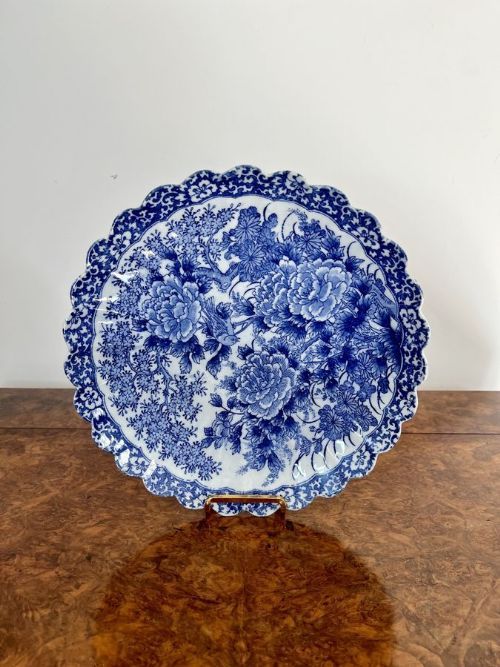
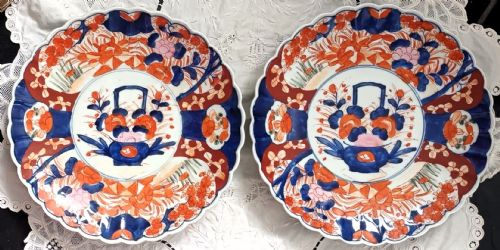
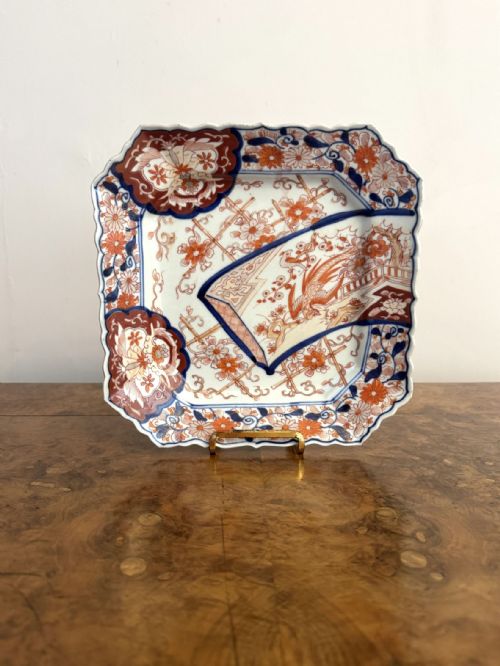
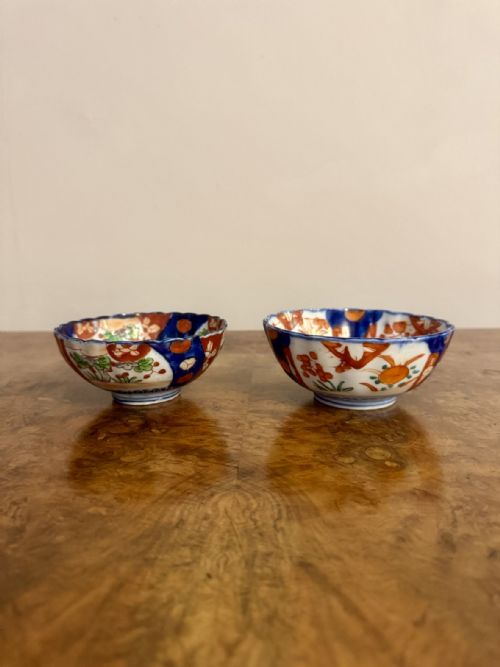
A scalloped edge decorative dish encompasses plates, chargers, and bowls shaped with curved, indented rims rather than straight outlines. When exploring a scalloped edge decorative dish, Japanese Imari porcelain from the nineteenth century and the Meiji period predominates alongside European ceramics and glass.
The objects take several forms, ranging from large display chargers and deep bowls to smaller plates and opaline glass shell dishes. These pieces originate from distinct periods spanning the seventeenth century through to the Edwardian era, with Victorian and nineteenth-century examples forming the core of the selection.
Makers utilised diverse cultural traditions, blending Dutch Baroque influences, French Napoleon III designs, and Japanese Edo and Meiji aesthetics. The common thread among these varied objects remains the shaped, undulating rim that frames the decorated surface.
Materials and production techniques
Porcelain and ceramic form the primary substance for the majority of these pieces, shaped into plates, bowls, and chargers with cobalt underglaze decoration. Kiln firing sets the rich blues and iron reds characteristic of Imari wares, whilst Dutch delftware employs tin glazes on earthenware bodies.
Surface enrichment often includes gilding, gold leaf, and enamel work applied over the glaze to highlight the shaped contours. Glass examples utilise moulded opaline material finished with hand-painted gilt edges along the shell-like ribs.
Scalloped Edge Decorative Dish Retail Price Guide 2026
Typical asking prices for scalloped edge decorative dish among the pieces listed under this phrase on Sellingantiques today, from the lower quarter to the upper quarter. They describe what is for sale here now, not the wider market.
The inventory spans seventeenth-century Delftware up to Edwardian and Victorian decorative ceramics.
Assessing visual and material merit
Quality rests in the crispness of the moulded edge and the precision of the hand-painted decoration across the ceramic or porcelain body. Pieces exhibiting finer control in cobalt underglaze work and richer application of enamel and gold leaf stand apart from simpler commercial output.
The depth of the modelling in shaped bowls and the clarity of the glaze during firing dictate the visual impact of the piece. Superior examples maintain balanced proportions where the undulating rim complements the central pictorial composition.
The Scalloped Edge Decorative Dish Glossary
- Imari
- A style of Japanese porcelain decorated in underglaze blue, iron red, and gold, named after the port from which it was shipped to Europe. It represents a major portion of the ceramic items found in this category.
- Charger
- A large decorative plate intended for display on a sideboard or wall rather than for dining use. These substantial pieces provide a wide surface for complex painted scenes.
- Toleware
- Painted or enamelled sheet metalware, often shaped into vessels and bowls. It offers a robust alternative to ceramic bodies while accepting fine surface decoration.
- Opaline glass
- An opaque or translucent glass developed in France during the nineteenth century, frequently moulded into decorative shell forms. It takes gilding well along its raised edges.
Scalloped Edge Decorative Dish: Frequently Asked Questions
How were these dishes displayed?
Large chargers and bowls were traditionally set upon sideboards, dressers, or mounted on walls to showcase their complex painted designs.
Smaller plates and shell dishes served on tables or cabinets as ornamental pieces rather than functional tableware.
What periods do these pieces span?
The selection covers items ranging from the seventeenth century through the Victorian and Edwardian eras, with a strong representation of nineteenth-century production.
Japanese Meiji period and European decorative arts feature prominently across the available dates.
How do I care for gilt porcelain?
Gilt and enamelled surfaces require gentle dusting with a soft, dry cloth to preserve the delicate gold leaf and overglaze colours.
Immersion in water or chemical cleaners should be avoided to protect the integrity of antique glazes.
What is the difference between a bowl and a charger?
Bowls possess deep, curved walls designed to hold items or stand independently as sculptural vessels on a surface.
Chargers are broad, flat plates created primarily to provide a wide canvas for detailed pictorial decoration.