

Satinwood Desk Table
Satinwood desk table pieces combine pale timbers and fine writing surfaces, offering practical study space paired with refined period craftsmanship.
Satinwood Desk Table
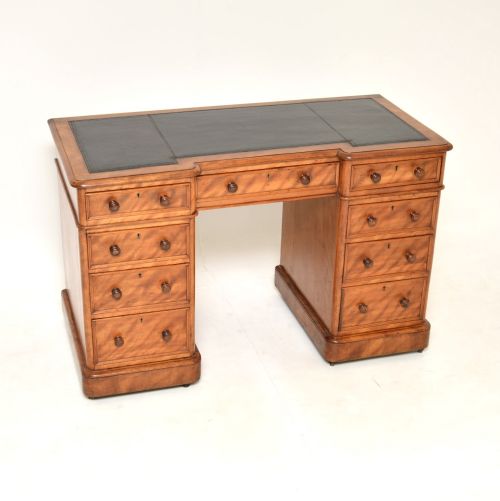
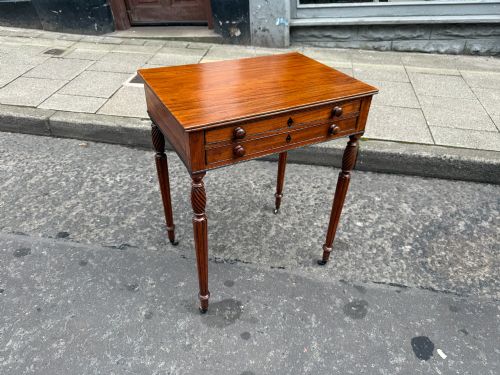
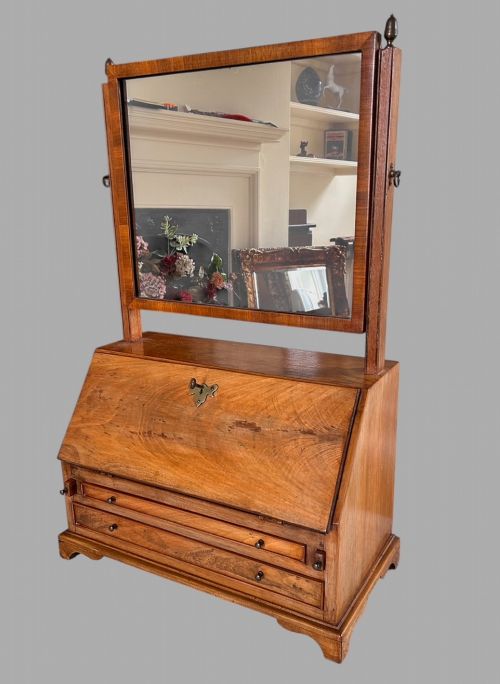
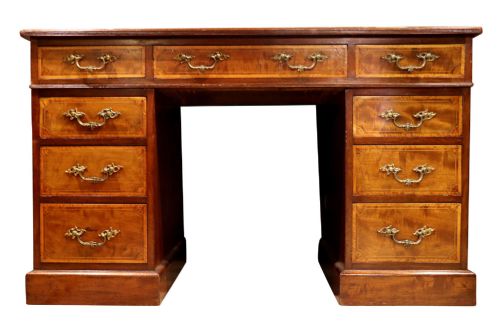
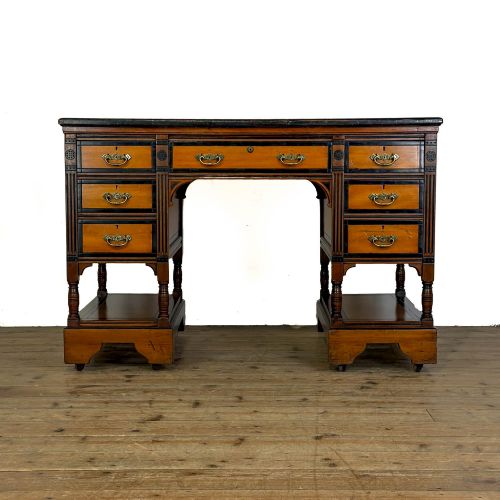
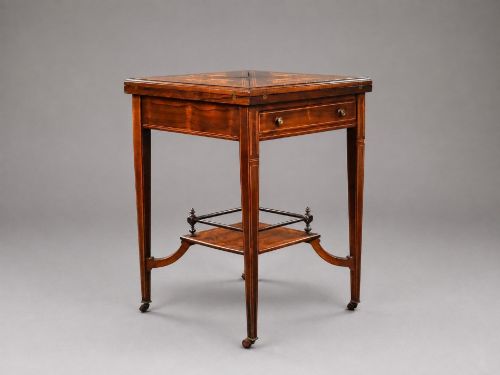
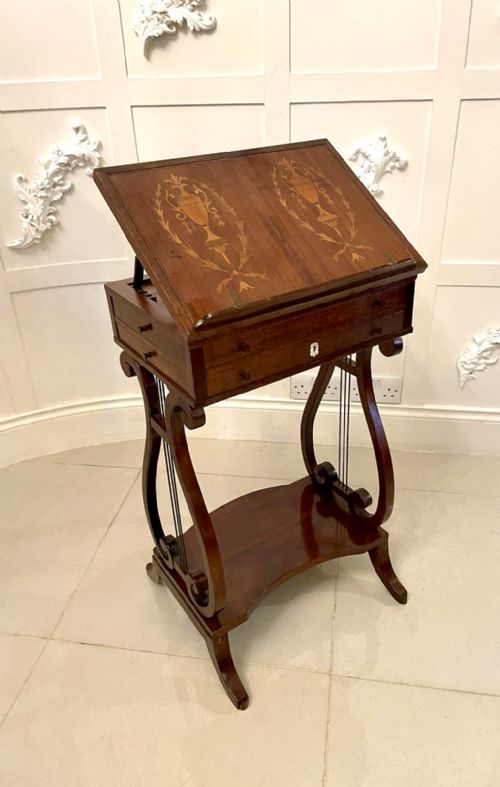
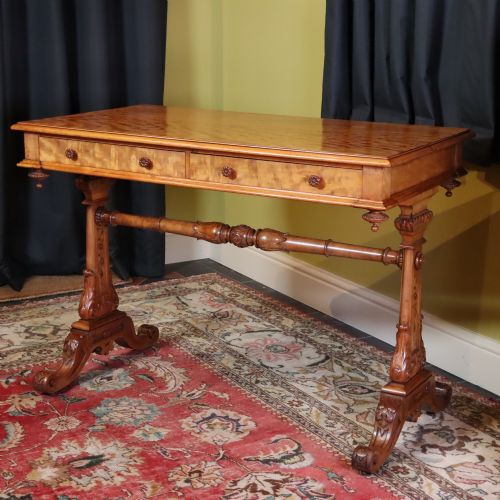
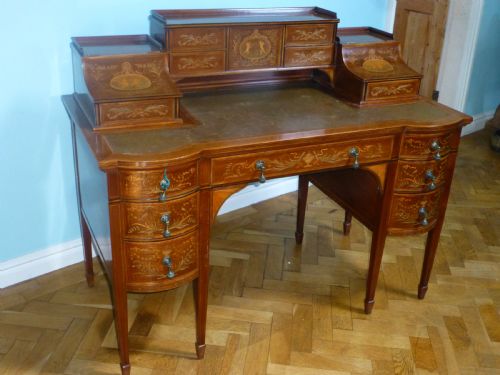
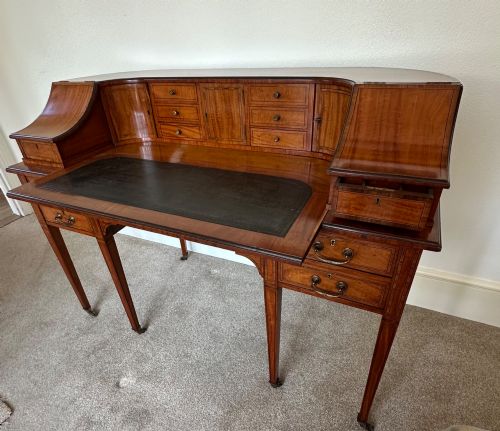
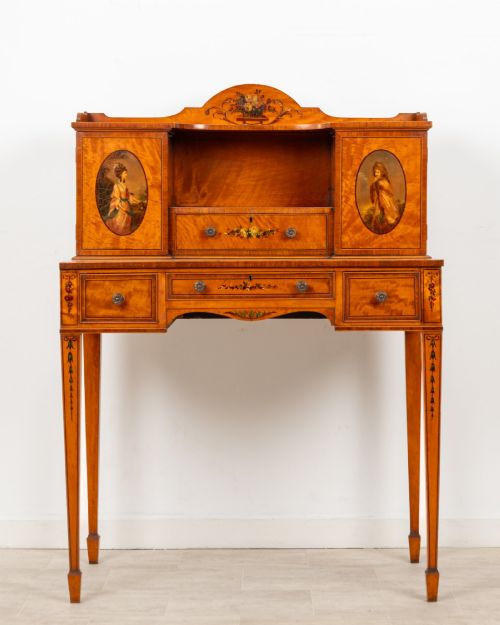
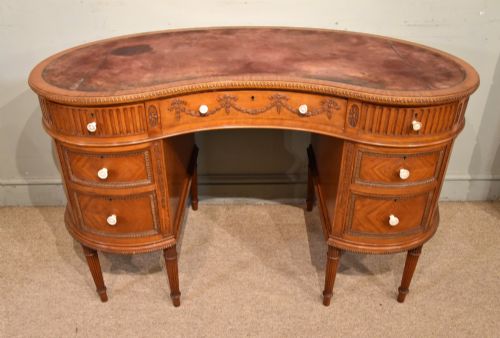
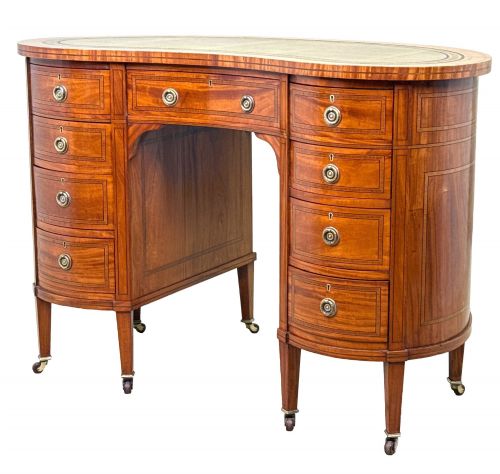
A satinwood desk table brings together compact writing furniture and light-toned cabinet work originating primarily from the eighteenth, nineteenth, and early twentieth centuries. When exploring this selection, buyers encounter formats ranging from kidney-shaped writing desks and Carlton House models to ladies writing tables and occasional dressing variants.
The prevailing examples originate from the Edwardian and Victorian eras, often displaying Sheraton Revival influences alongside George III antecedents. These pieces function as dedicated writing surfaces while serving as decorative centrepieces within domestic interiors.
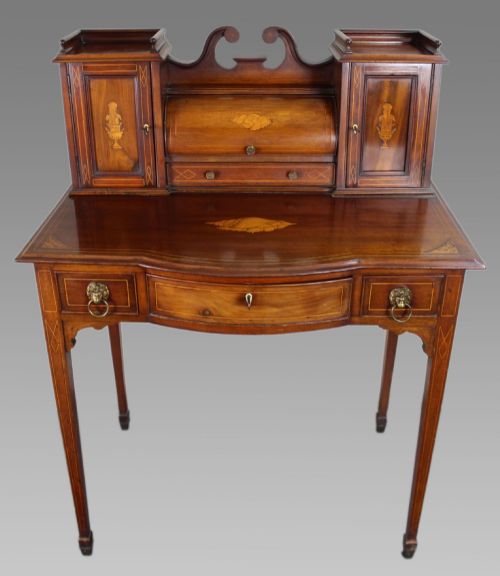
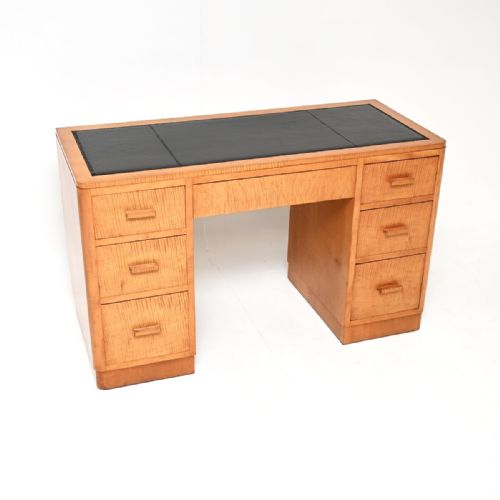
Forms vary from twin-pedestal configurations and compact bonheur du jour units to side tables fitted with drawers and leather writing inserts. Surviving examples demonstrate the versatility demanded by past households for correspondence and light administrative tasks.
Materials and construction methods
Makers utilised pale satinwood veneers applied over secondary timbers like mahogany or pine, frequently incorporating contrasting banding and intricate marquetry. Brass hardware, original leather inserts, and hand-painted floral details appear regularly across the surviving inventory.
Cabinet makers employed precise dovetail joinery for drawer construction and shaped curved framework for kidney and barrel-front designs. Polished finishes protected the grain while highlighting the natural chatoyant quality of the wood.
The listings show pieces spanning the eighteenth century through to the Edwardian and Art Deco periods, incorporating satinwood, mahogany, rosewood, and brass.
Differentiating quality in construction
Superior execution shows in the precision of the marquetry inlay, the retention of original brass handles, and the condition of the leather writing surfaces. Master workshops balanced structural integrity with delicate proportions, ensuring stability in complex forms such as the Carlton House desk.
Lesser examples display degraded secondary timber, replaced hardware, or lifting veneer where humidity affected the underlying structure. The integration of hand-painted decoration and well-figured timber distinguishes the finest output from standard commercial production.
Edwards and Roberts·Maple and Co·Gillows
The Satinwood Desk Table Glossary
- Satinwood
- A lustrous, hard timber native to Ceylon and the West Indies, known for its golden colour and reflective grain. It was heavily utilised during the eighteenth and nineteenth centuries for high-status furniture.
- Carlton House desk
- A form of writing desk featuring a curved superstructure fitted with small drawers and pigeonholes around the perimeter of the writing surface. This layout originated in the late eighteenth century.
- Kidney shape
- A curved desk or table configuration resembling a kidney bean, designed to fit comfortably against the user. This outline appears frequently in Edwardian and late nineteenth-century pieces.
- Marquetry
- Decorative patterns formed by the insertion of pieces of wood, shell, or ivory into a veneer surface. Makers utilised this technique to create floral and neoclassical motifs.
- Bonheur du jour
- A small, light ladies writing desk featuring a small cabinet or shelving superstructure above the writing surface. These pieces emerged during the eighteenth century.
- Sheraton Revival
- A late nineteenth and early twentieth-century design movement inspired by the neoclassical furniture of George Thomas Sheraton. Pieces display balanced proportions, fine banding, and painted details.
Satinwood Desk Table: Frequently Asked Questions
What is a satinwood desk table?
A satinwood desk table is a piece of antique writing furniture constructed with or veneered in pale, lustrous satinwood timber. These surfaces accommodate daily correspondence and study.
They appear in various formats, including kidney shapes, side tables, and Carlton House desks, dating predominantly from the Victorian and Edwardian periods.
How do I date a satinwood desk table?
Dating relies on examining construction methods, hardware styles, and overall aesthetic characteristics such as Sheraton Revival influences or neoclassical painted motifs. Edwardian examples often feature lighter mahogany carcases with detailed marquetry.
Victorian and eighteenth-century pieces display heavier secondary timbers, hand-cut dovetails, and structural proportions typical of their respective eras.
Were these tables used for writing?
These tables served primarily as compact writing desks, dressing tables, or ladies workstation surfaces within private homes. Many incorporate leather-lined writing inserts and integrated stationery drawers.
Their dual functionality allowed owners to use them for both personal correspondence and as decorative side furniture in reception rooms.
How should I care for satinwood furniture?
Maintaining satinwood requires placing the furniture away from direct sunlight and extreme humidity fluctuations to prevent veneer lifting. Regular dusting with a soft, dry cloth preserves the polished finish.
Harsh chemical cleaners must be avoided in favour of traditional wax polishes suitable for antique hardwood surfaces.