



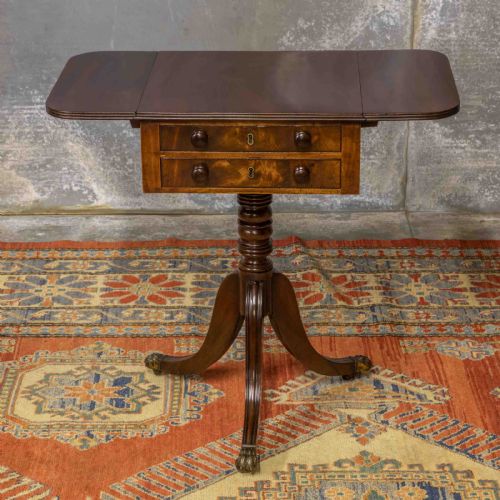


Regency Ladies Work Table
These regency ladies work table pieces combine storage, writing surfaces and sewing compartments in refined timber frames.
Regency Ladies Work Table
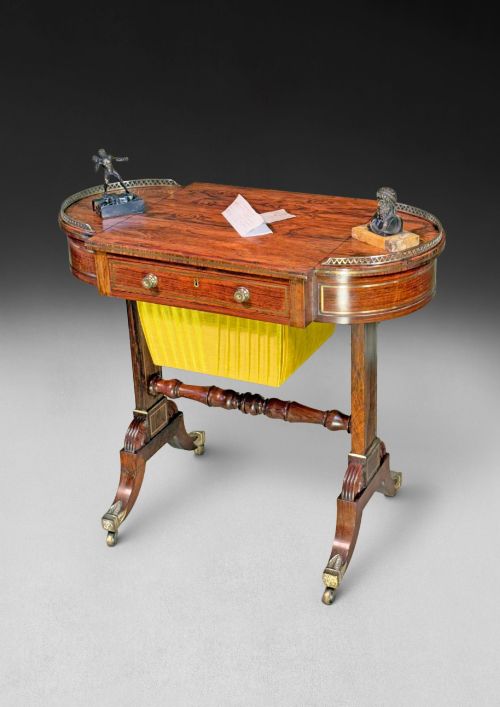
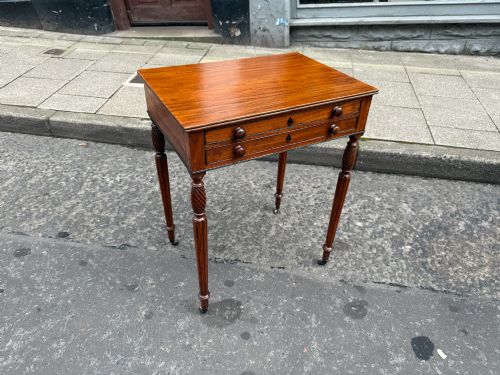
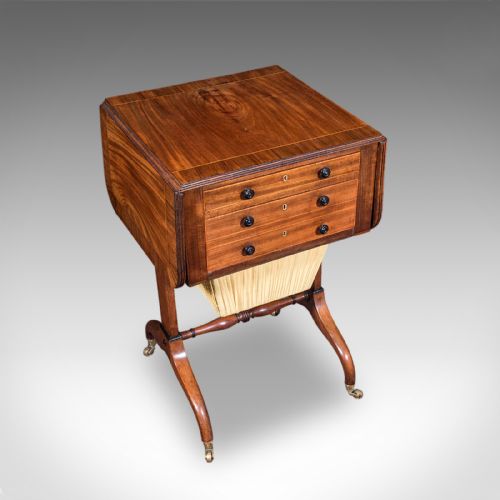
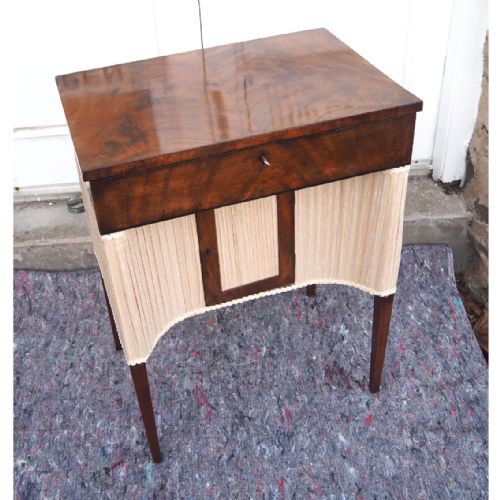
A regency ladies work table is a multifunctional small furniture form designed for needlework, writing and personal use during the early nineteenth century. These pieces typically incorporate fitted drawers, drop leaves and suspended fabric bags or workboxes beneath the main surface.
The versions most commonly found on this page date from the Regency period through to the William IV era, constructed in timber forms such as occasional or side tables. Examples frequently double as writing desks, dressing tables or games tables with folding tops.
Origins span English and Scottish workshops, utilising traditional cabinet-making methods of the Georgian and Regency eras. Buyers encounter varied formats, from pedestal bases to slender leg structures equipped with compartmented interiors.
Materials and Construction
Makers utilised dense timbers such as mahogany, rosewood and satinwood, often applied as fine veneers over secondary woods. Flame mahogany and figured grain patterns provide decorative surface movement across table tops and drawer fronts.
Inlays of contrasting specimen wood veneers and brass stringing define the stylistic vocabulary of the period. Structural elements frequently incorporate turned legs, drop leaves supported by swing brackets and fitted internal compartments for sewing equipment.
Regency Ladies Work Table Retail Price Guide 2026
Typical asking prices for regency ladies work table among the pieces listed under this phrase on Sellingantiques today, from the lower quarter to the upper quarter. They describe what is for sale here now, not the wider market.
Listings feature mahogany, rosewood and satinwood alongside decorative elements like brass inlay and tortoiseshell.
Quality and Craftsmanship
Quality rests upon the selection of timber veneers and the precision of decorative inlay work. Superior examples display seamless grain matching across surfaces and complex interior fittings that retain original compartments.
The integrity of the structural joinery and the survival of secondary elements such as rear screens, internal work bags and brass hardware dictate the standing of an individual piece.
The Regency Ladies Work Table Glossary
- Drop Leaf
- A hinged flap on the side of a table that can be raised to extend the surface area. It is supported by a pivoted bracket when in use.
- Flame Mahogany
- A veneer cut from timber where the branch meets the trunk, creating a distinct flickering flame pattern. This decorative grain was highly prized in Regency cabinet making.
- Specimen Wood
- Small pieces of various contrasting timbers used together for decorative inlay patterns. These geometric or pictorial designs highlight the maker's skill.
- Work Box
- A compartmented container integrated into furniture to hold sewing tools, threads and personal items. It often sits above a suspended fabric bag.
- Stringing
- Thin lines of contrasting wood or light-coloured inlay set into the surface of a panel. It forms delicate borders around table tops and drawer edges.
Regency Ladies Work Table: Frequently Asked Questions
What was a work table used for?
These tables served as personal workstations for middle and upper-class women during the early nineteenth century. They provided a dedicated surface for needlework, embroidery and correspondence.
Inside the fitted drawers and suspended fabric bags, owners kept sewing implements, threads and letters. The inclusion of drop leaves and foldover tops allowed the furniture to adapt quickly from craft use to writing or casual games.
How do I date a Regency piece?
Dating relies on observing structural characteristics, timber choices and decorative motifs typical of the period from eighteen hundred to eighteen thirty. Regency pieces often feature classical proportions, brass accents and specific leg turning styles.
Comparison with documented examples from the George III, Regency and William IV eras helps narrow the timeline. Secondary woods inside drawers and the method of veneer application also offer clues to the manufacturing decade.
Are these tables suitable for modern rooms?
Their compact dimensions make these tables versatile for placement beside sofas, in hallways or as small writing desks in contemporary interiors. The concealed storage compartments offer practical space for small items.
Placing them away from direct heat sources and strong sunlight protects the antique timbers and delicate wood veneers from drying out or fading over time.
What is the difference between work and sewing tables?
While the terms frequently overlap in period descriptions, a sewing table places specific emphasis on internal compartments and fabric work bags. Work tables often encompass a broader range of multi-functional uses including writing and casual games.
Both forms belong to the same family of compact nineteenth-century furniture designed for personal apartment use. The internal fittings and top configurations distinguish whether the primary function leaned toward needlecraft or general utility.