
Regency Wooden Sideboard
A regency wooden sideboard anchors a dining room with proportion and timber grain, offering deep drawers and cupboards for service storage.
Regency Wooden Sideboard
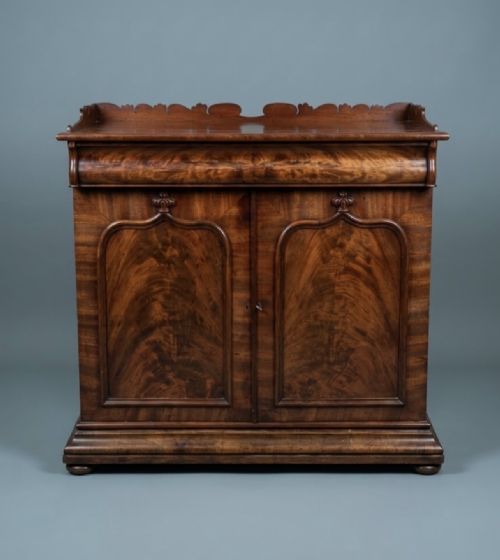
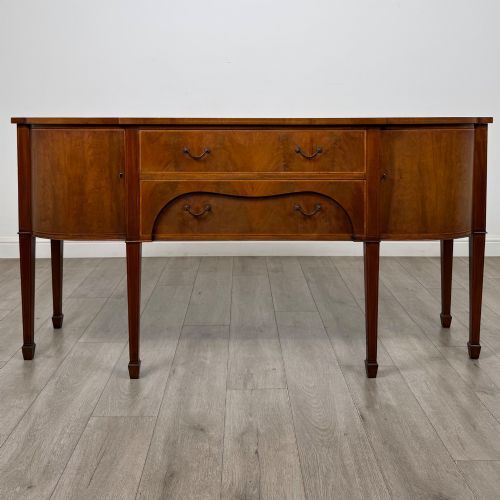
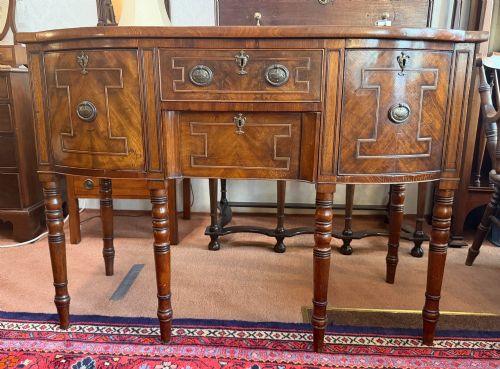
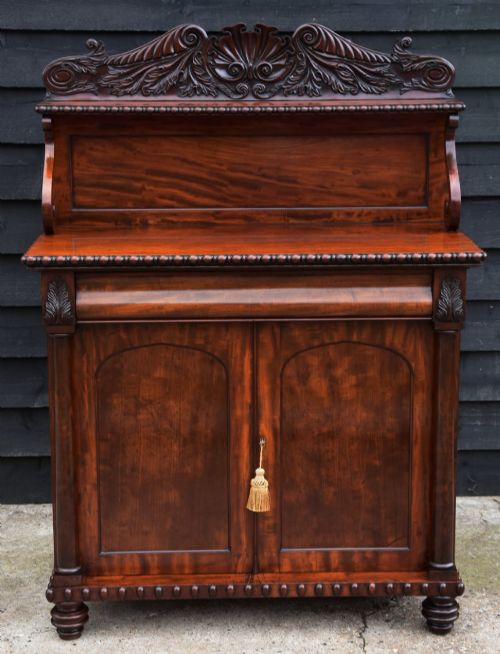
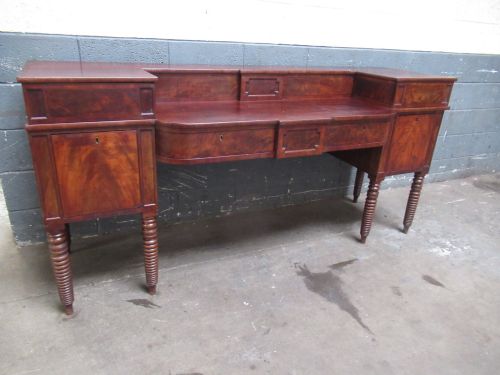
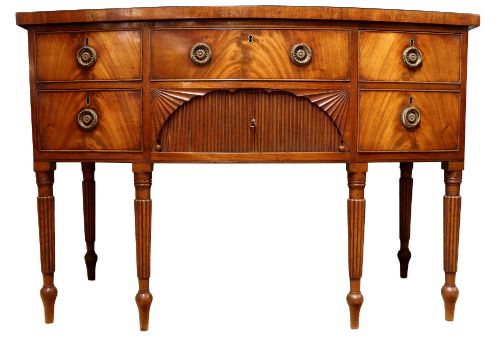
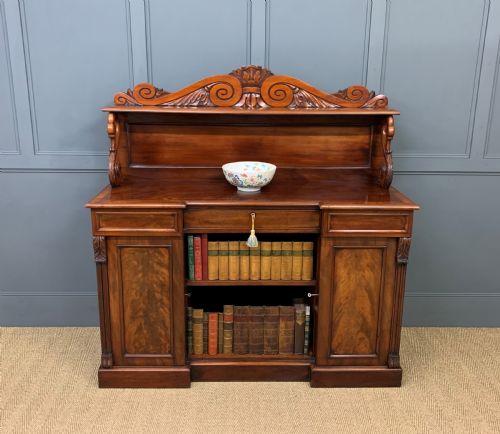
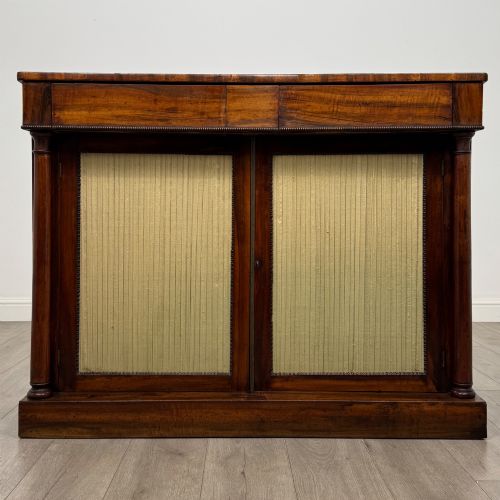
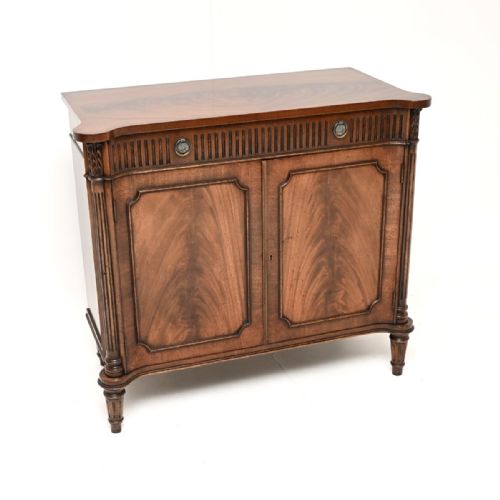
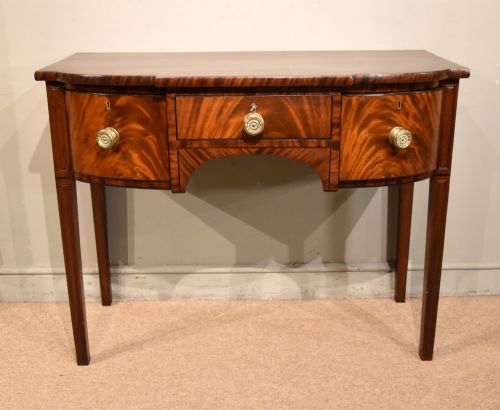
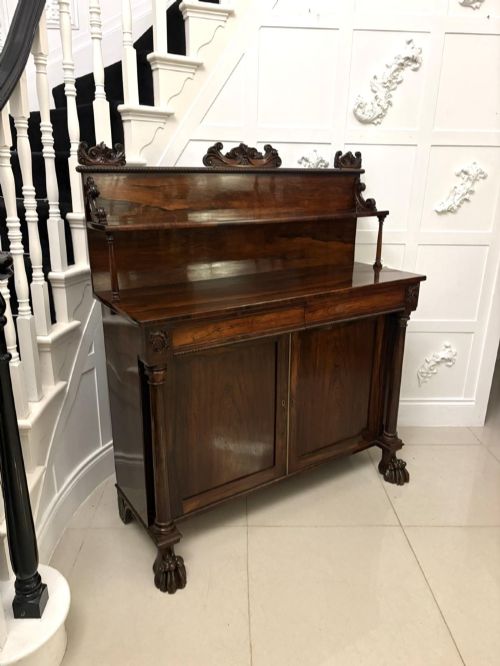
A regency wooden sideboard brings together formal dining pieces built across the Regency period, the Georgian era, and the nineteenth century. These forms include bow-fronted boards, pedestal sideboards, chiffoniers, and side cabinets designed for domestic service.
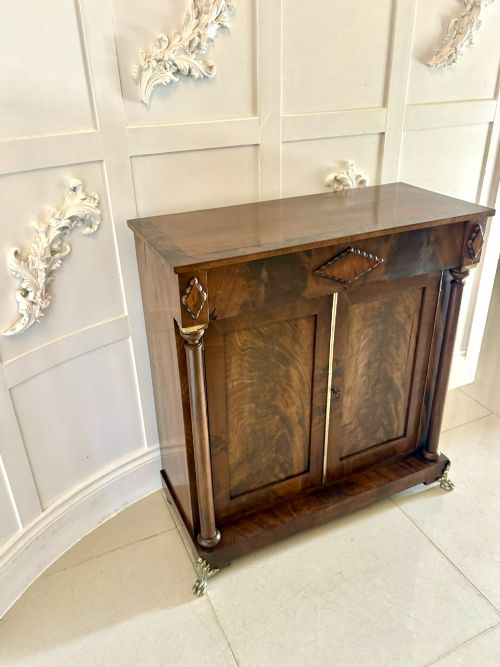
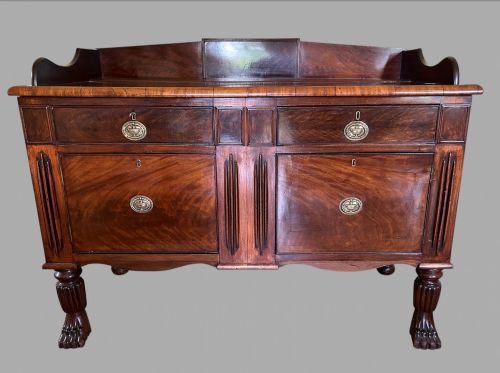
The pieces appearing most frequently on this page are mahogany sideboards and chiffoniers featuring flame veneer and brass detailing. Makers constructed these cabinets in styles spanning Regency, William IV, and Georgian traditions, originating from English and Scottish workshops.
Buyers also encounter related serving tables, low cupboards, and campaign pieces constructed from diverse timbers. Each format serves the dining room or hall with enclosed storage and broad display surfaces.
Materials and Technique
Cabinet makers relied principally upon solid mahogany and flame mahogany veneer, applying the figured grain across drawer fronts and cupboard doors to create striking visual patterns. Workshops also utilised rosewood, amboyna, goncalo alves, oak, and boxwood for contrasting stringing and inlay.
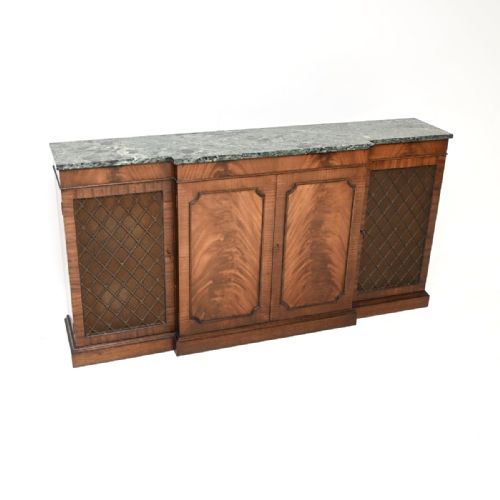
Construction techniques combined robust carcase framing with delicate surface embellishments, incorporating brass inlay, grill fronts, marble tops, and carved architectural details. Craftsmen shaped timbers into bow-front, demi-lune, and pedestal profiles using traditional joinery methods.
Listings feature mahogany, rosewood, amboyna, and goncalo alves timbers across the Regency, Georgian, and Victorian periods.
Craft and Proportion
Quality rests upon the selection of timber figures, where symmetrical flame mahogany veneer elevates a piece far above plain stock boards. The crispness of brass inlay and the depth of carved mouldings further distinguish superior cabinet work.
Proportion and structural integrity define the higher tier of these sideboards, ensuring that pedestals, doors, and backsplashes harmonize without heavy restoration. Original hardware and sound internal drawer construction complete the standard of better pieces.
Gillows
The Regency Wooden Sideboard Glossary
- Flame mahogany
- A veneer cut from timber where the branch meets the trunk, producing a distinctive flickering flame pattern. Cabinet makers prized this figure for principal drawer fronts and doors.
- Chiffonier
- A low-enclosed sideboard or cabinet, often featuring shelves or a mirrored backplate. These pieces became popular during the Regency and William IV periods for living rooms and dining spaces.
- Bow-front
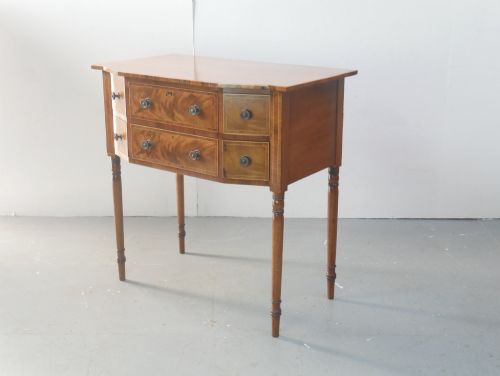
- A convex curving front profile characteristic of many Georgian and Regency sideboards. This shape softens the room's angles while expanding internal storage capacity.
- Pedestal sideboard
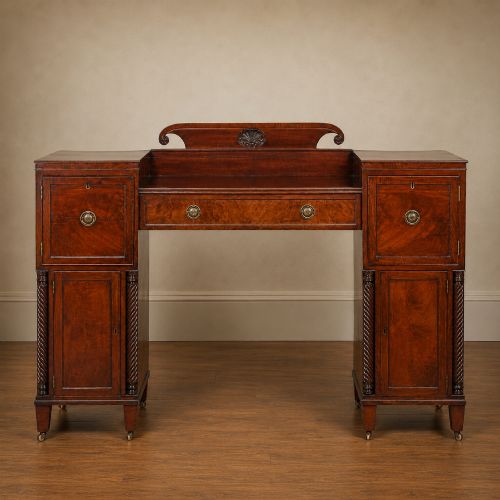
- A large dining board comprising two distinct pedestals flanking a central section. They often include cellarette drawers and elaborate carved backsplashes.
- Goncalo alves
- An exotic hardwood native to South America utilised for distinctive decorative grain in select Regency cabinets. It provides a rich brown colour with dark contrasting figuring.
Regency Wooden Sideboard: Frequently Asked Questions
What is a regency wooden sideboard used for?
These cabinets served dining rooms for storing silver, linen, and wine during meals. Their broad tops also provided a surface for serving dishes and displaying decorative items.
Today, buyers utilise them in dining spaces and hallways for practical storage while adding period character to the interior.
How do I identify a Regency period piece?
Look for specific stylistic cues such as brass inlay, reeded legs, lion paw feet, and architectural brass rings. Timbers like flame mahogany and rosewood predominate in pieces from this era.
Compare the proportions and construction methods against standard Georgian and Victorian characteristics to confirm the period.
How do I care for antique mahogany wood?
Keep these sideboards away from direct sunlight and heat sources to prevent the mahogany veneer from drying out and splitting. Apply a quality wax periodically to nourish the timber grain.
Dust with a soft, dry cloth and avoid commercial polishes containing silicone, which can damage the historic polish surface.
What is the difference between a sideboard and a chiffonier?
Sideboards were principally designed for dining rooms to store serving equipment and heavy tableware. They often feature multiple drawers flanked by cupboards or pedestals.
Chiffoniers are typically smaller enclosed cabinets developed later in the period, frequently incorporating a shelf superstructure above the main storage carcase.