




Amboyna Display Cabinet
An amboyna display cabinet brings warmth and intense grain to a room, catching the light behind glass doors.
Amboyna Display Cabinet
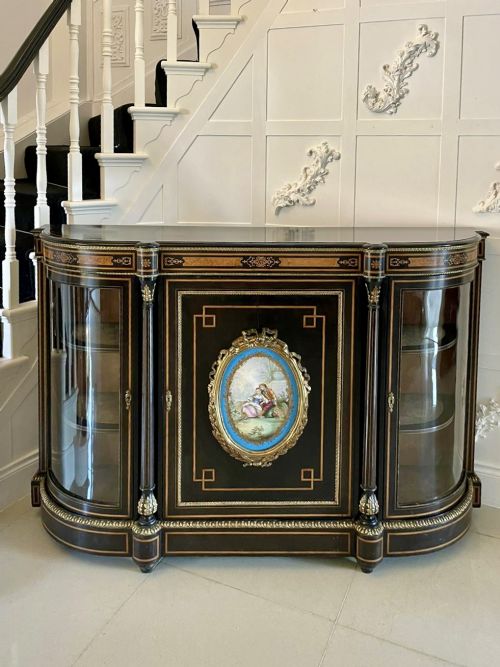
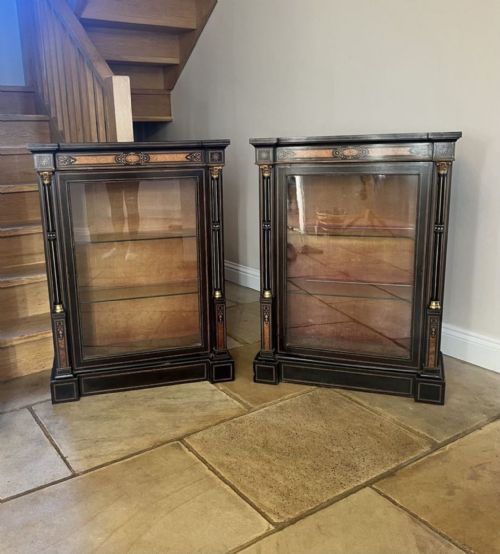
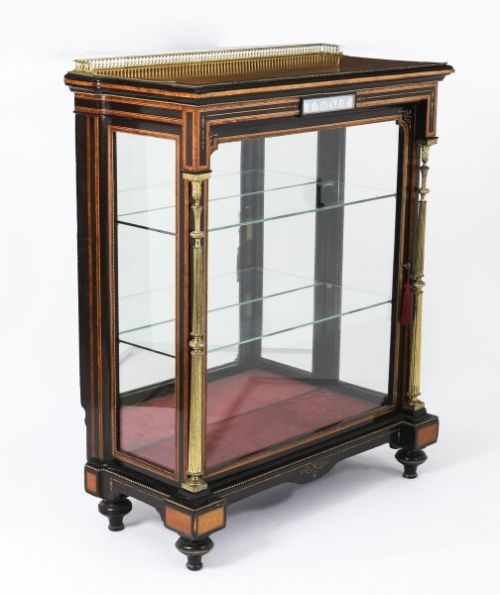
An amboyna display cabinet is a piece of furniture designed to showcase ceramics, glass and small valuables behind glass panels. These cabinets frequently appear from the Victorian era and the nineteenth century, often taking the form of credenzas, side cabinets and pier display cabinets.
The version most commonly met on this page combines amboyna veneer with ebonised wood and brass or ormolu mounts. Makers of the period paired the rich, mottled brown tones of amboyna with dark framing to create striking contrast.
Materials and construction
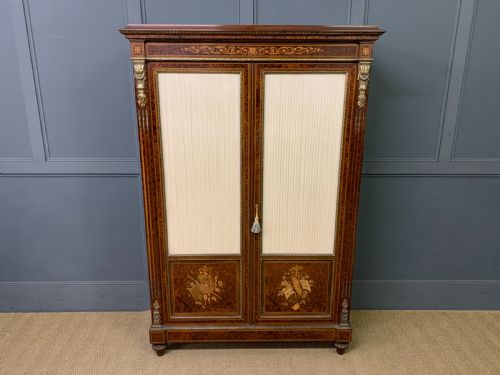
Ebonised wood and contrasting woods such as burr walnut, mahogany and kingwood framed the panels. Brass stringing, marquetry and ormolu mounts completed the construction, adding metallic detail to the wooden surfaces.
Nineteenth-century cabinet makers carefully matched the swirling knots of amboyna veneer so the grain patterns appeared to ripple like water across the doors.
Assessing quality
Quality rests in the selection and matching of the amboyna veneer across the doors and panels. Finer examples show symmetrical grain patterns that flow evenly across the front of the cabinet.
The crispness of the brass inlays, the weight of the ormolu mounts and the depth of the ebonising separate standard production from exhibition pieces. Superior workshops employed meticulous joinery that keeps doors flush and locks functioning smoothly.
Lamb of Manchester
The Amboyna Display Cabinet Glossary
- Ebonised wood
- Timber treated with a dark stain or chemical process to imitate ebony. Cabinet makers used this technique to create stark contrast against lighter veneers.
- Ormolu
- Gilt bronze mounts cast and chased by hand to ornament furniture. These metallic additions decorated the corners, friezes and uprights of nineteenth-century pieces.
- Pier cabinet
- A narrow display cabinet designed to fit against the wall space between windows. These tall, slender pieces typically feature a single glass door.
- Credenza
- A low cabinet enclosed by doors, often with glass panels for display. Originating as a side table, it evolved into a prominent Victorian drawing-room piece.
Amboyna Display Cabinet: Frequently Asked Questions
What is amboyna wood?
Amboyna is an exotic hardwood harvested from burls, prized for its mottled, golden-brown grain patterns and dense texture.
Because of its scarcity, makers almost exclusively used it as a veneer rather than solid timber, laying thin slices over stable secondary woods.
How do I style a display cabinet?
Place the cabinet in a drawing room or study where natural light can strike the glass panels and illuminate the contents.
Keep the interior arrangements uncluttered to allow the figured amboyna grain on the exterior to remain the visual focus.
Are these cabinets purely Victorian?
While the majority date from the Victorian period and the nineteenth century, variations appear in Aesthetic Movement and Napoleon III styles.
French and English workshops both utilised the wood, leading to differences in overall proportion and mount design.