


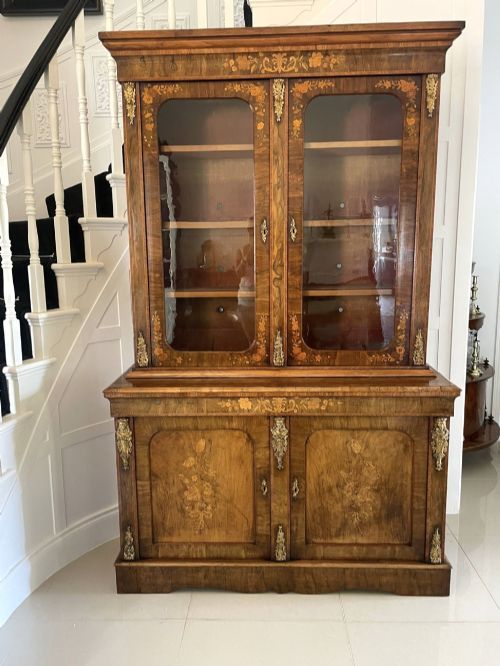
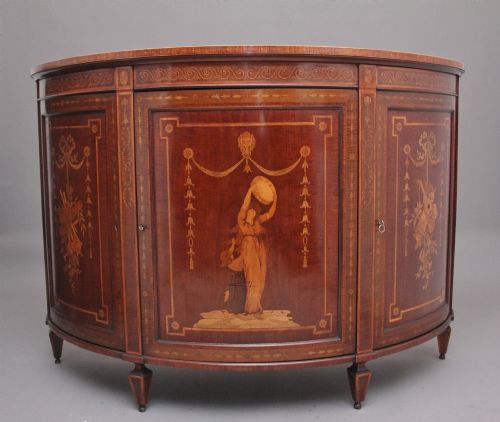
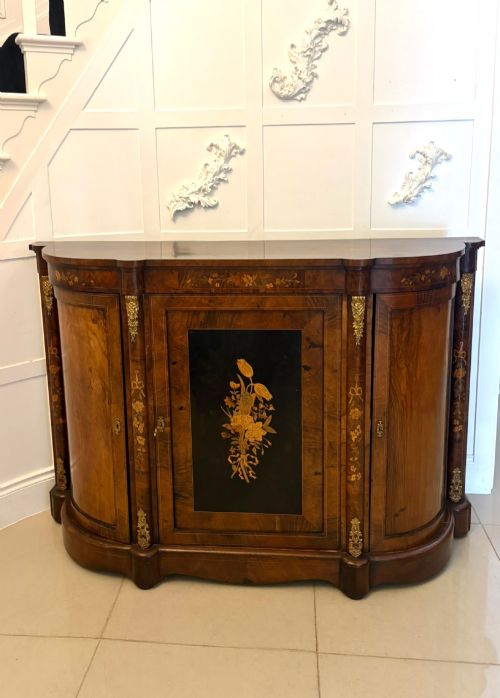
French Marquetry Credenza
A french marquetry credenza brings refined nineteenth-century timberwork, gleaming ormolu, and shaped marble tops into a room with striking presence.
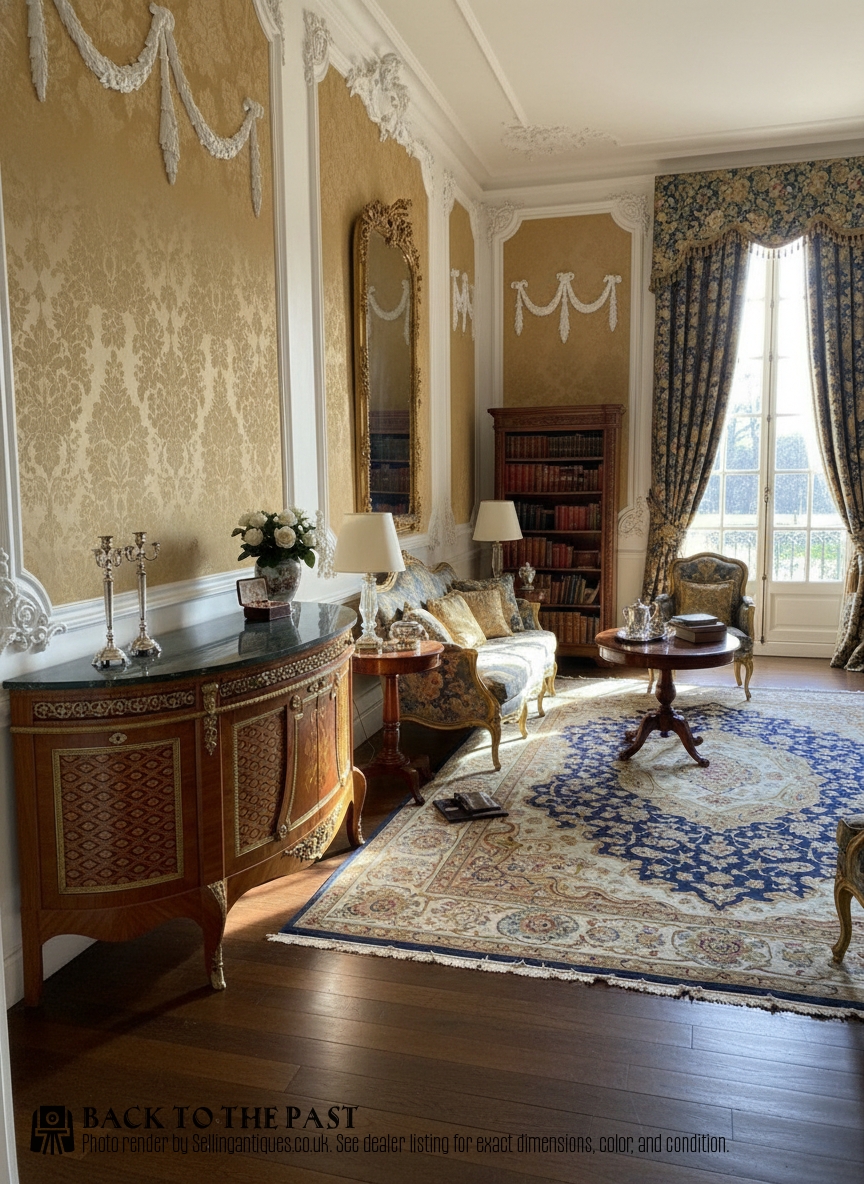
French Marquetry Credenza
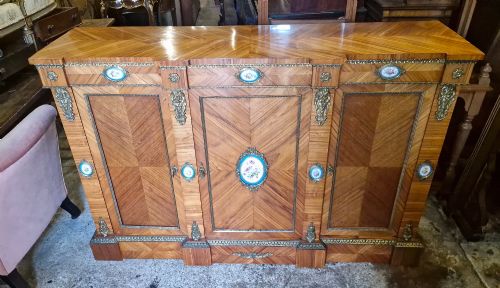
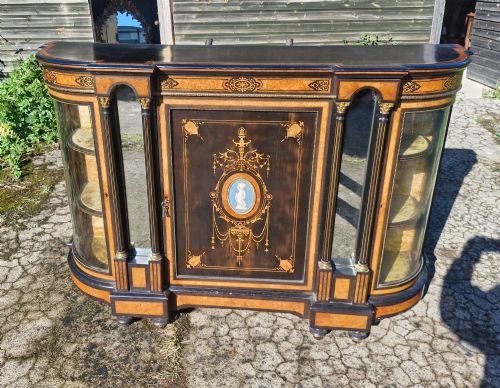
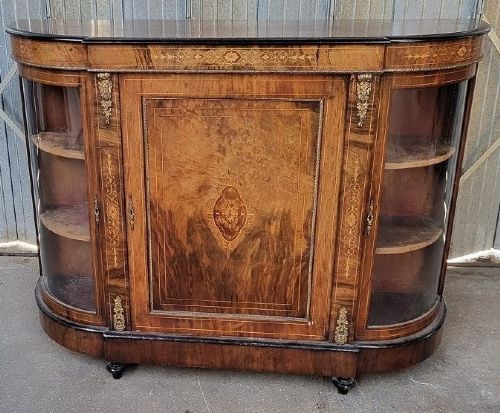
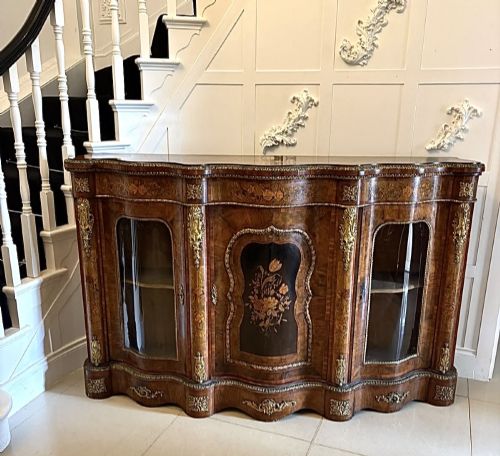
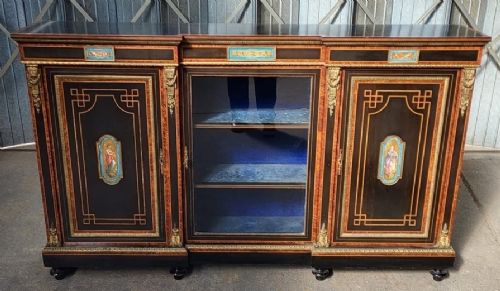
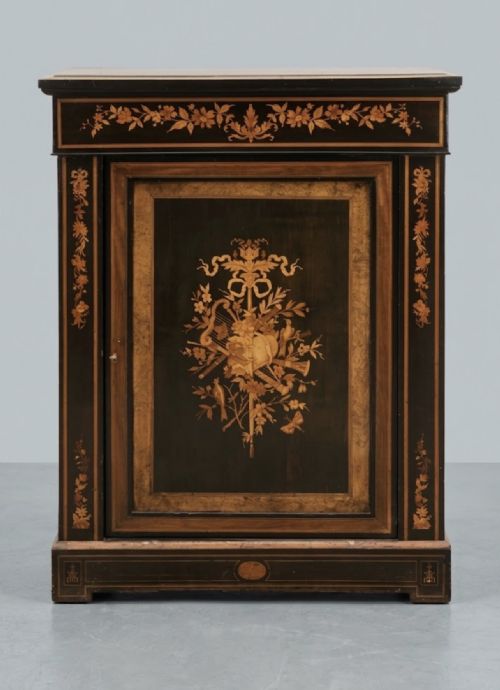
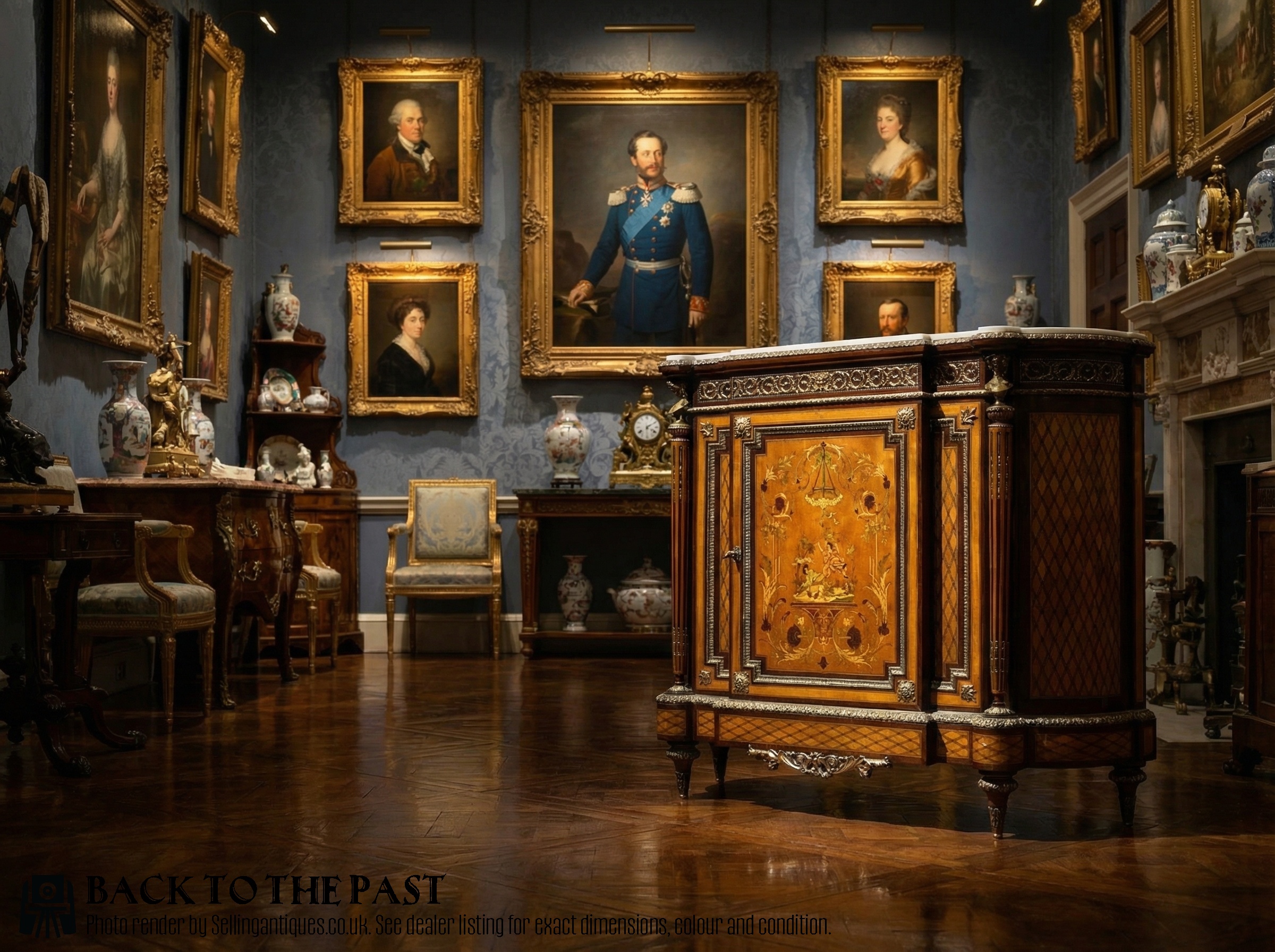
A french marquetry credenza is a substantial low storage cabinet or display piece designed for formal reception rooms, combining decorative wood veneers with architectural presence. The pieces found here date predominantly from the nineteenth century, including Victorian interpretations and specific revival styles such as Napoleon III and Louis XV.
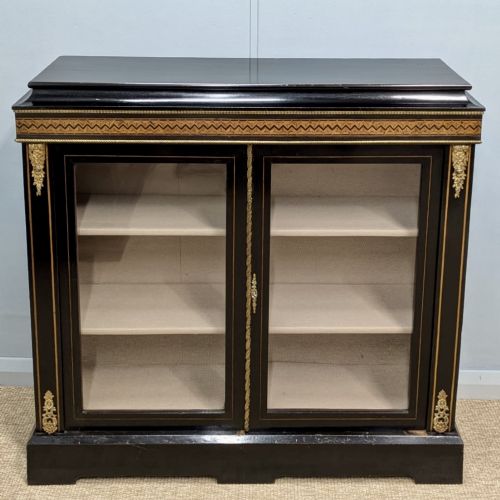
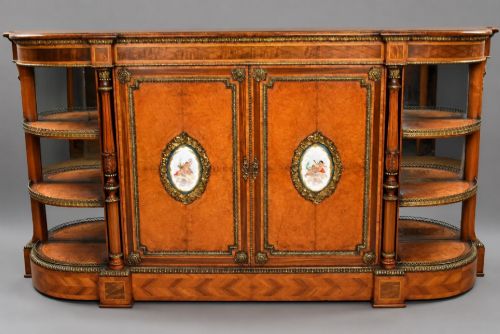
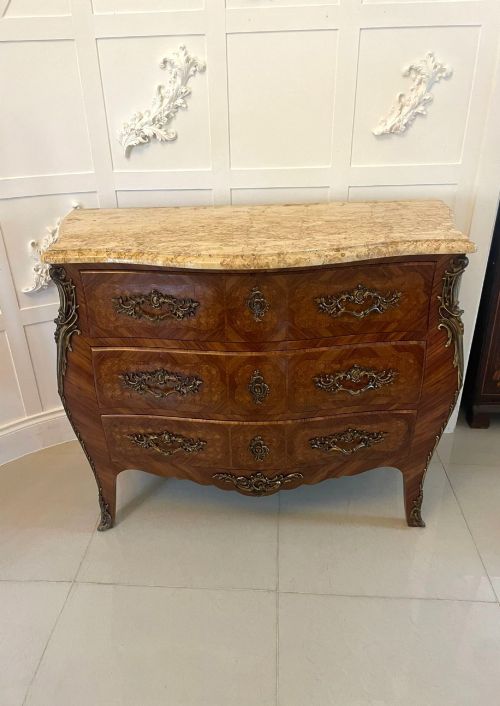
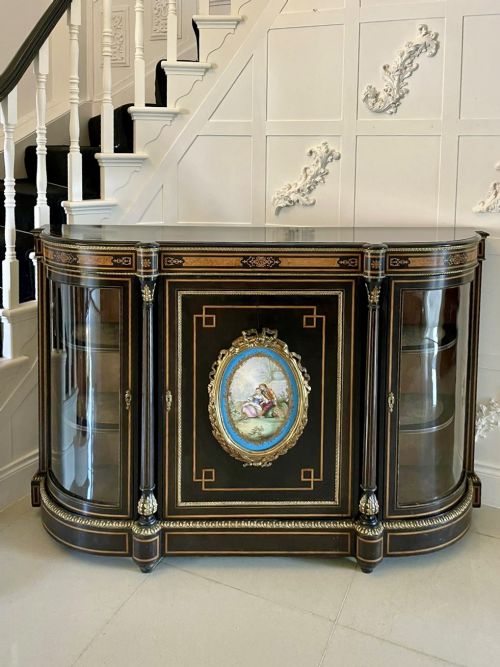
Forms vary from serpentine-fronted three-door side cabinets and breakfront display pieces to demi-lune cabinets and pier cabinets with glazed doors. Walnut, burr walnut, ebonised wood, and kingwood form the primary carcases, frequently accented with elaborate floral or geometric inlay.
Most examples originate from English workshops influenced by continental aesthetics or from French makers working in the ornate revival taste of the mid to late nineteenth century. These items served both as status symbols for displaying porcelain and collectibles and as functional low sideboards.
How They Were Made
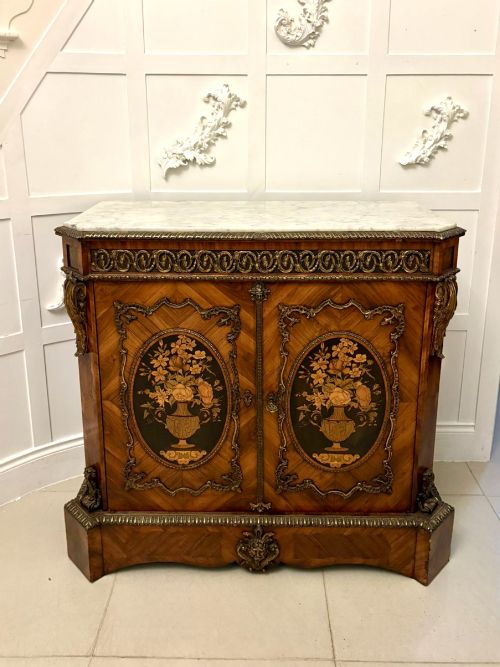
Cabinetmakers constructed these pieces using solid timber carcases overlaid with fine veneers like burr walnut, kingwood, and amboyna, hand-cut with intricate floral marquetry or brass and tortoiseshell boullework. The contrasting grains and natural tones of the woods created complex pictorial panels across doors and curved panels.
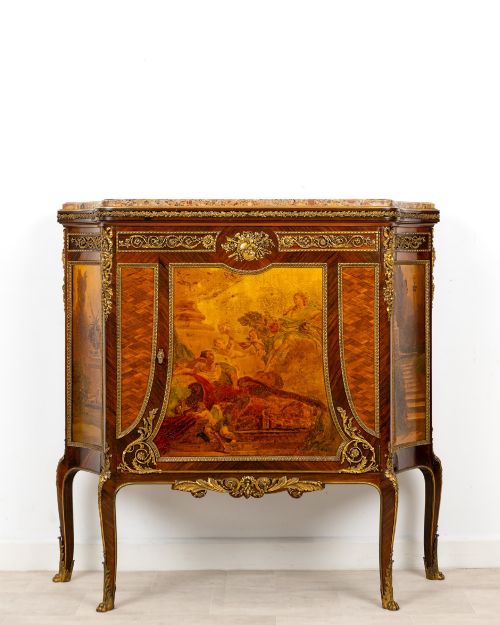
Gilded bronze mounts, known as ormolu, were cast, chased, and applied to corners, borders, and feet to highlight the serpentine and bow-fronted contours. Heavy marble slabs, often shaped to follow the serpentine or demi-lune curves of the top, were fitted directly onto the timber carcase.
Joinery relied on traditional carcase construction with veneered panels bedded onto pine or oak foundations, while brass stringing and inlay required meticulous hand-fitting into recessed channels.
French Marquetry Credenza Retail Price Guide 2026
Typical asking prices for french marquetry credenza among the pieces listed under this phrase on Sellingantiques today, from the lower quarter to the upper quarter. They describe what is for sale here now, not the wider market.
Materials across this selection include burr walnut, kingwood, ebonised wood, ormolu, and marble.
What Varies in Quality
The sophistication of the marquetry and the choice of underlying timber dictate the initial tier of distinction, with burr walnut and exhibition-grade kingwood veneers commanding higher regard. Finely figured grain patterns demand greater skill in matching and cutting across curved surfaces.
The crispness and weight of the ormolu mounts separate standard production from exceptional pieces; hand-chased bronze mounts show depth and clarity, whereas lesser casts appear flat and uniform. Furthermore, the integration of heavy shaped marble tops and the precision of the door alignment indicate the standard of the workshop.
Pieces bearing documented signatures or plaques, such as those from recognised makers like Maison Gagneau or Edward Holmes Baldock, demonstrate superior execution in both interior joinery and exterior embellishment.
Edward Holmes Baldock·Maison Gagneau
The French Marquetry Credenza Glossary
- Marquetry
- Decorative veneer work forming pictorial patterns using various coloured woods. It differs from parquetry in its use of figurative designs rather than geometric grids.
- Ormolu
- Gilded bronze mounts applied to furniture for decorative accent. The term derives from the French for milled or ground gold.
- Boulle
- A style of marquetry using brass and tortoiseshell, developed in France during the reign of Louis XIV. It creates a striking contrast of golden metal against dark shell.
- Serpentine
- A curved line with a convex centre flanked by concave sides. This contour requires skilled carpentry to shape both timber carcases and marble tops.
- Vitrine
- A glass-fronted cabinet designed for displaying porcelain and small objects. These often occupy the central or side sections of nineteenth-century credenzas.
French Marquetry Credenza: Frequently Asked Questions
What is a french marquetry credenza used for?
These cabinets served historically in formal dining rooms and drawing rooms for storing silver, linen, and glassware while displaying decorative objects on top.
Today, they function as striking focal points in modern living spaces, providing low-profile storage alongside generous surface area for lamps and collections.
How do I identify nineteenth century pieces?
Examine the interior construction, secondary timbers, and hand-cut dovetails, which differ significantly from later twentieth-century reproductions.
Original hardware, hand-chased ormolu mounts, and period veneer characteristics help establish the correct Victorian or Napoleon III timeframe.
Are marble tops original?
Many nineteenth-century credenzas and commodes were specifically designed to carry heavy marble slabs fitted precisely to their serpentine or straight contours.
Original marble typically shows matching edge profiles and historical wear patterns consistent with the age of the wooden carcase beneath.
How do I care for burr walnut and veneer?
Keep these sensitive timber surfaces away from direct sunlight and excessive temperature fluctuations to prevent the historic veneers from lifting or drying out.
Apply gentle wax polishes sparingly and avoid liquid cleaners that can penetrate hairline fractures in the old polish.