




Brass Gallery Side Cabinet
A brass gallery side cabinet brings refined display space to a room, uniting timber elegance with a distinctive metal railing.
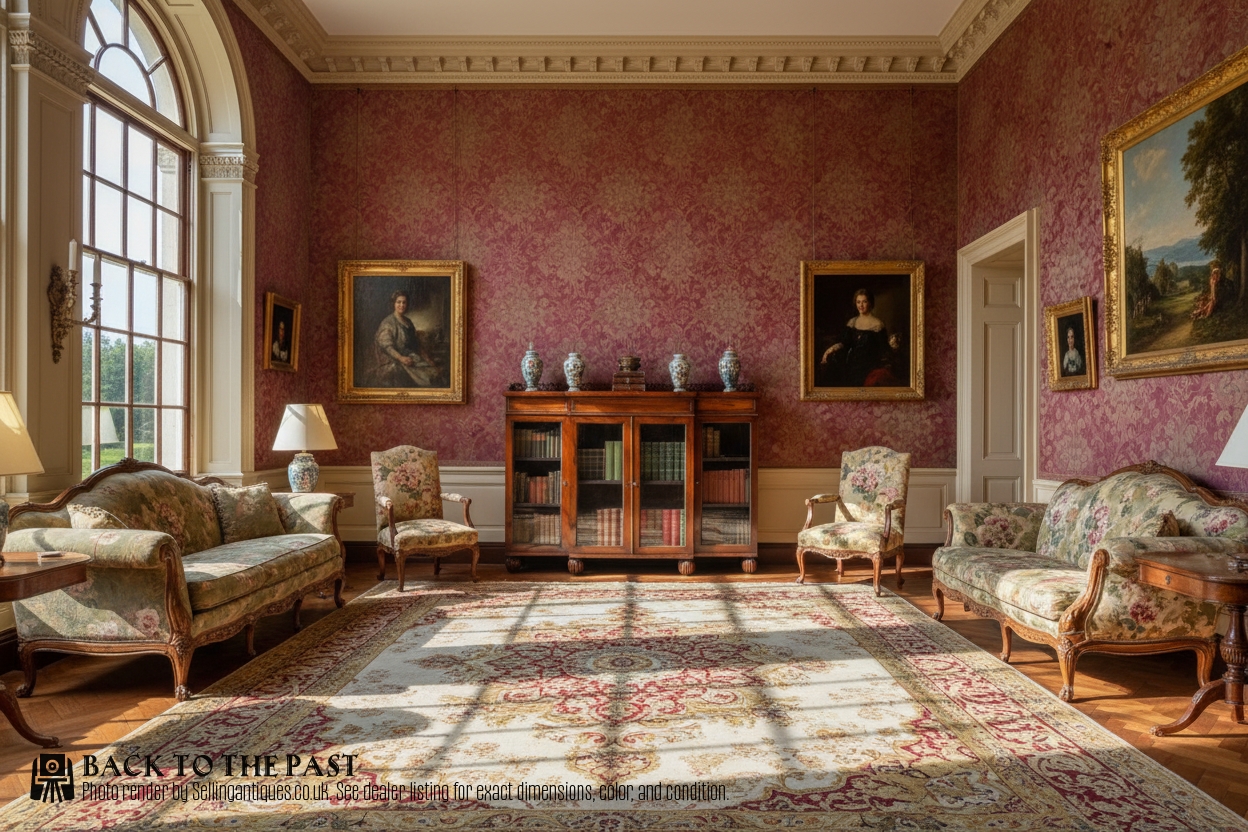
Brass Gallery Side Cabinet
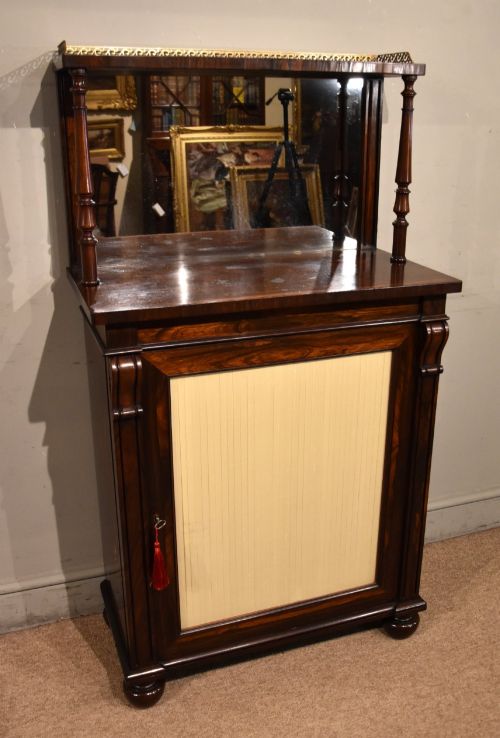
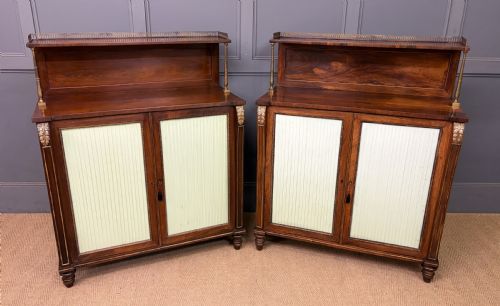
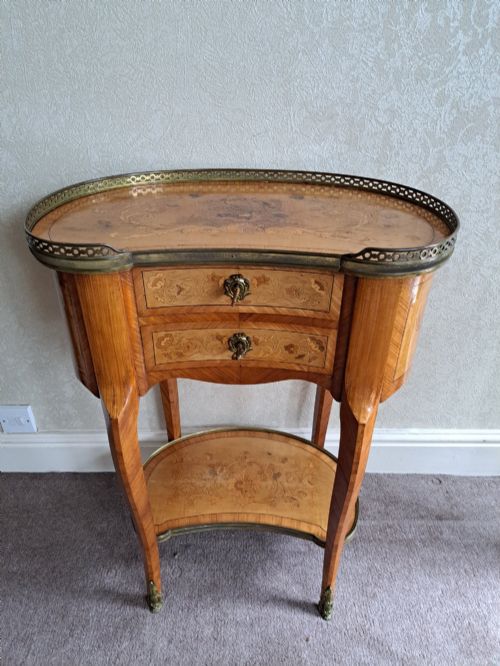
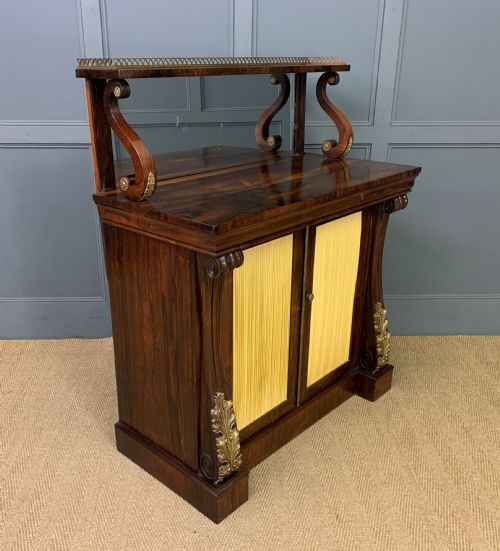
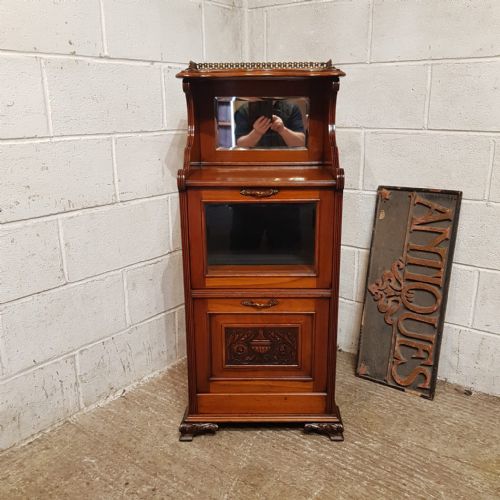
A brass gallery side cabinet is a low storage piece designed to hold books, collections or tableware while offering a surface edged with a fine metal railing. These pieces appear across Georgian, Regency and Victorian periods, often taking the form of chiffoniers or bedside cabinets.
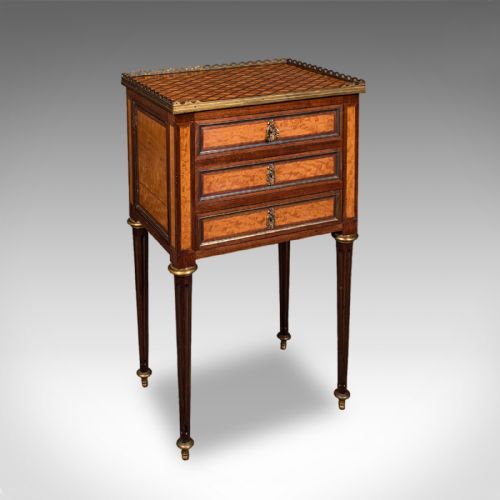
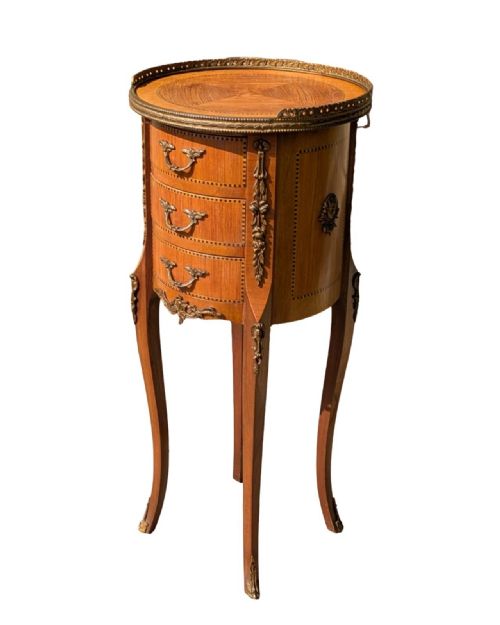
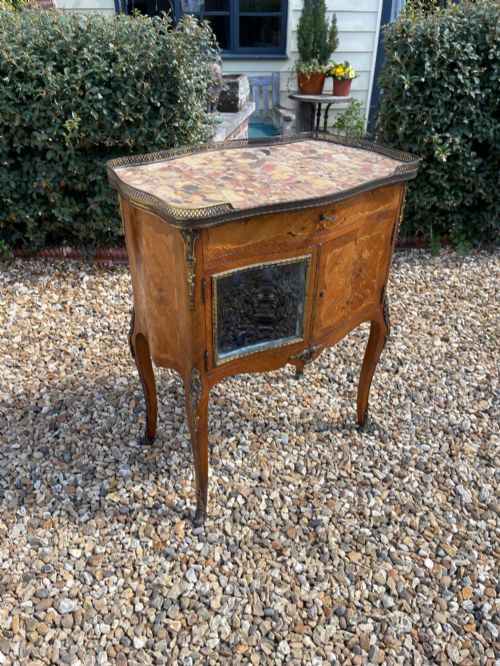
The versions most frequently met on this page date from the Regency and Victorian eras, alongside French revival pieces from the late nineteenth century. Cabinet makers utilised rich timbers such as rosewood, mahogany and walnut to construct these functional items.
Makers often incorporated glazed doors, marble tops or inlaid boxwood and kingwood alongside the characteristic metal gallery. Such additions transformed standard storage furniture into decorative focal points for the home.

Factors of quality
The refinement of the timber grain and the precision of any marquetry inlay set superior examples apart from standard production. Cabinet makers who selected highly figured rosewood, mahogany or amboyna achieved a much richer visual depth.
The execution of the brass gallery itself indicates the standard of the piece, with cast and chased metalwork showing far greater crispness than stamped alternatives. Original mounts and well-fitted doors preserve the integrity and balance of the design.
Brass Gallery Side Cabinet Retail Price Guide 2026
Typical asking prices for brass gallery side cabinet among the pieces listed under this phrase on Sellingantiques today, from the lower quarter to the upper quarter. They describe what is for sale here now, not the wider market.
Gillows·John McClean·Edwards and Roberts
The Brass Gallery Side Cabinet Glossary
- Gallery
- A raised railing or openwork fringe surrounding the top surface of a cabinet or table. This metal or wooden border prevented small objects from sliding off.
- Chiffonier
- A low cabinet featuring shelving or doors below, developed during the Georgian and Regency periods. It often incorporates the characteristic brass gallery on its upper surface.
- Marquetry
- The art of applying decorative veneer pieces in geometric or pictorial patterns onto a timber carcase. Craftsmen used contrasting woods to create elaborate surface designs.
- Ormolu
- Gilt bronze ornamentation mounted onto furniture pieces, particularly popular in French revival and Empire styles. The technique involved applying a gold amalgam to cast bronze.
- Davenport
- A small compact desk featuring a sloping writing surface above a pedestal of drawers. These items frequently date from the Georgian and Victorian eras.
Brass Gallery Side Cabinet: Frequently Asked Questions
What is a brass gallery side cabinet?
A brass gallery side cabinet is a low storage unit finished with a decorative metal railing along the top edge. These pieces served various domestic purposes from holding books to displaying ornaments.
Craftsmen produced them primarily in mahogany, rosewood and walnut across the Georgian, Regency and Victorian periods. The metal gallery distinguished them from standard side tables and cabinets by securing items placed on top.
How were these cabinets used historically?
These cabinets functioned as versatile storage and display furniture in dining rooms, drawing rooms and bedrooms. The enclosed lower sections held linens, papers or dining accessories.
The flat top surface with its protective metal rail allowed owners to display porcelain, glassware or silver safely while entertaining guests or relaxing at home.
How do I style a side cabinet at home?
A side cabinet fits neatly into a living room, hallway or bedroom as an accent piece with practical storage. You can place lamps, books or decorative ceramics on the surface without risking them sliding off the edged top.
Pair the rich tones of rosewood or mahogany with neutral walls to let the timber grain and brass gallery stand out. The compact proportions make them suitable for spaces where larger sideboards overwhelm the room.
How can I tell the period of a cabinet?
Dating relies on examining the primary timber, construction methods and prevailing design styles of the era. Regency pieces often showcase figured rosewood and brass inlay, while Victorian examples frequently feature heavier walnut or mahogany.
French revival cabinets from the late nineteenth century typically display elaborate kingwood marquetry, ormolu mounts and sometimes marble tops. Interior drawer construction and backboards also provide clues regarding the manufacturing date.