

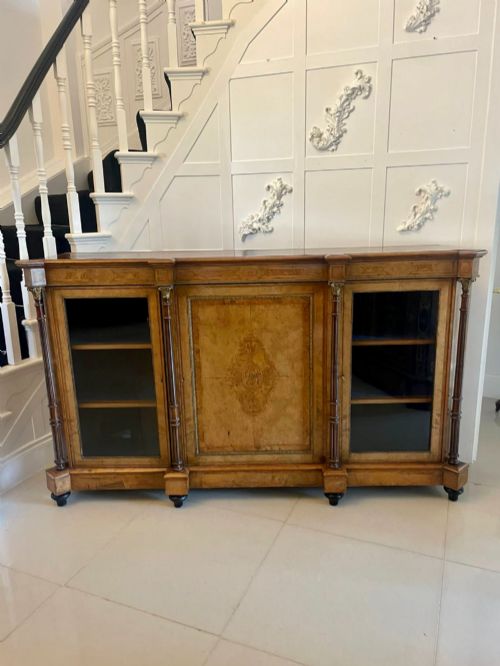
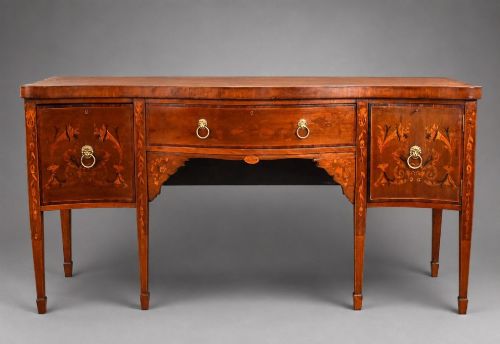
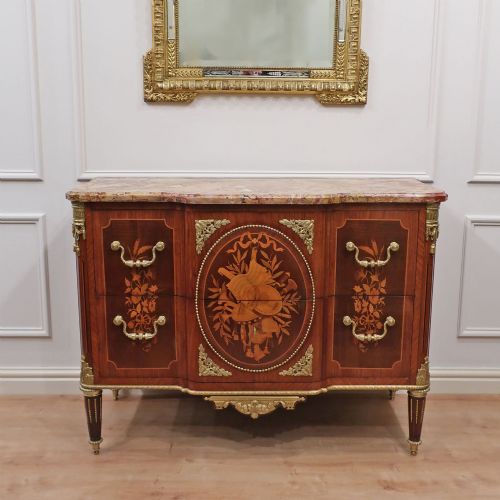
Marquetry Inlaid Sideboard
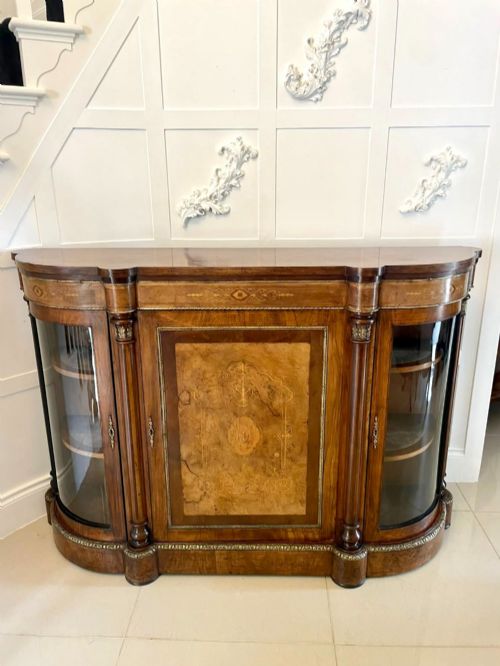
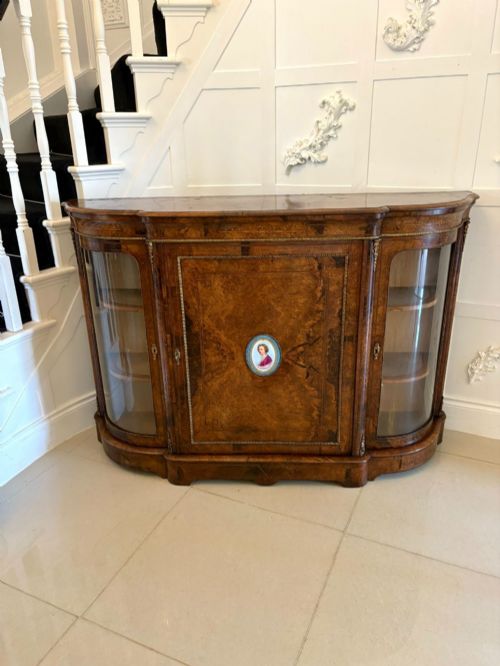
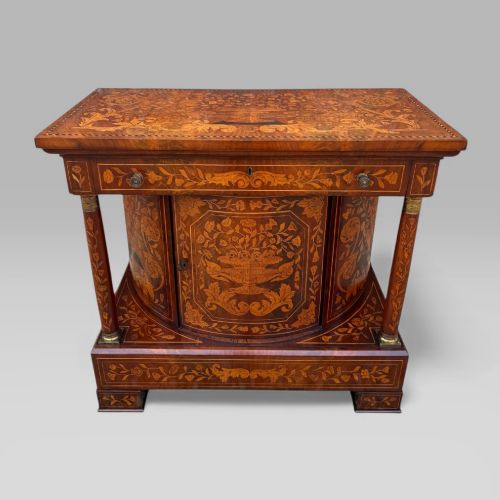
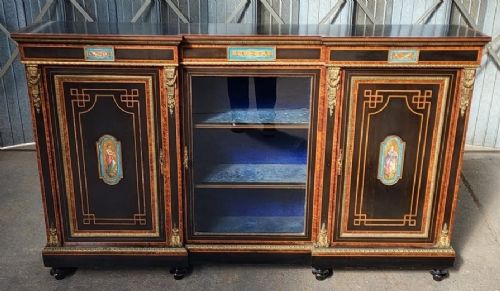
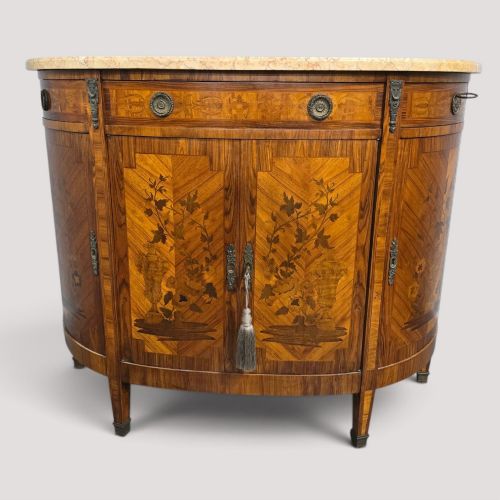
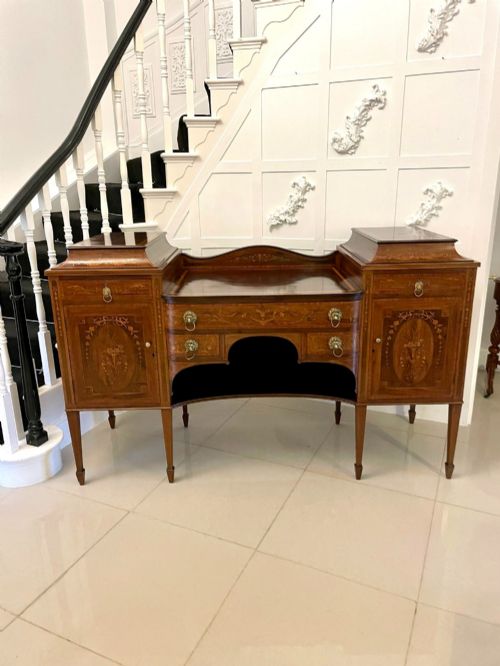
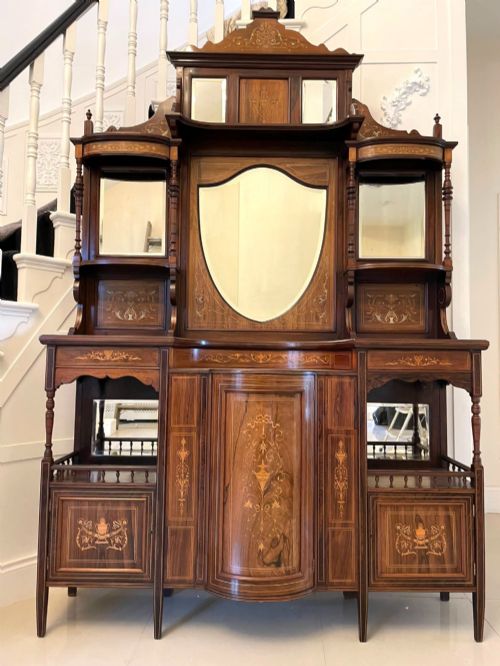
When you examine a marquetry inlaid sideboard, you see fine woodworking and patterned veneers combined to create storage for the dining room.
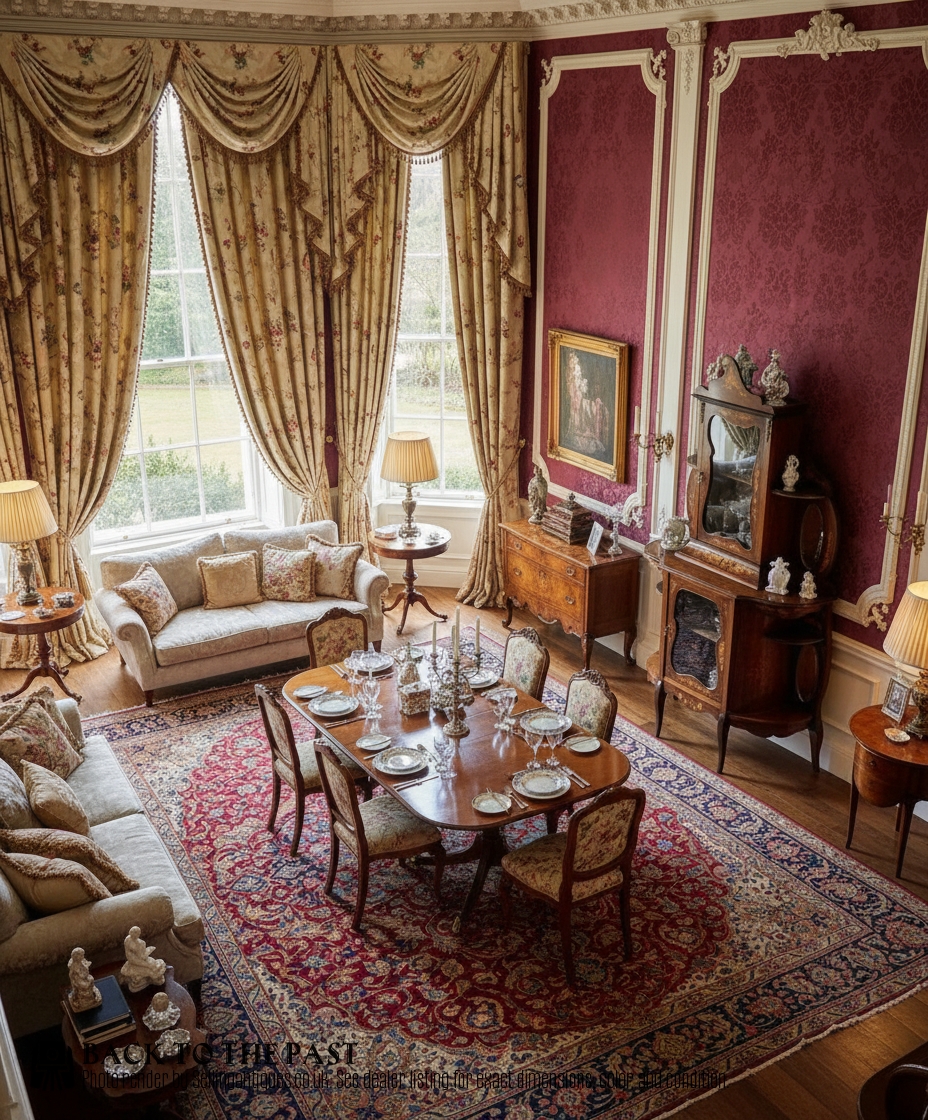
Marquetry Inlaid Sideboard
A marquetry inlaid sideboard combines substantial storage cabinetry with decorative wood-veneered surfaces.
The pieces appearing most frequently on this page date from the Victorian period through to the early twentieth century.
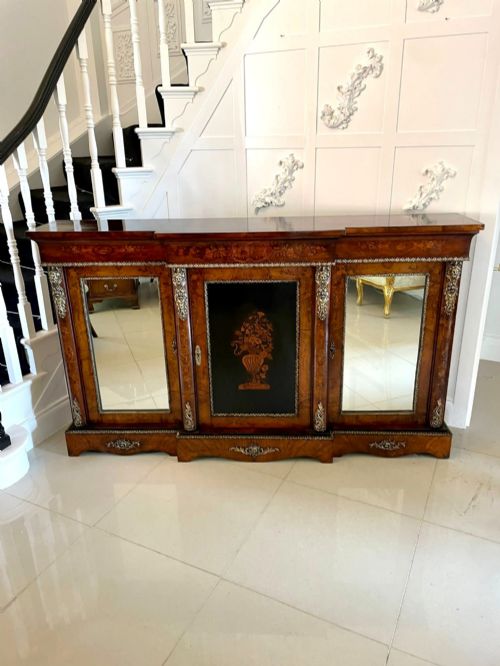
Makers utilised various forms including credenzas, side cabinets, and conventional sideboards equipped with cupboards and drawers.

How they were made
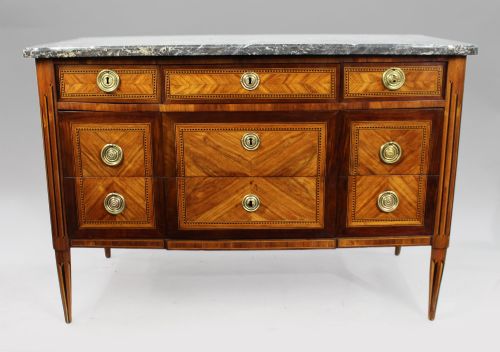
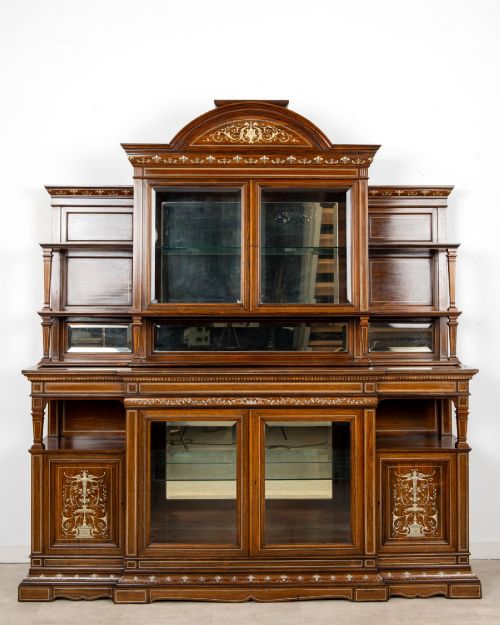
Craftsmen applied thin veneers of burr walnut, mahogany, satinwood, and rosewood onto a foundational timber carcass.
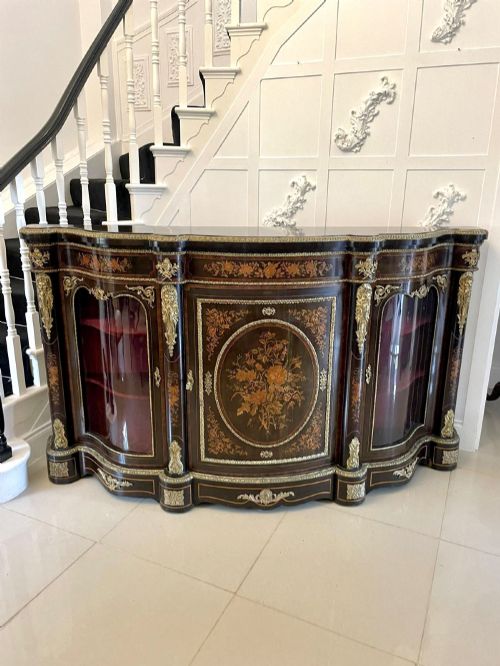
Detailed floral and geometric patterns were formed by fitting contrasting wood veneers together into the surface.
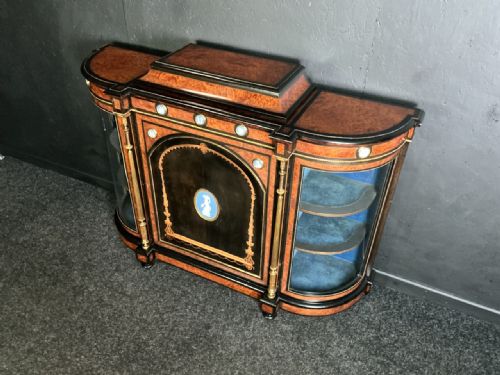
Many examples incorporate cast ormolu mounts, brass details, and glass panels to frame the inlaid wood.
Marquetry Inlaid Sideboard Retail Price Guide 2026
Typical asking prices for marquetry inlaid sideboard among the pieces listed under this phrase on Sellingantiques today, from the lower quarter to the upper quarter. They describe what is for sale here now, not the wider market.
Cabinet makers occasionally hid small velvet-lined compartments behind intricate floral marquetry doors to secure family secrets.
What varies in quality
The refinement of the marquetry cutting determines how tightly the individual veneer pieces fit together within the design.
Selected timbers such as highly figured burr walnut or dense satinwood denote higher grade cabinet making.
The inclusion of heavy cast ormolu mounts and porcelain plaques elevates the decorative ambition of the piece.

Hewetsons London·Collinson and Lock·August Ungethüm·Maison Gagneau·Edwards and Roberts·Gillows
The Marquetry Inlaid Sideboard Glossary
- Marquetry
- Decorative veneer work forming pictures or patterns by fitting together small pieces of various woods. It transforms a plain wooden surface into a pictorial panel.
- Ormolu
- Gilt bronze mounts applied to furniture for decoration. This technique adds metallic contrast to dark woods.
- Credenza
- A sideboard or display cabinet, often featuring curved glass doors and central cupboards. It provides surface display alongside enclosed storage.
- Parquetry
- Geometric wood inlay forming repeating patterns such as cubes or stripes. It differs from marquetry by using strict geometric shapes rather than pictorial motifs.
- Burr walnut
- Wood taken from the growth excrescence of a walnut tree, showing swirling grain patterns. Cabinet makers prized this timber for its rich visual texture.
Marquetry Inlaid Sideboard: Frequently Asked Questions
What is a marquetry inlaid sideboard?
A marquetry inlaid sideboard is a storage cabinet featuring decorative wood veneer patterns across its doors and drawer fronts. These pieces combine practical dining room storage with detailed surface decoration.
They appear primarily in Victorian and Edwardian iterations, utilising timbers like walnut and mahogany paired with intricate floral motifs.
How do you clean marquetry furniture?
Clean marquetry surfaces using a soft, dry cloth to remove dust without disturbing the delicate veneer joints. Avoid excess moisture, which can loosen the glue holding the inlay pieces in place.
Apply professional beeswax periodically to nourish the wood and maintain the sheen across the contrasting veneers.
Where were these sideboards used?
These cabinets served in dining rooms and formal reception spaces to store tableware, linens, and silver. Their decorative fronts ensured they functioned as display pieces as well as storage.
Larger credenza variations often combined shelf displays behind glass doors with central enclosed compartments.
How can you tell the period of a sideboard?
Dating relies on combining the cabinet style, the choice of primary timber, and the nature of the inlay work. Victorian examples frequently employ burr walnut with rich floral marquetry and ormolu mounts.
Later Edwardian pieces often favor lighter satinwood and cleaner Sheraton Revival lines with delicate ribbon or urn motifs.