



Ebony Inlaid Cabinet
An ebony inlaid cabinet brings dark contrast and precise linear detail into a room, spanning periods from the seventeenth century through the Victorian era.
Ebony Inlaid Cabinet
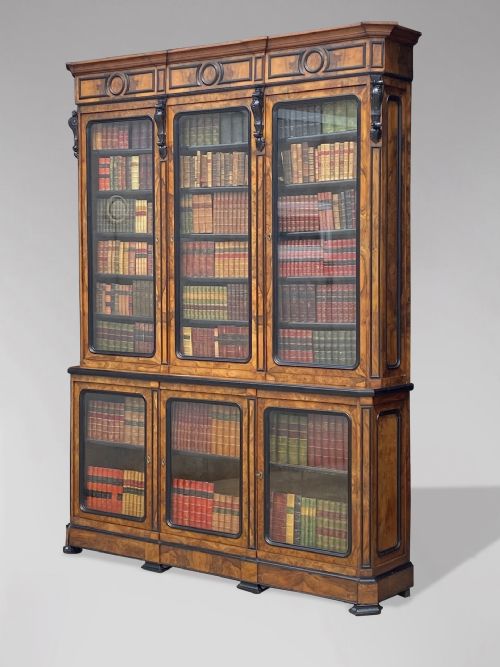
An ebony inlaid cabinet combines structural woods such as mahogany, walnut, or oak with dark contrasting wood, creating sharp geometric or linear decoration across the surface. These pieces range in form from compact pier cabinets and side cabinets to larger bookcases, credenzas, and armoires.
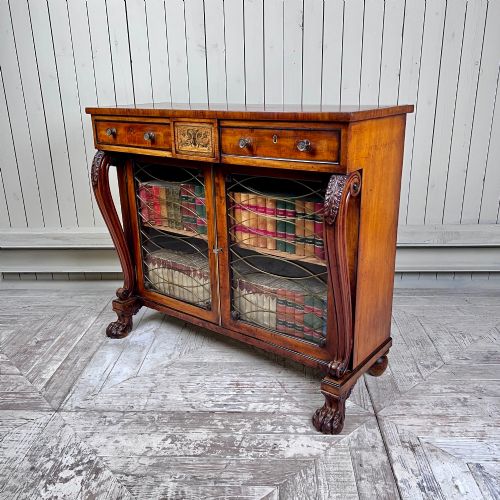
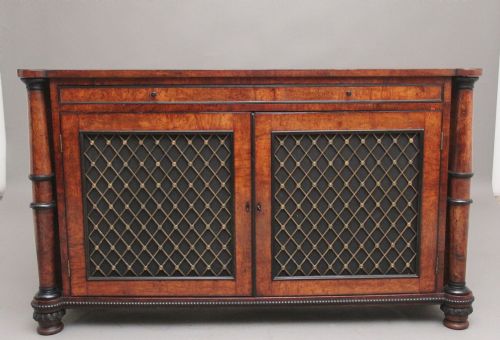
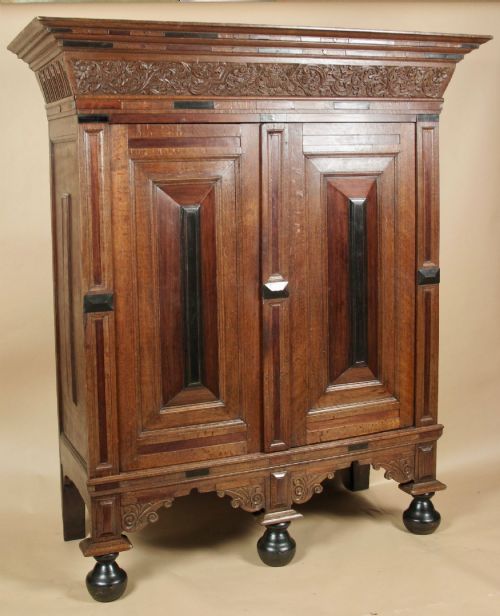
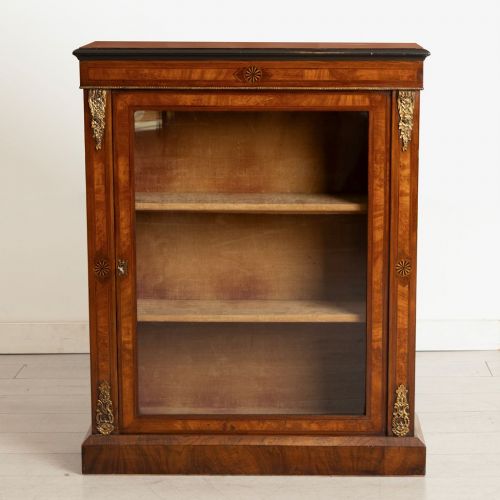
The selection here draws primarily on nineteenth-century Victorian and Regency examples alongside earlier seventeenth-century Dutch Baroque and Flemish works. You encounter side cabinets, chiffoniers, and display pieces set with brass, bone, or tortoiseshell alongside the dark wood.
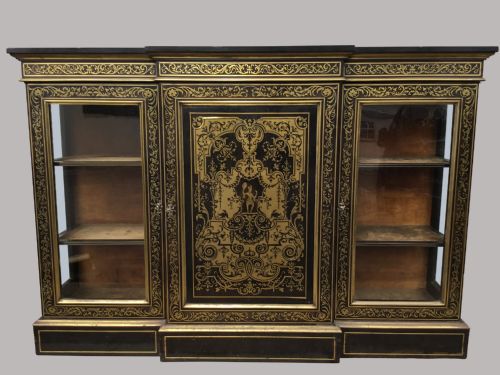
The style shifts according to origin, moving from English Regency line inlay and Victorian burr walnut framing to ornate French Boulle work and Syrian revival pieces set with abalone. Each iteration uses the dark timber to frame panels of lighter or highly figured woods.
How they were made
Cabinet makers utilised dense tropical ebony for stringing, banding, and ground veneer, contrasting it against mahogany, rosewood, burr walnut, and pollard oak. Surfaces often incorporate brass lines, ormolu mounts, bone, and tortoiseshell to build intricate decorative panels.
Construction methods rely on solid carcases faced with fine veneers, where individual strips of ebony are meticulously let into channels cut into the primary wood. The precision of this inlay work determines the crispness of the geometric borders and scrolling motifs seen across Regency and Victorian examples.
The listings on this page span from pre-sixteenth-century Italian works to late Victorian designs, utilising materials such as tortoiseshell, bone, and abalone.
What varies in quality
The standard of an ebony inlaid cabinet rests on the sharpness of the joinery and the integrity of the contrasting stringing. Finer pieces maintain tight, flush lines where the dark wood meets the primary timber, without gaps or shrinkage in the surrounding veneers.
Material selection also dictates distinction, separating standard production from exceptional workshops that incorporated tortoiseshell, bone, abalone, or gilt bronze mounts alongside the ebony work. The depth of figure in the underlying walnut or amboyna further elevates the visual weight of the piece.
The Ebony Inlaid Cabinet Glossary
- Ebony
- A dense, dark heartwood used for contrasting inlays, stringing, and solid mouldings on cabinet facades. It provides the deep black tones characteristic of these pieces.
- Pier cabinet
- A low freestanding cabinet designed to fit the wall space between windows. These often feature glass doors and elaborate wood inlays.
- Credenza
- A low sideboard or storage cabinet originating in the nineteenth century, frequently fitted with marquetry and glass panels. They serve as primary display surfaces in reception rooms.
- Stringing
- Thin strips of contrasting wood inlaid into channels cut into the surface of a furniture piece. This technique creates delicate borders around panels and drawers.
- Boulle work
- A form of marquetry using brass and tortoiseshell inlaid in contrasting patterns. It is commonly found on nineteenth-century French furniture.
Ebony Inlaid Cabinet: Frequently Asked Questions
Where should I place an ebony inlaid cabinet?
These cabinets suit reception rooms, studies, or hallways where their dark timber and contrasting details can catch natural light. Position them away from direct heat sources to protect the underlying veneers and delicate inlay work.
Because many examples feature glass doors or display shelves, they work well for showcasing curated collections while providing enclosed lower storage for books or papers.
How do I care for the ebony and inlay?
Dust the surfaces regularly with a soft, dry cloth and avoid applying modern silicone polishes that can build up on the wood. Maintain a stable room humidity to prevent the ebony stringing and delicate bone or brass inlays from lifting.
If the timber appears dry, apply a minimal amount of traditional beeswax using a soft brush, buffing gently along the grain to preserve the natural lustre.
How can I tell a Regency cabinet from a Victorian one?
Regency pieces often display restrained neoclassical lines, simple brass line inlay, and timbers such as mahogany or amboyna. The proportions tend to be architectural and linear.
Victorian examples frequently incorporate heavier timbers like burr walnut, richer marquetry, and more exuberant carving or gilt bronze mounts, reflecting mid-nineteenth-century taste for revival styles.
What is a cabinet on stand?
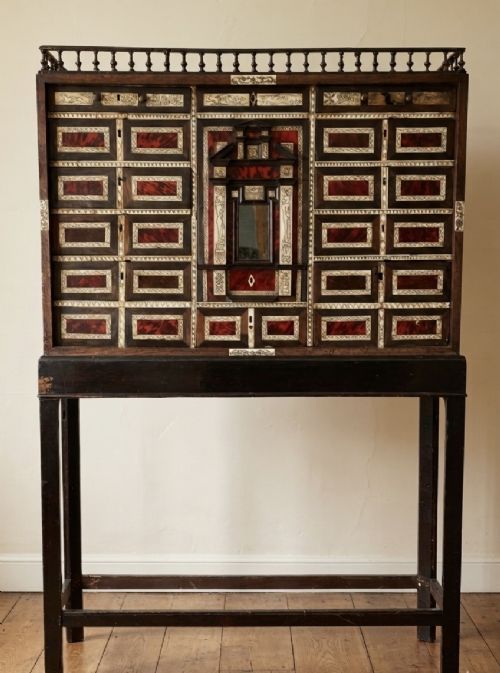
A cabinet on stand consists of an enclosed storage box resting upon an independent supporting frame with legs. This form allows the upper cabinet to remain visually distinct from the open base beneath.
Originating in earlier centuries, these pieces often feature elaborate interior drawers and specialised decorative veneers that contrast sharply with the simpler structure of the stand.