


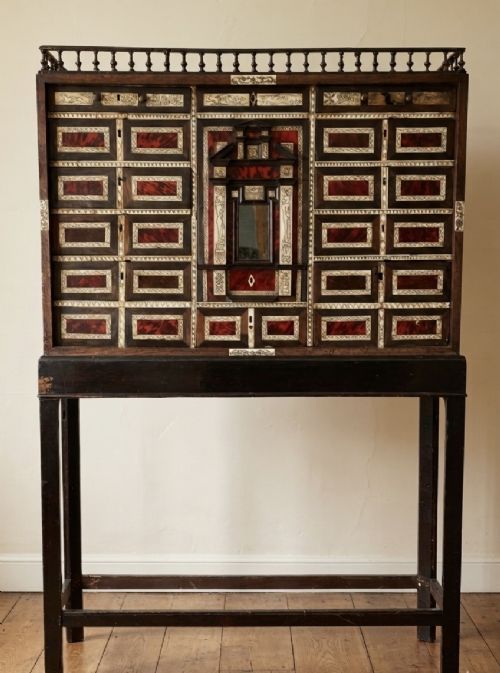


Baroque Inlaid Cabinet
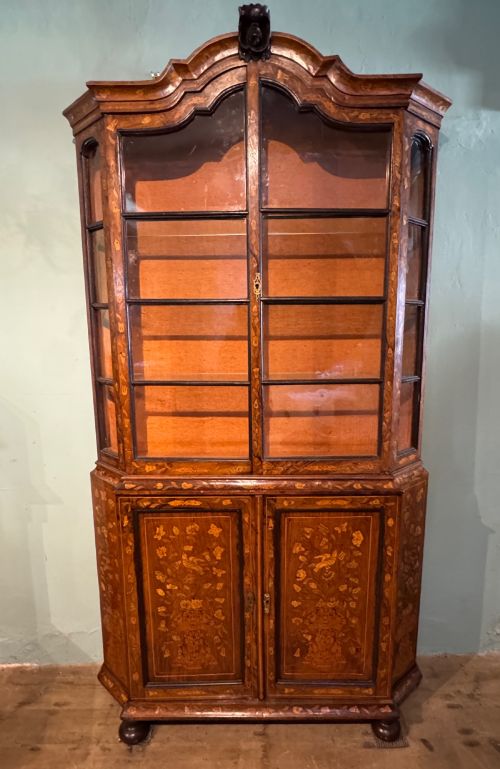
A baroque inlaid cabinet brings seventeenth and eighteenth-century craftsmanship into a room through intricate floral motifs and rich walnut timbers.
Baroque Inlaid Cabinet
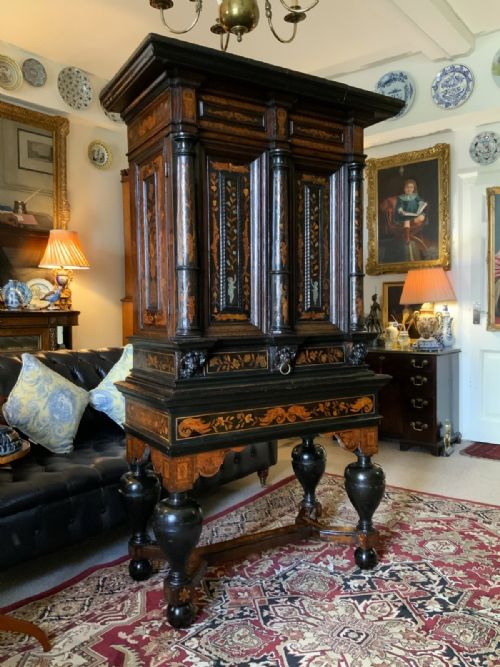
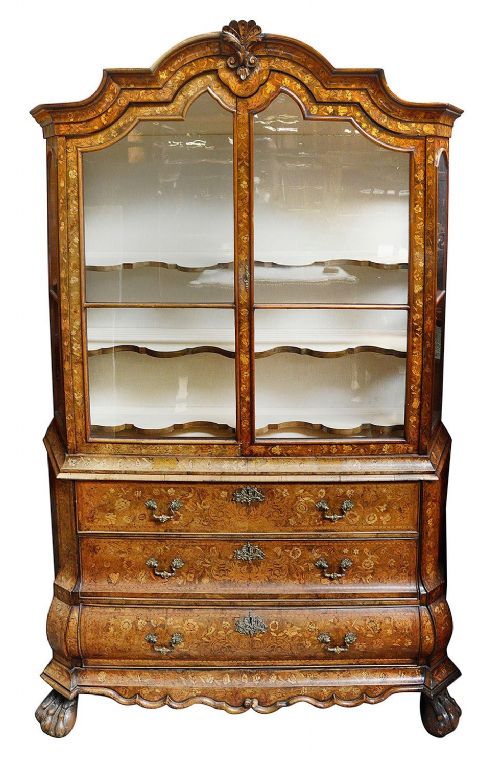
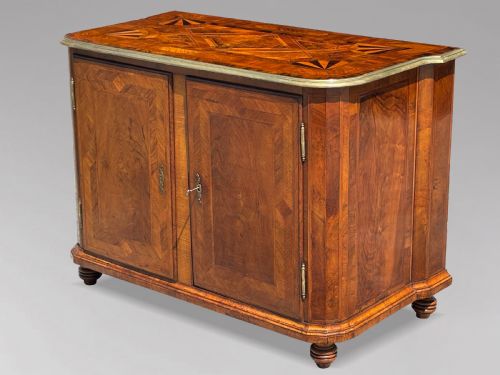
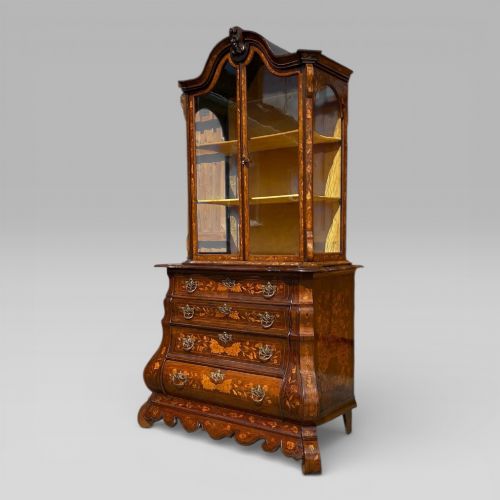
A baroque inlaid cabinet stands as a substantial storage piece, encompassing bureau bookcases, display cabinets on stands, and large armoires. The pieces meeting this search phrase originate predominantly from Dutch, German, Flemish, and French workshops spanning the seventeenth and eighteenth centuries.
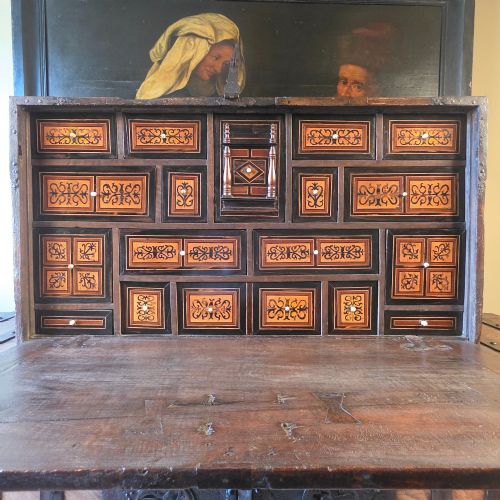
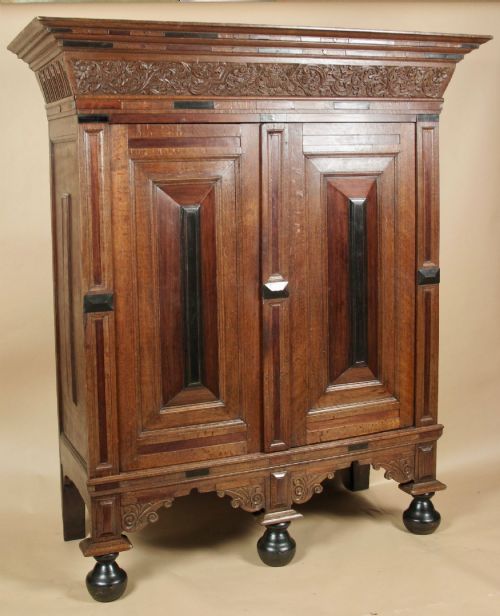
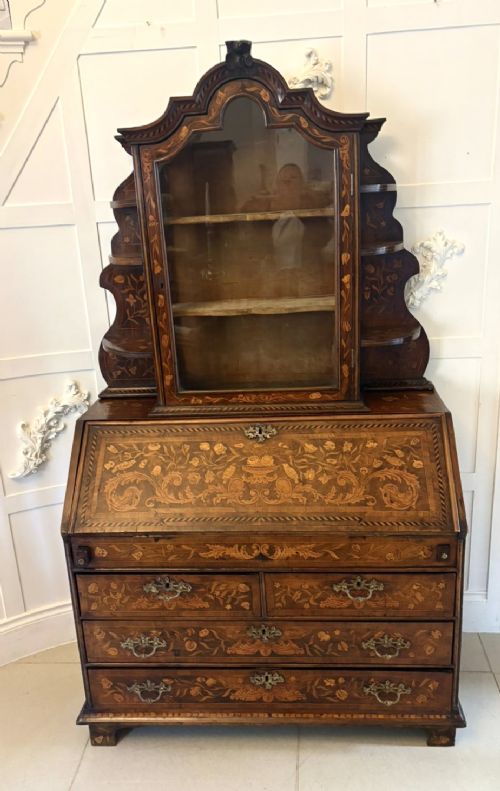
The most frequent form encountered here is the bureau bookcase or cabinet on stand, combining a writing desk or display area with deep drawers. These case pieces reflect regional designs such as the Dutch bombé silhouette and the Gelderse kussenkast format.
Makers utilised native and exotic timbers to construct tall linen presses, corner cabinets, and smaller table-top escritosires. Each variation demonstrates the shift from austere seventeenth-century framing towards elaborate eighteenth-century floral compositions.
Standards of Execution
Quality rests upon the precision of the marquetry cutting and the depth of the timber figuring. Superior examples display seamless alignment where floral stems and scrolling foliage cross drawer fronts and cabinet doors.
The choice of secondary woods and the complexity of the inlaid materials separate standard production from exceptional works. Cabinets integrating pewter, bone, and tortoiseshell alongside multi-wood marquetry demonstrate superior workshop skill.
Object forms range from miniature apprentice pieces and table-top escritosires to large floor-standing armoires and double corner cabinets.
Edwards & Roberts
The Baroque Inlaid Cabinet Glossary
- Marquetry
- Decorative veneer work arranged in pictorial patterns using various coloured woods. Craftsmen cut thin slices of timber to form floral or geometric scenes across the cabinet doors.
- Bombé
- A swelling, outward-curved commode or cabinet profile. This bulging contour requires advanced shaping techniques applied to solid timber and thick veneers.
- Kussenkast
- A heavy Dutch architectural cupboard featuring cushion-moulded doors. The style originated in the seventeenth century and relies on prominent raised panels.
- Bureau bookcase
- A dual-purpose piece featuring a sloping desk flap below upper shelving enclosed by doors. These units provided integrated storage for correspondence and bound volumes.
- Boulle
- A form of marquetry utilising brass and tortoiseshell inlaid in contrasting counter-points. Named after the French royal cabinetmaker, this technique defines certain nineteenth-century pieces.
Baroque Inlaid Cabinet: Frequently Asked Questions
How do I identify a seventeenth-century cabinet?
Seventeenth-century pieces typically exhibit heavier architectural framing, distinct mouldings, and simpler geometric inlay using materials like ebony and bone. They often take the form of cabinets on stands or cushion-moulded kussenkast structures.
By contrast, later eighteenth-century iterations favour sweeping bombé contours and elaborate multi-wood floral marquetry covering every visible surface.
What is the difference between a bureau bookcase and a display cabinet?
A bureau bookcase incorporates a sloping writing flap that drops down to reveal internal pigeonholes and small drawers. The upper section generally contains enclosed shelving for books.
A display cabinet prioritises glazed doors to showcase porcelain and decorative objects, resting either directly on the floor or elevated upon a carved stand.
Where were these cabinets made?
The pieces recorded here stem primarily from continental European workshops, with a strong emphasis on Dutch, German, and Flemish origins. Regional preferences shaped the forms, such as Dutch floral marquetry and German walnut bureau cabinets.
French pieces introduce distinct styling through nineteenth-century Boulle work and Mazarin commodes.
How should I care for inlaid wood surfaces?
Maintain a stable room environment away from direct sunlight and dramatic humidity shifts to prevent the wood veneers and delicate stringing from lifting. Natural waxes applied sparingly will nourish the walnut and fruitwood timbers.
Avoid liquid polishes and use a soft, dry cloth for regular dusting of the intricate marquetry panels.