



Italian Marquetry Cabinet
An italian marquetry cabinet brings distinct continental craft and complex timber inlay into a room, offering both surface interest and useful storage.
Italian Marquetry Cabinet
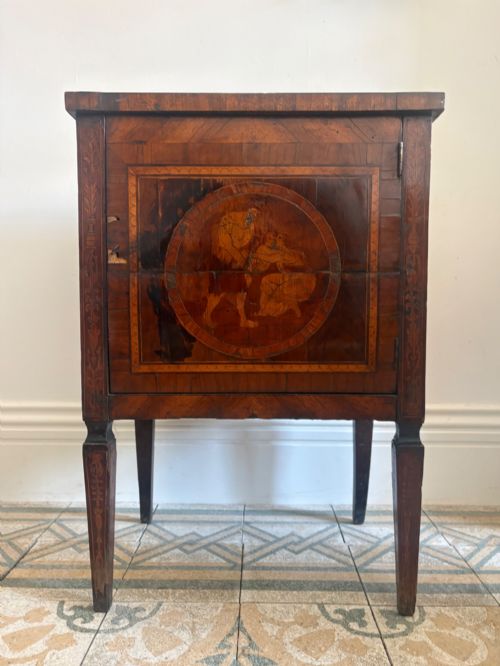
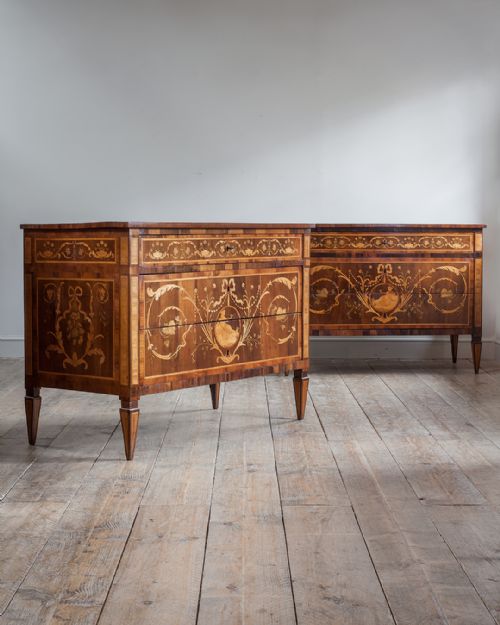
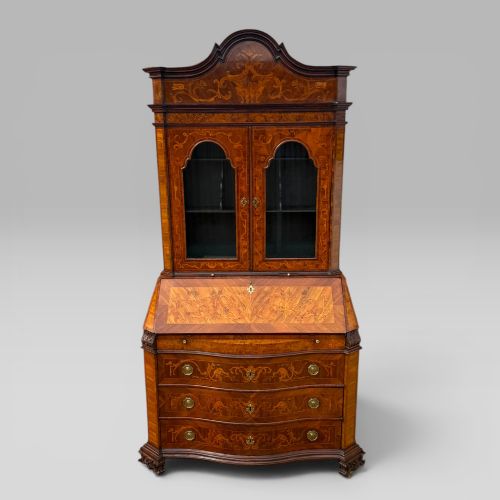
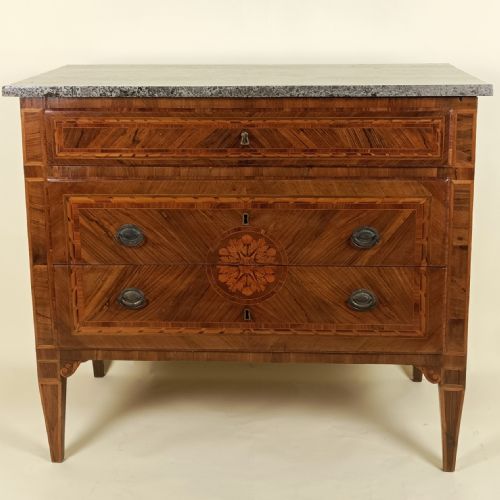
An italian marquetry cabinet covers a wide range of forms from this search phrase, spanning chests of drawers, side cabinets, bureau bookcases, and bedside commodinos. These pieces originate from varied periods including the 18th century, the 19th century, and the early 20th century, displaying regional shifts in design.
Buyers will encounter different stylistic expressions among these pieces, notably Neoclassical, Italian Rococo, Venetian Rococo, and Moorish Revival. Forms vary from monumental bureau cabinets to compact nightstands and bedframes featuring matching bedside tables.
Regional work from areas like Lombardy or Venice demonstrates local interpretations of classic forms. The presence of marble tops and giltwood details often accompanies the intricate marquetry surfaces found across these items.
Judging quality and execution
Quality in an italian marquetry cabinet rests on the precision of the timber fit and the complexity of the veneer work. Finer examples display tight joins in the mosaic of fruitwoods and kingwood, creating crisp pictorial depth without gaps.
The sophistication of the underlying carcase shape also dictates standing, particularly where bombé contours or serpentine fronts demand expert woodwork. Creator attribution, such as signed pieces by makers like Pietro Ferrario or Adriano Brambilla, further distinguishes exhibition-standard items from standard production.
Listings feature walnut, fruitwood, kingwood, and tulipwood veneers applied across pieces spanning the 18th century to the mid-20th century.
Pietro Ferrario·Adriano Brambilla·Tiffany
The Italian Marquetry Cabinet Glossary
- Marquetry
- The art of applying decorative pieces of veneer to a structural carcase to form pictorial or geometric designs. This technique relies on contrasting coloured timbers such as walnut, tulipwood, and fruitwood.
- Commodino
- A small bedside chest of drawers or cabinet common in Italian furniture design. These compact pieces frequently feature inlaid marquetry and marble tops.
- Bombe
- A bulging or swelling outward contour typical of continental cabinet design. This curved form requires advanced skill to veneer successfully.
- Bureau Bookcase
- A dual-purpose piece combining a sloping writing flap desk with upper shelving or cabinet storage. These large forms often display extensive marquetry across the fall front and drawer panels.
- Parcel Gilt
- Partially gilded woodwork where specific carved details or mouldings receive a gold leaf finish. This technique highlights particular decorative zones against the dark walnut or mahogany ground.
Italian Marquetry Cabinet: Frequently Asked Questions
Where were these cabinets placed in a home?
These cabinets served multiple domestic functions depending on their specific form, ranging from bedside nightstands to grand reception room bureau bookcases. Larger commodes and side cabinets occupied principal entertaining spaces to display status and taste.
Smaller bedside commodinos and nightstands functioned primarily in sleeping quarters for personal storage. Marble-topped variants provided durable surfaces for washing equipment or lighting.
How do I identify the period of a piece?
Dating relies on observing the prevailing stylistic vocabulary, such as Neoclassical symmetry, Rococo curves, or Moorish Revival geometric motifs. Construction methods and secondary timbers inside drawers also provide clues to the era of manufacture.
Regional traits further help narrow down the date, as 18th-century Venetian workshops utilised distinct handling compared to later 19th-century revival pieces. Comparing the complexity of the marquetry patterns against known historical examples confirms the timeline.
How should I care for timber marquetry surfaces?
Protect these surfaces by avoiding direct sunlight and maintaining stable room humidity to prevent the delicate veneer from lifting. Gentle dusting with a dry, soft cloth preserves the polished finish without harming the fine timber joints.
Apply professional wax sparingly only when the wood appears dry, avoiding silicone-based polishes entirely. Care must be taken around marble tops to prevent staining from acidic liquids.
What is the difference between marquetry and inlay?
Marquetry involves assembling an entire picture or pattern from veneers on a paper backing before gluing the complete sheet to the carcase. This technique covers the whole surface of the furniture in a mosaic of different coloured woods.
Inlay traditionally entails carving a recess directly into a solid piece of wood and fitting a contrasting material into that cavity. Marquetry is far more common on the decorative continental cabinets found in this category.