

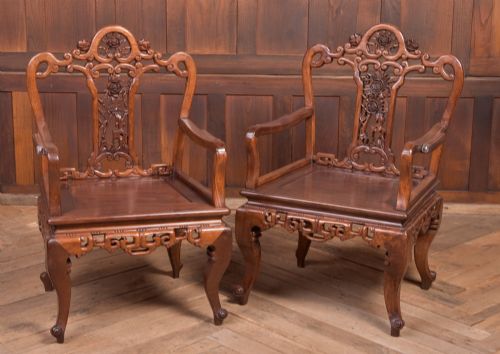


Qing Dynasty Hongmu Furniture
Qing dynasty hongmu furniture comprises dense, dark hardwood tables, chairs and stands built for display and daily use.
Qing Dynasty Hongmu Furniture
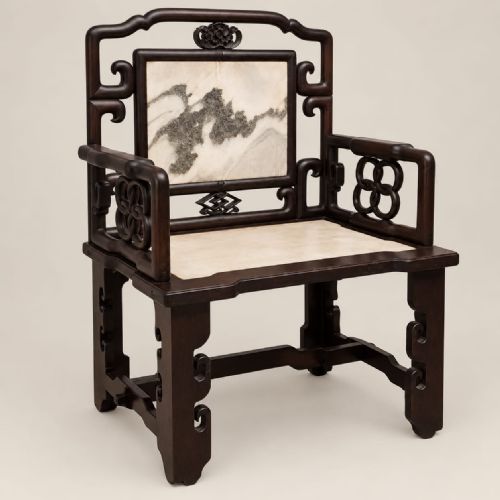
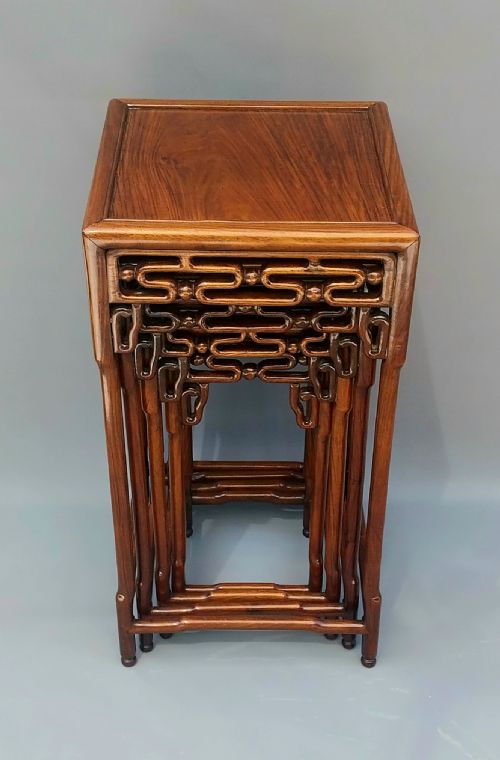
Qing dynasty hongmu furniture includes nests of tables, plant stands, altar tables, armchairs, benches and occasional tables produced in China during the nineteenth and early twentieth centuries. These forms served practical functions within domestic interiors, from holding porcelain and plants to providing seating.
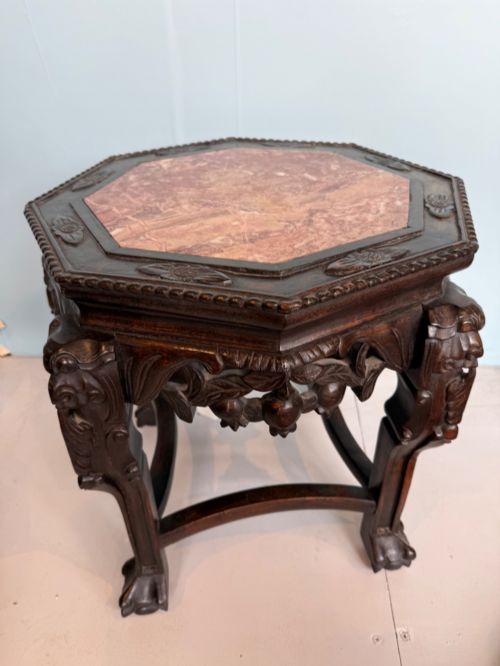
Nest of tables and plant stands with inset marble tops appear frequently among the listings, alongside substantial altar tables and armchairs. Pieces range from matched pairs of stands to single low occasional tables and travelling boxes, reflecting a diverse output of hardwood furnishings.
How they were made
Makers utilised hongmu, rosewood, and general hardwood, often combining them with amboyna wood, burrwood and mother-of-pearl inlay. These dense timbers allowed for precise carving without requiring heavy structural bracing.
Surfaces feature intricate carved detailing and inset marble or rouge marble tops, particularly on stands and tables. Construction methods relied on traditional joinery techniques suitable for heavy tropical hardwoods.
Available forms span plant stands, nests of tables, armchairs, altar tables, benches, stools and travelling boxes.
What varies in quality
Quality depends upon the crispness of the carving and the selection of the timber grain, where denser hongmu and well-figured burrwood or amboyna elevate a piece. The integration of contrasting materials, such as mother-of-pearl inlay or natural marble panels, distinguishes finer examples from simpler utilitarian items.
Proportion and structural stability also separate standard production from superior craftsmanship, particularly in complex forms like nested tables or throne chairs. The weight and finish of the hardwood indicate the original tier of manufacture.
The Qing Dynasty Hongmu Furniture Glossary
- Hongmu
- A category of dense, fragrant tropical hardwoods used in traditional Chinese furniture. It translates literally to red wood.
- Altar table
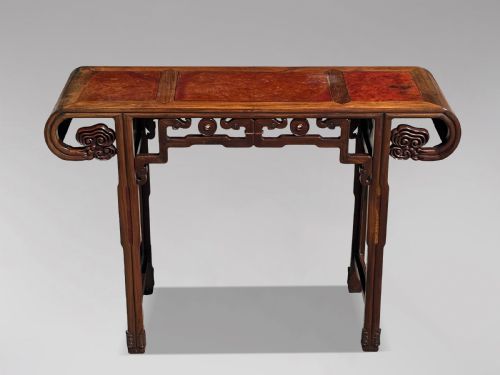
- A long, narrow rectangular table with upturned flanged ends, historically used for ritual offerings but adapted for domestic display.
- Nest of tables
- A set of graduated tables designed to fit neatly beneath one another when not in use.
- Pedestal stand
- A tall, slender support table specifically designed to elevate urns, plants or decorative sculptures.
- Amboyna wood
- A highly figured burl timber utilised for contrasting panels and decorative veneer work.
Qing Dynasty Hongmu Furniture: Frequently Asked Questions
How do I care for hongmu furniture?
Keep these hardwood pieces away from direct heat sources and sudden humidity changes to prevent the timber from splitting.
Dust regularly with a dry cloth and occasionally apply natural wax to maintain the polished surface of the wood.
What is an altar table used for?
Altar tables originally held ceremonial objects and ancestral tablets in traditional Chinese households.
Today, their long proportions and narrow depth make them well-suited as console tables in hallways or living spaces.
Are marble tops original to these stands?
Many plant stands and tables feature inset marble or rouge marble tops that were integrated during the initial construction.
These stone panels provided a cool, durable surface for displaying heavy porcelain vessels and potted plants without damaging the wood.
How can I identify late Qing dynasty pieces?
Late Qing pieces often date from the late nineteenth to the early twentieth century and show traditional carving styles combined with functional western-influenced forms.
The use of dense hongmu alongside amboyna and mother-of-pearl inlay is typical of this transitional manufacturing period.