



Oriental Bonsai Stand
An oriental bonsai stand is a low carved support intended to elevate a miniature tree or decorative vessel, bringing balance and form to a display.
Oriental Bonsai Stand
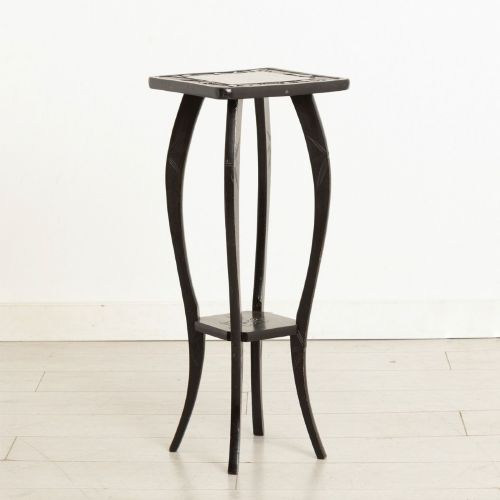
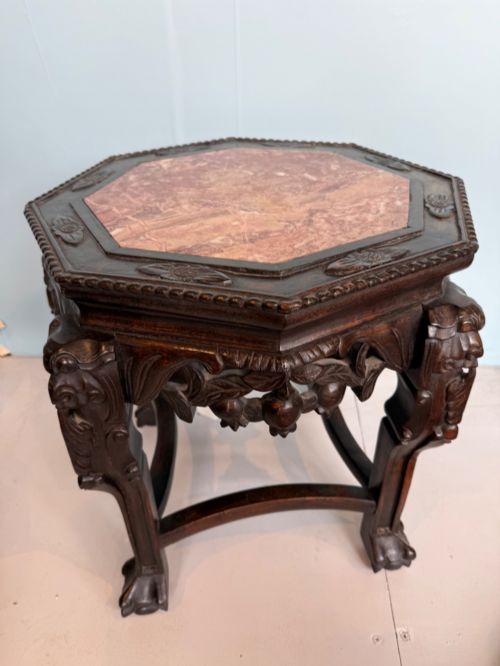
When you search for an oriental bonsai stand, you encounter low tables, pot stands, and urn pedestals designed to lift botanical specimens and ceramics off the floor or table. These pieces emerge predominantly from the nineteenth century through the early twentieth century, spanning the Victorian era and the Meiji and Taisho periods.
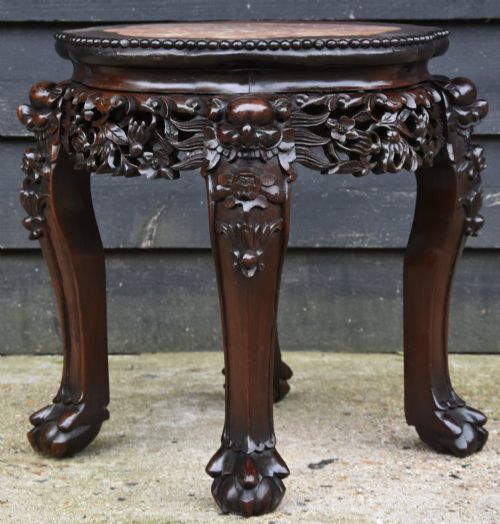
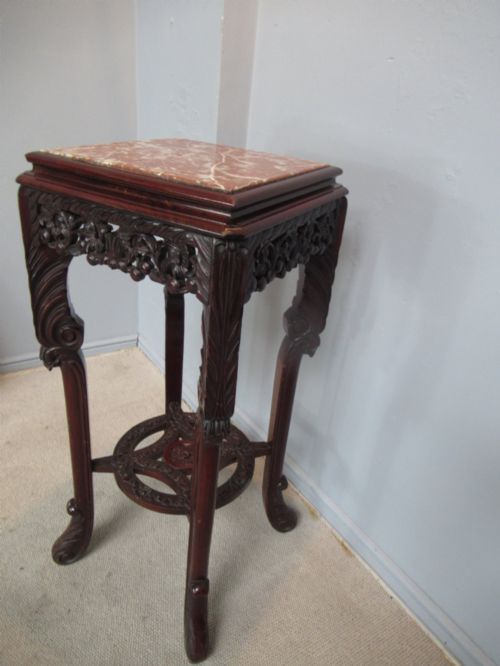
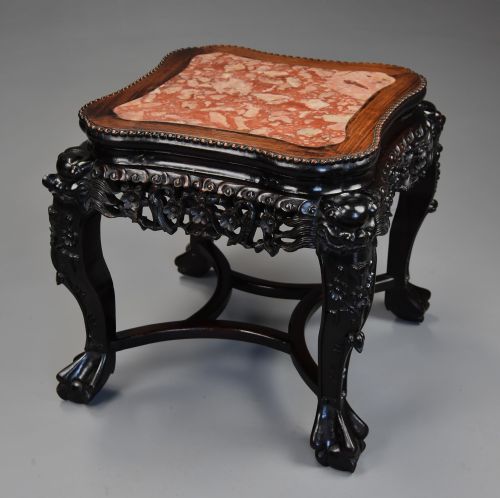
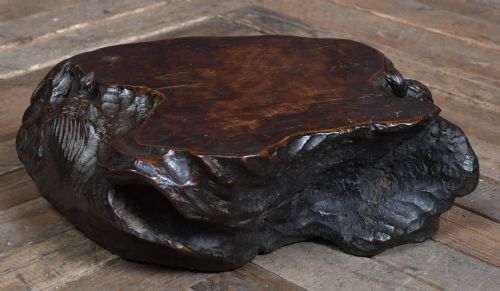
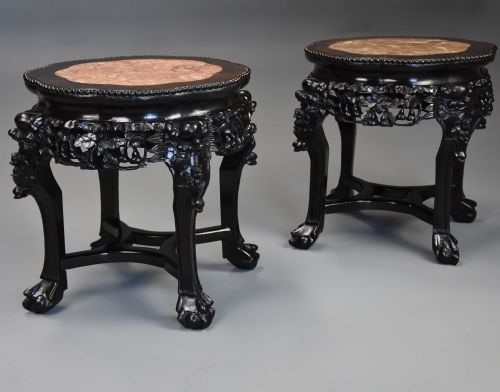
The versions most commonly met on this page include Chinese hardwood plant stands, often featuring shaped marble inset tops, alongside Japanese carved display stands. Makers and workshops constructed these objects as functional furniture for scholars' tables, drawing rooms, and garden rooms, adapting forms from the Qing Dynasty and Chinese export traditions.
How they were made
Craftsmen utilised dense timbers such as rosewood, hongmu, padouk, huali wood, and ebonised wood to build these stands, ensuring a sturdy frame capable of supporting heavy stone vessels and potted plants. Artisans frequently integrated rouge marble or plain stone panels directly into the wooden top surface.
Carpenters and carvers shaped the timber with intricate hand-carved motifs, joining the components through traditional woodworking techniques without relying on modern fasteners. Surfaces received smooth polishing to highlight the natural grain of the dense exotic hardwoods.
What varies in quality
The distinction between ordinary and superior pieces rests upon the crispness of the hand-carved detail and the selection of timber. Dense, heavily figured woods like hongmu and padouk command greater attention due to their weight and fine grain texture.
Quality also shows in the integration of the inset marble top and the precision of the joinery in the legs and aprons. Pieces displaying balanced proportions and well-defined floral or geometric carving represent the higher tier of these historic stands.
Liberty of London
The Oriental Bonsai Stand Glossary
- Hongmu
- A dense, dark tropical hardwood utilised extensively in Chinese furniture manufacture. It translates literally to red wood and develops a deep patina over time.
- Padouk
- A heavy, durable exotic timber known for its rich reddish-brown colour. Makers favoured it for carved stands due to its strength and stability.
- Jardiniere stand
- A tall or low table specifically built to support a large ceramic flower pot or plant container. These items often feature circular tops and carved aprons.
- Meiji period
- The era in Japanese history spanning from eighteen sixty-eight to nineteen twelve, characterised by openness to foreign trade and high-level craftsmanship in wood and metal.
- Marble inset
- A stone slab fitted flush into the wooden top of a stand, providing a cool, stable surface for heavy porcelain vases and bonsai pots.
Oriental Bonsai Stand: Frequently Asked Questions
What is an oriental bonsai stand used for?
These low tables and pedestals serve to elevate potted miniature trees, decorative urns, and ceramic vases above the surface of a room. Raising the plant highlights its individual form and protects surrounding furniture from moisture.
Historically, scholars and collectors placed them in reception rooms and studies to create focal points within an interior space.
Are Chinese and Japanese stands different?
Chinese stands frequently utilise dense tropical hardwoods like hongmu and feature marble inserts surrounded by ornate floral carvings. Japanese stands from the Meiji and Taisho periods often showcase naturalistic carvings of animals, turtles, or irregular branches.
Both traditions focus on elevating botanical displays, but the specific motifs and timber treatments reflect their distinct regional origins.
How do I style a plant stand at home?
Position a low carved stand beside seating or beneath a window to elevate a potted plant, ceramic bowl, or bronze sculpture. The compact dimensions allow them to fit easily on top of sideboards or function independently on the floor.
Pairing the timber tone with existing interior wood finishes helps integrate the antique piece into a modern room.