









Chinese Plant Table
A Chinese plant table brings dense hardwoods and inset stone into a room, serving as a sturdy pedestal for pots or a low display surface.
Chinese Plant Table
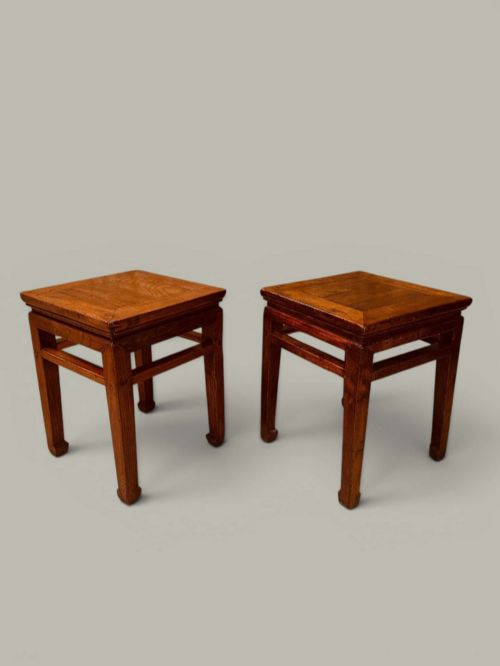
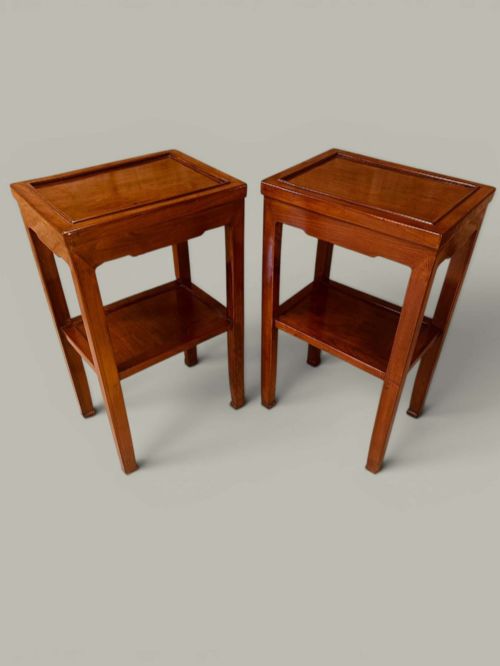
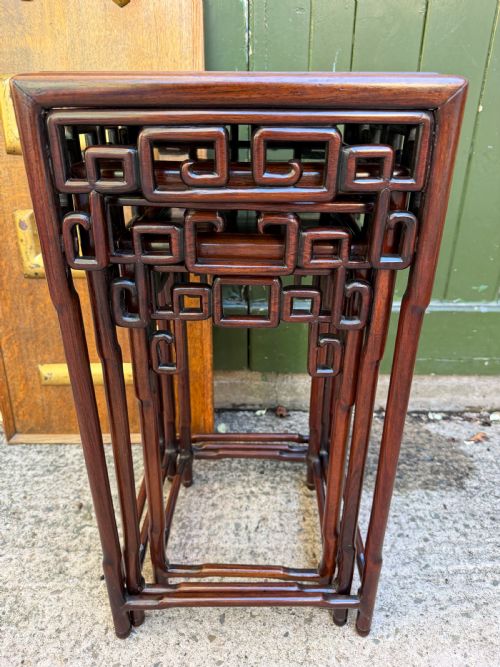
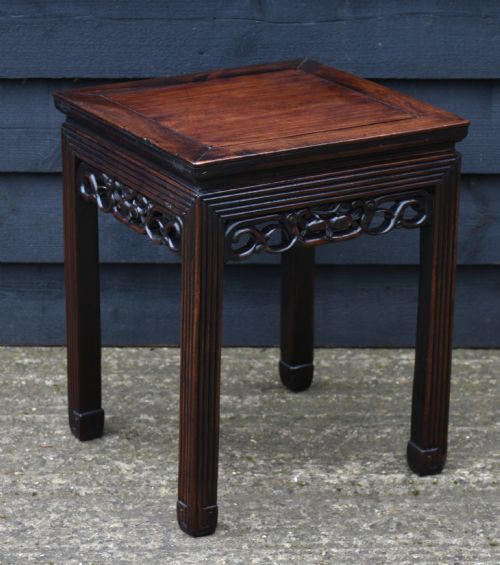
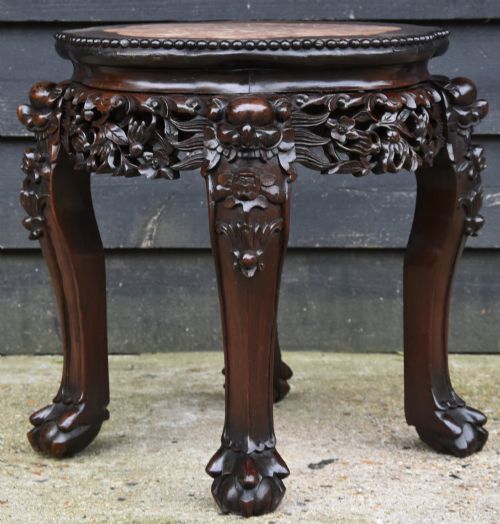
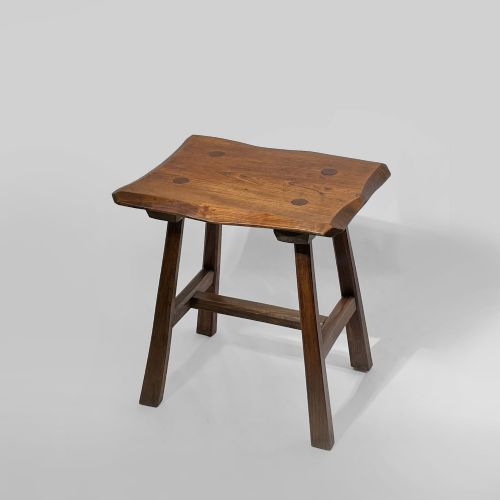
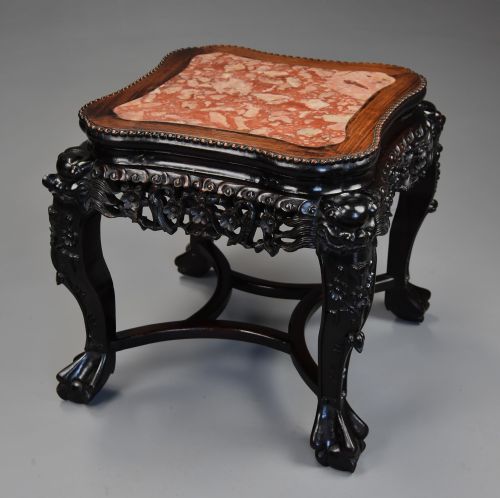
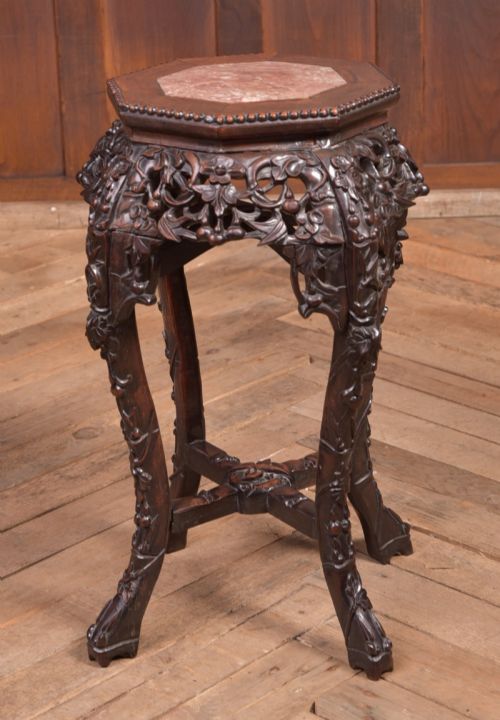
The Chinese plant table appears in several guises across this page, predominantly as a jardiniere stand, pot stand, or low table dating from the nineteenth century up to the Edwardian period. You will frequently encounter compact square or round occasional pieces designed to elevate porcelain and planters, alongside taller pedestal stands and nests of tables.
Many examples derive from the Qing Dynasty and Chinese Export traditions, utilising traditional forms like barrel stools, vase tables, and wine tables. The selection also encompasses British interpretations in the Chinoiserie and Chinese Chippendale styles, bridging Eastern joinery with Victorian tastes.
These items function equally well as lamp tables or side tables in modern interiors, though their primary historic purpose remains the display of plants and decorative vessels. The majority of pieces rely on sturdy timber framing combined with contrasting stone or wood panels set flush into the top.
Materials and construction
Joinery relies on dense tropical timbers such as rosewood, padouk, huanghuali, and hongmu, often simply described in records as hardwood, alongside native varieties like elm and rootwood. Artisans carved these heavy woods deeply with traditional motifs, creating rigid frames capable of supporting heavy ceramic planters.
A defining characteristic of these tables is the inset top, which frequently incorporates variegated rouge marble, burr wood, mother of pearl inlay, or lacquer and cloisonné enamel panels. This combination of carved timber and smooth stone provides a stable, water-resistant surface suited for holding damp ceramic jardinieres.
Chinese Plant Table Retail Price Guide 2026
Typical asking prices for chinese plant table among the pieces listed under this phrase on Sellingantiques today, from the lower quarter to the upper quarter. They describe what is for sale here now, not the wider market.
Listings feature pieces spanning the Victorian era through the Edwardian period, alongside items attributed to the Qing Dynasty.
Assessing craftsmanship
Quality rests heavily on the depth and crispness of the wood carving, where fluid floral and geometric motifs distinguish superior workshop output from simpler production. The weight and grain of the timber also dictate standard, with dense rosewoods and figured huanghuali sitting above plain elm or general softwoods.
The integration of the inset top marks the level of care taken by the maker, particularly in the precision with which marble or lacquer panels fit the surrounding wooden rebate. Well-matched grain patterns and tight joinery at the joints ensure structural longevity in these heavy, compact forms.
The Chinese Plant Table Glossary
- Jardiniere stand
- A tall or low table specifically proportioned to hold a ceramic flower pot or plant container. These stands often feature water-resistant stone tops to protect the timber underneath.
- Hongmu
- A traditional Chinese term translating to red wood, applied to dense, dark hardwoods used in fine Qing Dynasty furniture. It encompasses varieties like padouk and certain heavy rosewoods.
- Cloisonne
- A decorative metalwork technique where enamel is applied within compartments wired to a base. On these tables, such panels appear as inset decorative surfaces.
- Chinoiserie
- European decorative style reflecting Chinese artistic influences, popular during the eighteenth and nineteenth centuries. It often merges British furniture forms with oriental motifs.
Chinese Plant Table: Frequently Asked Questions
What is a Chinese plant table?
A Chinese plant table is a sturdy, decorative stand designed to elevate planters, jardiniere bowls, and vases off the floor. They range from low stools to tall pedestals and incorporate inset stone or wood surfaces.
Historically placed in reception rooms or courtyards, these tables highlight botanical displays while protecting interior floors from moisture. Today, they serve equally well as side tables or lamp stands.
How do I date a Chinese plant table?
Dating relies on identifying timber types, joinery methods, and stylistic cues from periods such as the late Qing Dynasty or the Victorian era. Earlier pieces often feature heavier rosewood or padouk with deeper hand-carving.
Matched pairs and specific stylistic markers like mother of pearl inlay or marble inserts help narrow down the decade of manufacture, typically placing pieces between the mid-nineteenth and early twentieth centuries.
Can I use a plant table for lamps?
Yes, these tables make exceptional lamp stands thanks to their stable construction and compact footprints. The marble or hardwood tops provide a durable surface that resists heat and minor spills.
Their varied heights allow you to match a specific corner or seating arrangement, bringing architectural interest and rich timber tones into a room.
What woods were used for these tables?
Couch builders utilised dense tropical hardwoods including rosewood, padouk, huanghuali, and hongmu, prized for their weight and dark coloration. Elm and rootwood also appear in more rustic or regional pieces.
In addition to solid timber frames, makers frequently incorporated contrasting materials like burr wood panels, lacquer, and smooth marble for the table tops.