


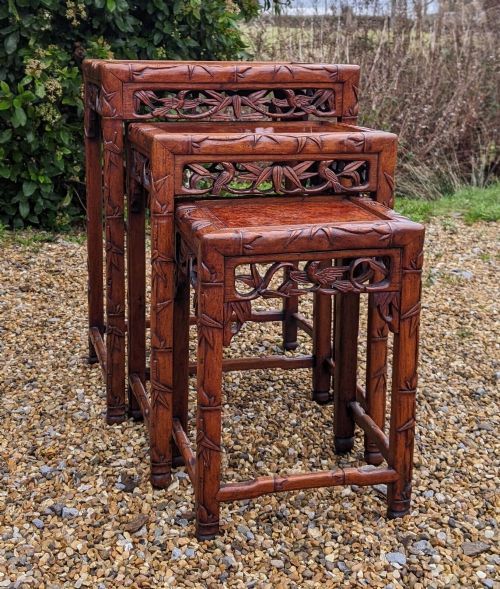


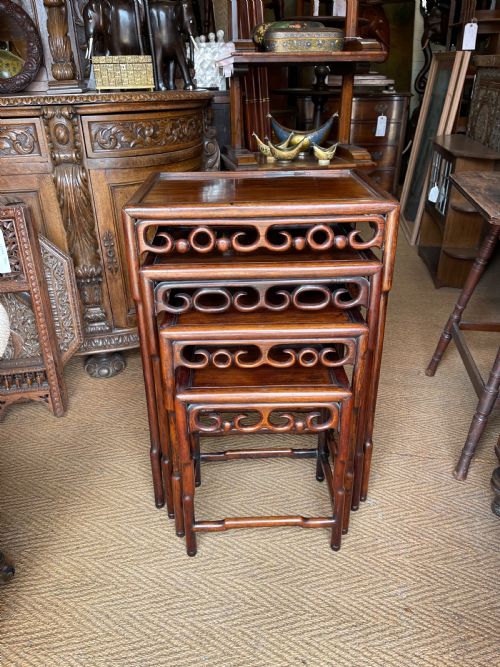


Bamboo Carved Side Tables
These bamboo carved side tables bring distinctive oriental and Anglo-Japanese character into a room.
Bamboo Carved Side Tables
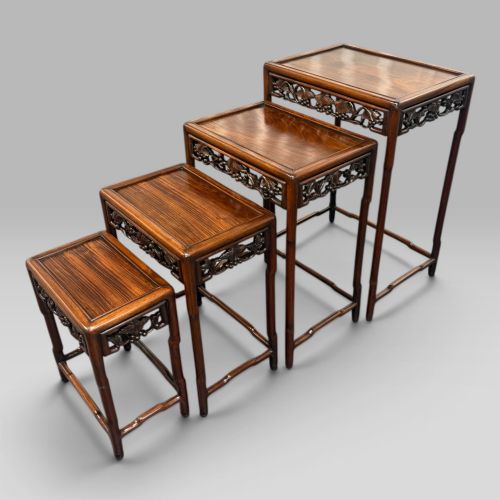
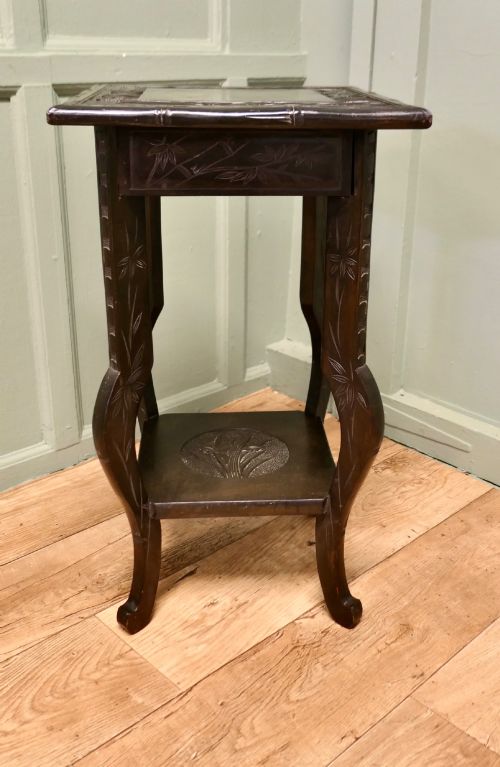
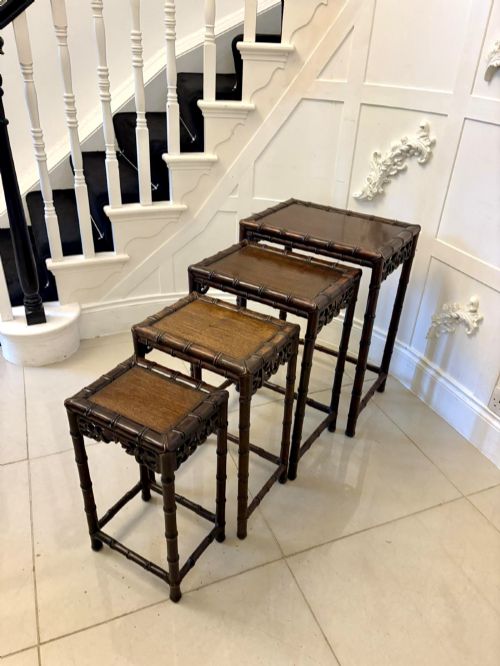
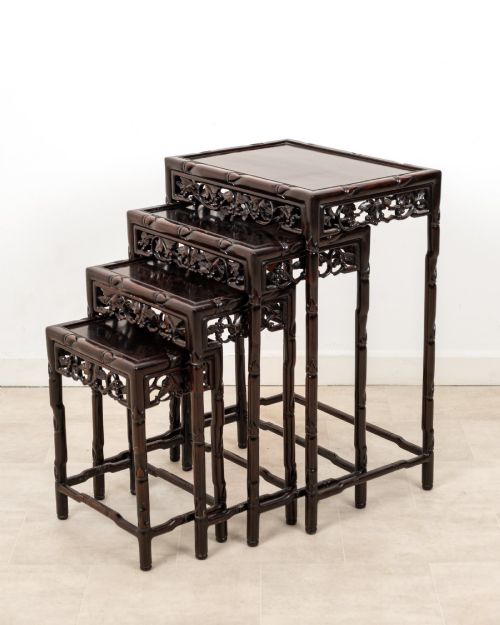
Bamboo carved side tables encompass a variety of forms including nests of tables, occasional tables, coffee tables, and console tables. The pieces span periods from the nineteenth century into the Edwardian era, with a strong representation of Chinese export and Qing Dynasty work alongside Anglo-Japanese design.
The aesthetic bridges traditional Chinese craftsmanship and nineteenth-century European taste, resulting in versatile furniture suited to diverse interior settings.
Materials and construction
Construction relies heavily on dense timbers including rosewood, mahogany, and hongmu, often shaped to imitate natural bamboo stalks. Artisans utilised traditional joinery alongside hand-carving techniques to render detailed surface decoration.
Certain tables incorporate inset marble panels within the wooden frames, adding weight and a contrasting cooling texture to the design. Folding mechanisms on specific coffee and tray tables demonstrate practical engineering alongside decorative carving.
Bamboo Carved Side Tables Retail Price Guide 2026
Typical asking prices for bamboo carved side tables among the pieces listed under this phrase on Sellingantiques today, from the lower quarter to the upper quarter. They describe what is for sale here now, not the wider market.
Some tables double as folding luggage stands, proving that nineteenth-century hosts understood the delicate art of unexpected overnight guests.
Assessing quality
Quality reveals itself through the depth and crispness of the carving, particularly where timber is fashioned into the likeness of bamboo. Timbers with rich natural grain and deep colour, such as huanghuali wood and well-selected hongmu, separate the finer examples from standard production.
The structural integrity of nesting sets, where four tables must slide smoothly and sit squarely, indicates the precision of the original cabinetmaker. Superior pieces maintain tight joints and balanced proportions across both single stands and complex folding tables.
Liberty of London
The Bamboo Carved Side Tables Glossary
- Hongmu
- A traditional Chinese term for dense, durable hardwoods used in fine furniture making. These dark timbers take a fine carved finish.
- Huanghuali wood
- A prized fragrant hardwood known for exceptional grain patterns and rich colour. It appears in high-status Chinese tables.
- Anglo-Japanese
- A nineteenth-century design style blending British aesthetic sensibilities with Japanese and Chinese motifs. This style heavily influenced occasional furniture of the period.
- Quartetto
- A matching set of four small tables designed to nest together. They were popular in the nineteenth and early twentieth centuries for versatility.
Bamboo Carved Side Tables: Frequently Asked Questions
What are bamboo carved side tables?
These pieces are tables carved from hardwoods to resemble bamboo, or traditional oriental tables featuring bamboo-style motifs. They include nesting sets, occasional tables, and stands.
Originating largely in the nineteenth and early twentieth centuries, they reflect both Chinese export traditions and European aesthetic movements.
How do you use a nest of tables?
A nest of tables provides flexible surface space that can expand or contract as needed in a living space. The smaller tables tuck neatly beneath the largest one when floor space is required.
They function well beside armchairs or sofas for holding drinks, books, or lamps.
How do I care for hardwood tables?
Hardwood furniture requires protection from direct sunlight and sudden temperature changes to prevent the timber from drying out. Regular dusting with a soft, dry cloth preserves the polished surface.
Avoid using silicone-based polishes, opting instead for traditional beeswax applied sparingly when the wood appears dry.
How do I tell periods apart?
Nineteenth-century pieces often display deeper, hand-carved details and denser tropical hardwoods like huanghuali or hongmu. Edwardian and later examples from around nineteen-ten frequently incorporate lighter mahogany frames and Anglo-Japanese styling.
Construction methods and timber selection offer the clearest clues to a table's age.