


Openwork Carved Side Table
These openwork carved side tables bring dense foliage and geometric piercing into domestic spaces through nineteenth-century and early twentieth-century workshops.
Openwork Carved Side Table
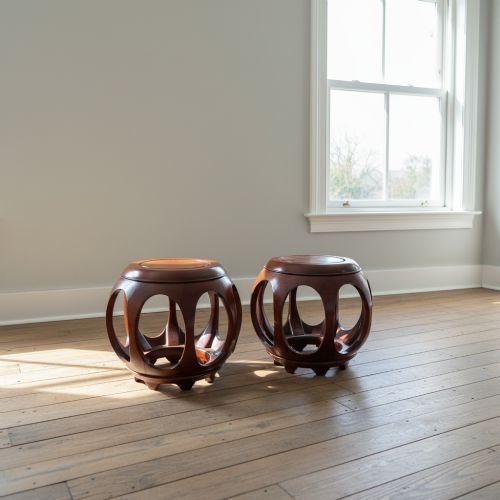
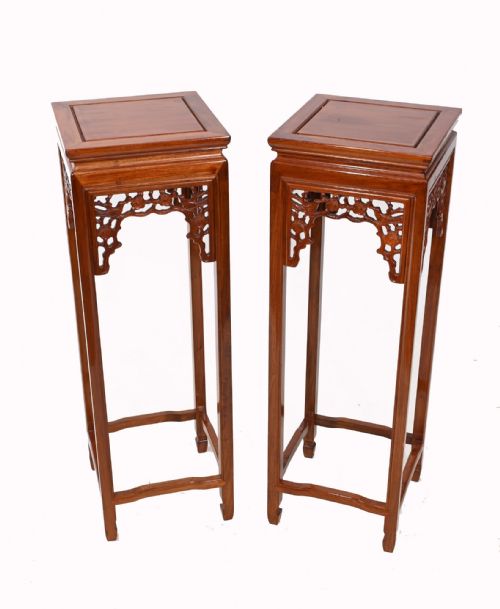
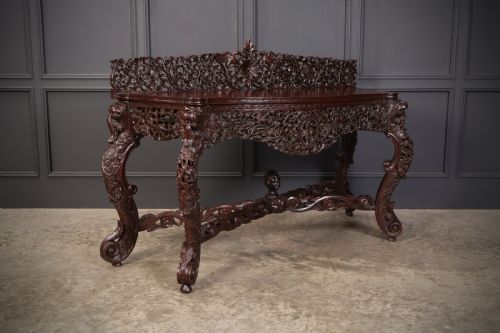
An openwork carved side table combines structural utility with intricate pierced woodwork drawn from Chinese traditional, Qing dynasty, and Anglo-Indian design vocabularies. These low tables, stands, and consoles serve auxiliary roles in a room, often placed against walls or beside seating to hold small objects.
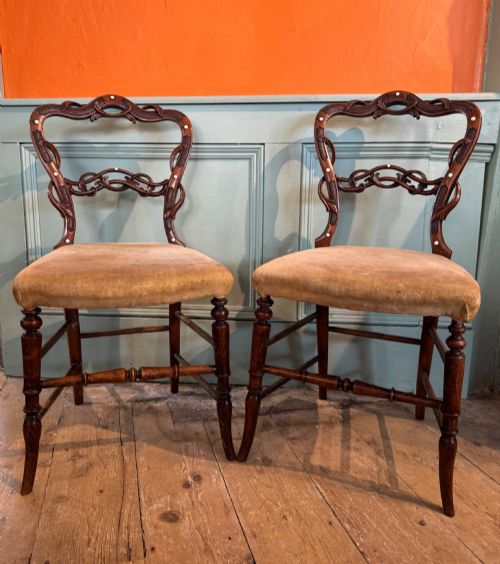
The versions most frequently met here span the Victorian era, the nineteenth century, and the early twentieth century, reflecting colonial trade and global aesthetic exchanges. Makers utilised dense exotic timbers to achieve deep relief carving that permits light to pass through the patterned voids.
Forms range from single rectangular altar tables and console tables to nested sets and tiered stands. Each piece displays distinct regional carving habits, shifting between naturalistic floral motifs and rigid geometric framing.
How they were made
Cabinetmakers constructed these tables using heavy tropical hardwoods, notably padauk, rosewood, hongmu, and burr wood, alongside occasional bone inlay details. These timber choices provided the structural density required for extensive piercing without compromising the integrity of the legs and apron.
The openwork technique relies on chisel and gouge work, carving straight through the wood matrix to create negative space around scrolls, dragons, or foliage. Surfaces were typically finished to highlight the natural grain and deep colour of the hardwood rather than painted over.
What varies in quality
Quality rests upon the depth and clarity of the carving, distinguishing shallow surface incisions from fully undercut openwork that creates genuine three-dimensional relief. The handling of joints where legs meet the apron also dictates structural longevity.
Material selection divides the production, as dense woods like hongmu and padauk hold crisp chisel edges far better than softer secondary timbers. The restraint and symmetry of the pierced motifs govern the visual balance of the finished piece.
The Openwork Carved Side Table Glossary
- Openwork
- Wood carving that is pierced completely through the material to create a pattern of solid areas and empty spaces. This technique defines the visual lightness of these tables.
- Padauk
- A heavy, durable reddish-brown tropical hardwood favoured by colonial makers for its capacity to take sharp detail. It darkens gracefully with age.
- Hongmu
- A traditional Chinese term for dense hardwoods, often translated as red wood, used in high-status furniture. It encompasses several heavy species with rich natural figuring.
- Altar table
- A rectangular form featuring upturned ends on the top surface, originating from ceremonial placement. These tables translate domestic ritual furniture into side table use.
- Quartetto
- A matched set of four graduating occasional tables designed to slide neatly beneath one another. They represent a specific nineteenth-century innovation in space-saving furniture.
Openwork Carved Side Table: Frequently Asked Questions
How do I care for openwork carved wood?
Dust these tables regularly using a soft, dry brush to reach into the pierced crevices where particles settle. Avoid liquid polishes that build up within the carved recesses.
Keep the wood away from direct heat sources and drastic humidity shifts to prevent the dense timbers from splitting. A light application of microcrystalline wax preserves the finish without attracting dust.
Where should I place a side table?
Position these tables in hallways, drawing rooms, or bedrooms where their carved aprons and legs remain visible from multiple angles. They suit placement beside armchairs or against panelled walls.
Ensure heavy items are not balanced on the edges of delicate pierced trays or nested tops. Their primary function remains decorative display rather than heavy load-bearing.
What is an Anglo-Indian table?
These pieces reflect the cross-cultural furniture production of the nineteenth century under British colonial rule. Indian artisans adapted traditional local carving styles to European furniture forms.
The result blends dense floral and wildlife motifs with Western console, occasional, and side table silhouettes. Rosewood and padauk frequently appear in these constructions.
How do I identify Qing dynasty tables?
Look for specific construction traits such as traditional mortise and tenon joinery executed without metal fasteners. The timber is typically dark, heavy hongmu or related dense hardwoods.
Carving motifs often draw upon symbolic flora, geometric dragons, and fretwork panels. The proportions prioritize structural balance alongside elaborate surface ornamentation.