

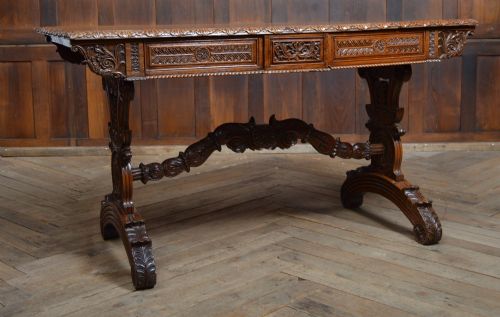


Victorian Colonial Console Table
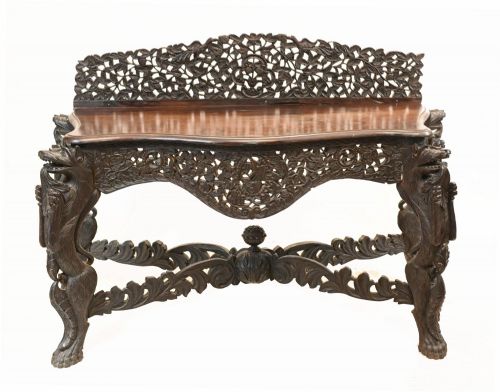
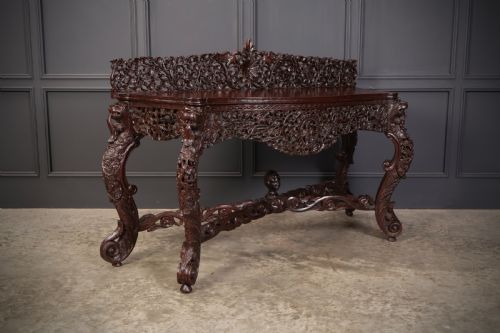
A victorian colonial console table brings heavy timber and dense hand-carving straight into a hallway, offering grand scale and striking grain.
Victorian Colonial Console Table
When you search for a victorian colonial console table, you are looking at nineteenth-century furniture produced during the British colonial era, often associated with Anglo-Indian or Anglo-Burmese workshops. These pieces combine British furniture forms with local craftsmanship and indigenous carving traditions. The console tables, library tables, and pier tables listed here date from the nineteenth century, including specific years like eighteen-sixty and eighteen-eighty.
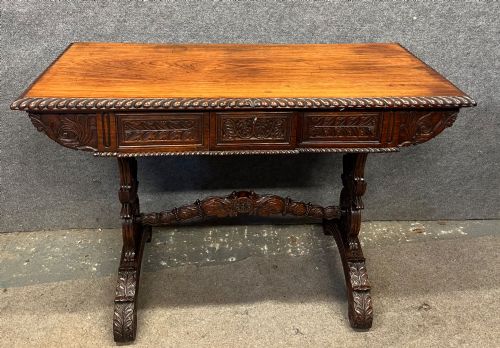
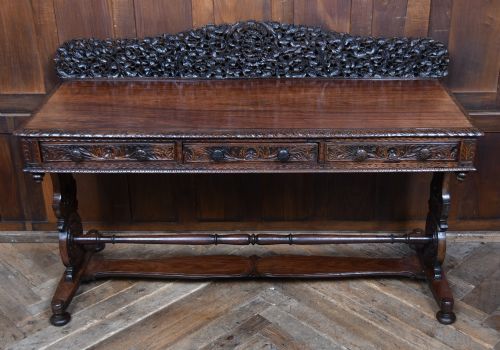
The most common version you will meet on this page is the carved rosewood or padouk console table from the mid-nineteenth century. These items frequently display intricate floral or foliage carving across heavy timber frames, reflecting the aesthetic tastes of the period. They serve as substantial side tables or pier tables designed to sit against a wall in a reception room or hallway.
How they were made
Makers utilised dense tropical hardwoods such as rosewood, teak, and padouk, which were prized for their durability and rich natural colour. These heavy timbers provided a stable foundation capable of supporting deep, sculptural relief work without splitting or warping.
Craftsmen carved the timber by hand, applying complex floral and foliate motifs directly into the solid wood rather than using applied veneer. Certain examples also incorporated marble tops, combining polished stone surfaces with heavily carved wooden bases.
Victorian Colonial Console Table Retail Price Guide 2026
Typical asking prices for victorian colonial console table among the pieces listed under this phrase on Sellingantiques today, from the lower quarter to the upper quarter. They describe what is for sale here now, not the wider market.
Carvers occasionally hid playful animal faces amidst the dense jungle foliage of their floral table friezes.
What varies in quality
The standard of the hand-carving separates the finer items from simpler production, with crisp, deep relief work showing greater manual skill than shallow or rushed incision. The choice of timber also dictates the character, as well-figured rosewood or padouk displays superior grain depth and natural lustre.
Proportion and architectural balance define the structure, ensuring that heavily decorated frames maintain structural harmony rather than appearing cluttered. The integration of materials, particularly where marble tops meet carved wooden bases, determines the overall refinement of the piece.
The Victorian Colonial Console Table Glossary
- Console table
- A table designed to stand against a wall, typically secured or supported by brackets or console legs. These pieces usually feature decoration on the front and sides while the back remains plain.
- Padouk
- A heavy, durable tropical hardwood with a reddish hue that darkens with age. It was frequently utilised in colonial furniture for its resilience and fine grain.
- Pier table
- A table designed to stand against the wall between two windows, often placed beneath a mirror. They share similar proportions with console tables.
- Anglo-Indian
- A term describing furniture made in India during the British period, combining British forms with traditional Indian craftsmanship. These items often feature dense, intricate carving.
- Rosewood
- A dense, dark timber with distinct grain patterns, highly favoured for nineteenth-century decorative furniture. It takes a high polish and supports deep relief carving.
Victorian Colonial Console Table: Frequently Asked Questions
What is a victorian colonial console table?
A victorian colonial console table is a nineteenth-century side table made in regions under British influence, such as India or Burma. They merge European furniture shapes with local timber and intricate hand-carved decoration.
These tables were typically positioned against hallway or reception room walls to display decorative objects or provide a grand architectural focal point.
How do I date these tables?
Dating relies on stylistic markers, construction methods, and recorded production periods from the nineteenth century, including specific decades like eighteen-sixty and eighteen-eighty. Examining the timber joints and the style of the carving helps place the piece within the Victorian era.
Makers often utilised solid tropical hardwoods typical of nineteenth-century colonial workshops, which provides a reliable timeframe for attribution.
Where should I place a console table?
These tables suit hallways, entrance passages, or principal reception rooms where their substantial scale and heavy carving can be appreciated. Because they are designed to stand against a wall, they occupy minimal floor space while offering a useful surface.
Pairing a console or pier table with a wall mirror creates a balanced arrangement true to nineteenth-century domestic interiors.
What woods were used?
Craftsmen utilised dense tropical hardwoods including rosewood, padouk, teak, and general hardwood. These materials offered the necessary weight and strength for deep manual carving.
Some examples also incorporated marble for the top surface, adding a polished contrast to the heavily decorated wooden bases.