

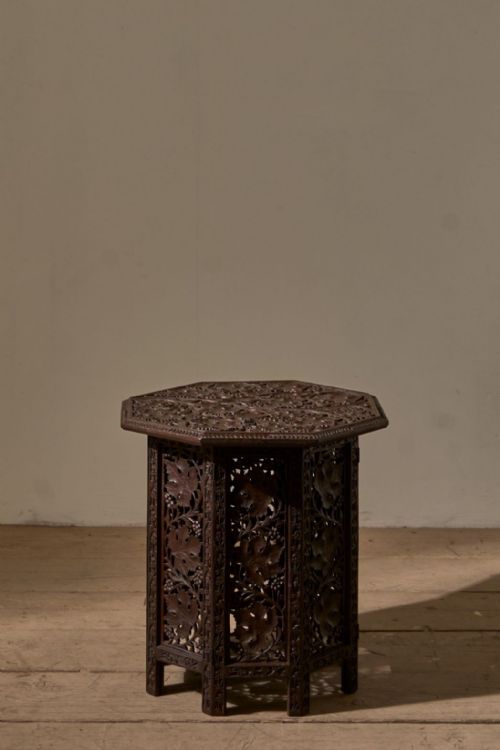
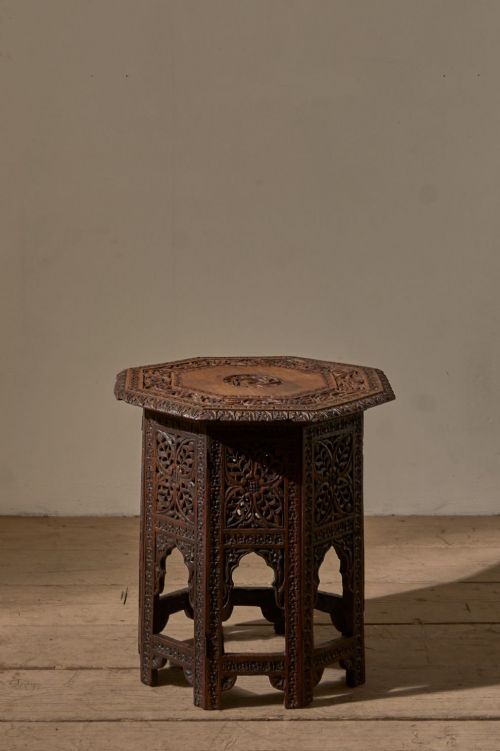


Padauk Wood Side Table
A padauk wood side table brings dense, richly coloured timber and intricate carving straight into a room from nineteenth-century workshops.
Padauk Wood Side Table
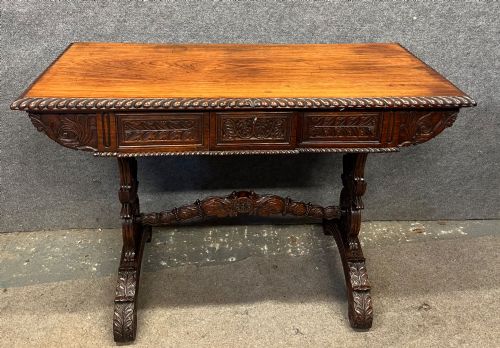
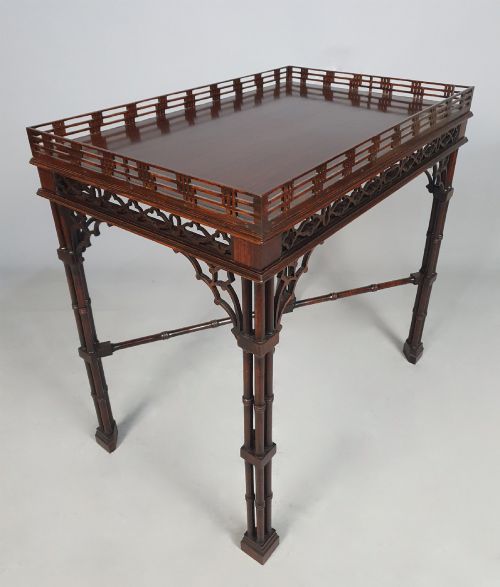
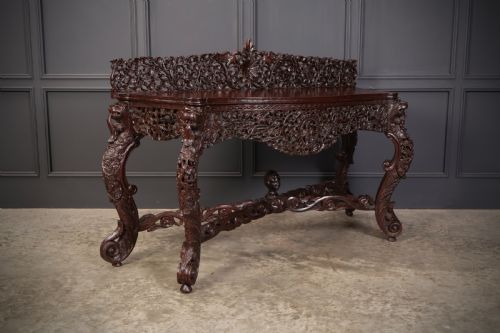
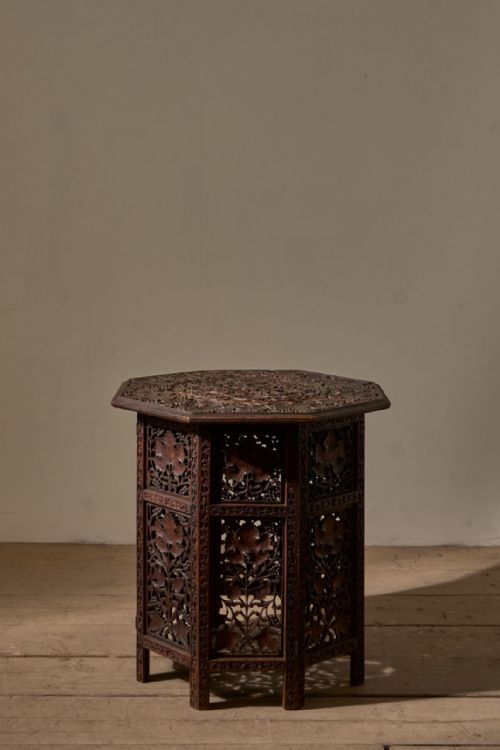
When a buyer searches for a padauk wood side table, they are looking at nineteenth-century furniture shaped by colonial trade, regional craftsmanship, and distinctive cabinet-making traditions. The evidence shows forms ranging from simple occasional and side tables to console tables, buffets, and plant stands.
On this page, the version a buyer is most likely to meet is an Anglo-Indian or Burmese piece from the nineteenth century, often featuring deep hand-carving. These pieces frequently incorporate styles such as Gothic Revival, Chinese Export, or Anglo-Burmese Colonial alongside the dense hardwood.
The materials recorded span beyond pure padauk to include mixed hardwoods, teak, brass, marble inserts, and bone inlay. Whether circular, collapsible, or tiered, these tables reflect global exchanges of design during the 1800s, uniting British room layouts with overseas carving expertise.
How they were made
Makers constructed these pieces using padauk and related hardwoods selected for their strength and deep colouration. Workshops relied on heavy manual carving to build intricate relief patterns such as dragons, foliage, and geometric motifs directly into the dense timber.
Construction techniques also incorporated secondary materials like teak for structural stability, alongside functional or decorative elements in brass. Some tables integrate inset marble tops or delicate bone inlay to contrast against the dark, heavy grain of the padauk.
Padauk Wood Side Table Retail Price Guide 2026
Typical asking prices for padauk wood side table among the pieces listed under this phrase on Sellingantiques today, from the lower quarter to the upper quarter. They describe what is for sale here now, not the wider market.
Materials appearing across the inventory include padauk wood, teak, marble, brass, and bone inlay.
What varies in quality
The distinction between a standard piece and a finer example lies in the depth, precision, and sharpness of the hand-carving across the surface. Tables with crisply defined leaf designs, figures, or architectural mouldings demonstrate superior workshop control over a notoriously dense wood.
Quality also rests in the integrity of the timber selection and the cleverness of construction, such as functional collapsible frames or well-integrated marble and bone elements. The balance of proportion between the carved base and the table top separates straightforward utility items from exceptional colonial commissions.
The Padauk Wood Side Table Glossary
- Padauk
- A dense, durable tropical hardwood known for its deep reddish-brown colour and fine grain. It accepts intricate carving exceptionally well.
- Anglo-Indian
- A term describing nineteenth-century furniture made in India for British residents or export, combining British forms with local carving styles.
- Console Table
- A wall-mounted or freestanding table designed to sit flat against a vertical surface, frequently topped with marble or heavy wood.
- Bone Inlay
- A decorative technique where small pieces of bone are set flush into the wooden surface to create contrasting geometric or floral patterns.
- Gothic Revival
- An architectural and decorative style drawing on medieval forms, visible in nineteenth-century pieces through pointed arches and structural heaviness.
Padauk Wood Side Table: Frequently Asked Questions
What is padauk wood?
Padauk is a heavy, durable tropical hardwood prized for its rich reddish-brown hue and stability.
It was widely utilised in nineteenth-century colonial workshops for export furniture that required deep, intricate carving.
Where were these tables made?
The listings show origins spanning India, Burma, and China during the nineteenth century.
Local artisans combined traditional regional carving techniques with British furniture forms ordered by colonial residents.
How do I style a side table?
These dark, heavily carved tables anchor a room well when paired with lighter walls and neutral surroundings.
They work effectively as focal points in hallways, reception rooms, or living spaces without needing heavy ornamentation on top.
Are these tables sturdy?
Padauk is an exceptionally dense and strong timber, making these tables robust for everyday placement.
Care should simply be taken to protect any marble inserts or delicate bone inlay from heavy impacts.
How do I date a table?
Dating relies on stylistic markers such as Gothic Revival motifs or Anglo-Indian colonial carving patterns characteristic of the eighteen-fifties to eighteen-nineties.
Construction methods and the specific mix of secondary timbers also help place a piece within the nineteenth century.