



Carved Hardwood Hallway Table
A carved hardwood hallway table brings deep grain and architectural presence to an entrance, connecting nineteenth-century craftsmanship with practical surface space.
Carved Hardwood Hallway Table
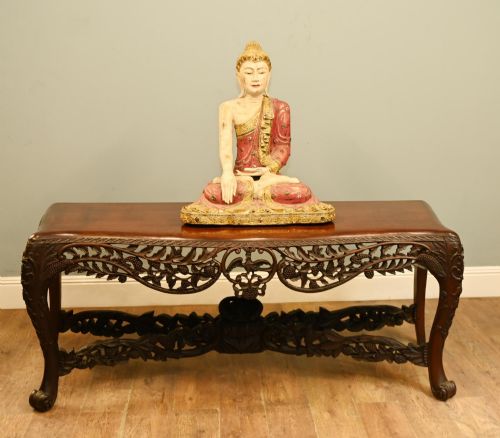
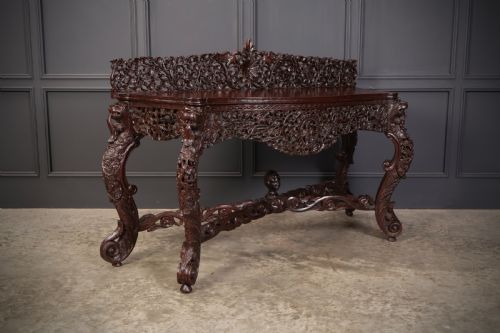
A carved hardwood hallway table covers the console tables, altar tables, and sideboards that fill this search phrase, originating primarily from the nineteenth century and the Qing Dynasty. Buyers find substantial timber forms designed for narrow spaces, ranging from traditional Chinese altar tables to Anglo-Indian and Anglo-Burmese colonial pieces.
The pieces appearing here lean heavily into dense tropical timbers and regional workshop traditions, including elm, hongmu, amboyna, padauk, and lacquered hardwood. These are functional items built with deep surface carvings, often taking the shape of rectangular consoles or long benches adapted for display.
Most examples date across the nineteenth century up to around nineteen hundred, carrying the decorative vocabulary of Chinese traditional, Chinoiserie, and colonial aesthetics. Selecting one means weighing whether a traditional altar table or a side console suits the proportions of an entrance hall.
Materials and construction methods
Joinery relies on dense tropical hardwoods like hongmu and padauk, selected for their weight and capacity to hold crisp, deep relief carving without splintering. Secondary timbers like elm appear alongside lacquered finishes that seal the wood and provide a glossy or matte surface sheen.
Carvers utilised hand chisels to cut intricate motifs directly into the solid timber frame, creating high-relief panels along the friezes and aprons of console and altar tables. Construction often employed traditional mortise and tenon techniques, allowing the heavy hardwood components to lock together without modern metal fasteners.
Carved Hardwood Hallway Table Retail Price Guide 2026
Typical asking prices for carved hardwood hallway table among the pieces listed under this phrase on Sellingantiques today, from the lower quarter to the upper quarter. They describe what is for sale here now, not the wider market.
Listings feature nineteenth-century pieces spanning traditional Chinese, Qing Dynasty, and Anglo-Indian colonial styles.
Distinctions in execution and material
Quality separates along the depth and sharpness of the hand carving, where superior examples display crisp undercut details in the floral or geometric motifs rather than shallow, mechanical stamping. The choice of timber also dictates grade, with dense hardwoods like hongmu and amboyna commanding attention for their natural figure and heavy weight.
Structural integrity and the retention of original surface finishes determine the standing of each piece, distinguishing tables with intact lacquer and minimal timber shrinkage from those with heavy later repairs. Proportion and the balance between the carved apron and the supporting legs govern the overall visual harmony.
The Carved Hardwood Hallway Table Glossary
- Hongmu
- A dense, heavy Chinese hardwood prized for its dark reddish-brown colour and fine grain. It provides an ideal substrate for intricate nineteenth-century carving.
- Altar table
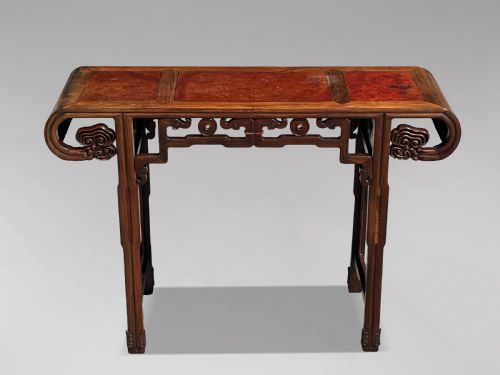
- A traditional Chinese form featuring an elongated rectangular top, often with upturned flanges at the ends. These tables served ceremonial functions before finding use as narrow console surfaces.
- Padauk
- A durable tropical timber showing rich red and brown tones, frequently utilised in Anglo-Indian and Burmese colonial furniture. It withstands heavy carving and humid climates.
- Amboyna wood
- A highly decorative burl timber known for its swirling grain patterns and warm golden-brown colour. It was often used for contrasting panels on fine nineteenth-century tables.
- Chinoiserie
- European decorative style reflecting Chinese artistic motifs, appearing on furniture produced both in the West and for export during the nineteenth century.
Carved Hardwood Hallway Table: Frequently Asked Questions
What is an altar table?
An altar table is a traditional Chinese form featuring an elongated top and high relief carving along the apron. They were originally placed against walls in domestic halls for ceremonial displays.
Today, their narrow proportions make them ideal hallway tables for narrow entryways and corridors.
How do I style a hallway table?
Pair the table with a simple mirror or wall art that matches the timber tone of the base. Keep surface decoration minimal to let the deep carvings of the hardwood remain visible.
Ensure the length matches your corridor width so the piece commands the space without blocking movement.
Are these tables solid wood?
These pieces are constructed from heavy tropical hardwoods such as hongmu, padauk, and elm. The timber density gives the furniture substantial weight and structural stability.
Surface treatments may include clear polishing or dark lacquer finishes applied over the solid wood.
How do I date a nineteenth-century table?
Dating relies on examining the timber species, joinery methods, and the style of the carving. Nineteenth-century pieces often show hand-tool marks and traditional joinery without modern hardware.
Comparison with documented Qing Dynasty and colonial workshop examples helps narrow the period of manufacture.