

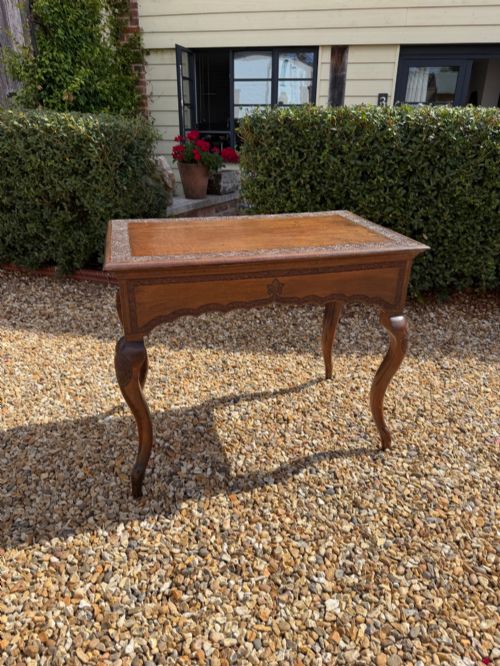
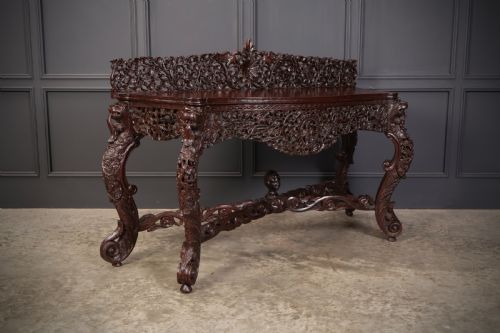
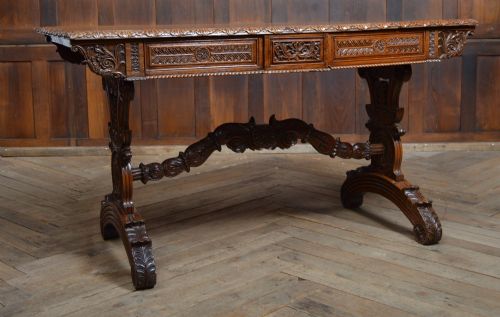


Anglo Indian Console Table
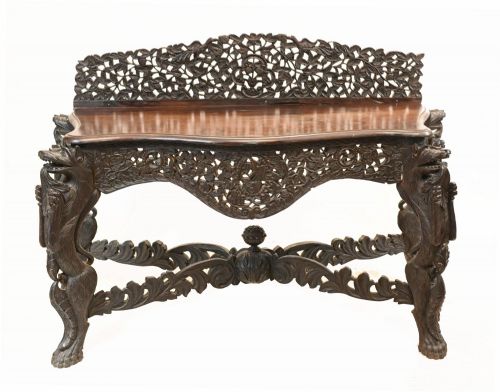
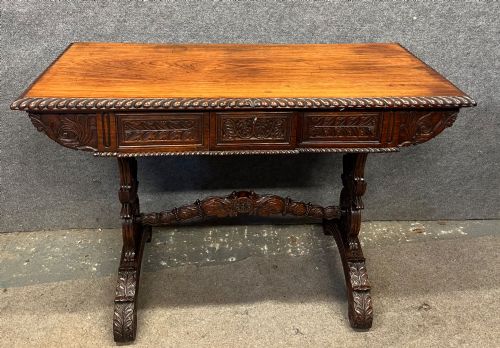
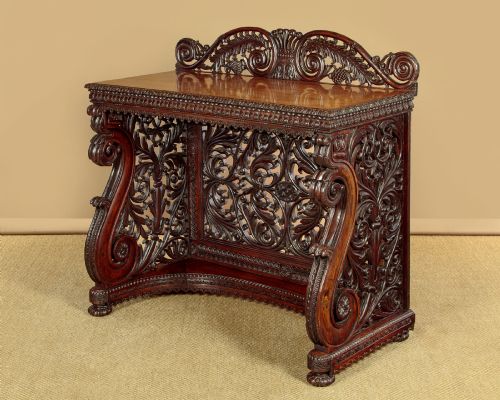
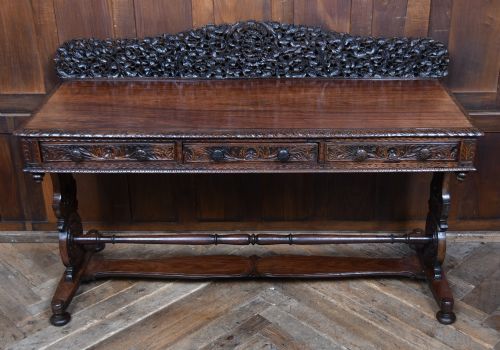
An anglo indian console table brings deep carved hardwoods and colonial craftsmanship straight into a hallway, combining British room forms with intricate eastern detail.

Anglo Indian Console Table
When you search for an anglo indian console table, you are looking at nineteenth-century furniture made where British design met local carving traditions. These pieces include console and pier tables, demi-lune formats, and side tables designed for colonial residences.
The version you are most likely to meet on this page dates from the nineteenth century, often spanning the Victorian era up to around nineteen twenty. They arrive in forms such as library tables and occasional tables alongside standard console shapes.
Makers drew on distinct regional styles including Burmese colonial, Moorish revival, and Kashmiri work. Alongside tables, the broader tradition yields occasional hall benches and window seats featuring detailed animal carvings.
Materials and construction methods
Carpenters built these tables using dense tropical timbers recorded as teak, padauk, rosewood, walnut, and general hardwood. These heavy woods provided the stable foundation necessary for deep relief carving and structural longevity.
Artisans applied hand carving directly to the solid timber bodies, frequently incorporating complex floral motifs and figural elements such as elephants. Select examples integrated contrasting bone inlay to highlight the linear patterns across the surface.
Anglo Indian Console Table Retail Price Guide 2026
Typical asking prices for anglo indian console table among the pieces listed under this phrase on Sellingantiques today, from the lower quarter to the upper quarter. They describe what is for sale here now, not the wider market.
Elephants occasionally join the furniture, appearing hand-carved into unusual window seats and hall benches.
Judging the standard of execution
Quality rests primarily on the depth and crispness of the hand carving across the timber. Superior pieces show precise undercutting and sharp definition in foliage and animal figures, whereas lesser items rely on shallow, soft impressions.
The choice of primary wood also dictates the tier, with richly grained padauk and rosewood commanding attention over simpler teak or mixed hardwoods. Intricate bone inlay work further separates standard utility furniture from high-status decorative commissions.
The Anglo Indian Console Table Glossary
- Demi-Lune
- A half-moon shape used for console tables designed to sit flush against a wall. This format suited narrow hallways and drawing rooms of the period.
- Padauk
- A heavy, durable tropical hardwood with a distinct reddish-brown tone. It served as a prime material for carved colonial furniture.
- Bone Inlay
- The technique of embedding small pieces of bone into wooden surfaces to create geometric or floral patterns. It provides a bright contrast against dark tropical woods.
- Pier Table
- A table designed to stand against the wall between two windows, often placed beneath a mirror. These pieces frequently match the console table form.
- Kashmiri Work
- Decorative carving associated with the Kashmir region, known for intricate surface detailing on walnut. It represents one of the distinct regional styles found in this furniture.
Anglo Indian Console Table: Frequently Asked Questions
Where did these tables originate?
These pieces were manufactured in regions under British colonial administration during the nineteenth and early twentieth centuries, blending European furniture forms with local carving traditions.
Craftsmen in areas such as Burma, Bombay, and Kashmir produced them for expatriate officials and local elites who favoured British room layouts.
How do I style a console table at home?
Place the table against a hallway or living room wall where its carved apron and legs remain visible. Because many feature flat wooden or marble tops, they hold lamps, trays, or decorative objects easily.
Keep surrounding furniture relatively simple so the dense wood carving and regional motifs stand out as a focal point.
What is the difference between padauk and rosewood?
Padauk is a dense tropical timber with a warm reddish or orange-brown hue that deepens with age. Rosewood tends to display darker grain patterns with purplish or black streaks.
Both timbers accept deep hand carving well, but their natural colouration gives each finished table a distinct visual weight.
How should I care for antique hardwood furniture?
Dust the carved surfaces regularly with a soft, dry cloth to prevent dirt from settling in the recesses of the relief work. Avoid placing the wood in direct sunlight or near heat sources that might cause the timber to dry out.
Apply occasional appropriate wax polish sparingly to nourish the grain without clogging the fine hand-carved details.