

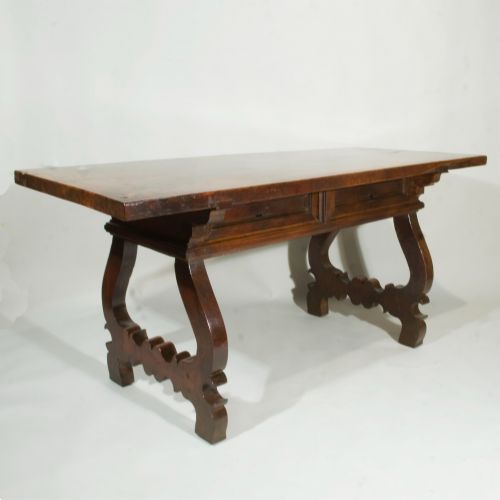
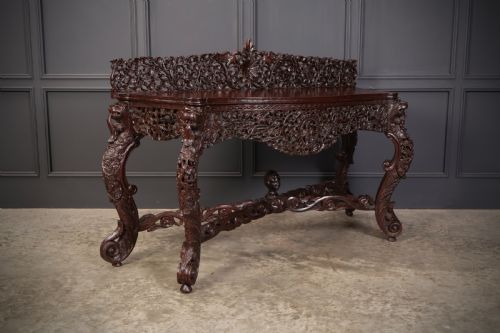
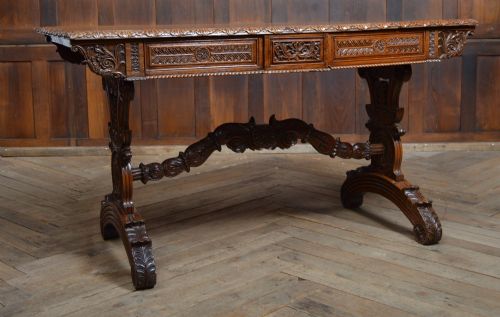
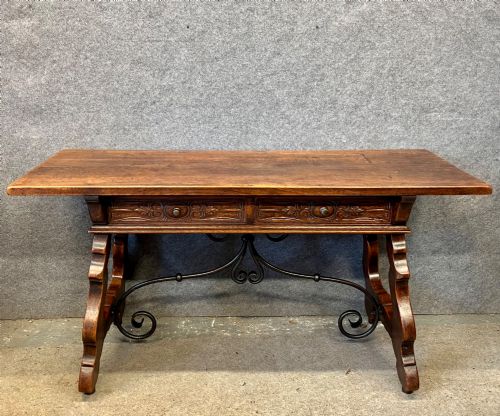


Colonial Carved Console Table
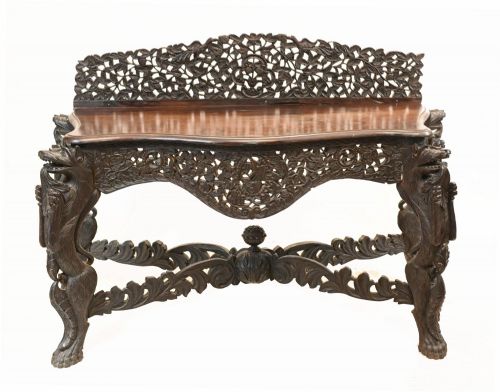
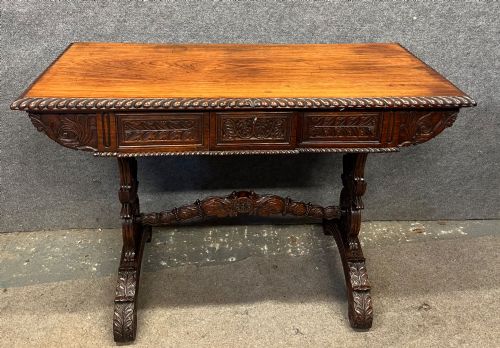
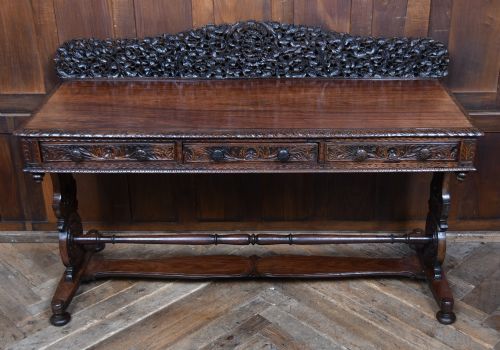
These colonial carved console table examples bring robust timber and dense carving together for a striking statement in any room.
Colonial Carved Console Table
A colonial carved console table typically serves as a substantial accent piece designed to sit against a wall, drawing the eye with heavily worked wooden surfaces. Buyers exploring this category encounter a range of forms, from narrow pier tables to broader side tables and centre tables originating from various global influences.
The pieces available span multiple centuries, with significant representation from the seventeenth, eighteenth, and nineteenth centuries. Alongside standard console formats, variations such as library tables and hall benches appear, reflecting the diverse domestic needs of historical colonial interiors.
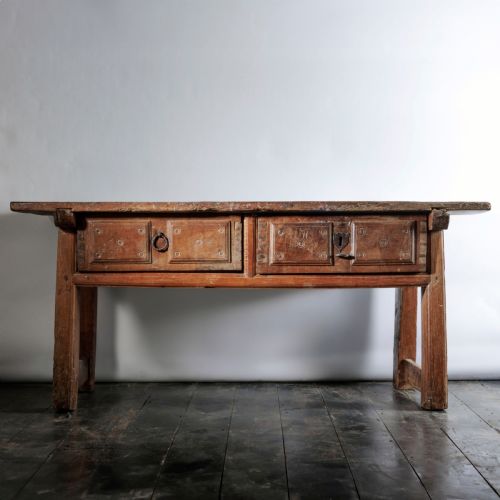
Geographic and stylistic crossover defines the selection, encompassing Anglo-Indian, Spanish Colonial, Portuguese Baroque, and Anglo-Burmese traditions. This stylistic breadth means a buyer might find a Spanish walnut piece alongside an intricately detailed rosewood console from the Indian subcontinent.
Materials and construction methods
Makers utilised dense, durable hardwoods suited to intricate chisel work, with rosewood, teak, padauk, and walnut frequently forming the primary structures. Oak also appears in Spanish regional pieces, providing a heavier, rustic foundation.
Carving serves as the principal decorative technique across the pieces, executed directly into the solid timber of the aprons, legs, and surfaces. Iron and brass hardware occasionally supplement the wooden construction, securing joints and supporting drop handles or structural mounts.
Colonial Carved Console Table Retail Price Guide 2026
Typical asking prices for colonial carved console table among the pieces listed under this phrase on Sellingantiques today, from the lower quarter to the upper quarter. They describe what is for sale here now, not the wider market.
Current listings span the seventeenth through the nineteenth centuries, featuring walnut, oak, rosewood, teak, and padauk across Spanish, Portuguese, and Anglo-Indian styles.
Distinguishing quality in construction and carving
Quality rests primarily on the depth and crispness of the carved ornamentation, distinguishing master craftsmanship from routine production. Tables featuring complex figural work, such as elephants or deep relief foliage, demonstrate greater labour intensity than simpler moulded edges.
The selection of timber grain and the integrity of the joinery further separate superior examples from standard ones. Dense, highly figured rosewood or richly patinated walnut indicates careful material selection by the maker, ensuring structural stability alongside visual impact.
The Colonial Carved Console Table Glossary
- Console table
- A table designed to stand against a wall, frequently secured to it or supported by two front legs. These pieces historically functioned to display decorative objects in formal reception rooms.
- Padauk
- A heavy, durable tropical hardwood noted for its reddish-brown colour and fine grain. Makers favoured it for pieces requiring intricate structural carving.
- Pier table
- A table designed specifically to fit against the wall space directly beneath a wall mirror or between windows. They share a close functional relationship with standard console tables.
- Anglo-Indian
- A descriptive term for furniture made in India under British influence, combining British furniture forms with traditional Indian carving techniques and tropical timbers.
- Apron
- The structural member running horizontally beneath the tabletop, connecting the legs. In these pieces, the apron is often the primary canvas for elaborate wood carving.
Colonial Carved Console Table: Frequently Asked Questions
What is a colonial carved console table?
A colonial carved console table is a heavy wooden furnishing produced during the colonial period, featuring detailed hand-carved ornamentation reflecting European and local design influences. These tables typically sit flat against a wall in hallways or living spaces.
They combine robust tropical hardwoods or regional timbers with deep relief carving on the aprons and legs. The category includes related forms like pier tables and side tables.
How do I style these tables?
Placing a console table against a prominent wall allows the carved woodwork to function as a focal point in a hallway, drawing room, or study. Pairing the piece with complementary historical lighting or mirrors enhances its architectural presence.
Because these tables possess dense grain and heavy carving, surrounding them with simpler decor helps balance the room. They serve effectively as display surfaces for lamps, ceramics, or books.
Which woods were used?
Makers relied on dense tropical hardwoods such as rosewood, teak, and padauk, alongside traditional European species like walnut and oak. These heavy timbers provided the structural strength needed to support deep chisel work without splitting.
Regional availability determined the primary wood, with Indian workshops favouring rosewood and padauk while European makers utilised walnut and oak. Each timber develops a distinct patina over centuries of use.
How do I identify Anglo-Indian pieces?
Anglo-Indian furniture combines British furniture forms with the rich carving traditions of the Indian subcontinent, frequently executed in rosewood or padauk. Motifs often include dense foliate patterns, animals, or local flora integrated into classical table structures.
These pieces reflect the cross-cultural exchange of the colonial era, merging European room layouts with indigenous woodworking skills. The resulting objects present a heavier, more ornate appearance than standard British domestic furniture.